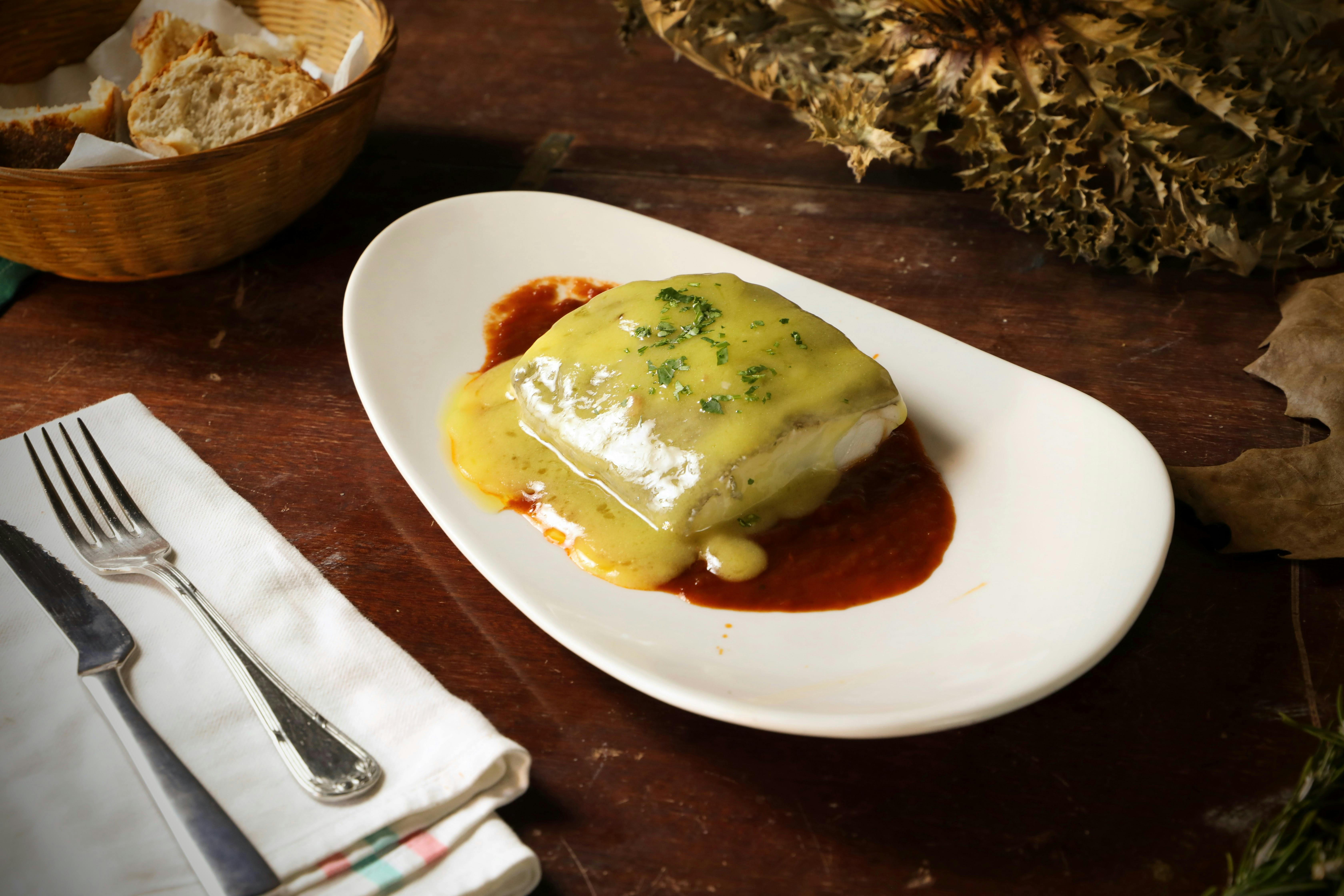
Photo: José Antonio Otegui Auzmendi / Pexels
Spanish
Bacalao al Pil Pil
The diets react (see scores below)
Common Ingredients
- salt cod
- olive oil
- garlic
- dried chiles
- parsley
- black pepper
- salt
- sherry vinegar
Specific recipes may vary.
Incompatible with 4 of 11 diets
Diet Ratings
Bacalao al Pil Pil is an excellent keto dish at its core. Salt cod is a high-protein, zero-carb fish, and the dish is built around a generous emulsion of olive oil — a hallmark healthy fat. Garlic adds minimal net carbs in the small quantities used for flavoring. Dried chiles and parsley contribute negligible carbs. The sherry vinegar is the only minor concern, as it contains a trace of residual sugars, but the small quantity used for seasoning is inconsequential to ketosis. Overall, the macronutrient profile — high fat from olive oil, moderate protein from cod, near-zero net carbs — aligns very well with ketogenic requirements. The pil-pil sauce itself is a natural fat emulsion with no added starch or thickeners, making this a naturally keto-compatible traditional preparation.
Some strict keto practitioners raise concern about sherry vinegar due to its trace sugar content and potential insulin response in metabolically sensitive individuals, preferring plain apple cider or white wine vinegar instead. Additionally, a minority note that salt cod, if heavily salted during preservation, may warrant caution for those managing electrolytes tightly, though this is not a carb-related concern.
Bacalao al Pil Pil is centered on salt cod (bacalao), a fish product and therefore an animal product. Fish is explicitly excluded under vegan dietary rules. The remaining ingredients — olive oil, garlic, dried chiles, parsley, black pepper, salt, and sherry vinegar — are all plant-based, but the primary protein and namesake ingredient is a clear animal-derived food. There is no vegan version of this dish; removing the cod would result in an entirely different dish, not a variation of Bacalao al Pil Pil.
Bacalao al Pil Pil is fundamentally disqualified by two core paleo violations: salt cod (heavily salted and preserved, a processed food with added salt) and added salt in the recipe itself. Paleo strictly excludes added salt and processed/preserved foods. Beyond these deal-breakers, sherry vinegar is a fermented, processed condiment that sits outside strict paleo guidelines. The remaining ingredients — olive oil, garlic, dried chiles, parsley, and black pepper — are all paleo-approved. Cod itself is an excellent paleo protein, but the traditional salting and curing process used to make bacalao renders it non-compliant. If made with fresh cod, no added salt, and substituting a paleo-friendly acid (e.g., lemon juice), the dish could be approved. As traditionally prepared, however, it cannot be recommended.
Bacalao al Pil Pil is a traditional Basque dish built almost entirely on Mediterranean diet pillars: salt cod (an excellent lean fish protein), generous extra virgin olive oil (the dish's emulsified sauce is essentially an olive oil preparation), garlic, and simple aromatics. Fish is explicitly encouraged 2-3 times weekly, and olive oil as the primary fat is central to the pattern. The sherry vinegar and dried chiles are minor flavor additions fully consistent with the diet. The main consideration is the high sodium content from salt cod, which must be desalted before cooking — this does not disqualify the dish but is worth noting for those monitoring sodium intake.
Some modern Mediterranean diet clinicians flag salt cod's very high sodium content even after soaking as a concern, and may prefer fresh or minimally processed fish. However, salt cod has deep roots in Iberian and broader Mediterranean culinary traditions and is widely accepted in traditional dietary pattern analyses.
Bacalao al Pil Pil is fundamentally incompatible with the carnivore diet despite its fish base. While salt cod is an acceptable animal protein, the dish is built around multiple plant-derived ingredients that are excluded from carnivore: olive oil (plant oil), garlic (allium vegetable), dried chiles (plant), parsley (herb), black pepper (spice), and sherry vinegar (plant-derived fermented product). The pil-pil sauce itself is an emulsion of olive oil and fish gelatin — the olive oil alone disqualifies it as a carnivore staple. Only the salt cod and salt components are carnivore-compliant. The dish cannot be meaningfully adapted without losing its identity entirely.
Bacalao al Pil Pil is a traditional Basque salt cod dish emulsified with olive oil and garlic. All listed ingredients — salt cod, olive oil, garlic, dried chiles, parsley, black pepper, salt, and sherry vinegar — are Whole30 compatible. Sherry vinegar is explicitly allowed under the Whole30 vinegar exception. The emulsification technique uses only the gelatin from the cod and olive oil, with no dairy or excluded thickeners. The main caution is that salt cod is a processed/preserved product: shoppers should verify the label contains only cod and salt, with no additives, sulfites (now allowed post-2024 rule change), or preservatives that would otherwise exclude it. As a whole-food protein dish without any excluded categories, this scores well.
Salt cod is a preserved, processed protein, and Melissa Urban's guidance generally encourages minimally processed whole foods; some practitioners may flag reliance on heavily salted preserved fish as testing the spirit of eating 'real food,' though no official rule excludes it. Label-reading is essential to confirm no non-compliant additives are present.
Bacalao al Pil Pil as traditionally prepared contains whole garlic cloves, which are a high-FODMAP ingredient due to fructans. Garlic is one of the highest-fructan foods tested by Monash University and must be avoided during the elimination phase at any standard serving size. The dish is defined by the presence of garlic as a core flavoring ingredient, and there is no realistic way to consume a standard serving without significant fructan exposure. Salt cod (bacalao) itself is low-FODMAP as a plain fish protein, olive oil is low-FODMAP, dried chiles are generally low-FODMAP in small amounts, parsley is low-FODMAP, black pepper and salt are low-FODMAP, and sherry vinegar is low-FODMAP at standard servings. However, the garlic makes this dish unsuitable for the elimination phase as traditionally prepared.
Bacalao al Pil Pil is built around salt cod, which is a preserved fish with extremely high sodium content — often 400–800mg or more per serving even after desalting/soaking. This is a critical concern for DASH, which targets <2,300mg/day (or <1,500mg for low-sodium DASH). The dish also adds salt and sherry vinegar, compounding sodium load. On the positive side, olive oil is a DASH-friendly fat (unsaturated), cod is an excellent lean protein, and garlic and parsley contribute beneficial micronutrients. The olive oil is used generously in pil pil (an emulsified sauce), which raises total fat and calorie content but not saturated fat. The primary disqualifier from 'approve' is the sodium burden of salt cod even after preparation. Fresh or low-sodium cod would easily qualify as a DASH-approved dish, but the traditional preparation with salt cod places this firmly in the 'caution' zone.
Bacalao al Pil Pil is built around salt cod and olive oil — two ingredients that align well with Zone principles. Salt cod is a lean, high-quality protein source (cod is one of the leanest fish available), and olive oil is the prototypical Zone-approved monounsaturated fat. Garlic, dried chiles, and parsley add polyphenols and anti-inflammatory compounds, which Sears actively promotes in his later writings. The core macro profile of this dish is strong on protein and fat. However, the challenge for Zone compliance lies in the fat ratio: traditional Pil Pil uses a substantial amount of olive oil to create its emulsified sauce, which can push the fat content significantly above the Zone's 30% fat target for a meal. While the fat is high-quality monounsaturated, the sheer volume can skew the 40/30/30 ratio unless portioned carefully. Additionally, this dish as served is essentially protein + fat with no carbohydrate component, making it an incomplete Zone meal. To Zone-balance it, a dieter would need to pair it with two or three servings of low-glycemic vegetables (e.g., roasted peppers, steamed asparagus, a side salad) to supply the carbohydrate block. The sodium content from salt cod (even after desalting) is high, which is not a Zone disqualifier per se but is a practical health consideration. Scored as caution rather than approve primarily due to the fat-heavy ratio of the dish as traditionally prepared and the absence of carbohydrate components.
Some Zone practitioners would rate this higher (7-8) on the grounds that olive oil fat quality is ideal in Zone methodology, cod is among the best lean proteins available, and the polyphenol content from garlic, chiles, and parsley directly supports Sears' anti-inflammatory framework. In his later work (The OmegaRx Zone, The Anti-Inflammation Zone), Sears places increasing emphasis on food quality and anti-inflammatory compounds over strict caloric ratio enforcement, under which logic a well-portioned Pil Pil with a vegetable side would be a model Zone meal.
Bacalao al Pil Pil is built on a strong anti-inflammatory foundation. Salt cod (bacalao) is a lean, high-quality protein source that, while not as rich in omega-3s as fatty fish like salmon or mackerel, still provides meaningful amounts of omega-3 fatty acids and selenium. Extra virgin olive oil is the centerpiece of this dish — the emulsified pil pil sauce is essentially a gelatin-and-EVOO emulsion — making it one of the most anti-inflammatory fats available, rich in oleocanthal and oleic acid. Garlic provides allicin and organosulfur compounds with well-documented anti-inflammatory effects. Dried chiles contribute capsaicin, a potent anti-inflammatory compound. Parsley is rich in flavonoids (apigenin, luteolin) and vitamin C. Black pepper enhances bioavailability of anti-inflammatory compounds. The main consideration is the high sodium content from salt-preserved cod: while sodium itself isn't directly pro-inflammatory in the classical sense, excessive intake is associated with endothelial inflammation and hypertension in some individuals. Traditional preparation involves extended soaking to desalt the cod, which reduces (but does not eliminate) sodium load. Sherry vinegar is a mild addition with negligible inflammatory impact. Overall, this is a Mediterranean dish that aligns well with anti-inflammatory principles — lean protein, abundant EVOO, anti-inflammatory aromatics — with sodium as the primary caveat.
Most anti-inflammatory frameworks would view this dish favorably given its Mediterranean profile. However, practitioners focused on autoimmune or kidney-related inflammation (e.g., functional medicine clinicians following AIP-adjacent protocols) may flag the residual high sodium content of salt cod as a concern for individuals with hypertension or kidney disease, where sodium-driven inflammation is a real risk. The dried chiles, while generally anti-inflammatory, are nightshade-adjacent (capsicum family) and some AIP protocols flag them for individuals with gut permeability issues.
Bacalao al Pil-Pil is built on salt cod, which is an excellent lean protein source — high protein density, low fat, and highly digestible when properly desalted. However, the dish's defining characteristic is its emulsified olive oil sauce, which requires a significant volume of olive oil (typically 150–250ml per serving) to achieve the signature gelatinous texture. While olive oil is an unsaturated fat and preferable to saturated alternatives, the total fat per serving is high, which can worsen GLP-1 side effects including nausea, bloating, and delayed gastric emptying. The dried chiles introduce mild spice risk, though at typical Spanish preparation levels this is usually tolerable. Garlic and sherry vinegar are low-risk in small amounts. The dish is low in fiber and relies on a large oil load to deliver its nutritional and textural payoff. Sodium content is also elevated due to the salt cod, which requires careful desalting — residual sodium may be a secondary concern. If portioned small and prepared with a reduced oil ratio, this dish can serve as a reasonable lean protein vehicle, but the traditional full preparation makes it a borderline choice for GLP-1 patients prone to GI sensitivity.
Some GLP-1-focused dietitians would approve a small portion of this dish on the basis that olive oil fat is heart-healthy and monounsaturated, and that the cod delivers high-quality complete protein efficiently — arguing that fat source quality matters more than fat quantity in this context. Others would flag the total fat load as a consistent GI trigger regardless of fat type, particularly in patients in early weeks of GLP-1 therapy when gastric emptying is most severely slowed.
*See how scores were generated at our methodology page.
Nutritional profile
Six traits that cut across every diet.
Fiber & Plants
How much whole-plant food and fiber it delivers.
Healthy Fats
The quality of its fats (unsaturated, omega-3).
Whole / Unprocessed
How close it is to its natural, unprocessed form.
Gut Gentle
How easy it is on digestion (low FODMAP, few irritants).
Low Glycemic
How little it spikes your blood sugar.
Protein Density
How much protein it packs per calorie.
Controversy Index
Higher controversy = more disagreement between diets.
Diet-Specific Tips
 Keto — 8/10
View tips
- Salt cod provides high-quality protein with zero net carbs
- Olive oil-based pil-pil sauce is a high healthy-fat emulsion — ideal for keto macros
- Garlic used in small flavoring quantities contributes negligible net carbs
- Dried chiles and parsley are low-carb aromatics with minimal macro impact
- Sherry vinegar contains only trace residual sugars — negligible at typical serving amounts
- No grains, starches, or added sugars in the traditional preparation
- Naturally unprocessed, whole-food dish aligning with keto food quality preferences
 Mediterranean — 8/10
View tips
- Cod is a lean, high-quality fish protein aligned with 2-3x weekly seafood recommendation
- Extra virgin olive oil is the dominant fat and forms the signature pil-pil emulsion sauce
- Garlic, dried chiles, parsley, and sherry vinegar are all Mediterranean-compatible aromatics
- Salt cod has elevated sodium that warrants attention, especially for hypertensive individuals
- No refined grains, added sugars, or processed ingredients present
- Dish has authentic historical roots in Basque and broader Iberian Mediterranean tradition
 Whole30 — 8/10
View tips
- Salt cod: compliant if ingredients are cod + salt only — verify label
- Olive oil: explicitly allowed natural fat
- Sherry vinegar: explicitly permitted by Whole30 vinegar rules
- Garlic, dried chiles, parsley, black pepper, salt: all fully compliant
- No excluded ingredients (no grains, dairy, legumes, added sugar)
- Post-2024 rule changes allow sulfites, so preserved cod with sulfites would now be compliant
 DASH — 4/10
View tips
- Salt cod is extremely high in sodium even after soaking/desalting — the dominant DASH concern
- Cod itself is an excellent lean, low-saturated-fat protein fully consistent with DASH principles
- Olive oil provides heart-healthy monounsaturated fat, aligned with DASH
- Added salt further increases sodium load beyond the salt cod baseline
- Garlic and parsley are DASH-positive ingredients with potassium and beneficial phytonutrients
- Substituting fresh cod for salt cod would make this dish DASH-approvable
- Generous olive oil adds calories but no saturated or trans fat — not a DASH disqualifier
 Zone — 6/10
View tips
- Salt cod is an excellent lean protein — one of the lowest-fat fish, ideal for Zone protein blocks
- Olive oil is the benchmark Zone-approved monounsaturated fat
- Traditional recipe uses high olive oil volume, potentially skewing fat ratio above 30% calories
- Dish contains zero carbohydrate components — must be paired with low-GI vegetables to form a complete Zone meal
- Garlic, dried chiles, and parsley contribute polyphenols and anti-inflammatory compounds favored by Sears
- High sodium from salt cod is a practical concern even after soaking, though not a Zone-specific issue
- Sherry vinegar adds negligible carbs and may improve glycemic response — minor positive factor
 Anti-Inflammatory — 8/10
View tips
- Cod provides lean protein and moderate omega-3 fatty acids
- Extra virgin olive oil (dominant fat) is rich in oleocanthal and oleic acid — strongly anti-inflammatory
- Garlic contributes allicin and organosulfur anti-inflammatory compounds
- Dried chiles provide capsaicin with documented anti-inflammatory properties
- Parsley adds flavonoids (apigenin, luteolin) and antioxidant vitamin C
- High sodium from salt cod is a concern — mitigated by traditional desalting soaking but not eliminated
- No refined carbohydrates, added sugars, seed oils, or processed ingredients
- Classic Mediterranean flavor profile aligns with anti-inflammatory dietary principles
 GLP-1 Friendly — 6/10
View tips
- Salt cod is a high-quality lean complete protein — strong positive for GLP-1 patients
- Very high olive oil content per serving drives total fat well above GLP-1-friendly thresholds
- Olive oil is unsaturated fat (preferred), but volume is the concern, not type
- Dried chiles introduce mild spice risk — usually tolerable but individual sensitivity varies
- Near-zero fiber content — no contribution toward 25–30g daily fiber target
- Elevated residual sodium from salt cod is a secondary consideration
- Small portion size could partially mitigate fat load but alters the dish significantly
- Easy to digest protein base (cod) is a positive for patients with slowed gastric emptying