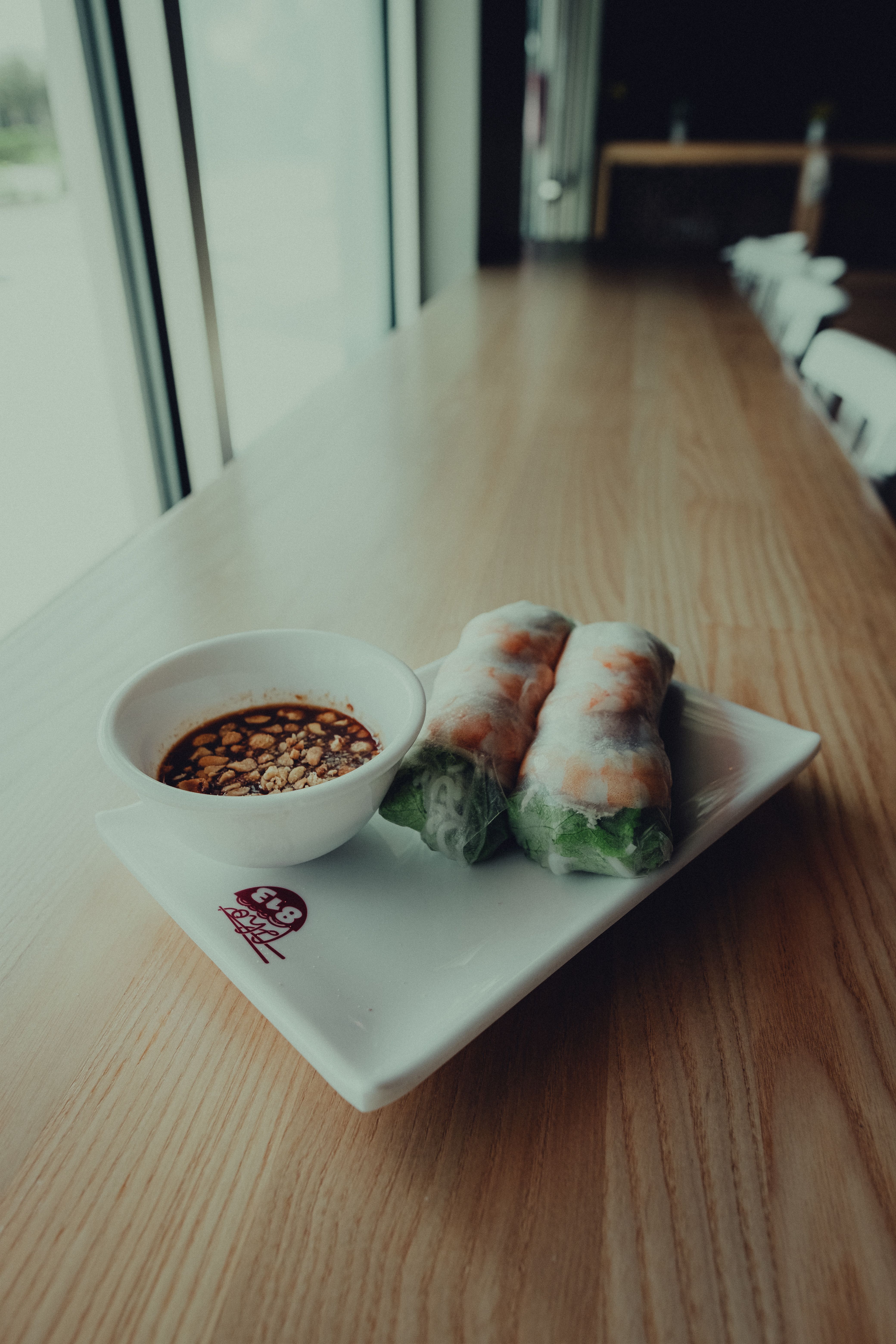
Photo: Connor Scott McManus / Pexels
Vietnamese
Bánh Cuốn
The diets react (see scores below)
Common Ingredients
- rice flour
- ground pork
- wood ear mushrooms
- shallots
- fish sauce
- cilantro
- Vietnamese sausage
- bean sprouts
Specific recipes may vary.
Incompatible with 7 of 11 diets
Diet Ratings
Bánh Cuốn is fundamentally incompatible with a ketogenic diet. The dish is built on rice flour sheets, which are a high-carbohydrate grain-based wrapper. A single serving of Bánh Cuốn can easily contain 40-60g or more of net carbs from the rice flour alone, far exceeding the daily keto limit. While the filling ingredients — ground pork, wood ear mushrooms, shallots, fish sauce — are relatively low-carb or keto-friendly on their own, the primary structural component (rice flour) makes the dish unsuitable. Bean sprouts add minimal additional carbs, but they are irrelevant given the disqualifying rice flour base. Vietnamese sausage may also contain added sugars or fillers. There is no realistic portion size that would make this dish compatible with ketosis.
Bánh Cuốn as described contains multiple animal-derived ingredients that are clearly incompatible with a vegan diet. Ground pork is a direct animal product, Vietnamese sausage (chả lụa) is typically made from pork, and fish sauce is a fermented fish product. These are not trace or incidental ingredients — they are primary flavor and protein components of the dish. There is no ambiguity here under any vegan framework.
Bánh Cuốn is fundamentally a grain-based dish. Rice flour — the primary and defining ingredient — is a processed grain product and is excluded under strict paleo rules. While some paleo-adjacent frameworks (e.g., Paul Jaminet's Perfect Health Diet) permit white rice as a 'safe starch,' rice flour is more processed than whole white rice and would be excluded even by most lenient interpretations. Vietnamese sausage is typically a processed meat product containing additives, preservatives, and often fillers, making it non-paleo. Fish sauce frequently contains added salt and sometimes sugar or preservatives. The remaining ingredients — ground pork, wood ear mushrooms, shallots, cilantro, and bean sprouts — are largely paleo-compatible, but the core structure of the dish relies on non-paleo components that cannot be separated from the dish as a whole.
Bánh Cuốn is built on refined rice flour (a refined grain with minimal fiber and nutrients), ground pork (red meat, limited to a few times per month in Mediterranean guidelines), and Vietnamese sausage (a processed meat high in saturated fat and sodium — both strongly discouraged). While wood ear mushrooms, shallots, bean sprouts, cilantro, and fish sauce are vegetable-forward and nutritious accompaniments, the foundational elements — refined starch, red meat, and processed meat — collectively contradict core Mediterranean diet principles. There is no olive oil, whole grains, legumes, or primary plant-based protein. The dish scores low overall.
Some Mediterranean diet interpreters would note that the vegetable garnishes (bean sprouts, mushrooms, shallots, herbs) and the modest portion of pork wrapped in a thin steamed sheet could be seen as analogous to a small meat accompaniment within a largely plant-forward meal — similar to how small amounts of cured meats appear in some Mediterranean regional traditions. Replacing Vietnamese sausage with a smaller amount of plain pork and serving with extra vegetables could push this toward 'caution.'
Bánh Cuốn is fundamentally incompatible with the carnivore diet. The dish is built on a rice flour wrapper, which is a grain-based plant food and forms the structural core of the dish. Beyond the rice flour, the ingredients include wood ear mushrooms (fungi/plant kingdom), shallots (plant), cilantro (plant herb), and bean sprouts (plant). Even the animal-derived components — ground pork, fish sauce, and Vietnamese sausage — are mixed with or accompanied by multiple plant-based ingredients, making the dish as a whole impossible to adapt within carnivore guidelines. The dish is essentially a plant-forward preparation with pork as a minor filling component. There is no version of this dish that qualifies as carnivore-compliant without completely deconstructing and rebuilding it from scratch.
Bánh Cuốn is fundamentally a rice-based steamed noodle/wrapper dish. Rice flour is a grain product (rice is explicitly excluded on Whole30), and this dish's entire structure depends on it — the thin steamed rice sheets are the dish itself, not a minor ingredient. Beyond the rice flour issue, this dish also falls into the 'no recreating noodles or pasta' category, as bánh cuốn sheets function as noodle wrappers. Vietnamese sausage (chả lụa) is a processed meat that commonly contains tapioca starch, sugar, and sometimes MSG or other additives that may not be compliant, adding further concern. Fish sauce and the other fresh ingredients (ground pork, mushrooms, shallots, cilantro, bean sprouts) are generally Whole30-compliant, but the foundational grain ingredient makes this dish impossible to approve.
Bánh Cuốn contains multiple high-FODMAP ingredients that make it unsuitable during the elimination phase. Shallots are high in fructans and are a significant FODMAP trigger — even small amounts cooked into the filling are problematic. Wood ear mushrooms (black fungus) contain polyols (mannitol) and are rated high-FODMAP by Monash at typical serving sizes. Vietnamese sausage (chả lụa) commonly contains garlic and/or onion/shallot as seasoning, adding further fructan load. Fish sauce in small amounts is generally low-FODMAP, and rice flour wrapper is safe. However, the combination of shallots, mushrooms, and likely garlic-containing sausage creates a dish with multiple stacked FODMAP sources that cannot reasonably be made low-FODMAP in its traditional form.
Some clinical FODMAP practitioners note that if shallots are used in very small quantities and the Vietnamese sausage brand is verified garlic/onion-free, the dish could theoretically be modified to a lower FODMAP load. However, in its standard restaurant or home-cooked form, these substitutions are rarely made, and Monash University's data clearly flags both shallots and wood ear mushrooms as high-FODMAP at normal serving amounts.
Bánh Cuốn is a Vietnamese steamed rice roll dish that presents a mixed DASH profile. On the positive side, it incorporates vegetables (wood ear mushrooms, shallots, bean sprouts, cilantro) and uses a steaming cooking method that avoids added fats. Rice flour is refined (not whole grain), which is less ideal than whole grains emphasized by DASH. The primary concerns are sodium and processed meat: fish sauce is a high-sodium condiment (approximately 1,400mg sodium per tablespoon), and Vietnamese sausage (chả lụa) is a processed pork product that typically contains significant sodium and may contain saturated fat. Ground pork as the protein is acceptable in moderate portions but is fattier than chicken breast or fish. The combination of fish sauce and Vietnamese sausage makes the sodium load a serious concern for a DASH dieter, particularly for the low-sodium DASH target of <1,500mg/day. A modified version using reduced fish sauce, omitting the sausage, and controlling portion size could be more DASH-compatible.
NIH DASH guidelines would flag this dish primarily for its high sodium contributors (fish sauce, processed sausage) and refined grain base. However, some DASH-oriented clinicians note that traditional Vietnamese cuisine uses fish sauce in relatively small amounts as a condiment and that the overall dish is low in saturated fat and incorporates vegetables — arguing it can fit within DASH with mindful sodium budgeting across the day.
Bánh Cuốn presents a mixed Zone Diet profile. The dish is built around a rice flour wrapper, which is a high-glycemic refined carbohydrate — Zone's primary concern here. Rice flour sheets are essentially white rice in a steamed form, classified as an 'unfavorable' carbohydrate in Zone terminology due to their high glycemic index and lack of fiber. However, the protein components (ground pork, Vietnamese sausage) provide meaningful protein blocks, and the accompanying vegetables (bean sprouts, wood ear mushrooms, shallots, cilantro) add favorable low-glycemic carbohydrates and polyphenols. Fish sauce contributes minimal macros but adds sodium. The ground pork and sausage are moderate-fat proteins — not ideal lean Zone proteins like chicken breast, but workable in controlled portions. The dish lacks significant monounsaturated fat, which would need to be added externally (e.g., a side of avocado or a drizzle of olive oil). With careful portioning — limiting the rice wrapper quantity, emphasizing the filling and vegetables, and pairing with lean protein adjustments — this dish can be worked into a Zone meal, though it requires effort to balance the macro ratios.
Some Zone practitioners would rate this more favorably, noting that the vegetable accompaniments (bean sprouts, mushrooms) help moderate the glycemic load of the rice flour, and that traditional Vietnamese portions of the wrapper are relatively thin and modest. Sears' later anti-inflammatory writings also give more credit to dishes rich in polyphenols (cilantro, shallots, mushrooms). Conversely, strict Zone followers might rate this lower given that rice flour is explicitly in Sears' 'unfavorable carb' category alongside white rice, and Vietnamese sausage may contain additives and higher saturated fat.
Bánh Cuốn presents a mixed anti-inflammatory profile. On the positive side, wood ear mushrooms offer immune-supporting beta-glucans and antioxidants, shallots provide quercetin and other flavonoids, cilantro contributes polyphenols, fish sauce (in modest amounts) adds fermented umami without significant inflammatory load, and bean sprouts offer some fiber and micronutrients. Rice flour as the base is a refined carbohydrate with a moderate-to-high glycemic load, which is neutral-to-mildly inflammatory — though it is gluten-free and less problematic than wheat-based refined starches. Ground pork is a moderate-fat red meat that falls in the 'limit' category of anti-inflammatory frameworks due to saturated fat content and lack of omega-3s. Vietnamese sausage (chả lụa) is a processed pork product that typically contains additives, sodium, and preservatives, which nudges the dish toward the 'avoid' threshold for that single ingredient. The dish lacks strongly anti-inflammatory components like omega-3-rich foods, leafy greens, turmeric, or olive oil. Overall, this is a culturally traditional dish with some beneficial ingredients offset by refined starch, red/processed meat, and a processed sausage component. Acceptable occasionally but not recommended as a regular anti-inflammatory breakfast.
Some integrative nutrition practitioners and the broader Mediterranean/anti-inflammatory tradition would view traditionally prepared Bánh Cuốn more favorably when the pork component is modest and the Vietnamese sausage is omitted or minimized — arguing the dish's light, steamed preparation, fermented condiments, and herb garnishes align reasonably well with anti-inflammatory eating. Conversely, stricter AIP or autoimmune-focused practitioners would rate it lower given the refined rice starch and processed meat components.
Bánh Cuốn consists of thin steamed rice flour sheets filled with seasoned ground pork and wood ear mushrooms, typically served with Vietnamese sausage (chả lụa), bean sprouts, fresh herbs, and fish sauce dipping sauce. The steamed preparation is a meaningful positive — it avoids the fried, greasy qualities that worsen GLP-1 side effects. Ground pork and Vietnamese sausage do contribute protein, but the overall dish is carbohydrate-dominant (rice flour sheets form the bulk), with moderate protein per serving and limited fiber. Vietnamese sausage tends to be moderately processed and contains fat, adding to the saturated fat load. Wood ear mushrooms and bean sprouts add minimal fiber and micronutrients. Fish sauce and shallots are fine in small amounts. The rice flour base is refined starch — low fiber, moderate glycemic impact — which limits nutrient density per calorie. For a GLP-1 patient eating small portions, this meal is unlikely to deliver sufficient protein (likely under 15g per standard serving without significant sausage addition) or fiber to meet priorities 1 and 2. It is not a food to avoid outright, but it falls short of ideal on multiple GLP-1 dietary criteria.
Some GLP-1-focused dietitians may view Bánh Cuốn more favorably as a culturally appropriate, easily digestible, low-fat steamed dish that is gentle on a slowed GI system — particularly useful on high-nausea days when tolerability matters more than protein optimization. Others would caution that the refined rice flour base and processed sausage make it a poor fit for patients needing maximum nutrient density from limited caloric intake.
*See how scores were generated at our methodology page.
Nutritional profile
Six traits that cut across every diet.
Fiber & Plants
How much whole-plant food and fiber it delivers.
Healthy Fats
The quality of its fats (unsaturated, omega-3).
Whole / Unprocessed
How close it is to its natural, unprocessed form.
Gut Gentle
How easy it is on digestion (low FODMAP, few irritants).
Low Glycemic
How little it spikes your blood sugar.
Protein Density
How much protein it packs per calorie.
Controversy Index
Higher controversy = more disagreement between diets.
Diet-Specific Tips
 DASH — 4/10
View tips
- Fish sauce is very high in sodium and significantly raises the sodium load of the dish
- Vietnamese sausage (chả lụa) is a processed meat with elevated sodium and saturated fat
- Rice flour is a refined grain, not a whole grain as DASH emphasizes
- Steaming cooking method is DASH-friendly — no added oils or fats
- Vegetables (wood ear mushrooms, bean sprouts, shallots, cilantro) add fiber, potassium, and micronutrients
- Ground pork is moderate in saturated fat; leaner proteins are preferred by DASH
- No low-fat dairy or significant calcium/magnesium sources present
- Low-sodium fish sauce or reduced quantities would improve the DASH score considerably
 Zone — 5/10
View tips
- Rice flour wrapper is a high-glycemic, unfavorable Zone carbohydrate with minimal fiber
- Ground pork and Vietnamese sausage are moderate-fat proteins, not ideal lean Zone proteins
- Wood ear mushrooms, bean sprouts, shallots, and cilantro contribute favorable low-glycemic carbs and polyphenols
- Dish lacks monounsaturated fat sources — fat block would need external supplementation
- Macro ratio skews toward carbohydrates, requiring portion control on the wrapper to approach 40/30/30
- Fish sauce adds sodium with negligible macro impact
- Dish is workable in Zone with modifications: reduce wrapper quantity, increase vegetable accompaniments, choose leaner protein options
 Anti-Inflammatory — 5/10
View tips
- Rice flour is a refined carbohydrate with moderate glycemic impact — mildly inflammatory in excess
- Ground pork is a 'limit' food in anti-inflammatory frameworks due to saturated fat
- Vietnamese sausage (chả lụa) is a processed meat with additives and sodium — pro-inflammatory
- Wood ear mushrooms provide anti-inflammatory beta-glucans and antioxidants
- Shallots and cilantro contribute beneficial flavonoids and polyphenols
- Fish sauce in small amounts is a fermented condiment — neutral to mildly positive
- Bean sprouts add modest fiber and micronutrients
- Dish lacks omega-3s, leafy greens, or strongly anti-inflammatory spices like turmeric or ginger
- Steamed cooking method is a positive — no inflammatory frying or charring
 GLP-1 Friendly — 5/10
View tips
- Steamed preparation is GLP-1-friendly and easy to digest
- Carbohydrate-dominant dish with refined rice flour — low fiber, moderate glycemic load
- Protein content is moderate but likely insufficient per serving to meet 15-30g meal target
- Vietnamese sausage is processed and adds saturated fat
- Wood ear mushrooms and bean sprouts contribute minimal fiber
- Low overall nutrient density per calorie relative to GLP-1 dietary priorities
- Portion-sensitive: a small serving may feel satisfying but delivers inadequate protein and fiber