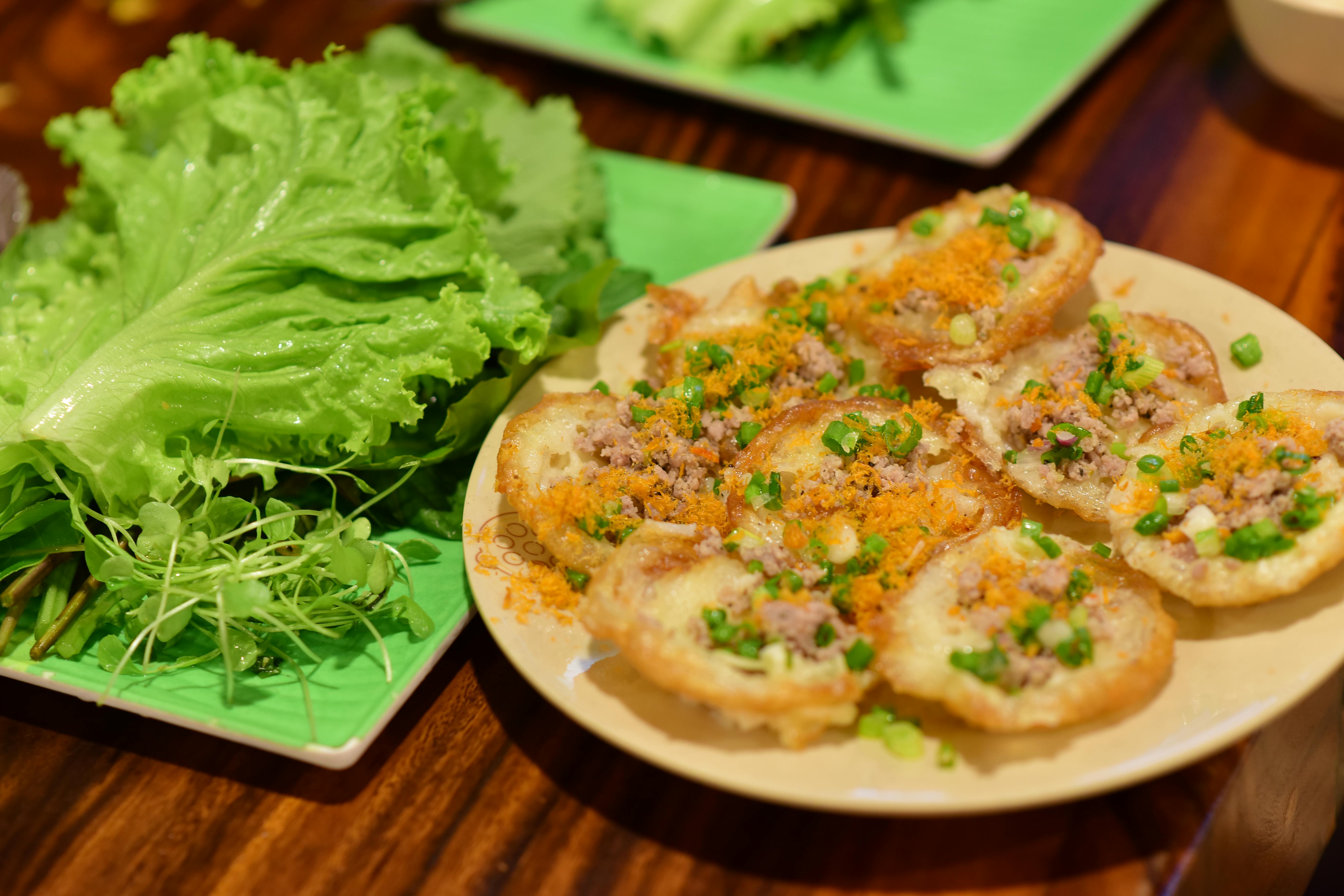
Photo: Sóc Năng Động / Pexels
Vietnamese
Bánh Khọt
The diets react (see scores below)
Common Ingredients
- rice flour
- coconut milk
- shrimp
- turmeric
- scallions
- fish sauce
- lettuce
- mint
Specific recipes may vary.
Incompatible with 5 of 11 diets
Diet Ratings
Bánh Khọt is fundamentally built on rice flour as its primary structural ingredient, making it incompatible with a ketogenic diet. Rice flour is a high-glycemic grain-based starch with virtually no fiber, yielding nearly all total carbs as net carbs. A standard serving of several mini savory pancakes (bánh khọt) would deliver a significant carb load — easily 25-40g net carbs per serving — from the rice flour batter alone, blowing through or consuming the entire daily keto carb budget in one snack. While the coconut milk adds desirable fat and the shrimp provides quality protein, these keto-friendly elements are overwhelmed by the rice flour base. Fish sauce, turmeric, scallions, lettuce, and mint are negligible in carb impact, but they cannot redeem the dish. This is not a borderline case — rice flour is in the same category as wheat flour and is strictly avoided on keto.
Bánh Khọt contains multiple animal-derived ingredients that disqualify it from a vegan diet. Shrimp is seafood (an animal product), and fish sauce is derived from fermented fish. Both are direct animal ingredients, not trace cross-contamination. The remaining ingredients — rice flour, coconut milk, turmeric, scallions, lettuce, and mint — are all plant-based, but the presence of shrimp and fish sauce makes this dish firmly non-vegan. A vegan adaptation could substitute mushrooms or tofu for shrimp and use soy sauce or vegan fish sauce (made from seaweed or mushrooms) instead of fish sauce.
Bánh Khọt is a Vietnamese mini savory pancake whose foundation is rice flour, a grain-derived ingredient that is explicitly excluded from the paleo diet. Despite the presence of several paleo-compliant ingredients — shrimp (an excellent paleo protein), coconut milk, turmeric, scallions, lettuce, and mint — the rice flour base is a dealbreaker. Fish sauce also warrants a minor note as it typically contains added salt and sometimes sugar or preservatives, though many paleo practitioners accept traditional fish sauce in small amounts. The dish cannot be modified to paleo compliance without fundamentally changing its identity, as rice flour is structurally central to the batter.
Bánh Khọt contains several Mediterranean-friendly elements — shrimp (encouraged 2-3x/week), fresh herbs (mint, scallions), and lettuce wraps align well with the diet's emphasis on seafood, vegetables, and aromatics. However, the dish deviates in key ways: coconut milk is used as the primary fat rather than olive oil, and rice flour (a refined grain) forms the batter base. Fish sauce as a seasoning is a functional analog to the Mediterranean use of salt and fermented flavors, and is acceptable in small quantities. The coconut milk introduces saturated fat from a non-traditional Mediterranean source, which is the main concern. Overall, this is a moderately acceptable dish — not harmful, but not a Mediterranean staple due to the fat source and refined grain base.
Some modern Mediterranean diet interpreters, particularly those focused on whole-food, plant-forward eating patterns, may view coconut milk more charitably as a minimally processed plant fat. Additionally, traditional Mediterranean cuisines from Lebanon and Turkey do use rice in moderation, lending some support for rice flour in small amounts as part of a mixed diet.
Bánh Khọt is fundamentally incompatible with the carnivore diet. The dish is built on a rice flour batter as its base, which is a grain-derived carbohydrate — entirely excluded on carnivore. Coconut milk is a plant-based fat source, also excluded. Turmeric and scallions are plant foods. Lettuce and mint, served as accompaniments, are vegetables/herbs. Fish sauce may contain added sugar and is plant-adjacent in processing. While shrimp is a carnivore-approved animal protein, it represents only a minor component of this heavily plant-based dish. The overwhelming majority of ingredients violate core carnivore principles.
Bánh Khọt are small savory Vietnamese pancakes/mini-crepes made in a specialized pan, using rice flour as the primary base. While most of the individual ingredients (shrimp, coconut milk, turmeric, scallions, fish sauce, lettuce, mint) are Whole30-compatible, rice flour is a grain-derived ingredient and is explicitly excluded on Whole30. Beyond the rice flour exclusion, Whole30 Rule 4 explicitly prohibits recreating pancakes, crepes, and similar baked/fried grain-based snack forms — even if one attempted to substitute the flour. Bánh Khọt are fundamentally a pancake/mini-cake format, which falls squarely into the 'no recreating baked goods or junk food' prohibition. Both the excluded ingredient (rice flour/grain) and the food format (pancake/crepe) independently disqualify this dish.
Bánh Khọt is a Vietnamese mini savory pancake dish with mostly low-FODMAP ingredients, but a few components require attention. Rice flour is low-FODMAP and safe. Shrimp, turmeric, fish sauce, lettuce, and mint are all low-FODMAP at standard servings. The main concerns are: (1) Coconut milk — low-FODMAP at 1/2 cup (125ml) per Monash, but high-FODMAP at larger amounts due to sorbitol; Bánh Khọt batter typically uses a meaningful quantity of coconut milk and the per-piece dose depends on how many pieces are consumed. (2) Scallions/green onions — the green tops are low-FODMAP and safe, but if white/bulb parts are included, they are high in fructans and must be avoided. Traditional recipes sometimes use the whole scallion. (3) Fish sauce is generally low-FODMAP in typical culinary amounts. Overall, the dish can be low-FODMAP if green scallion tops only are used and coconut milk quantity per serving is controlled, but cumulative serving size across multiple mini pancakes could push coconut milk intake into high-FODMAP territory.
Monash University rates coconut milk as low-FODMAP at ≤1/2 cup and green scallion tops as safe, making this dish approvable with careful preparation. However, clinical FODMAP practitioners often flag coconut milk-heavy dishes as risky during elimination because the creamy batter for Bánh Khọt is concentrated and people typically eat 6–10 pieces, making cumulative coconut milk exposure a realistic concern.
Bánh Khọt presents a mixed DASH profile. On the positive side, it contains lean shrimp (a DASH-approved lean protein), rice flour (a grain base), and a generous serving of fresh vegetables — lettuce and mint — which are core DASH foods. Turmeric and scallions add beneficial phytonutrients with negligible sodium. However, two ingredients raise DASH concerns: (1) Coconut milk is high in saturated fat from a tropical oil source, which DASH explicitly limits. In typical Bánh Khọt batter, coconut milk is used in moderate quantities, contributing saturated fat per serving. (2) Fish sauce is very high in sodium — approximately 1,200–1,500mg per tablespoon — and while used as a dipping condiment in relatively small amounts, it can push sodium intake significantly toward or beyond DASH daily limits, especially the stricter 1,500mg/day target. The dish is not heavily processed and lacks added sugars or red meat, which works in its favor. Overall, it is acceptable in moderation with portion control, but the coconut milk and fish sauce components prevent a full approval under standard DASH guidelines.
NIH DASH guidelines explicitly limit saturated fat and tropical oils like coconut milk, supporting a cautious rating. However, some updated clinical interpretations note that the small amount of coconut milk used in Bánh Khọt batter per serving may not meaningfully impact cardiovascular outcomes, and DASH-oriented dietitians working with Southeast Asian populations may permit this dish with a reduced-sodium fish sauce substitute or limited dipping sauce use.
Bánh Khọt is a Vietnamese mini savory pancake snack with a mixed Zone profile. The shrimp protein is excellent — lean, low-fat, and easy to portion into Zone blocks. The lettuce and mint wraps are favorable low-glycemic carbs that Sears would enthusiastically endorse. However, the dish has two notable Zone concerns: (1) Rice flour is a high-glycemic refined carbohydrate — 'unfavorable' in Zone terminology — and forms the structural base of each cake, making it hard to reduce without eliminating the dish itself. (2) Coconut milk contributes saturated fat rather than the preferred monounsaturated fat (olive oil, avocado, almonds). The coconut milk fat profile conflicts with Zone's anti-inflammatory emphasis, though in later writings Sears softened his stance on saturated fats somewhat. Fish sauce and turmeric are Zone-neutral to positive (turmeric is a polyphenol Sears values for its anti-inflammatory properties). As a snack, a small serving of 2-3 mini cakes could be portioned to approximate Zone ratios if the lettuce wrap component is generous, but the rice flour base and coconut milk fat make this an 'unfavorable' Zone food requiring careful control rather than a favorable one.
Some Zone practitioners following Sears' later anti-inflammatory framework (Toxic Fat, The Mediterranean Zone) might be more permissive with coconut milk, as Sears acknowledged medium-chain triglycerides in coconut have a different metabolic profile than long-chain saturated fats. Additionally, if portion size is kept very small (1-2 mini cakes) and the lettuce-herb wrap ratio is maximized, the glycemic load from rice flour could be minimized enough to work within a Zone snack block structure.
Bánh Khọt presents a largely favorable anti-inflammatory profile. Shrimp provides lean protein and some omega-3 fatty acids, along with astaxanthin, a potent carotenoid antioxidant. Turmeric is one of the most well-supported anti-inflammatory spices, with curcumin shown to reduce CRP and IL-6. Fresh lettuce and mint contribute polyphenols, flavonoids, and antioxidants. Scallions offer quercetin and organosulfur compounds with anti-inflammatory activity. Fish sauce, while high in sodium, is used in small amounts and is minimally processed in traditional form. Rice flour is a refined carbohydrate, which is mildly pro-inflammatory in large quantities, but the portion size in this snack context limits concern. Coconut milk is the most debated ingredient — it contributes saturated fat (primarily lauric acid), which some anti-inflammatory frameworks flag as pro-inflammatory, though others consider medium-chain triglycerides (MCTs) metabolically distinct. Overall, the dish leans anti-inflammatory due to its herb-forward, seafood-based, whole-food composition with minimal processed ingredients.
Coconut milk introduces saturated fat, which mainstream anti-inflammatory guidance (and Dr. Weil's pyramid) recommends limiting. Some practitioners, particularly those aligned with AHA heart-health guidelines, would lower this dish's rating due to saturated fat content, while paleo and MCT-positive researchers argue coconut fat is metabolically neutral or beneficial.
Bánh Khọt are small savory rice flour mini-pancakes cooked in cast iron molds with coconut milk, topped with shrimp and scallions, served with fresh lettuce and herbs. The shrimp provides lean, high-quality protein, and the fresh accompaniments (lettuce, mint, scallions) add fiber, micronutrients, and water content — all GLP-1 positives. The small, portion-friendly format suits reduced appetite well. However, coconut milk is the primary concern: it is high in saturated fat, which can worsen GLP-1 side effects like nausea, bloating, and slowed gastric emptying. Rice flour is a refined carbohydrate with minimal fiber and low protein density, meaning the batter base contributes mostly empty starch calories. Fish sauce adds sodium but in small amounts is not a significant concern. Overall protein per serving is modest given the shrimp-to-batter ratio, unlikely to hit the 15-30g per meal target without multiple pieces. The dish is not fried in the traditional deep-fry sense but is cooked with oil in the molds, adding some fat. It is not a strong GLP-1 meal on its own but can work as a light snack if portions are controlled and paired with additional protein.
Some GLP-1 dietitians may rate this more favorably given the small portion format, whole-food ingredients, and shrimp protein, arguing that the coconut milk quantity per piece is small enough to be tolerable for most patients. Others flag coconut milk categorically due to its saturated fat content and its known potential to slow gastric emptying further, particularly on higher-dose GLP-1 regimens.
*See how scores were generated at our methodology page.
Nutritional profile
Six traits that cut across every diet.
Fiber & Plants
How much whole-plant food and fiber it delivers.
Healthy Fats
The quality of its fats (unsaturated, omega-3).
Whole / Unprocessed
How close it is to its natural, unprocessed form.
Gut Gentle
How easy it is on digestion (low FODMAP, few irritants).
Low Glycemic
How little it spikes your blood sugar.
Protein Density
How much protein it packs per calorie.
Controversy Index
Higher controversy = more disagreement between diets.
Diet-Specific Tips
 Mediterranean — 5/10
View tips
- Shrimp is a Mediterranean-approved protein (seafood 2-3x/week)
- Coconut milk replaces olive oil as the fat — introduces saturated fat not typical of Mediterranean tradition
- Rice flour is a refined grain, not a whole grain
- Fresh herbs (mint, scallions) and lettuce are strongly encouraged plant foods
- Fish sauce is a high-sodium condiment but used in small amounts, analogous to salt/fermented flavors
- No red meat, processed ingredients, or added sugars
 Low-FODMAP — 5/10
View tips
- Rice flour is low-FODMAP and safe as the base
- Coconut milk is low-FODMAP at ≤1/2 cup (125ml) but high-FODMAP at larger amounts — cumulative dose across multiple mini pancakes is a risk
- Scallions: green tops only are low-FODMAP; white/bulb parts contain fructans and must be excluded
- Shrimp, turmeric, fish sauce, lettuce, and mint are all low-FODMAP at standard servings
- Dish is generally safe if portion is limited and only scallion greens are used in preparation
 DASH — 5/10
View tips
- Coconut milk contains saturated fat from a tropical oil, which DASH limits
- Fish sauce is very high in sodium (~1,200–1,500mg/tbsp), a major DASH concern even in dipping sauce quantities
- Shrimp is a lean, DASH-compatible protein source
- Fresh lettuce and mint are core DASH vegetables
- Rice flour is an acceptable grain base but refined, not whole grain
- Turmeric and scallions are DASH-positive anti-inflammatory additions
- Low-sodium fish sauce or lime-based dipping sauce would improve DASH compatibility
- Light coconut milk would reduce saturated fat content
 Zone — 5/10
View tips
- Shrimp is an ideal lean Zone protein source, easily portioned to 7g protein blocks
- Rice flour is a high-glycemic 'unfavorable' carbohydrate in Zone methodology
- Coconut milk provides saturated fat rather than preferred monounsaturated fat
- Lettuce and mint wraps are excellent low-glycemic Zone-favorable carbs
- Turmeric is a valued polyphenol in Sears' anti-inflammatory Zone framework
- Small snack portion size limits total glycemic impact but doesn't change the unfavorable carb classification
- The carb-to-protein ratio skews high due to rice flour base, challenging 40/30/30 balance
 Anti-Inflammatory — 7/10
View tips
- Turmeric (curcumin) — well-established anti-inflammatory spice
- Shrimp — lean protein with omega-3s and astaxanthin antioxidant
- Fresh herbs (mint, scallions) — polyphenols and quercetin
- Lettuce — antioxidants and fiber
- Coconut milk — saturated fat content is a moderate concern
- Rice flour — refined carbohydrate, mildly pro-inflammatory in excess
- Fish sauce — high sodium but used in small quantities
- No trans fats, seed oils, refined sugars, or processed additives
 GLP-1 Friendly — 5/10
View tips
- Shrimp provides lean, complete protein but total protein per serving is low given batter-to-shrimp ratio
- Coconut milk adds saturated fat which can worsen nausea, bloating, and delayed gastric emptying on GLP-1 medications
- Rice flour base is a refined carbohydrate — low fiber, low protein, low nutrient density per calorie
- Small individual piece format is well-suited to reduced appetite and small meal portions
- Fresh lettuce, mint, and scallions add fiber, micronutrients, and hydration — genuine GLP-1 positives
- Not deep-fried but pan-cooked with oil — moderate fat load, easier to digest than fried alternatives
- Fish sauce sodium is not a major concern at condiment-level quantities
- Unlikely to meet 15-30g protein target per snack serving without supplementation