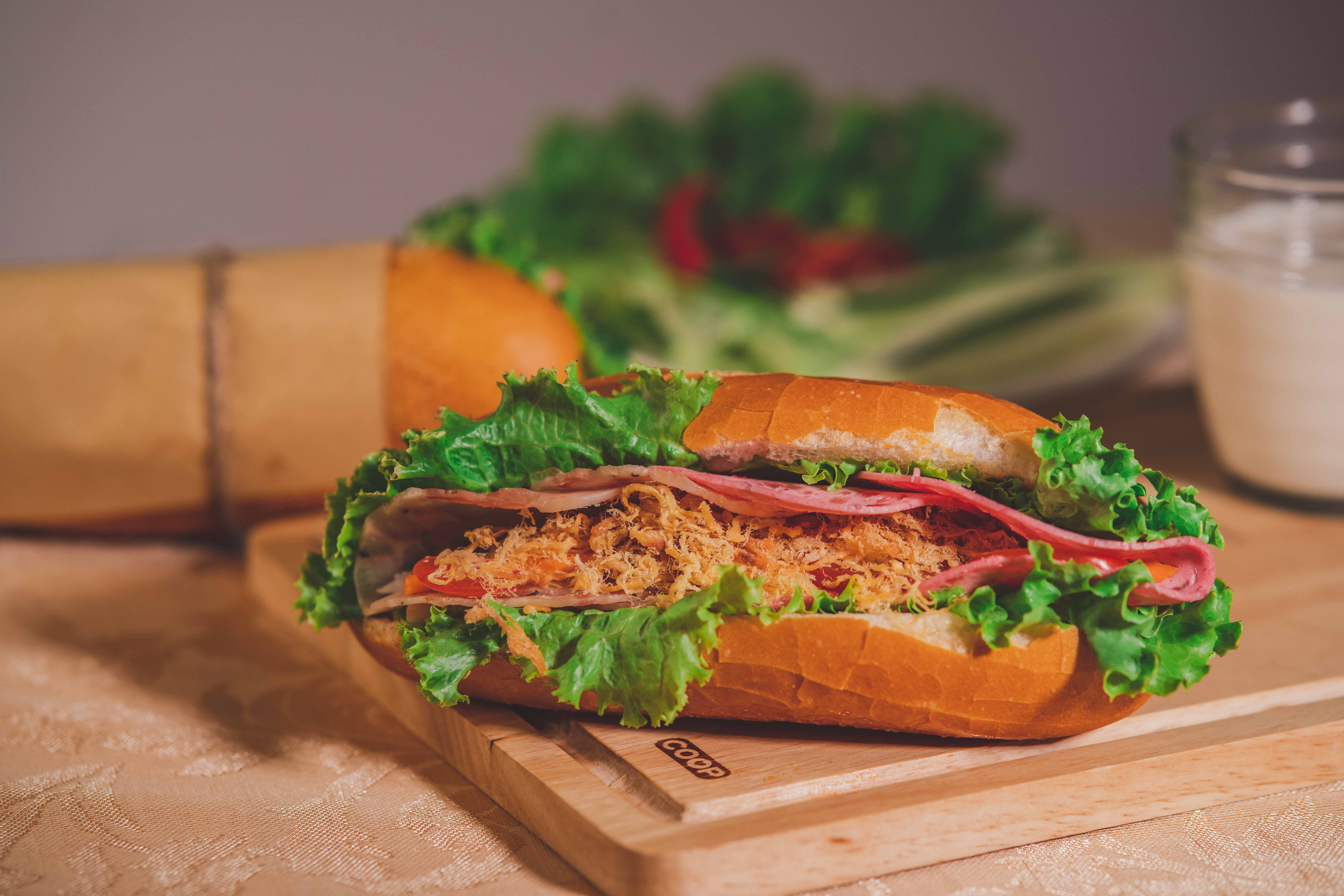
Photo: Phương Khánh / Pexels
Vietnamese
Banh Mi (Pork)
The diets react (see scores below)
Common Ingredients
- baguette
- pork
- pâté
- pickled daikon
- pickled carrots
- cilantro
- jalapeños
- mayonnaise
Specific recipes may vary.
Incompatible with 8 of 11 diets
Diet Ratings
Banh Mi is fundamentally built around a French baguette, which is a refined wheat bread delivering approximately 40-50g of net carbs per standard sandwich roll alone — enough to exceed the entire daily keto carb budget in a single component. The remaining ingredients (pork, pâté, mayonnaise, cilantro, jalapeños) are largely keto-friendly, and the pickled daikon and carrots add only modest additional carbs. However, no amount of portion control can make the baguette compatible with ketosis; even half a roll would likely push most individuals out of ketosis. This dish is structurally defined by its bread and cannot be modified into a keto meal without fundamentally deconstructing it into something that is no longer a Banh Mi.
Banh Mi (Pork) contains multiple animal products that are strictly excluded under vegan dietary rules. Pork is a direct animal flesh product, pâté is typically made from liver (pork or chicken), and mayonnaise is made from eggs. These three ingredients alone make this dish clearly incompatible with a vegan diet. There is no ambiguity here — this is a meat-centered sandwich with additional animal-derived condiments.
Banh Mi is fundamentally incompatible with the paleo diet. The defining feature of this sandwich is the baguette — a wheat-flour bread that is explicitly excluded from paleo as a grain product. Beyond the bread, pâté is typically processed with additives and sometimes grain fillers, and mayonnaise is conventionally made with soybean or canola oil (both excluded seed oils). The pickled vegetables (daikon and carrots) may also contain added sugar and salt. While the core protein (pork) and fresh vegetables (cilantro, jalapeños) are paleo-approved, the foundational structure of the dish — a grain-based bread sandwich — makes it impossible to consider paleo-compatible in any meaningful sense. This is not a gray area; wheat-based bread is one of the clearest avoid items in all paleo frameworks.
Banh Mi with pork is problematic from multiple Mediterranean diet angles. The base is a refined white flour baguette — exactly the kind of refined grain the diet discourages. Pork (especially in the form of pâté and cured/processed pork) falls into the red/processed meat category, which should be limited to a few times per month. Pâté is particularly concerning as a processed, high-saturated-fat product. Mayonnaise adds processed fat rather than the preferred extra virgin olive oil. While the pickled vegetables, cilantro, and jalapeños are positive plant-forward elements, they are condiments rather than the core of the meal and cannot offset the structural problems. This dish is not Mediterranean in tradition or composition.
Banh Mi is fundamentally incompatible with the carnivore diet. The dish is built around a wheat flour baguette, which is a grain-based food and strictly excluded. Beyond the bread, the majority of the remaining ingredients are plant-derived: pickled daikon, pickled carrots, cilantro, and jalapeños are all vegetables/herbs that are excluded. The pickling liquids typically contain sugar and vinegar. Mayonnaise, while containing egg, is made with plant-based oils (soybean or canola) and is therefore not carnivore-compliant. The only carnivore-compatible components are the pork and possibly the pâté (if made from pure animal ingredients). This dish is essentially a plant-heavy sandwich and scores as low as possible despite containing some meat.
Banh Mi is a sandwich built on a baguette, which is a wheat-flour bread — a grain product explicitly excluded on Whole30. Beyond the bread itself, the sandwich format (bread as a wrap/vessel) falls squarely into the 'no recreating baked goods' rule that prohibits breads, wraps, and similar items. Additional concerns include: pâté often contains added ingredients like dairy or non-compliant binders; mayonnaise as commonly sold contains soy oil or soy-derived emulsifiers and added sugar; and pickled daikon/carrots may contain added sugar in the pickling brine. The baguette alone is a hard disqualifier regardless of other ingredients.
Banh Mi is problematic on a low-FODMAP diet primarily because of the wheat baguette, which is high in fructans — one of the most significant FODMAPs. A standard baguette serving (the bread alone makes up much of this sandwich) would easily exceed the safe fructan threshold. Additionally, pâté often contains onion and/or garlic as standard ingredients, both of which are high-FODMAP. Pickled daikon and carrots are generally low-FODMAP, cilantro and jalapeños are fine, plain pork is fine, and mayonnaise is typically low-FODMAP. However, the baguette and likely-contaminated pâté make this dish a clear avoid during the elimination phase at any standard serving.
Monash University rates some sourdough baguettes as lower in fructans due to fermentation reducing FODMAP content, and some clinical FODMAP practitioners allow a small amount (e.g., one slice) of wheat sourdough. However, a full Banh Mi baguette — which is a standard wheat baguette, not typically sourdough — at a normal serving size would far exceed safe fructan limits, and most elimination-phase protocols would advise avoiding it entirely.
Banh Mi with pork is poorly aligned with DASH diet principles across multiple dimensions. The baguette is a refined white flour bread, not a whole grain. Pâté is high in saturated fat, cholesterol, and sodium. The pork component (commonly fatty cuts like char siu or pork belly) contributes saturated fat and sodium. Mayonnaise adds saturated fat and significant sodium. Pickled daikon and carrots, while providing some vegetables, are brined in high-sodium solutions. The overall sandwich is calorie-dense, sodium-heavy (easily exceeding 800–1,200mg per sandwich), and rich in saturated fat from multiple sources — all directly contrary to DASH priorities. The positive elements (daikon, carrots, cilantro, jalapeños) are overwhelmed by the problematic components.
Banh Mi presents significant Zone Diet challenges primarily due to its baguette base. The French baguette is a high-glycemic refined white flour carbohydrate — exactly what Dr. Sears classifies as 'unfavorable' — and it dominates the carbohydrate block count of this sandwich. A standard baguette portion provides dense, rapidly-absorbed carbs that spike insulin, directly opposing the Zone's core goal of hormonal balance. The pork and pâté components add saturated fat beyond Zone-preferred monounsaturated levels, and the mayonnaise (typically omega-6-heavy seed oil) conflicts with the anti-inflammatory fat emphasis. On the positive side, the pickled daikon and carrots, cilantro, and jalapeños are excellent low-glycemic Zone-favorable vegetables providing polyphenols. The pork protein itself is workable in lean cuts. The problem is structural: the baguette-to-filling ratio makes it nearly impossible to achieve 40/30/30 macros in a typical serving. Zone practitioners could deconstruct this dish — eating the filling with minimal bread — but as served, the carbohydrate load is heavily skewed toward unfavorable high-GI sources with insufficient protein and fat to balance the blocks.
Banh Mi with pork presents a mixed anti-inflammatory profile. On the positive side, the dish includes several anti-inflammatory ingredients: pickled daikon and carrots provide fermented vegetables with some probiotic benefit and antioxidants, cilantro offers polyphenols and phytonutrients, and jalapeños contain capsaicin which has documented anti-inflammatory effects. However, the dish has several problematic components. The baguette is made from refined white flour — a refined carbohydrate that can spike blood sugar and promote inflammatory signaling. Pork (especially the fattier cuts used in banh mi like thịt nướng, char siu, or cold cuts) is red/processed meat, which falls in the 'limit' category. Pâté is a processed, high-fat, high-sodium liver spread that is typically rich in saturated fat. Mayonnaise is typically made from refined seed oils (soybean or canola), which are debated in anti-inflammatory contexts. The overall dish skews toward pro-inflammatory due to its refined grain base, processed meat components, and high saturated fat from pâté. It is not a dish to avoid entirely — the vegetable components and spices offer real benefit — but it is not anti-inflammatory-friendly in its standard form. A modified version with whole grain bread, chicken or tofu protein, and avocado or olive oil in place of mayo and pâté would score considerably higher.
Some anti-inflammatory practitioners would note that traditional Vietnamese cuisine uses smaller amounts of meat relative to vegetables and herbs compared to Western dishes, and that fermented vegetables add probiotic value that can benefit gut-mediated inflammation. Additionally, mainstream nutrition guidelines (including the AHA) do not classify lean pork as a significant inflammatory food, and some anti-inflammatory researchers distinguish between processed meat and minimally processed pork cuts. However, most dedicated anti-inflammatory protocols (including Dr. Weil's pyramid and the IF Rating system) would flag the refined baguette, pâté, and processed pork components as net negatives.
A traditional pork banh mi presents a mixed nutritional profile for GLP-1 patients. The baguette is a refined white flour bread with low fiber and high glycemic impact, which is problematic given the priority on nutrient density and blood sugar stability. Pâté is high in saturated fat and very rich, which can worsen nausea, reflux, and bloating — common GLP-1 side effects. Mayonnaise adds additional fat with negligible nutritional value. The jalapeños may trigger reflux or nausea in sensitive patients. On the positive side, the pork itself provides meaningful protein (roughly 15-20g depending on portion), and the pickled daikon and carrots offer some fiber, probiotics from fermentation, and digestive support. The pickled vegetables are actually a modest bright spot. However, the combination of refined bread, fatty pâté, and mayo in a single serving creates a high-fat, low-fiber, calorie-dense package that works against GLP-1 dietary priorities. A modified version — open-faced, extra lean pork, no pâté, light or no mayo — could score higher, but the standard preparation lands firmly in caution territory.
Some GLP-1-focused RDs would argue that a half-portion banh mi with lean char siu or grilled chicken (substituting for fatty pork and pâté) is a reasonable real-world meal choice that provides adequate protein and the pickled vegetables support gut health — the disagreement centers on whether modifiable real-world foods should be rated on their standard versus their optimized preparation.
*See how scores were generated at our methodology page.
Nutritional profile
Six traits that cut across every diet.
Fiber & Plants
How much whole-plant food and fiber it delivers.
Healthy Fats
The quality of its fats (unsaturated, omega-3).
Whole / Unprocessed
How close it is to its natural, unprocessed form.
Gut Gentle
How easy it is on digestion (low FODMAP, few irritants).
Low Glycemic
How little it spikes your blood sugar.
Protein Density
How much protein it packs per calorie.
Controversy Index
Higher controversy = more disagreement between diets.
Diet-Specific Tips
 Zone — 4/10
View tips
- Baguette is high-glycemic refined carbohydrate — classified 'unfavorable' in Zone methodology
- Pâté and mayonnaise contribute saturated fat and omega-6 fats, conflicting with Zone's anti-inflammatory fat priorities
- Pickled daikon, carrots, jalapeños, and cilantro are Zone-favorable low-glycemic vegetables
- Pork protein is usable but less ideal than skinless chicken or fish due to higher saturated fat content
- Standard sandwich format creates macro imbalance: carb-heavy, insufficient protein blocks to compensate
- Deconstruction strategy (minimal bread, more filling) could rehabilitate this dish to a caution-5 range
- As served in traditional portions, insulin response would be poorly controlled
 Anti-Inflammatory — 4/10
View tips
- Refined white flour baguette is a pro-inflammatory refined carbohydrate
- Pork and pâté are processed/high-fat meats in the 'limit to avoid' category for anti-inflammatory diets
- Pâté is high in saturated fat and sodium — both pro-inflammatory at excess levels
- Mayonnaise typically contains refined seed oils (soybean/canola), which are debated
- Pickled daikon and carrots provide fermented vegetable benefit and some probiotic value
- Cilantro and jalapeños contribute anti-inflammatory polyphenols and capsaicin
- Overall macronutrient profile is high refined carb + saturated fat, which is an inflammatory combination
 GLP-1 Friendly — 4/10
View tips
- Refined white baguette: low fiber, high glycemic load, poor nutrient density per calorie
- Pâté: high saturated fat content, likely to worsen nausea and reflux on GLP-1 medications
- Mayonnaise: adds fat and empty calories with no protein or fiber benefit
- Jalapeños: may trigger or worsen GLP-1-related reflux and nausea in sensitive patients
- Pork filling provides ~15-20g protein depending on cut and portion — a meaningful positive
- Pickled daikon and carrots: modest fiber and fermented food benefit, support digestion
- Overall fat load per serving is high, conflicting with GLP-1 low-fat priority
- Portion sensitivity: a half sandwich with lean protein and minimal condiments significantly improves the profile