Mexican
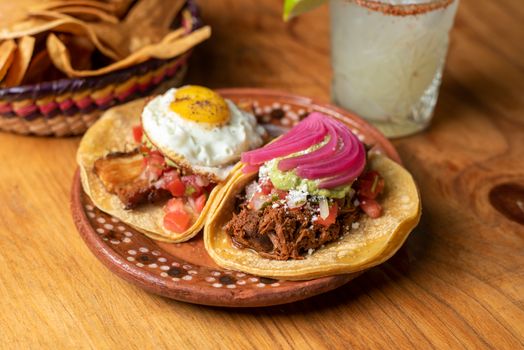
Barbacoa Tacos
The diets react (see scores below)
Common Ingredients
- beef cheek
- guajillo chiles
- chipotle chiles
- corn tortillas
- white onion
- cilantro
- lime
- cumin
Specific recipes may vary.
Incompatible with 7 of 11 diets
Diet Ratings
Barbacoa Tacos are fundamentally incompatible with ketogenic diet due to the corn tortillas, which are a grain-based, high-carb food. A standard corn tortilla contains approximately 12-15g net carbs each, meaning even two tacos push 25-30g of net carbs from tortillas alone — before accounting for any other ingredients. The barbacoa filling itself (beef cheek, guajillo and chipotle chiles, cumin, onion, cilantro, lime) is largely keto-friendly, with beef cheek being a high-fat, protein-rich cut. However, the dish as traditionally prepared with corn tortillas is a clear keto violation. The dish could be adapted (lettuce wraps, low-carb tortillas) but as described with corn tortillas, it must be avoided.
Barbacoa Tacos contain beef cheek as the primary protein, which is a direct animal product. Beef is unambiguously non-vegan, making this dish entirely incompatible with a vegan diet regardless of the otherwise plant-based accompaniments (corn tortillas, chiles, onion, cilantro, lime, cumin).
Barbacoa Tacos are disqualified primarily by the corn tortillas, which are made from corn — a grain explicitly excluded from the paleo diet. The beef cheek, guajillo chiles, chipotle chiles, white onion, cilantro, lime, and cumin are all paleo-compliant ingredients. However, the corn tortilla is the structural foundation of this dish, not an optional garnish, making the dish as presented non-paleo. Without the tortilla, the barbacoa filling itself would be fully approved.
Barbacoa tacos center on beef cheek, a fatty cut of red meat that directly contradicts Mediterranean diet principles, which limit red meat to a few times per month. Beef cheek is particularly high in saturated fat. While corn tortillas are a whole grain and the accompanying vegetables (onion, cilantro, lime) and spices are acceptable, the primary protein is problematic. The dish as a whole is not Mediterranean in composition or tradition, and the red meat base disqualifies it from approval or even caution status under standard Mediterranean diet guidelines.
Barbacoa Tacos are fundamentally incompatible with the carnivore diet. While the beef cheek itself is an excellent carnivore food — a fatty, collagen-rich cut from a ruminant animal — virtually every other ingredient violates carnivore principles. Corn tortillas are a grain-based plant food and a direct carbohydrate source. Guajillo and chipotle chiles are plant-derived spices/peppers. White onion, cilantro, and lime are all plant foods. Cumin is a plant-based spice. The dish is predominantly a vehicle for plant ingredients, with the carnivore-friendly beef cheek being only one component of a heavily plant-laden preparation. Even if one were to extract only the beef cheek, the traditional preparation involves marinating in chile-based sauces, which would still be non-compliant.
Barbacoa Tacos contain corn tortillas, which are made from corn — a grain explicitly excluded on the Whole30 program. Beyond the tortilla issue, this dish also falls into the 'no recreating wraps/tortillas' rule (Rule 4), which explicitly lists tortillas and wraps as off-limits even if a compliant version could theoretically be constructed. The barbacoa filling itself (beef cheek, guajillo chiles, chipotle chiles, onion, cilantro, lime, cumin) would be fully Whole30-compliant and could be enjoyed as a standalone bowl or over cauliflower rice, but the corn tortilla wrapper makes the dish as presented a clear violation.
Barbacoa Tacos contain multiple high-FODMAP ingredients that make this dish problematic during the elimination phase. White onion is one of the highest-FODMAP foods tested by Monash University, rich in fructans, and is used both in cooking the beef and as a raw topping — there is no safe serving size. Guajillo and chipotle chiles are not well-tested by Monash, but dried chiles used in significant quantities for braising may contribute fructans. The corn tortillas themselves are low-FODMAP (2 small corn tortillas per Monash). Beef cheek is a plain meat and is low-FODMAP. Cilantro, lime juice, and cumin in typical culinary amounts are low-FODMAP. However, white onion as a core structural ingredient — used in both the braising liquid and as a raw garnish — is the primary disqualifier. Traditional barbacoa preparation cannot be safely executed low-FODMAP without substituting or omitting the onion entirely, making the dish as described a high-FODMAP avoid.
Monash University rates very small amounts of onion as high-FODMAP with no safe threshold, making this a clear avoid; however, some clinical FODMAP practitioners suggest that if onion is used only in braising and then removed (with FODMAPs remaining water-soluble in the braising liquid rather than absorbing into the meat), the meat itself may be tolerable — though this is not a Monash-validated approach and most elimination-phase protocols would still advise avoidance.
Barbacoa tacos present a mixed DASH diet profile. The core protein — beef cheek — is a fatty cut of red meat, high in saturated fat, which DASH explicitly limits. DASH discourages red meat in general and reserves it for occasional, lean portions. However, the preparation style here uses no added sodium-heavy sauces like soy sauce or processed condiments; the flavor comes primarily from guajillo and chipotle chiles, cumin, and aromatics. Corn tortillas are a reasonable whole-grain-adjacent starch with relatively low sodium. The garnishes — white onion, cilantro, and lime — are DASH-positive. The main concerns are the beef cheek's saturated fat content (beef cheeks are notably high in intramuscular fat, comparable to short ribs) and the chipotle chiles, which in canned adobo form add significant sodium; if dried chipotles or adobo-light preparations are used, sodium impact is lower. This dish is not a DASH core food but could fit within DASH in small, occasional portions — perhaps 2 small tacos — especially if paired with vegetables and overall daily sodium is managed.
NIH DASH guidelines categorize all red meat as a limit food and recommend lean poultry or fish as primary proteins; beef cheek specifically, being a high-fat cut, would be a poor DASH choice. However, some updated DASH-oriented clinicians note that unprocessed red meat in modest portions fits within an overall DASH-compliant dietary pattern, and the absence of processed high-sodium ingredients here makes this a better-prepared version than most red meat dishes.
Barbacoa tacos present a mixed Zone Diet picture. Beef cheek is a fatty, collagen-rich cut — not the lean protein Zone ideally prefers (skinless chicken, fish, lean beef), but it's a whole food protein source that can be portioned appropriately (~1 oz provides roughly 1 protein block). The guajillo and chipotle chiles, white onion, cilantro, and lime are all Zone-favorable low-glycemic vegetables/aromatics rich in polyphenols, fitting nicely into carb blocks. The main concern is the corn tortillas: corn is classified as an 'unfavorable' carb in Zone terminology due to its higher glycemic index relative to vegetables, and tortillas are a starchy, grain-based carb that tips the meal toward higher glycemic load. However, small corn tortillas (~6g net carbs each) can be counted as carb blocks within the 40% carb allocation. The protein-to-fat ratio of beef cheek is also skewed — it carries significant saturated fat, making it harder to hit the 30/30 protein/fat split without the fat overshooting. A Zone-adapted version would use 2 small tortillas (2 carb blocks), limit beef cheek to a modest 2–3 oz portion, and balance with extra vegetables. As served in a typical taqueria, portions will likely over-deliver on fat and starchy carbs while under-delivering on vegetables.
Some Zone practitioners following Sears' later anti-inflammatory work (The OmegaRx Zone, The Zone Diet) would be more lenient on saturated fat from whole animal sources like beef cheek, viewing it as preferable to processed seed oils. Additionally, traditional barbacoa is minimally processed and chile-rich, offering meaningful polyphenol content. A strict early-Zone reading (Enter the Zone) would flag both the fatty beef cut and corn tortillas as 'unfavorable,' pushing this lower, while a more modern Zone application recognizes it as a manageable meal with careful portioning.
Barbacoa tacos present a genuinely mixed anti-inflammatory profile. On the positive side, guajillo and chipotle chiles deliver capsaicin and carotenoids with documented anti-inflammatory properties. Cumin contributes antioxidant compounds. Cilantro, lime, and white onion add polyphenols, vitamin C, and quercetin. Corn tortillas are a whole grain option with fiber, and are preferable to refined flour tortillas. However, the primary protein — beef cheek — is a high-fat cut of red meat. It is rich in saturated fat and arachidonic acid, both of which are associated with elevated inflammatory markers (CRP, IL-6) in research. Traditional barbacoa preparation often involves slow braising, which can concentrate fat content further. Red meat is squarely in the 'limit' category under anti-inflammatory frameworks. The dish is not built around processed ingredients, trans fats, or added sugars, which keeps it from falling into 'avoid' territory. As an occasional meal featuring beneficial spices and whole-grain tortillas, it lands in a moderate caution zone — acceptable infrequently but not a dietary staple for those following anti-inflammatory principles.
Some anti-inflammatory practitioners, including those aligned with ancestral or paleo-adjacent frameworks, argue that traditionally raised beef contains higher omega-3 to omega-6 ratios and conjugated linoleic acid (CLA), making it less inflammatory than conventionally raised beef — sourcing matters significantly. Conversely, mainstream anti-inflammatory authorities like Dr. Weil consistently classify red meat as a food to limit regardless of sourcing due to saturated fat and heme iron content.
Barbacoa tacos present a mixed nutritional profile for GLP-1 patients. Beef cheek is the primary protein source and does deliver meaningful protein (~20-25g per 3 oz serving), but it is a fatty cut — slow-braised beef cheek is notably high in saturated fat and collagen-rich connective tissue, which, while flavorful, increases the fat load per serving. High fat content is a significant concern on GLP-1 medications as it worsens nausea, bloating, and reflux by compounding the already-slowed gastric emptying. Corn tortillas are a modest positive — they are whole grain, relatively low fat, and easier to digest than flour tortillas, contributing small amounts of fiber. The remaining ingredients (onion, cilantro, lime, guajillo and chipotle chiles, cumin) are nutritionally negligible in taco quantities but the chile peppers introduce mild-to-moderate spice, which may worsen reflux or nausea in sensitive GLP-1 patients. Overall, this dish can be consumed cautiously in a 1-2 taco portion with attention to fat quantity, but it is not an optimal GLP-1 meal due to the high-fat protein cut and spice exposure.
Some GLP-1-focused dietitians accept barbacoa in small portions because beef cheek provides complete protein and the braising process makes the meat soft and easy to chew and digest; they argue that total fat per a 1-2 taco serving may be manageable. Others flag fatty braised beef cuts categorically due to the compounding effect of dietary fat on GLP-1-induced delayed gastric emptying, particularly in the first several months on the medication when GI side effects are most pronounced.
*See how scores were generated at our methodology page.
Nutritional profile
Six traits that cut across every diet.
Fiber & Plants
How much whole-plant food and fiber it delivers.
Healthy Fats
The quality of its fats (unsaturated, omega-3).
Whole / Unprocessed
How close it is to its natural, unprocessed form.
Gut Gentle
How easy it is on digestion (low FODMAP, few irritants).
Low Glycemic
How little it spikes your blood sugar.
Protein Density
How much protein it packs per calorie.
Controversy Index
Higher controversy = more disagreement between diets.
Diet-Specific Tips
 DASH — 4/10
View tips
- Beef cheek is a high-saturated-fat cut of red meat — a food category DASH explicitly limits
- Chipotle chiles in canned adobo form can add significant sodium; dried or fresh preparations are lower sodium
- Corn tortillas are low in sodium and an acceptable whole grain starch under DASH
- Guajillo chiles, cumin, onion, cilantro, and lime are all DASH-positive ingredients
- No processed high-sodium condiments or full-fat dairy in the listed ingredients
- Small portion (2 small tacos) could fit within DASH total daily limits if rest of day is managed
- Substituting a lean protein (chicken, fish, beans) would convert this to an approve-level dish
 Zone — 5/10
View tips
- Beef cheek is high in saturated fat — not an ideal Zone protein; difficult to hit 30% protein / 30% fat split cleanly
- Corn tortillas are 'unfavorable' Zone carbs (higher GI, starchy grain) but can be counted as carb blocks in small quantities
- Guajillo and chipotle chiles, onion, cilantro, and lime are Zone-favorable polyphenol-rich, low-glycemic ingredients
- Typical restaurant portions will over-deliver on fat and carbs relative to protein, breaking Zone ratios
- Can be Zone-adapted: 2 small tortillas + modest beef portion + extra vegetables brings it into compliance
- Minimal processing and whole-food ingredients are consistent with Zone's anti-inflammatory emphasis
 Anti-Inflammatory — 5/10
View tips
- Beef cheek is a high-fat red meat cut — elevated saturated fat and arachidonic acid, both pro-inflammatory
- Guajillo and chipotle chiles provide capsaicin, carotenoids, and antioxidants with anti-inflammatory activity
- Cumin adds antioxidant polyphenols
- Cilantro, lime, and white onion contribute quercetin, vitamin C, and anti-inflammatory phytochemicals
- Corn tortillas are a whole grain base — preferable to refined flour, provide fiber
- No processed ingredients, trans fats, added sugars, or seed oils in this preparation
- Red meat categorized as 'limit' across all major anti-inflammatory frameworks
 GLP-1 Friendly — 4/10
View tips
- Beef cheek is a high-fat cut — elevated saturated fat load worsens GLP-1 GI side effects
- Protein content is adequate per serving but fat-to-protein ratio is unfavorable compared to leaner alternatives
- Corn tortillas preferred over flour — lower fat, modest fiber, easier digestion
- Chipotle and guajillo chiles introduce moderate spice that may trigger reflux or nausea in GLP-1 patients
- Small portion (1-2 tacos) is essential — this dish is highly portion-sensitive
- No meaningful fiber contributors beyond tortillas — limited vegetable content
- Braised texture is easy to digest, which is a mild positive for gastroparesis-like GLP-1 symptoms