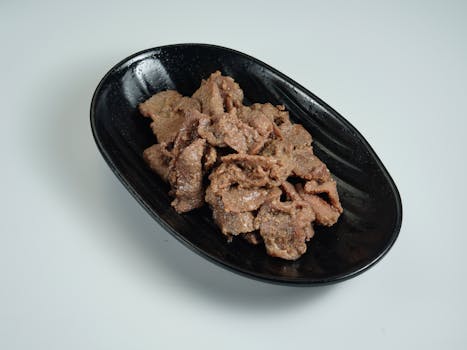
The diets react (see scores below)
Common Ingredients
- beef
- soy sauce
- sesame oil
- garlic
- Asian pear
- scallions
- sugar
- sesame seeds
Specific recipes may vary.
Incompatible with 7 of 11 diets
Diet Ratings
Beef Bulgogi in its traditional form contains multiple significant keto-incompatible ingredients. Sugar is added directly to the marinade, Asian pear contributes natural sugars and carbs (used both for sweetness and as a meat tenderizer), and soy sauce adds additional carbohydrates. Together, a standard serving can easily deliver 15-25g of net carbs from the marinade alone, making it very difficult to fit within a daily keto budget without completely reformulating the dish. While the beef base and sesame oil are keto-friendly, the dish as traditionally prepared is incompatible with ketosis.
Beef Bulgogi contains beef as its primary protein and central ingredient, making it fundamentally incompatible with a vegan diet. Beef is an animal product, and no preparation or cooking method changes this fact. The remaining ingredients — soy sauce, sesame oil, garlic, Asian pear, scallions, sugar, and sesame seeds — are all plant-based, but the dish cannot be considered vegan due to the beef itself.
Beef Bulgogi contains multiple non-paleo ingredients that disqualify it from approval. Soy sauce is a major violation — it is a fermented soy product (a legume) and contains wheat, making it both a legume derivative and a grain product. Sesame oil is a seed oil, which is excluded under paleo guidelines. Refined sugar is explicitly excluded as a processed, refined sweetener. While the beef, garlic, Asian pear, scallions, and sesame seeds are all paleo-approved, the three core marinade ingredients (soy sauce, sesame oil, sugar) make this dish incompatible with the paleo framework in its traditional form. A paleo adaptation could substitute coconut aminos for soy sauce, avocado or coconut oil for sesame oil, and a small amount of honey or fruit for sweetness — but the dish as described cannot be approved.
Beef Bulgogi is centered on red meat (beef), which the Mediterranean diet limits to only a few times per month. The dish also contains added sugar and soy sauce (a high-sodium processed condiment), both of which conflict with Mediterranean principles. While garlic and sesame seeds are positive elements, they do not offset the core issues: red meat as the primary protein and the presence of added sugar and refined condiments. This dish fundamentally contradicts the plant-forward, olive-oil-based ethos of the Mediterranean diet.
Beef Bulgogi is fundamentally incompatible with the carnivore diet despite its animal protein base. While the beef itself is carnivore-approved, the marinade is loaded with multiple plant-derived and processed ingredients that violate core carnivore principles: soy sauce (fermented soy — a legume), sesame oil (plant-derived seed oil), garlic (plant), Asian pear (fruit used as a tenderizer/sweetener), scallions (plant), sugar (processed carbohydrate), and sesame seeds (plant seeds). Nearly every component outside the beef itself is explicitly excluded. This dish is essentially defined by its marinade, making it impossible to meaningfully separate the approved from the non-approved elements as prepared.
Beef Bulgogi as listed contains two excluded ingredients: soy sauce (which contains soy, a legume, and often wheat — both excluded) and sugar (an added sugar, explicitly excluded). While coconut aminos can substitute for soy sauce and the Asian pear could provide natural sweetness in place of sugar, the dish as described with these standard ingredients is not Whole30 compliant.
Beef Bulgogi contains multiple high-FODMAP ingredients that make it unsuitable during the elimination phase. Garlic is one of the highest-FODMAP foods tested by Monash University, rich in fructans, and is a core ingredient in bulgogi marinades — there is no safe serving size. Asian pear (nashi pear) is high in excess fructose and polyols (sorbitol) at typical serving amounts used in marinades. Scallions (green onions) are problematic: the white bulb portion is high in fructans, and while the green tops are low-FODMAP, traditional bulgogi recipes use both parts or do not specify separation. Soy sauce contains wheat (fructans) unless specifically gluten-free/tamari is used. Beef, sesame oil, sugar, and sesame seeds are themselves low-FODMAP, but the combination of garlic, Asian pear, and likely scallion whites makes this dish high-FODMAP as traditionally prepared.
Beef bulgogi presents a mixed DASH profile. While it contains beneficial ingredients like garlic, scallions, Asian pear, and sesame seeds (which contribute potassium, fiber, and healthy fats), it has several DASH concerns. Soy sauce is extremely high in sodium — even a modest 2-tablespoon serving contains ~1,800–2,000mg sodium, which alone can push a meal close to or beyond the entire daily DASH sodium limit of 2,300mg (or completely exceed the 1,500mg low-sodium DASH threshold). Beef is a red meat that DASH explicitly recommends limiting. Sesame oil is acceptable in small amounts as a vegetable oil, but the added sugar in the marinade contributes to the 'limited sweets' category. The dish is not categorically off-limits — lean cuts (sirloin, tenderloin), small portions, and a low-sodium soy sauce substitute could make it more DASH-compatible — but as traditionally prepared, the sodium load and red meat content require significant modification for regular inclusion in a DASH eating plan.
NIH DASH guidelines explicitly limit red meat and high-sodium condiments like soy sauce, placing traditional bulgogi in a cautionary category. However, some DASH-oriented clinicians note that when prepared with lean beef in a 3oz portion, low-sodium soy sauce or coconut aminos, and consumed infrequently, bulgogi can fit within a broader DASH framework — the beneficial garlic, pear, and sesame components provide nutrients aligned with DASH goals.
Beef Bulgogi presents a mixed Zone Diet profile. The lean beef provides quality protein that fits Zone blocks well at approximately 25g per meal serving, and garlic and scallions are favorable low-glycemic aromatics. Sesame oil contributes some fat, though it is higher in omega-6 polyunsaturated fat rather than the preferred monounsaturated fats like olive oil — a concern for Sears' anti-inflammatory framework. The more significant issues are the added sugar in the marinade and the Asian pear, both of which raise the glycemic load and make carbohydrate block management harder. Traditional bulgogi marinades can contain meaningful amounts of sugar (sometimes 1-2 tablespoons), which Sears classifies as an unfavorable carbohydrate. However, because Zone is ratio-based, a carefully portioned serving of bulgogi — especially if the sugar is reduced and served alongside favorable vegetables rather than rice — can be incorporated into a Zone-balanced meal. The dish is not disqualifying, but requires deliberate portion control and ideally a recipe modification to reduce added sugar and swap sesame oil partially for olive oil.
Some Zone practitioners and Sears' later anti-inflammatory writings (The OmegaRx Zone, The Zone) place greater emphasis on polyphenol-rich foods and omega-3 balance, which would view the garlic, scallions, and sesame seeds more favorably as anti-inflammatory contributors. In this framing, a small amount of sugar in a marinade distributed across a serving could be considered negligible in the context of an otherwise lean protein dish, potentially nudging the rating toward a low approve if portion sizes are controlled and the dish is paired with non-starchy vegetables.
Beef Bulgogi presents a mixed anti-inflammatory profile. On the positive side, garlic is a well-established anti-inflammatory ingredient with allicin and organosulfur compounds that reduce inflammatory markers. Sesame oil contains sesamol and sesamin with antioxidant properties, and sesame seeds add lignans and some omega-3s. Scallions contribute quercetin and flavonoids. Asian pear provides fiber and polyphenols. Soy sauce in moderate amounts is relatively neutral. The primary concern is beef, which is a red meat — high in saturated fat and arachidonic acid, both associated with pro-inflammatory pathways and elevated CRP. Anti-inflammatory guidelines consistently recommend limiting red meat, though they don't prohibit it outright. The added sugar in the marinade is a minor inflammatory factor. The dish is notably not deep-fried and is typically made with thinly sliced lean cuts (like sirloin or ribeye eye), which moderates the saturated fat load compared to, say, a fatty beef stew. Overall, Bulgogi is a culturally traditional dish with meaningful anti-inflammatory aromatics but a red-meat foundation that places it firmly in the 'moderate/caution' zone — acceptable occasionally but not an anti-inflammatory staple.
Some anti-inflammatory practitioners, including those following Dr. Weil's guidelines, would view occasional lean beef as permissible within an otherwise anti-inflammatory diet, especially when prepared with anti-inflammatory spices like garlic — pushing this toward the higher end of caution. Conversely, stricter anti-inflammatory and plant-forward protocols would flag any regular red meat consumption as pro-inflammatory given its saturated fat and arachidonic acid content, potentially scoring this lower.
Beef bulgogi provides meaningful protein from beef and contains garlic, scallions, and Asian pear which add micronutrients and some fiber. However, the cut of beef used (typically ribeye or short rib) carries moderate-to-high saturated fat, which can worsen GLP-1 side effects like nausea and reflux. Sesame oil adds additional fat per serving. The sugar in the marinade contributes empty calories and a modest glycemic load, though the amount per serving is typically small. Soy sauce adds significant sodium. The dish scores reasonably on protein density and digestibility when portioned appropriately, but the fatty beef cuts and combined fat sources keep it in caution territory. Substituting a leaner cut like sirloin or flank steak would meaningfully improve the profile.
Some GLP-1-focused RDs accept bulgogi as a practical, culturally appropriate protein source and note that marinade sugars and sesame oil are minor concerns at typical serving sizes; others caution that the traditional fatty cuts and cumulative fat load from sesame oil can reliably trigger nausea and delayed gastric emptying symptoms, particularly in the early weeks of medication titration.
*See how scores were generated at our methodology page.
Nutritional profile
Six traits that cut across every diet.
Fiber & Plants
How much whole-plant food and fiber it delivers.
Healthy Fats
The quality of its fats (unsaturated, omega-3).
Whole / Unprocessed
How close it is to its natural, unprocessed form.
Gut Gentle
How easy it is on digestion (low FODMAP, few irritants).
Low Glycemic
How little it spikes your blood sugar.
Protein Density
How much protein it packs per calorie.
Controversy Index
Higher controversy = more disagreement between diets.
Diet-Specific Tips
 DASH — 4/10
View tips
- High sodium from soy sauce — a major DASH concern, potentially exceeding daily limits in one dish
- Red meat (beef) is limited on DASH; lean cuts like sirloin improve compatibility
- Added sugar in marinade conflicts with DASH guidance on limiting sweets
- Beneficial ingredients: garlic, scallions, Asian pear add potassium, fiber, and phytonutrients
- Sesame oil and sesame seeds are acceptable as unsaturated fat sources in small amounts
- Low-sodium soy sauce or coconut aminos would significantly improve DASH score
- Portion control of beef (3oz) is essential if included in a DASH plan
 Zone — 5/10
View tips
- Lean beef protein fits Zone protein block requirements well
- Added sugar in marinade raises glycemic load and complicates carb block management
- Asian pear contributes additional sugar/glycemic impact
- Sesame oil is omega-6 dominant, contrary to Zone's monounsaturated fat preference
- Garlic and scallions are favorable low-glycemic Zone ingredients
- Dish can be Zone-adapted by reducing sugar and pairing with non-starchy vegetables instead of rice
- Traditional preparation with full sugar content makes precise Zone ratio management difficult
 Anti-Inflammatory — 5/10
View tips
- Red meat (beef) is a primary ingredient — linked to saturated fat and arachidonic acid, both pro-inflammatory
- Garlic is a strong anti-inflammatory ingredient with well-documented effects on inflammatory markers
- Sesame oil contains sesamol and sesamin with antioxidant and anti-inflammatory properties
- Added sugar in the marinade contributes modestly to inflammatory load
- Asian pear and scallions add polyphenols and quercetin
- Lean cut preparation and thin slicing moderates saturated fat compared to other beef dishes
- No processed additives, trans fats, or high-fructose corn syrup present
 GLP-1 Friendly — 5/10
View tips
- Moderate-to-high saturated fat from traditional fatty beef cuts (ribeye/short rib)
- Meaningful protein source supporting the 100-120g daily target
- Added sugar in marinade adds modest glycemic load
- Sesame oil contributes additional fat per serving
- High sodium from soy sauce warrants attention for cardiovascular health
- Asian pear and scallions add minor micronutrient and fiber value
- Leaner cut substitution (sirloin, flank) would upgrade score to 6-7
- Portion sensitivity: small servings reduce fat and sodium burden significantly