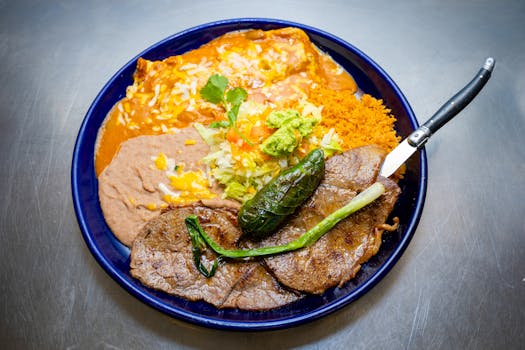
Photo: ADELAIDO BAUTISTA / Pexels
Mexican
Beef Enchiladas
The diets react (see scores below)
Common Ingredients
- corn tortillas
- shredded beef
- red enchilada sauce
- cheddar cheese
- onion
- cumin
- garlic
- cilantro
Specific recipes may vary.
Incompatible with 8 of 11 diets
Diet Ratings
Beef enchiladas are fundamentally incompatible with ketogenic dieting due to corn tortillas, which are a grain-based, high-carb ingredient. A standard serving of 2-3 enchiladas contains approximately 30-45g of net carbs from the tortillas alone, easily exceeding or maxing out the entire daily keto carb budget. The red enchilada sauce typically adds additional sugars and starchy thickeners, pushing net carbs even higher. While the shredded beef, cheddar cheese, and aromatics (cumin, garlic, onion, cilantro) are keto-friendly components, the structural foundation of the dish — corn tortillas — makes it impossible to consume in any standard form without breaking ketosis. There is no meaningful portion size that renders this dish compatible.
Beef enchiladas contain multiple animal products that are strictly excluded from a vegan diet. Shredded beef is a direct animal flesh product, and cheddar cheese is a dairy product derived from animal milk. Both are unambiguous violations of vegan principles. The remaining ingredients — corn tortillas, red enchilada sauce, onion, cumin, garlic, and cilantro — are plant-based, but the presence of beef and cheese makes this dish entirely incompatible with veganism.
Beef Enchiladas contain multiple paleo-excluded ingredients that make this dish fundamentally incompatible with the Paleolithic diet. Corn tortillas are a grain product — corn is explicitly excluded under paleo rules. Cheddar cheese is dairy, also excluded. Red enchilada sauce typically contains added salt, often sugar, and may contain other processed additives. While shredded beef, onion, cumin, garlic, and cilantro are all paleo-approved, the structural and defining components of this dish (tortillas, cheese, enchilada sauce) are all violations. This is not a dish that can be made paleo-compliant with minor swaps — the tortilla and cheese are central to the dish's identity.
Beef enchiladas conflict with Mediterranean diet principles on multiple fronts. Red meat (shredded beef) is meant to be eaten only a few times per month, making it a poor choice as a regular main dish. Cheddar cheese adds saturated fat beyond the moderate dairy allowance typical of the diet. The red enchilada sauce is often processed and may contain added sugars and sodium. While corn tortillas are a whole grain and ingredients like onion, garlic, cumin, and cilantro are plant-based positives, they do not offset the core problems: red meat as the primary protein and a processed sauce base. This dish is not Mediterranean in origin or composition, and its nutritional profile runs counter to the diet's emphasis on lean proteins, olive oil as the primary fat, and minimal red meat consumption.
Beef enchiladas are fundamentally incompatible with the carnivore diet. While the shredded beef and cheddar cheese have some carnivore merit, the dish is built around multiple plant-based and grain-based components. Corn tortillas are a grain product and a direct carbohydrate source explicitly excluded from carnivore. The red enchilada sauce is plant-based, typically containing chili peppers, tomatoes, and other vegetable ingredients. Onion, cumin, garlic, and cilantro are all plant-derived foods — vegetables, spices, and herbs — none of which are permitted on carnivore. This dish is a classic plant-forward Mexican preparation where the beef is a supporting ingredient rather than the foundation, making it entirely unsuitable.
Beef Enchiladas contain multiple Whole30-excluded ingredients. Corn tortillas are made from corn, which is a grain explicitly excluded from the Whole30 program. Cheddar cheese is dairy, also explicitly excluded. Additionally, corn tortillas fall under the 'no recreating baked goods/junk food' rule, as wraps and tortillas are specifically listed as prohibited even if made with compliant ingredients. The red enchilada sauce may also contain added sugar, corn starch, or other non-compliant additives. This dish is fundamentally incompatible with Whole30 in its standard form.
This dish contains multiple high-FODMAP ingredients that make it unsuitable during the elimination phase. Garlic and onion are the most problematic — both are among the highest-fructan foods tested by Monash University and are high-FODMAP even in very small quantities. Red enchilada sauce typically contains both garlic and onion as primary ingredients, compounding the issue. While corn tortillas, shredded beef, cheddar cheese (low-lactose aged cheese), cumin, and cilantro are all individually low-FODMAP, the combination of fresh onion, garlic, and onion/garlic-laden enchilada sauce makes this dish a clear avoid during elimination. There is no realistic way to consume a standard serving of this dish as described without a significant fructan load.
Beef enchiladas present multiple conflicts with DASH diet principles. Red enchilada sauce is typically high in sodium (often 300-500mg per 1/4 cup serving, with a full dish easily exceeding 1,000-1,500mg), directly violating DASH sodium limits. Shredded beef is a red meat, which DASH explicitly limits due to saturated fat content. Cheddar cheese is full-fat dairy, which DASH guidelines recommend replacing with low-fat alternatives. The combination of these three high-concern ingredients in a single dish makes it difficult to fit within DASH guidelines even with modest portions. The corn tortillas, onion, garlic, cumin, and cilantro are DASH-compatible, but they don't offset the core issues. As typically prepared and served in restaurants or from standard recipes, this dish would significantly stress both the sodium and saturated fat budgets of a DASH eating plan.
Beef enchiladas present several Zone Diet challenges but are not impossible to incorporate with careful portioning. The corn tortillas are a moderate-glycemic carb source — higher GI than Zone-favorable vegetables but lower than white flour tortillas, though the net carbs can stack up quickly (1 tortilla ≈ 12g net carbs, so 2-3 tortillas already exceed a 3-block carb allotment). The shredded beef protein is acceptable in Zone terms but may carry more saturated fat than lean Zone-preferred proteins like skinless chicken or fish, depending on the cut. Cheddar cheese adds saturated fat and some protein, disrupting the lean-protein and monounsaturated-fat ideals. Red enchilada sauce can contain added sugars and moderate sodium, adding unfavorable carb load. On the positive side, onion, garlic, and cilantro are Zone-favorable polyphenol-rich additions, and the dish can theoretically be portioned to approximate a Zone block ratio — but it requires significant restraint (limiting to 1 tortilla, controlling cheese, choosing lean beef) and isn't naturally Zone-balanced as typically served. The carb-to-protein ratio as served in a restaurant or standard recipe skews heavily carb-dominant, making it difficult without active modification.
Some Zone practitioners note that corn tortillas, while 'unfavorable' in Zone terminology, have a lower glycemic index than wheat flour tortillas and can be used in strict 1-tortilla portions as a 1-block carb. Dr. Sears' later anti-inflammatory writings also somewhat softened the stance on moderate saturated fat from whole food sources like beef, suggesting the dish isn't categorically off-limits if lean beef is used and portions are tightly controlled. A modified version with extra vegetables (peppers, spinach) replacing some tortilla volume could approach Zone-favorable ratios.
Beef enchiladas present a mixed anti-inflammatory profile. On the positive side, corn tortillas are a whole grain option with reasonable fiber content and are less refined than flour tortillas. Cumin, garlic, and cilantro all have documented anti-inflammatory properties — garlic contains allicin and organosulfur compounds that reduce inflammatory markers, while cumin offers antioxidants. Onion provides quercetin, a notable flavonoid. Red enchilada sauce, typically made from dried chili peppers, tomatoes, and spices, adds capsaicin and lycopene — both anti-inflammatory compounds. However, the dish is anchored by shredded beef, a red meat that the anti-inflammatory framework recommends limiting due to saturated fat content and arachidonic acid, which can promote inflammatory eicosanoids. Cheddar cheese is a full-fat dairy product, another category to limit — it adds saturated fat and contributes to an overall pro-inflammatory fat profile. The combination of red meat plus full-fat cheese as primary components tips this dish toward the cautionary range. The dish is not deeply problematic — it avoids processed additives, trans fats, and refined carbohydrates — but its core protein and fat sources are at odds with anti-inflammatory priorities. Occasional consumption is reasonable; regular inclusion would need modification (leaner protein, reduced cheese, or plant-based protein swaps).
The anti-inflammatory concern here is primarily about red meat frequency and saturated fat load. Dr. Weil's framework doesn't prohibit red meat outright — it recommends limiting consumption to a few times per week — so within that context, one serving of beef enchiladas is defensible. Some researchers also note that the spice profile (garlic, cumin, chili) may meaningfully offset the pro-inflammatory burden of the red meat, though this remains difficult to quantify in a mixed dish.
Beef enchiladas present a mixed nutritional profile for GLP-1 patients. On the positive side, shredded beef provides meaningful protein (typically 15-20g per 2-enchilada serving), corn tortillas offer modest fiber and are easier to digest than flour tortillas, and aromatics like cumin, garlic, and onion are GLP-1-neutral. However, several factors limit the rating: shredded beef (especially common cuts like chuck) carries moderate-to-high saturated fat, cheddar cheese adds additional saturated fat and calories with limited volume, and red enchilada sauce often contains added sodium and moderate fat from oil-based chili preparations. The combination of fat from beef, cheese, and sauce in a single dish risks worsening GLP-1 side effects including nausea, reflux, and bloating. The dish is also portion-sensitive — a restaurant serving of 3+ enchiladas would be excessive, while a single enchilada as part of a balanced plate is more appropriate. Nutrient density per calorie is moderate but not optimal given the fat load relative to protein yield.
Some GLP-1-focused dietitians consider a lightened version of this dish — using lean shredded chicken or extra-lean beef, reducing cheese, and controlling portion to one enchilada — a reasonable culturally relevant meal that meets protein targets. Others caution that the combined fat from beef and cheese in a single dish reliably worsens gastric emptying delay symptoms and recommend avoiding this format entirely in favor of deconstructed protein-forward Mexican-inspired meals.
*See how scores were generated at our methodology page.
Nutritional profile
Six traits that cut across every diet.
Fiber & Plants
How much whole-plant food and fiber it delivers.
Healthy Fats
The quality of its fats (unsaturated, omega-3).
Whole / Unprocessed
How close it is to its natural, unprocessed form.
Gut Gentle
How easy it is on digestion (low FODMAP, few irritants).
Low Glycemic
How little it spikes your blood sugar.
Protein Density
How much protein it packs per calorie.
Controversy Index
Higher controversy = more disagreement between diets.
Diet-Specific Tips
 Zone — 4/10
View tips
- Corn tortillas are moderate-GI 'unfavorable' Zone carbs — carb load escalates quickly with standard 2-3 enchilada servings
- Shredded beef may contain significant saturated fat depending on cut — lean cuts (flank, sirloin) are more Zone-compatible
- Cheddar cheese adds saturated fat and disrupts monounsaturated fat ideal
- Red enchilada sauce may contain added sugars, increasing glycemic load
- Dish as typically served is carb-dominant, misaligning with 40/30/30 Zone ratio
- Garlic, onion, cilantro are Zone-favorable polyphenol and anti-inflammatory contributors
- Modification to 1 tortilla with lean beef, reduced cheese, and added vegetables could bring closer to Zone balance
 Anti-Inflammatory — 4/10
View tips
- Red meat (shredded beef) is a 'limit' category due to saturated fat and arachidonic acid content
- Cheddar cheese is full-fat dairy — a 'limit' category under anti-inflammatory guidelines
- Corn tortillas are a better choice than flour tortillas — whole grain, lower glycemic
- Garlic, cumin, and cilantro contribute meaningful anti-inflammatory phytonutrients
- Red enchilada sauce provides capsaicin and lycopene from chili peppers — both anti-inflammatory
- No trans fats, refined sugar, or processed additives identified in the ingredient list
- Onion adds quercetin, a well-researched anti-inflammatory flavonoid
 GLP-1 Friendly — 4/10
View tips
- Shredded beef has moderate-to-high saturated fat depending on cut, increasing GI side effect risk
- Cheddar cheese adds saturated fat and calories with limited protein per calorie
- Corn tortillas preferred over flour — lower fat, modest fiber, easier digestion
- Combined fat load from beef + cheese + enchilada sauce may worsen nausea, reflux, or bloating
- Protein content is adequate per serving (est. 15-20g for 2 enchiladas) but fat accompanies it
- Portion-sensitive: one enchilada as part of a balanced plate is more GLP-1 appropriate than a standard restaurant serving
- Red enchilada sauce is generally mild spice-wise and not a significant GLP-1 concern
- Dish can be meaningfully improved by substituting lean chicken breast or turkey for beef and reducing cheese quantity