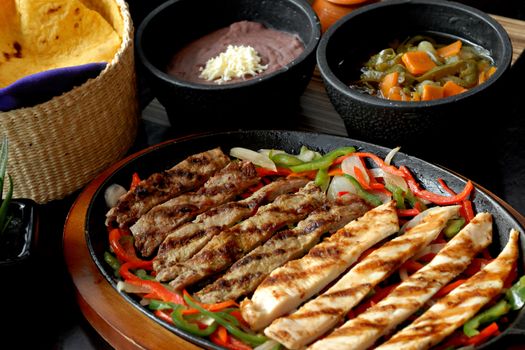
Photo: DΛVΞ GΛRCIΛ / Pexels
Mexican
Beef Fajitas
The diets react (see scores below)
Common Ingredients
- skirt steak
- bell peppers
- onion
- lime
- cumin
- garlic
- flour tortillas
- cilantro
Specific recipes may vary.
Incompatible with 7 of 11 diets
Diet Ratings
Beef fajitas as traditionally prepared are incompatible with keto primarily due to the flour tortillas, which are a grain-based, high-carb ingredient. A single large flour tortilla contains roughly 25-30g of net carbs, immediately threatening or exceeding the daily keto limit on its own. The skirt steak is excellent for keto — high in protein and fat — and the fajita vegetables (bell peppers, onion) have moderate carbs but are manageable in small portions. However, the dish as listed includes flour tortillas as a core component, making the standard preparation a keto avoid. The filling alone (steak + peppers + onion) could qualify as a caution or even approve, but the dish cannot be evaluated without its defining wrapper.
Beef fajitas contain skirt steak as the primary protein, which is beef — a direct animal product. This is unambiguously non-vegan. The remaining ingredients (bell peppers, onion, lime, cumin, garlic, flour tortillas, cilantro) are all plant-based, but the inclusion of beef alone disqualifies this dish from any vegan diet. There is no meaningful debate within the vegan community about the status of beef.
Beef fajitas contain flour tortillas, which are made from wheat — a grain that is strictly excluded from the paleo diet. The remaining ingredients (skirt steak, bell peppers, onion, lime, cumin, garlic, cilantro) are all paleo-approved, making this a dish that is very close to paleo-compliant but disqualified by a single core ingredient. The flour tortilla is not a gray-area item; wheat is universally rejected across all paleo frameworks. Without the tortilla, the filling itself would score a 9.
Beef fajitas present multiple conflicts with Mediterranean diet principles. The primary protein is skirt steak, a red meat, which is limited to only a few times per month in the Mediterranean diet. The dish is wrapped in flour tortillas, a refined grain product that contradicts the diet's emphasis on whole grains. While several ingredients — bell peppers, onion, lime, garlic, cumin, and cilantro — are genuinely Mediterranean-friendly, they cannot offset the two core violations: frequent red meat consumption and refined grain wrapping. This dish as traditionally prepared is not compatible with Mediterranean dietary patterns.
Beef fajitas are fundamentally incompatible with the carnivore diet. While the skirt steak itself is an excellent carnivore food, the dish is defined by its plant-based components: flour tortillas (grain-based), bell peppers, onion, lime, cumin, garlic, and cilantro. These ingredients — vegetables, grains, citrus, and plant-derived spices — are all explicitly excluded from the carnivore diet. The dish cannot be meaningfully adapted without removing the core elements that make it a fajita. The only salvageable component is the skirt steak itself, which eaten alone would score a 9.
Beef fajitas as listed contain flour tortillas, which are made from wheat — a grain explicitly excluded on the Whole30 program. Beyond being a disallowed grain, tortillas also fall squarely on Whole30's list of prohibited 'recreated junk food' items (wraps/tortillas are explicitly called out). The remaining ingredients — skirt steak, bell peppers, onion, lime, cumin, garlic, and cilantro — are all fully Whole30-compliant. The dish could be made compliant by simply omitting the tortillas and serving the fajita filling over a bed of greens or cauliflower rice, or wrapped in lettuce leaves.
Beef fajitas as described contain multiple high-FODMAP ingredients that cannot be easily mitigated at standard serving sizes. Garlic is high-FODMAP at any culinary amount due to fructans and is a direct avoid. Onion is one of the highest-FODMAP foods tested by Monash, also due to fructans, and is a definitive avoid even in small quantities. Flour tortillas are made from wheat, which is high in fructans — a standard 1-2 tortilla serving easily exceeds the safe threshold. Together, these three ingredients (garlic, onion, flour tortillas) make this dish unsuitable during the elimination phase. Skirt steak, bell peppers, lime, cumin, and cilantro are all low-FODMAP and unproblematic, but they cannot offset the high-FODMAP components.
Beef fajitas present a mixed DASH profile. The dish contains several DASH-friendly components — bell peppers and onions are excellent vegetables rich in potassium and fiber, and spices like cumin and garlic are encouraged. Lime and cilantro add flavor without sodium. However, skirt steak is a relatively fatty cut of red meat, higher in saturated fat than the lean poultry or fish DASH emphasizes; DASH limits red meat to occasional, small portions. Flour tortillas are refined-grain carbohydrates rather than the whole grains DASH recommends, and restaurant or pre-seasoned versions often carry significant added sodium. As a home-prepared dish using modest portions of skirt steak, whole-wheat tortillas as a swap, and no added salt, this dish can be made more DASH-compatible. As commonly ordered or prepared, it lands in the caution range due to red meat content, refined grain tortillas, and potential sodium load from seasoning blends or marinades.
NIH DASH guidelines explicitly limit red meat and favor lean proteins, which would push this toward a lower score. However, updated clinical interpretations note that lean cuts of beef in small portions (2–3 oz) can fit within DASH's weekly allowance for red meat, and some DASH-aligned dietitians focus more on overall dietary pattern than excluding individual dishes, particularly when the dish is vegetable-rich and home-prepared with sodium control.
Beef fajitas have a mixed Zone profile. The filling components — skirt steak, bell peppers, onion, lime, garlic, and cilantro — are actually quite Zone-friendly. Skirt steak is a moderately lean cut of beef providing solid protein blocks, though it carries more saturated fat than ideal Zone proteins like skinless chicken or fish. Bell peppers and onions are favorable low-glycemic Zone carbohydrates loaded with polyphenols, and lime juice adds flavor with negligible glycemic impact. The primary Zone concern is the flour tortillas, which are high-glycemic refined carbohydrates that Sears classifies as 'unfavorable' carbs — they spike insulin and are harder to balance into a proper 40/30/30 block structure. A typical serving of 2 flour tortillas adds roughly 40-50g of high-GI carbs, crowding out the preferred vegetable-based carb blocks. With careful portion control — using a single small tortilla or corn tortilla, loading up on the pepper-onion filling, and trimming visible fat from the steak — this dish can be made Zone-compatible. Without modification, the tortilla-to-vegetable ratio is inverted from what Zone recommends.
Some Zone practitioners and later Sears materials suggest that the anti-inflammatory benefits of the polyphenol-rich filling (peppers, onions, garlic, cumin, lime) partially offset concerns about the tortilla, especially if portion size keeps total carb blocks in check. Skirt steak, while not the leanest protein, contains some beneficial fatty acid profiles and iron, and Sears' later work is somewhat less rigid about saturated fat when the overall anti-inflammatory index of the meal is favorable. A modified version with corn tortillas or lettuce wraps would earn a solid 7-8.
Beef fajitas present a mixed anti-inflammatory profile. On the positive side, bell peppers and onions are rich in antioxidants and polyphenols (vitamin C, quercetin, carotenoids). Garlic and cumin are anti-inflammatory spices with well-documented benefits. Lime juice adds vitamin C and flavonoids, and cilantro contributes additional polyphenols. These vegetable and spice components are genuinely beneficial. The problematic element is skirt steak, a cut of red meat that is high in saturated fat and arachidonic acid, both of which are associated with increased inflammatory markers (CRP, IL-6) when consumed regularly. Anti-inflammatory guidelines consistently place red meat in the 'limit' category. Flour tortillas add refined carbohydrates, which can promote inflammatory responses through blood sugar spikes and lack of fiber — whole grain or corn tortillas would be a meaningfully better choice. The overall dish is a moderate-impact meal: the vegetable and spice components pull the score upward, while the red meat and refined flour tortillas pull it down. Occasional consumption is acceptable within an anti-inflammatory dietary pattern, but this is not a dish to eat regularly. Swapping skirt steak for chicken or shrimp, and using corn or whole wheat tortillas, would substantially improve the anti-inflammatory profile.
Some anti-inflammatory practitioners, including those aligned with Dr. Weil's broader Mediterranean-inspired approach, would note that grass-fed beef in modest portions is less concerning due to a better omega-3 to omega-6 ratio and higher CLA content — making occasional red meat less problematic than the strict 'limit' category implies. Conversely, stricter anti-inflammatory and AIP-adjacent protocols would score this lower due to the combination of red meat, refined flour, and the cumulative saturated fat load.
Beef fajitas present a mixed nutritional profile for GLP-1 patients. Skirt steak provides meaningful protein (roughly 25-30g per 4oz serving), which is a clear positive, but it is a moderately fatty cut — higher in saturated fat than ideal, which can worsen nausea, bloating, and reflux in GLP-1 patients. Bell peppers and onion contribute fiber, antioxidants, and hydration-supporting water content, which are genuine positives. Cumin, garlic, and lime are well-tolerated spices and flavor enhancers that pose no concern. The flour tortillas are the weakest element: refined grains, low protein density, moderate glycemic impact, and they add calorie volume without meaningful nutritional return. The dish is not fried and is not extremely high in fat, which keeps it out of avoid territory. Served in a modified, portion-conscious way — smaller tortilla or skipped entirely, lean skirt steak trimmed of visible fat, generous vegetable filling — this meal can be acceptable. As served in a typical restaurant portion with two to three large flour tortillas, the calorie density and saturated fat load become more problematic for GLP-1 patients.
Some GLP-1-focused dietitians accept skirt steak in moderate portions as a practical high-protein option, particularly for patients who struggle to meet protein targets, viewing the saturated fat tradeoff as manageable at meal-sized quantities. Others more strictly limit all fatty red meat cuts due to the compounding effect of slowed gastric emptying, arguing that the higher fat content meaningfully prolongs gastric residence time and worsens GI side effects more than leaner proteins would.
*See how scores were generated at our methodology page.
Nutritional profile
Six traits that cut across every diet.
Fiber & Plants
How much whole-plant food and fiber it delivers.
Healthy Fats
The quality of its fats (unsaturated, omega-3).
Whole / Unprocessed
How close it is to its natural, unprocessed form.
Gut Gentle
How easy it is on digestion (low FODMAP, few irritants).
Low Glycemic
How little it spikes your blood sugar.
Protein Density
How much protein it packs per calorie.
Controversy Index
Higher controversy = more disagreement between diets.
Diet-Specific Tips
 DASH — 5/10
View tips
- Skirt steak is a higher-fat red meat cut — DASH limits red meat and favors lean poultry/fish
- Bell peppers and onions are DASH-approved vegetables rich in potassium and fiber
- Flour tortillas are refined grains — whole-wheat tortillas would better align with DASH
- No inherently high-sodium ingredients listed, but fajita seasoning blends can add significant sodium
- Spices (cumin, garlic, lime) support flavor without sodium — a DASH-positive preparation strategy
- Portion size of beef is critical — 2–3 oz servings keep saturated fat within DASH limits
- Home-prepared version scores higher than restaurant versions due to sodium control
 Zone — 6/10
View tips
- Flour tortillas are high-glycemic refined carbs — classified 'unfavorable' in Zone methodology
- Skirt steak provides adequate protein blocks but has higher saturated fat than ideal Zone proteins like chicken or fish
- Bell peppers and onions are excellent Zone carbohydrate sources — low glycemic, high polyphenol
- Lime, cumin, garlic, and cilantro are Zone-neutral flavor enhancers with anti-inflammatory properties
- Portion control is essential: 1 small tortilla maximum to keep carb blocks balanced
- Substituting corn tortilla or lettuce wrap would significantly improve Zone compatibility
- No added oils mentioned, which avoids omega-6 seed oil concerns
 Anti-Inflammatory — 5/10
View tips
- Red meat (skirt steak) is pro-inflammatory — high in saturated fat and arachidonic acid
- Bell peppers and onions provide antioxidants, vitamin C, and quercetin
- Garlic and cumin are well-established anti-inflammatory spices
- Flour tortillas contribute refined carbohydrates with minimal fiber
- Lime and cilantro add modest polyphenol and vitamin C benefits
- Occasional consumption acceptable; not suitable for regular anti-inflammatory eating
- Corn or whole wheat tortillas and lean protein substitutions would improve the profile
 GLP-1 Friendly — 5/10
View tips
- Skirt steak provides solid protein (~25-30g per 4oz) but is a moderately fatty cut with higher saturated fat than ideal for GLP-1 patients
- Flour tortillas are refined carbohydrates with low protein density and minimal fiber — weakest component of the dish
- Bell peppers and onion add fiber, micronutrients, and water content — genuine positives
- Not fried and spice profile is mild and well-tolerated — cumin, garlic, lime pose no GI concern
- Portion sensitivity is high: restaurant-sized servings with multiple tortillas push this toward avoid territory
- Modification potential is strong: substituting corn tortillas, reducing tortilla quantity, trimming steak fat, or skipping tortillas improves the score meaningfully
- Saturated fat from skirt steak may worsen nausea or reflux in patients with active GLP-1 GI side effects