Photo: Merkhat Amangeldinov / Pexels
Chinese
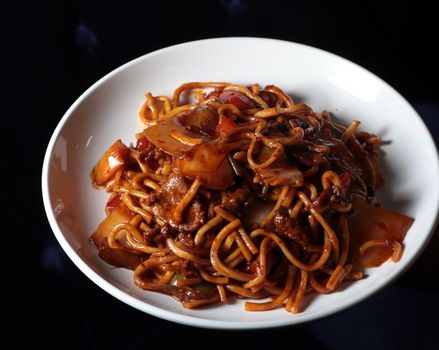
Beef Lo Mein
The diets react (see scores below)
Common Ingredients
- lo mein noodles
- flank steak
- bok choy
- carrots
- bean sprouts
- soy sauce
- oyster sauce
- sesame oil
Specific recipes may vary.
Incompatible with 8 of 11 diets
Diet Ratings
Beef Lo Mein is fundamentally incompatible with a ketogenic diet. The primary ingredient — lo mein noodles — is a wheat-based grain product that delivers an extremely high carbohydrate load, likely 50-70g of net carbs per serving on its own, which instantly exceeds the entire daily keto carb allowance. Oyster sauce also contains added sugars and starch, compounding the carb count. While the flank steak, bok choy, bean sprouts, sesame oil, and soy sauce are individually keto-friendly or borderline acceptable, the noodle base makes this dish irredeemable for ketosis without a complete structural overhaul (e.g., substituting shirataki or zucchini noodles).
Beef Lo Mein contains multiple animal-derived ingredients that make it entirely incompatible with a vegan diet. Flank steak is directly animal flesh (beef), which is a clear disqualifier. Oyster sauce is derived from oysters, an animal product. These two ingredients alone place this dish firmly in the 'avoid' category with no ambiguity whatsoever within vegan standards.
Beef Lo Mein contains multiple ingredients that are firmly excluded from the paleo diet. Lo mein noodles are wheat-based, making them a grain product — one of the clearest 'avoid' categories in paleo. Soy sauce contains both wheat and soy (a legume). Oyster sauce is a processed condiment typically containing added sugar, salt, and starch. Sesame oil is a seed oil, explicitly excluded under paleo guidelines. Bean sprouts, while technically from a legume (mung bean), are debated but generally avoided. The only paleo-compliant ingredients in this dish are flank steak, bok choy, and carrots. The dish is fundamentally structured around non-paleo components and cannot be made compliant without replacing the majority of its ingredients.
Beef Lo Mein conflicts with Mediterranean diet principles on multiple fronts. Red beef (flank steak) is limited to a few times per month, refined lo mein noodles lack the fiber and nutrients of whole grains, and the dish relies on soy and oyster sauces — high-sodium processed condiments foreign to Mediterranean traditions. Sesame oil, while a plant-based fat, displaces extra virgin olive oil as the primary fat. The vegetables (bok choy, carrots, bean sprouts) are the only genuinely compatible elements, but they are insufficient to redeem a dish otherwise built around discouraged components.
Beef Lo Mein is fundamentally incompatible with the carnivore diet. While flank steak is carnivore-approved, it is surrounded by numerous prohibited ingredients. Lo mein noodles are wheat-based (grain), a core excluded food group. Bok choy, carrots, and bean sprouts are plant vegetables entirely forbidden on carnivore. Soy sauce is a fermented grain-and-legume product, oyster sauce contains sugar and plant-based thickeners, and sesame oil is a plant-derived seed oil — all strictly excluded. The only salvageable component is the flank steak itself. This dish is essentially a plant and grain dish with beef as a minor supporting ingredient, making it one of the clearest possible avoid verdicts.
Beef Lo Mein contains multiple Whole30-excluded ingredients. Lo mein noodles are made from wheat flour, a grain that is strictly prohibited on Whole30. Soy sauce contains both soy (a legume) and wheat (a grain), both of which are excluded — coconut aminos would be the compliant substitute. Oyster sauce typically contains added sugar and often soy, making it non-compliant. This dish is also structurally a noodle dish, which falls under the 'no pasta or noodles' rule in the program's 'no recreating junk food/comfort food' guideline. The vegetables (bok choy, carrots, bean sprouts) and flank steak are individually compliant, but the dish as a whole cannot be made Whole30-compatible without fundamental reconstruction.
Beef Lo Mein contains multiple high-FODMAP ingredients that make it unsuitable during the elimination phase. Lo mein noodles are made from wheat flour, which is high in fructans — a major FODMAP trigger. Oyster sauce typically contains wheat and added sugars that can contribute fructans and excess fructose. Regular soy sauce also contains wheat (tamari would be the low-FODMAP alternative). The remaining ingredients — flank steak, bok choy, carrots, bean sprouts, and sesame oil — are individually low-FODMAP and would not be problematic. However, the combination of wheat-based noodles and oyster sauce makes this dish clearly high-FODMAP at any standard serving size. There is no realistic portion reduction that would make a standard restaurant or home-cooked Beef Lo Mein safe during elimination.
Beef Lo Mein as commonly prepared is problematic for the DASH diet on multiple fronts. The primary issue is extremely high sodium content: soy sauce alone contains approximately 900-1,000mg of sodium per tablespoon, and oyster sauce adds another 400-500mg per tablespoon. A typical restaurant or home-prepared serving can easily contain 1,500-2,500mg of sodium — exceeding the entire daily allowance for standard DASH (2,300mg) or coming close to it in a single dish. Additionally, flank steak is a red meat, which DASH advises limiting. Lo mein noodles are refined wheat noodles, not whole grain, providing little fiber. Sesame oil adds fat, though it is an unsaturated vegetable oil and less of a concern. On the positive side, the dish includes DASH-friendly vegetables (bok choy, carrots, bean sprouts), and flank steak is a relatively lean cut of beef. However, the sodium burden from the sauce components is disqualifying under DASH principles, which explicitly call for limiting high-sodium condiments and processed sauces. This dish would need substantial modification — low-sodium soy sauce, reduced sauce quantities, and ideally substituting chicken or fish for beef — to approach DASH compatibility.
Beef Lo Mein presents a challenging Zone balancing act. The lo mein noodles are the primary problem — refined wheat noodles are a high-glycemic, unfavorable carbohydrate in Zone terminology, driving up the glycemic load significantly. A typical restaurant serving is heavily noodle-dominant, making the carb ratio far too high and the wrong kind of carbs. The flank steak is a relatively lean cut and is a workable Zone protein source. The vegetables — bok choy, carrots, and bean sprouts — are favorable Zone carbs that provide polyphenols and fiber, but they're minority ingredients here. Sesame oil is omega-6 heavy (unfavorable compared to monounsaturated olive oil or avocado), and oyster sauce and soy sauce add sugar and sodium. To make this Zone-compatible, a cook would need to dramatically reduce noodle quantity (one small block's worth), increase the vegetable proportion substantially, ensure flank steak is the dominant ingredient by weight, and swap sesame oil for a more monounsaturated fat. As typically prepared in a restaurant or standard recipe, the carb-to-protein-to-fat ratio is badly skewed — too many carbs (and the wrong type), moderate protein, and unfavorable fat profile. It can be adapted at home but is very difficult to Zone-balance in a standard preparation.
Beef Lo Mein presents a mixed anti-inflammatory profile. On the positive side, the dish includes several anti-inflammatory vegetables: bok choy (a cruciferous vegetable rich in antioxidants and vitamin C), carrots (beta-carotene), and bean sprouts (some polyphenols, fiber). Sesame oil contains sesamin and sesamol, lignans with modest anti-inflammatory properties, and is acceptable in small amounts. Flank steak is a relatively lean cut of beef, which mitigates but does not eliminate concerns — red meat is categorized as 'limit' in anti-inflammatory guidelines due to saturated fat and potential promotion of arachidonic acid pathways. Lo mein noodles are refined carbohydrates, which raise insulin levels and can contribute to pro-inflammatory signaling, though the effect depends on portion size. Soy sauce and oyster sauce are high in sodium and contain some additives; both are processed condiments, though used in small quantities as flavoring. The dish is a reasonable moderate choice for most people, particularly if beef portions are modest and vegetables are generous, but the combination of refined noodles and red meat prevents an 'approve' rating.
More orthodox anti-inflammatory practitioners (e.g., those following AIP or strict Weil pyramid guidance) would rate this lower, emphasizing that refined wheat noodles spike blood glucose and that any red meat regularly promotes inflammation via arachidonic acid and saturated fat. However, others note that flank steak's relatively low fat content and the dish's substantial vegetable component make it acceptable in a balanced anti-inflammatory diet.
Beef lo mein offers a mixed nutritional profile for GLP-1 patients. Flank steak is a relatively lean cut that contributes meaningful protein, and the vegetables (bok choy, carrots, bean sprouts) add fiber, micronutrients, and water content. However, lo mein noodles are refined carbohydrates with low fiber and moderate glycemic impact, which reduces nutrient density per calorie — a key concern when appetite is suppressed. Sesame oil and oyster sauce add fat and sodium, and restaurant-style preparations often use substantially more oil than home versions, pushing the fat content higher and potentially worsening nausea or reflux. The dish is not fried, which works in its favor for digestibility, but the overall macronutrient balance (carb-heavy, moderate protein, moderate fat) is not optimally configured for GLP-1 patients. A home-prepared version with reduced oil, extra vegetables, and a larger protein-to-noodle ratio would score higher. Standard restaurant portions are also large, which can overwhelm the reduced gastric capacity typical on GLP-1 medications.
Some GLP-1-focused dietitians accept dishes like lo mein as a practical, culturally relevant meal choice when portioned carefully, noting that flank steak provides adequate lean protein and the vegetables offer fiber — particularly if the patient is early in treatment and tolerating a broader range of foods. Others flag refined noodles and high sodium from soy and oyster sauce as more significant concerns, especially for patients with concurrent hypertension or blood sugar management goals, and recommend substituting whole wheat or shirataki noodles to improve the rating.
*See how scores were generated at our methodology page.
Nutritional profile
Six traits that cut across every diet.
Fiber & Plants
How much whole-plant food and fiber it delivers.
Healthy Fats
The quality of its fats (unsaturated, omega-3).
Whole / Unprocessed
How close it is to its natural, unprocessed form.
Gut Gentle
How easy it is on digestion (low FODMAP, few irritants).
Low Glycemic
How little it spikes your blood sugar.
Protein Density
How much protein it packs per calorie.
Controversy Index
Higher controversy = more disagreement between diets.
Diet-Specific Tips
 Zone — 4/10
View tips
- Lo mein noodles are refined, high-glycemic carbohydrates classified as 'unfavorable' in Zone terminology
- Carbohydrate load in a standard serving is far too high relative to protein and fat for a 40/30/30 ratio
- Flank steak is a relatively lean Zone-compatible protein source
- Bok choy, bean sprouts, and carrots are favorable low-glycemic Zone vegetables but are minority ingredients
- Sesame oil is omega-6 dominant, contrary to Zone's preference for monounsaturated fats
- Oyster sauce adds sugar, further elevating the glycemic load
- Adaptable at home by drastically reducing noodles and increasing vegetables, but not Zone-friendly as standardly prepared
 Anti-Inflammatory — 5/10
View tips
- Flank steak is lean red meat — acceptable in moderation but a 'limit' food in anti-inflammatory guidelines
- Lo mein noodles are refined carbohydrates with limited fiber, contributing to glycemic load
- Bok choy, carrots, and bean sprouts provide antioxidants, vitamins, and some polyphenols
- Sesame oil offers modest anti-inflammatory lignans (sesamin, sesamol)
- Soy sauce and oyster sauce add sodium and processed condiment concerns, though in typical culinary quantities
- No omega-3 sources, whole grains, or strongly anti-inflammatory spices (e.g., turmeric, ginger) present
 GLP-1 Friendly — 5/10
View tips
- Refined lo mein noodles are low in fiber and add mostly empty carbohydrate calories
- Flank steak is a relatively lean protein source, supporting the protein priority
- Sesame oil and restaurant-level oil usage increase fat content, risking nausea and reflux
- Vegetables (bok choy, carrots, bean sprouts) contribute fiber and hydration
- High sodium from soy sauce and oyster sauce is a secondary concern
- Large standard portion sizes conflict with small-portion requirements on GLP-1 medications
- Not fried — softer texture supports digestibility compared to crispy noodle dishes
- Home preparation with less oil and more protein improves the profile significantly