Photo: SAMY PHOTOGRAPHY / Pexels
American
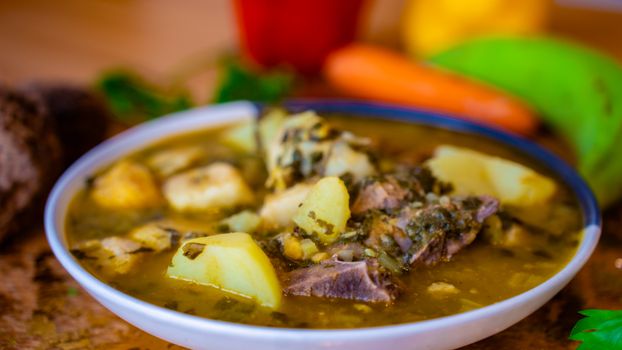
American Beef Stew
The diets react (see scores below)
Common Ingredients
- beef chuck
- potatoes
- carrots
- celery
- onion
- beef broth
- tomato paste
- thyme
Specific recipes may vary.
Incompatible with 5 of 11 diets
Diet Ratings
American Beef Stew is incompatible with a ketogenic diet primarily due to the inclusion of potatoes, a high-starch vegetable that alone can contain 15-30g of net carbs per serving. Carrots and onions add additional net carbs (carrots ~6g, onion ~4g per serving), and tomato paste contributes sugars and carbs as well. A standard serving of this stew could easily deliver 30-50g of net carbs, potentially exceeding the entire daily keto carb allowance in a single meal. While the beef chuck and beef broth are fully keto-compatible and provide excellent fat and protein, the starchy and higher-carb vegetables fundamentally disqualify this dish in its standard form.
American Beef Stew contains multiple animal-derived ingredients that are categorically excluded from a vegan diet. Beef chuck is mammalian muscle meat, and beef broth is an animal-derived liquid made from boiling animal bones and/or meat. Both are direct animal products with no ambiguity in vegan classification. While the vegetables (potatoes, carrots, celery, onion), tomato paste, and thyme are fully plant-based, the presence of beef and beef broth makes this dish entirely incompatible with veganism. There is no meaningful debate within the vegan community about whether beef is acceptable.
American Beef Stew is largely paleo-compatible, with grass-fed beef chuck, carrots, celery, onion, thyme, and tomato paste all being straightforward paleo approvals. The primary concern is white potatoes, which occupy a well-documented gray zone in the paleo community. Loren Cordain's original framework excluded them due to glycemic load and glycoalkaloid content, while modern paleo authorities like Mark Sisson and the Whole30 protocol have moved to permit them. Beef broth is generally fine if homemade or additive-free, but most commercial broths contain added salt or other additives, introducing a processing concern. Overall, this dish sits in caution territory — it's close to paleo-compliant but hinges on the white potato debate and the sourcing of broth.
Strict Cordain-school paleo excludes white potatoes entirely due to their glycoalkaloid content and high glycemic index, which would push this dish firmly into avoid territory for that camp. Conversely, Mark Sisson (Primal Blueprint) and Whole30 both permit white potatoes, which would elevate this dish closer to an approval for practitioners following those frameworks.
American Beef Stew is centered on beef chuck, a red meat high in saturated fat, which is explicitly limited in the Mediterranean diet to only a few times per month. Red meat as the primary protein of a main dish directly contradicts core Mediterranean principles. While the dish does include beneficial vegetables (carrots, celery, onion, potatoes) and tomato paste, and uses herbs like thyme, these positives are overwhelmed by the dominant role of red meat. There is no olive oil, no legumes, no fish, and no whole grains. The dish is also culturally removed from Mediterranean traditions and reflects a high red-meat dietary pattern inconsistent with the diet's foundation.
American Beef Stew contains beef chuck and beef broth, which are carnivore-approved ingredients, but the dish is dominated by plant-based foods: potatoes, carrots, celery, onion, tomato paste, and thyme. These vegetables, root starches, and plant-derived seasonings are strictly excluded on the carnivore diet. The plant ingredients are not minor additives — they are core structural components of the dish, making this fundamentally a plant-heavy stew with beef rather than a carnivore meal. No modification short of removing every non-animal ingredient would make this compliant.
American Beef Stew as described contains entirely Whole30-compliant ingredients. Beef chuck is an approved protein, potatoes and carrots and celery and onion are all compliant vegetables, beef broth is compliant as long as it contains no added sugar, sulfites, or non-compliant additives (store-bought broth should be label-checked), tomato paste is compliant with no added sugar, and thyme is a compliant herb. This is a straightforward whole-food dish with no grains, legumes, dairy, or other excluded ingredients. The only minor caveat is that store-bought beef broth may contain additives, but the dish as described is fully compliant.
This dish contains two high-FODMAP ingredients that make it unsuitable during the elimination phase. Onion is one of the highest-fructan foods tested by Monash University and is high-FODMAP at any serving size. Standard beef broth or stock frequently contains onion and/or garlic as base ingredients, compounding the fructan load. These two ingredients alone disqualify the dish. The remaining ingredients — beef chuck, potatoes (in moderate portions), carrots, celery (up to ~75g), tomato paste (up to ~2 tbsp), and thyme — are all low-FODMAP at typical serving sizes, meaning the dish is easily adaptable. However, as written with onion and commercial beef broth included, it must be rated avoid.
American beef stew contains a mix of DASH-friendly and DASH-cautionary ingredients. The vegetables (carrots, celery, onion, potatoes) and herbs (thyme) are excellent DASH foods, contributing potassium, fiber, and micronutrients. However, beef chuck is a fatty cut of red meat, which DASH limits due to saturated fat content — DASH generally recommends lean cuts and limits red meat to no more than a few servings per week. The beef broth is the primary sodium concern: standard commercial beef broth can contribute 800–1,000mg sodium per cup, and a stew typically uses multiple cups, making the dish potentially high in sodium even before accounting for any added salt. Tomato paste is DASH-friendly in small amounts. If made with low-sodium broth, a leaner cut (like beef round), and portion-controlled, this dish moves toward DASH compliance. As commonly prepared with standard broth and chuck, it sits in the caution zone due to sodium and saturated fat.
NIH DASH guidelines explicitly limit red meat and emphasize low-sodium cooking, placing a standard beef chuck stew with commercial broth outside ideal DASH parameters. However, updated clinical interpretations note that a homemade stew with low-sodium broth, trimmed lean beef, and abundant vegetables can be consistent with DASH goals — some DASH-oriented dietitians consider this dish acceptable when sodium is controlled and red meat portions are modest (3–4 oz per serving).
American Beef Stew presents multiple Zone Diet challenges that require significant modification to fit the protocol. The primary protein — beef chuck — is a fatty cut with substantial saturated fat, making it 'unfavorable' in Zone terminology compared to lean proteins like skinless chicken or fish. A typical serving will exceed the ideal fat profile for a Zone meal. More critically, potatoes are explicitly categorized as a high-glycemic, 'unfavorable' carbohydrate in Dr. Sears' Zone framework, similar to white rice and white bread. They spike blood sugar and disrupt the hormonal balance the Zone targets. The saving graces are the other vegetables: carrots, celery, and onion are low-glycemic, favorable Zone carbs, and tomato paste provides polyphenols. The beef broth and thyme add minimal macro impact. As traditionally prepared, this dish is carb-heavy (potato-dominant) with fatty protein and insufficient favorable vegetable volume to balance the glycemic load. However, because Zone is ratio-based rather than exclusionary, a modified version — using leaner beef (sirloin), removing or drastically reducing potatoes, and increasing celery, onion, and adding extra low-GI vegetables — could be brought into Zone compliance. As presented in its classic form, caution is warranted.
American beef stew presents a mixed anti-inflammatory profile. On the positive side, the dish contains several anti-inflammatory ingredients: carrots and celery provide antioxidants and carotenoids; onion contains quercetin, a polyphenol with anti-inflammatory properties; tomato paste is rich in lycopene (a potent antioxidant, and concentrated in cooked tomatoes); and thyme is a recognized anti-inflammatory herb. Potatoes, while starchy, are a whole food with reasonable nutrient density. The broth base is relatively benign. However, the primary concern is beef chuck, a fatty cut of red meat that is high in saturated fat and arachidonic acid — both associated with pro-inflammatory pathways when consumed regularly. Anti-inflammatory frameworks (including Dr. Weil's pyramid) place red meat in the 'limit' category, recommending it be eaten sparingly if at all. The dish has no omega-3 sources, no leafy greens, no olive oil, and no significant polyphenol-dense ingredients beyond onion and tomato paste. Overall, this is a nutritionally mixed dish: the vegetable components are beneficial, but the red meat base and saturated fat content make it unsuitable for regular consumption on an anti-inflammatory diet. Occasional consumption is reasonable; it is not a dish to build a diet around.
American beef stew made with beef chuck sits in caution territory for GLP-1 patients. Beef chuck is a moderately fatty cut (typically 15-20g fat per 3oz serving) with meaningful protein (~22g per 3oz), but the saturated fat content is a concern given GLP-1 guidance to favor lean proteins. The vegetables (carrots, celery, onion, potatoes) and broth contribute fiber, hydration, and micronutrients, improving the dish's overall nutrient density. Tomato paste and thyme add antioxidants with minimal caloric cost. The stew format is actually GLP-1-friendly in several ways: it is easy to digest, portion-controllable, hydrating due to broth content, and the slow-cooked texture is gentle on a slowed GI tract. The primary concern is the fatty cut of beef — if trimmed well and defatted after cooking (skimming fat from broth), the dish becomes more acceptable. Potatoes contribute starchy carbohydrates with modest fiber, which is acceptable in a small portion but not ideal. Overall, this is a borderline dish that can be made more GLP-1-friendly with leaner beef substitution (e.g., beef round or sirloin) and portion control.
Some GLP-1-focused RDs would rate this dish more favorably, noting that the broth-based, slow-cooked format is among the most GI-tolerable meal types for patients on these medications, and that beef chuck — when trimmed and defatted — delivers adequate protein in a small serving. Others would steer patients away from any fatty red meat entirely due to the saturated fat load and the risk of worsening nausea or reflux, particularly in the early weeks of GLP-1 therapy when GI side effects are most pronounced.
*See how scores were generated at our methodology page.
Nutritional profile
Six traits that cut across every diet.
Fiber & Plants
How much whole-plant food and fiber it delivers.
Healthy Fats
The quality of its fats (unsaturated, omega-3).
Whole / Unprocessed
How close it is to its natural, unprocessed form.
Gut Gentle
How easy it is on digestion (low FODMAP, few irritants).
Low Glycemic
How little it spikes your blood sugar.
Protein Density
How much protein it packs per calorie.
Controversy Index
Higher controversy = more disagreement between diets.
Diet-Specific Tips
 Paleo — 5/10
View tips
- Beef chuck is a paleo-approved whole protein
- White potatoes are debated — excluded by Cordain, accepted by Sisson and Whole30
- Carrots, celery, onion, and thyme are fully paleo-compliant
- Tomato paste is generally accepted if free of additives
- Commercial beef broth often contains added salt or preservatives — homemade is preferred
- No grains, legumes, dairy, or seed oils present
 Whole30 — 9/10
View tips
- Beef chuck is a fully compliant Whole30 protein
- All vegetables (potatoes, carrots, celery, onion) are Whole30-approved
- Thyme is a compliant herb
- Tomato paste is compliant — verify no added sugar on store-bought versions
- Beef broth should be label-checked to ensure no added sugar or non-compliant additives
- No excluded ingredients (grains, legumes, dairy, added sugar) present
- Dish is a whole-food preparation, not a recreation of a junk food or baked good
 DASH — 5/10
View tips
- Beef chuck is a fatty red meat cut high in saturated fat, which DASH limits
- Commercial beef broth is typically high in sodium (800–1,000mg+ per cup), a major DASH concern
- Vegetables (carrots, celery, onion, potatoes) are core DASH foods contributing potassium and fiber
- Tomato paste adds lycopene and potassium with minimal sodium in typical amounts
- Substituting low-sodium broth significantly improves DASH compatibility
- Using a leaner beef cut (round, sirloin) would reduce saturated fat and better align with DASH
- Portion size of red meat is critical — DASH recommends ≤6 oz lean meat per day total
- Overall dish pattern (vegetable-forward stew) aligns with DASH structure, but execution matters
 Zone — 4/10
View tips
- Beef chuck is a high-fat, high-saturated-fat cut — 'unfavorable' Zone protein; lean beef would be preferred
- Potatoes are explicitly categorized as a high-glycemic 'unfavorable' carbohydrate in Dr. Sears' Zone framework
- Carrots, celery, onion, and tomato paste are favorable low-glycemic Zone carbohydrates
- The dish as traditionally made is likely carb-heavy and fat-heavy relative to protein, violating the 40/30/30 ratio
- Zone-friendly modification possible: substitute lean sirloin, eliminate or minimize potatoes, increase non-starchy vegetables
 Anti-Inflammatory — 5/10
View tips
- Beef chuck is a fatty red meat high in saturated fat and arachidonic acid — placed in the 'limit' category by anti-inflammatory frameworks
- No omega-3 fatty acids present
- Carrots, celery, and onion provide antioxidants and quercetin
- Tomato paste is a concentrated source of lycopene, an anti-inflammatory carotenoid
- Thyme is a recognized anti-inflammatory herb
- Potatoes are a neutral whole-food starch
- No olive oil, leafy greens, or other emphasized anti-inflammatory fats present
- Acceptable occasionally but not suitable for regular consumption on an anti-inflammatory diet
 GLP-1 Friendly — 5/10
View tips
- Beef chuck is a moderately high-fat cut with significant saturated fat — less ideal than lean proteins like chicken breast or fish
- Broth-based stew format is easy to digest and hydrating, which are positive attributes for GLP-1 patients
- Vegetables (carrots, celery, onion) contribute fiber and micronutrients
- Potatoes add starchy carbohydrates — portion-sensitive, acceptable in small amounts
- Dish is portion-controllable and works well in small servings
- Saturated fat content can be reduced by trimming beef and skimming fat from broth after cooking
- Swapping chuck for a leaner cut (round, sirloin) would elevate this to a stronger approve rating