Photo: khezez | خزاز / Pexels
American
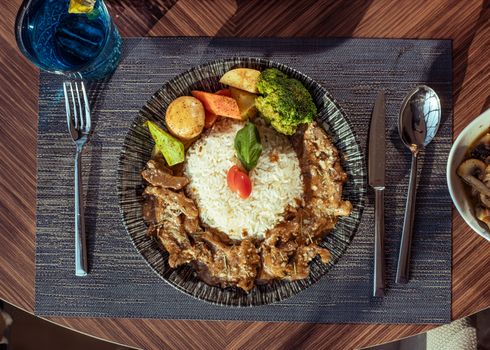
Beef Stroganoff
The diets react (see scores below)

That’s a heavy plate — want to see the leaner version?
Common Ingredients
- beef sirloin
- mushrooms
- onion
- beef broth
- sour creamGreek yogurt (plain, nonfat)+0.7
Nonfat Greek yogurt swaps a high-saturated-fat dairy (~20g fat per 100g, mostly saturated) for a high-protein, near-zero-fat dairy with similar tang. The texture in cooked applications is close; the saturated-fat penalty cited by dash, anti-inflammatory, and zone is substantially reduced.
- Dijon mustard
- egg noodlesWhole wheat pasta+0.6
Whole wheat pasta replaces refined egg noodles with whole-grain pasta: fiber jumps from ~2g to ~6g per 100g, the refined-grain penalty falls, and the egg-enriched dough's saturated fat contribution is removed. Mediterranean and dash both call out whole-grain over refined.
- butterExtra virgin olive oil+0.7
Extra virgin olive oil replaces butter for cooking: removes the saturated-fat / cholesterol load butter contributes (~50g saturated per 100g) and adds mediterranean-aligned monounsaturated fats and polyphenols. Mediterranean and anti-inflammatory both significantly reward this swap.
Specific recipes may vary.
Incompatible with 7 of 11 diets
Diet Ratings
Traditional Beef Stroganoff as listed contains egg noodles, which are a grain-based pasta and the primary disqualifier for keto. A standard serving of egg noodles (about 1 cup cooked) contributes roughly 40g of net carbs, easily exceeding the daily keto limit on its own. The remaining ingredients — beef sirloin, mushrooms, onion, beef broth, sour cream, Dijon mustard, and butter — are largely keto-compatible (with onion and mushrooms being moderate in carbs but manageable in small portions). However, the dish as traditionally prepared and served cannot be considered keto-friendly due to the egg noodles. A modified version substituting egg noodles with zucchini noodles or shirataki noodles would shift this to an 'approve' rating.
Beef Stroganoff contains multiple animal-derived ingredients, making it entirely incompatible with a vegan diet. Beef sirloin is a direct animal flesh product. Sour cream is a dairy product. Butter is a dairy-derived fat. Egg noodles contain eggs. Beef broth is derived from animal bones and meat. Every major protein and fat source in this dish is animal-based, and there is no ambiguity whatsoever — this dish fails vegan criteria on at least five separate counts.
Beef Stroganoff contains multiple non-paleo ingredients that make it incompatible with the diet. Egg noodles are a grain-based pasta and are strictly excluded. Sour cream is a dairy product, also excluded. Butter is dairy-derived and discouraged. While the core ingredients — beef sirloin, mushrooms, onion, and beef broth — are paleo-friendly, the dish as traditionally prepared relies structurally on grains and dairy, making it a clear avoid.
Beef Stroganoff is fundamentally at odds with Mediterranean diet principles on multiple fronts. The primary protein is beef sirloin (red meat), which is restricted to a few times per month in the Mediterranean diet. The dish is built around sour cream and butter as primary fat sources rather than olive oil, introducing significant saturated fat. Egg noodles are refined carbohydrates with no whole grain equivalent here. The overall flavor profile and structure center on ingredients that are either limited (red meat) or discouraged (butter, sour cream, refined noodles) in Mediterranean eating patterns. The only Mediterranean-friendly components are the mushrooms, onion, and Dijon mustard, which are minor supporting ingredients rather than the foundation of the dish.
Beef Stroganoff is heavily incompatible with the carnivore diet. While the beef sirloin and butter are carnivore-approved, the dish contains multiple disqualifying plant-based ingredients: mushrooms, onion, and egg noodles (a grain-based carbohydrate) are all explicitly excluded. Dijon mustard is a plant-derived condiment with added vinegar and spices. The sour cream is a dairy ingredient that is debated but secondary to the larger issue. The egg noodles alone — a processed grain product — make this a clear 'avoid' with high confidence. This dish is fundamentally a plant-and-grain-forward recipe that happens to include beef, not a carnivore meal with minor modifications.
Beef Stroganoff as described contains multiple excluded ingredients. Egg noodles are a grain-based pasta, which is explicitly excluded from Whole30 (pasta/noodles are specifically called out in Rule 4 and grains are excluded under Rule 1). Sour cream is dairy and explicitly excluded. Butter is regular butter (not ghee or clarified butter), which is also excluded dairy. With three clear violations — egg noodles (grains), sour cream (dairy), and butter (dairy) — this dish is firmly off-limits on Whole30.
Beef Stroganoff as traditionally prepared contains multiple high-FODMAP ingredients that make it unsuitable during the elimination phase. Onion is one of the highest fructan-containing foods and is high-FODMAP at virtually any culinary serving size. Mushrooms (such as common button or cremini varieties) are high in polyols (mannitol) and are high-FODMAP above very small portions (typically >75g for button mushrooms, but still a concern in a dish where they are a featured ingredient). Egg noodles are made from wheat flour, which is high in fructans and high-FODMAP at standard pasta serving sizes. Sour cream contains lactose and is high-FODMAP above about 2 tablespoons. Beef broth may contain onion or garlic as ingredients. The beef sirloin itself and butter are low-FODMAP, and Dijon mustard is generally low-FODMAP in small amounts, but the problematic ingredients — onion, mushrooms, egg noodles, and sour cream — are structurally integral to this dish. Making a FODMAP-safe version would require substituting nearly every sauce and starch component (e.g., replacing onion with green onion tops, omitting or limiting mushrooms, using gluten-free noodles, and swapping sour cream for a lactose-free version), making the standard recipe a clear avoid.
Beef Stroganoff sits at the boundary of DASH compatibility. Beef sirloin is a leaner cut of red meat, which DASH does not categorically prohibit but advises limiting (no more than 6 oz/day of lean meat overall, with preference for poultry and fish). The larger concerns are the sour cream (full-fat dairy, high in saturated fat — directly contrary to DASH's low-fat dairy emphasis) and butter (saturated fat source DASH recommends minimizing). Commercial beef broth is typically high in sodium, which conflicts with DASH's sodium limits. Egg noodles are refined carbohydrates rather than the whole grains DASH emphasizes. On the positive side, mushrooms and onions are DASH-friendly vegetables, and sirloin is among the leaner beef options. A DASH-modified version — using low-sodium broth, substituting low-fat Greek yogurt for sour cream, reducing or replacing butter with olive oil, and using whole-grain noodles — would score considerably higher (6-7). As commonly prepared, however, this dish accumulates multiple DASH caution flags simultaneously.
NIH DASH guidelines specify low-fat dairy and sodium limits that this dish clearly strains with sour cream and standard beef broth. However, some updated DASH-oriented clinicians note that emerging evidence on full-fat dairy and cardiovascular risk is less alarming than previously thought, and that a single serving of a mixed dish with lean beef and vegetables can fit within weekly DASH meal planning when overall daily sodium and saturated fat budgets are managed.
Beef Stroganoff presents several Zone Diet challenges. The egg noodles are a high-glycemic, 'unfavorable' carbohydrate that spike insulin and are difficult to portion into Zone blocks without dominating the meal. Butter and sour cream add significant saturated fat, conflicting with the Zone's preference for monounsaturated fats like olive oil. Beef sirloin is a moderately acceptable Zone protein — it's leaner than fattier cuts but still carries more saturated fat than ideal proteins like chicken breast or fish. On the positive side, mushrooms and onions are favorable low-glycemic Zone vegetables, and beef broth and Dijon mustard are largely neutral. To bring this dish into Zone compliance, one would need to substantially reduce or eliminate the egg noodles (possibly substituting zucchini noodles or serving over a small portion of low-GI vegetables), replace butter with olive oil, swap sour cream for plain low-fat Greek yogurt, and carefully control the beef portion to approximately 3 oz. As traditionally prepared, the macro ratio skews too high in carbohydrates from noodles and too high in saturated fat, making it difficult to achieve the 40/30/30 target without significant modification.
Beef Stroganoff presents a mixed anti-inflammatory profile. On the problematic side: beef sirloin is red meat, which anti-inflammatory guidelines consistently recommend limiting due to saturated fat and arachidonic acid content that can promote inflammatory pathways (prostaglandins, leukotrienes). Sour cream and butter are full-fat dairy and saturated fat sources, both in the 'limit' category. Egg noodles are refined carbohydrates with a high glycemic index, contributing to post-meal insulin spikes that drive inflammatory signaling. These three issues compound each other in a single dish. On the positive side: mushrooms (particularly common button or cremini) provide some anti-inflammatory polyphenols and beta-glucans, though they are not the more potent Asian varieties emphasized in anti-inflammatory protocols. Onion contributes quercetin, a meaningful anti-inflammatory flavonoid. Dijon mustard adds negligible but non-negative value. Beef broth is largely neutral. The dish is not in 'avoid' territory because it lacks trans fats, processed additives, high-fructose corn syrup, or seed oils, and the beef is a whole-food lean cut rather than processed meat. However, the combination of red meat + full-fat dairy (sour cream + butter) + refined carbohydrates (egg noodles) makes this a dish that works against anti-inflammatory goals when eaten regularly. Occasional consumption is acceptable, but it should not be a dietary staple.
Beef Stroganoff presents a mixed nutritional profile for GLP-1 patients. On the positive side, beef sirloin is a reasonable protein source and mushrooms add some fiber and micronutrients. However, the dish is significantly compromised by sour cream and butter, which together create a high saturated-fat sauce that worsens GLP-1 side effects like nausea, bloating, and reflux. Egg noodles are refined carbohydrates with minimal fiber, contributing empty calories at a time when every bite must count nutritionally. The combination of fat-heavy sauce and starchy noodles slows digestion further on top of GLP-1's already slowed gastric emptying, increasing GI discomfort risk. The dish is not inherently avoid-worthy because sirloin provides meaningful protein and the dish is not fried, but in its traditional form it fails on fat content, fiber, and nutrient density per calorie. A modified version — Greek yogurt instead of sour cream, reduced butter, whole wheat or legume-based noodles — would score considerably higher.
Some GLP-1-focused dietitians view beef stroganoff as a modifiable comfort food worth rehabilitating rather than avoiding outright, noting that sirloin provides 20–25g of protein per serving and the dish is easy to eat in small portions without causing the acute GI distress associated with fried foods. Others flag the saturated fat load from sour cream and butter as a meaningful trigger for nausea and reflux in patients early in their GLP-1 titration, recommending avoidance until GI tolerance is established.
*See how scores were generated at our methodology page.
Nutritional profile
Six traits that cut across every diet.
Fiber & Plants
How much whole-plant food and fiber it delivers.
Healthy Fats
The quality of its fats (unsaturated, omega-3).
Whole / Unprocessed
How close it is to its natural, unprocessed form.
Gut Gentle
How easy it is on digestion (low FODMAP, few irritants).
Low Glycemic
How little it spikes your blood sugar.
Protein Density
How much protein it packs per calorie.
Controversy Index
Higher controversy = more disagreement between diets.
Diet-Specific Tips
 DASH — 4/10
View tips
- Full-fat sour cream is high in saturated fat, conflicting with DASH low-fat dairy requirements
- Beef broth is typically high in sodium — low-sodium versions significantly improve DASH compatibility
- Butter adds saturated fat; substituting olive oil would better align with DASH
- Beef sirloin is a lean red meat cut but DASH still recommends limiting red meat frequency
- Egg noodles are refined grains; whole-grain pasta or noodles preferred under DASH
- Mushrooms and onion are DASH-positive vegetables contributing potassium and fiber
- Dish can be modified to caution-high or approve range with low-sodium broth, low-fat Greek yogurt, and whole-grain noodles
 Zone — 4/10
View tips
- Egg noodles are a high-glycemic 'unfavorable' carbohydrate in Zone terminology, spiking insulin and disrupting the 40/30/30 ratio
- Butter and sour cream are high in saturated fat, conflicting with Zone's monounsaturated fat preference
- Beef sirloin is an acceptable but not ideal Zone protein due to moderate saturated fat content
- Mushrooms and onions are favorable Zone vegetables that support anti-inflammatory polyphenol intake
- The dish can be Zone-adapted by substituting zucchini noodles, using olive oil instead of butter, and replacing sour cream with low-fat Greek yogurt
- Traditional preparation creates an unfavorable macro ratio with excessive carbohydrates and saturated fat relative to lean protein
 Anti-Inflammatory — 4/10
View tips
- Red meat (beef sirloin) — limit per anti-inflammatory guidelines due to saturated fat and arachidonic acid
- Full-fat dairy double hit: sour cream and butter both contribute saturated fat
- Egg noodles are refined carbohydrates with high glycemic index, promoting post-meal inflammation
- Mushrooms provide beta-glucans and polyphenols — modest anti-inflammatory benefit
- Onion contributes quercetin, a well-studied anti-inflammatory flavonoid
- No trans fats, no processed additives, no seed oils — avoids the worst pro-inflammatory ingredients
- Cumulative effect of multiple 'limit' ingredients in one dish makes regular consumption inadvisable
 GLP-1 Friendly — 4/10
View tips
- High saturated fat from sour cream and butter worsens GLP-1 GI side effects
- Egg noodles are refined carbs with low fiber — poor nutrient density per calorie
- Beef sirloin provides meaningful protein (~20–25g per serving) — a genuine positive
- No significant fiber sources in the dish — falls short of GLP-1 fiber priorities
- Heavy, creamy sauce increases gastric discomfort risk given slowed emptying
- Dish is portion-sensitive — small servings reduce but do not eliminate concerns
- Easily modified to score higher: swap sour cream for Greek yogurt, use legume-based pasta