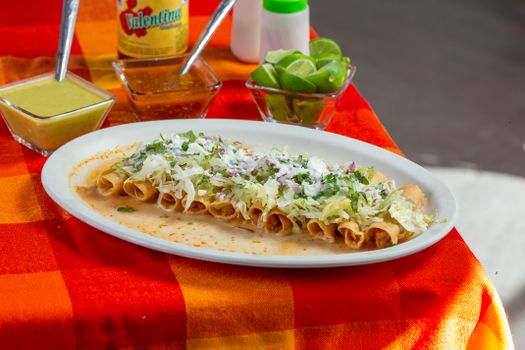
Photo: Jonathan Reynaga / Pexels
Mexican
Beef Taquitos
The diets react (see scores below)
Common Ingredients
- corn tortillas
- shredded beef
- onion
- cumin
- garlic
- vegetable oil
- sour cream
- guacamole
Specific recipes may vary.
Incompatible with 10 of 11 diets
Diet Ratings
Beef Taquitos are fundamentally incompatible with a ketogenic diet due to the corn tortillas, which are the defining structural element of the dish. Corn tortillas contain approximately 12-14g of net carbs each, and taquitos typically use 2-3 tortillas per serving, easily contributing 25-40g of net carbs from the tortillas alone — potentially consuming an entire day's carb budget in one snack. Corn is a grain and a starchy food that is explicitly excluded from ketogenic eating. The filling ingredients (shredded beef, onion, cumin, garlic) are largely keto-friendly, and the accompaniments (sour cream, guacamole) are actually ideal keto condiments, but they cannot redeem the dish when the primary vessel is a high-carb grain wrapper. This is not a portion-control situation — the tortillas cannot be reduced without eliminating the dish itself.
Beef Taquitos contain multiple animal-derived ingredients that are explicitly excluded from a vegan diet. Shredded beef is a direct animal product (mammal flesh), and sour cream is a dairy product made from cow's milk. These two ingredients alone make this dish entirely incompatible with vegan principles. There is no ambiguity here — this is a meat-and-dairy dish with no vegan substitutions in its standard form.
Beef Taquitos contain multiple non-paleo ingredients that disqualify the dish outright. Corn tortillas are a grain-based food — corn is explicitly excluded from the paleo diet. Vegetable oil (a seed oil) is also a clear violation. Sour cream is a dairy product, another paleo exclusion. While the shredded beef, onion, cumin, garlic, and guacamole are all paleo-compliant, the foundational elements of this dish — the tortilla wrapper, the frying oil, and the dipping accompaniment — are incompatible with paleo principles. This is not a dish that can be made paleo-compliant with minor substitutions; the taquito format itself depends on a grain-based shell.
Beef taquitos conflict with Mediterranean diet principles on multiple fronts. Red/processed beef is the primary protein, which the Mediterranean diet limits to only a few times per month. The tortillas are deep-fried in vegetable oil rather than the preferred extra virgin olive oil, adding refined processing and potentially unhealthy fats. Sour cream is a high-saturated-fat dairy product not aligned with the diet's moderate dairy recommendations. While the dish contains some beneficial elements — corn tortillas are a whole grain, onion and garlic are encouraged aromatics, and guacamole provides healthy monounsaturated fats — these positives are outweighed by the combination of red meat, frying method, and overall preparation style that is far removed from Mediterranean dietary patterns.
Beef taquitos are fundamentally incompatible with the carnivore diet. The dish is built around corn tortillas, a grain-based plant food that is strictly excluded. Beyond the tortilla, the recipe includes multiple plant-derived ingredients: onion, cumin (a plant spice), garlic, and vegetable oil (a processed plant oil). The accompaniments — guacamole (avocado-based) and sour cream — add further plant content, and even the sour cream is a marginal dairy item. The only carnivore-compatible element is the shredded beef itself. This dish is essentially a Mexican snack defined by its plant-based wrapper and seasonings, making it a clear avoid with no meaningful path to compliance without completely reconstructing the dish.
Beef Taquitos contain multiple Whole30-excluded ingredients. First, corn tortillas are made from corn, which is a grain explicitly excluded from the Whole30 program. Second, sour cream is a dairy product, also explicitly excluded. Additionally, taquitos are a fried, rolled tortilla dish that falls squarely into the 'no recreating junk food/comfort food' rule — they are essentially the tortilla/wrap category that Whole30 explicitly prohibits. Even if one were to attempt a compliant version, the corn tortilla alone makes this dish incompatible. The guacamole and shredded beef with spices would be compliant on their own, but the overall dish cannot be made Whole30-compatible in its traditional form.
Beef taquitos contain multiple high-FODMAP ingredients that make this dish unsuitable during the elimination phase. Onion is one of the highest-fructan foods and is problematic even in small amounts. Garlic is similarly a major fructan source and should be completely avoided during elimination. Sour cream contains lactose and is high-FODMAP at standard serving sizes. Guacamole, while avocado-based, is often made with garlic and onion, adding further FODMAP load. The corn tortillas and shredded beef are themselves low-FODMAP, and cumin is fine at culinary amounts, but the combination of onion, garlic, sour cream, and likely garlic/onion-containing guacamole creates a dish with several unavoidable high-FODMAP triggers. No reasonable modification of portion size would make this dish safe during elimination phase as typically prepared.
Beef taquitos are problematic for the DASH diet on multiple fronts. The primary protein is shredded beef, which is a red meat high in saturated fat — a category DASH explicitly limits. The dish is fried in vegetable oil, adding significant total fat and calories. Sour cream is a full-fat dairy product, directly contradicting DASH's emphasis on fat-free or low-fat dairy. While corn tortillas and aromatics like onion, garlic, and cumin are acceptable, the overall nutritional profile — high saturated fat from beef and sour cream, deep-frying oil, and typically elevated sodium from seasoned meat — places this dish well outside DASH guidelines. Guacamole contains heart-healthy monounsaturated fats from avocado and is DASH-friendly in isolation, but it does not offset the other concerns. As a fried red meat snack with full-fat dairy, this is not compatible with the DASH eating plan as written by NIH/NHLBI.
Beef taquitos present several Zone Diet challenges but are not categorically excluded. The corn tortillas are a moderate-to-high glycemic carbohydrate source — Zone classifies corn as an 'unfavorable' carb — and taquitos typically use 2-3 small tortillas per serving, pushing the carb block count high while providing limited micronutrient value. The shredded beef provides lean protein potential, though the cut matters significantly; if fatty, it adds saturated fat beyond Zone targets. Vegetable oil used for frying is likely a seed oil (corn, soybean) high in omega-6 fatty acids, which directly conflicts with Sears' anti-inflammatory emphasis. Sour cream adds saturated fat, further skewing the fat profile away from monounsaturated sources. On the positive side, guacamole provides favorable monounsaturated fat from avocado, onion and garlic are anti-inflammatory polyphenol sources, and cumin is Zone-friendly. The dish could be adapted toward Zone ratios by reducing tortilla quantity, using lean beef, eliminating or minimizing the frying oil and sour cream, and leaning into the guacamole. As typically prepared and served as a snack, however, the carb-to-protein ratio is imbalanced (carb-heavy), fat quality is poor, and portions are difficult to control precisely.
Some Zone practitioners note that corn tortillas, while 'unfavorable,' have a lower glycemic load per small tortilla than flour-based alternatives, and that 1-2 taquitos with guacamole could be fit into a single Zone snack block with careful portioning. Dr. Sears' later anti-inflammatory framework (The Anti-Inflammation Zone) focuses heavily on omega-6 avoidance, which would make the frying oil a more serious concern than the tortillas themselves.
Beef taquitos present a largely pro-inflammatory nutritional profile. The primary protein is shredded beef (red meat), which the anti-inflammatory framework recommends limiting due to saturated fat and arachidonic acid content. The dish is deep- or pan-fried in vegetable oil — likely a high-omega-6 refined oil (corn, soybean, or sunflower) — which is problematic both for its omega-6 load and for oxidation of fats during high-heat frying. Sour cream adds full-fat dairy, another source of saturated fat that the framework recommends limiting. The corn tortillas are a refined carbohydrate with modest fiber and minimal anti-inflammatory benefit. On the positive side, the dish includes some genuinely anti-inflammatory ingredients: garlic and cumin have documented anti-inflammatory properties, and guacamole (avocado) is a clear positive, providing anti-inflammatory monounsaturated fats and polyphenols. However, the guacamole is a condiment and cannot offset the overall pro-inflammatory structure of fried red meat in refined tortillas with full-fat dairy. The combination of red meat + frying in omega-6 oil + full-fat dairy makes this a dish to avoid on an anti-inflammatory diet. It could be upgraded significantly by using grilled chicken or fish instead of beef, baking instead of frying, using olive oil if pan-cooking, and swapping sour cream for a plant-based alternative.
The exact type of vegetable oil used matters — some anti-inflammatory practitioners distinguish refined high-omega-6 oils (corn, sunflower) from more neutral options like high-oleic sunflower or avocado oil, and the AHA considers many vegetable oils heart-healthy. Additionally, if the beef is grass-fed, its omega-3 to omega-6 ratio is meaningfully better than conventional beef, which some anti-inflammatory researchers (including Dr. Weil) note as a meaningful distinction.
Beef taquitos are a poor fit for GLP-1 patients across nearly every key criterion. The dish is deep-fried in vegetable oil, making it high in total fat and difficult to digest — a significant risk for nausea, bloating, and reflux given GLP-1-slowed gastric emptying. Shredded beef provides some protein but is a fatty cut relative to lean alternatives, and the total protein per serving is modest given the small portion size and the carbohydrate-heavy corn tortilla base. The accompaniments — sour cream (high saturated fat, low protein density) and guacamole (healthy fat but calorie-dense) — add substantial fat without meaningfully improving protein or fiber content. Corn tortillas offer minimal fiber. The overall calorie composition skews heavily toward fat and refined carbohydrate with low nutrient density per calorie, which is counterproductive when total intake is already reduced. Fried preparation is the primary disqualifier — this food category is explicitly linked to worsened GLP-1 GI side effects regardless of other ingredients.
*See how scores were generated at our methodology page.
Nutritional profile
Six traits that cut across every diet.
Fiber & Plants
How much whole-plant food and fiber it delivers.
Healthy Fats
The quality of its fats (unsaturated, omega-3).
Whole / Unprocessed
How close it is to its natural, unprocessed form.
Gut Gentle
How easy it is on digestion (low FODMAP, few irritants).
Low Glycemic
How little it spikes your blood sugar.
Protein Density
How much protein it packs per calorie.
Controversy Index
Higher controversy = more disagreement between diets.
Diet-Specific Tips
 Zone — 4/10
View tips
- Corn tortillas are 'unfavorable' Zone carbs with moderate-to-high glycemic index
- Multiple tortillas per serving creates carb-heavy macro imbalance
- Vegetable frying oil is likely high in omega-6 fatty acids, conflicting with Zone anti-inflammatory principles
- Sour cream adds saturated fat, moving fat profile away from ideal monounsaturated sources
- Shredded beef protein quality depends on cut; lean beef is acceptable in Zone
- Guacamole is a favorable monounsaturated fat source (avocado)
- Onion, garlic, and cumin provide polyphenols consistent with Zone anti-inflammatory goals
- As a snack, portion control is difficult and the dish skews carb-heavy relative to Zone ratios