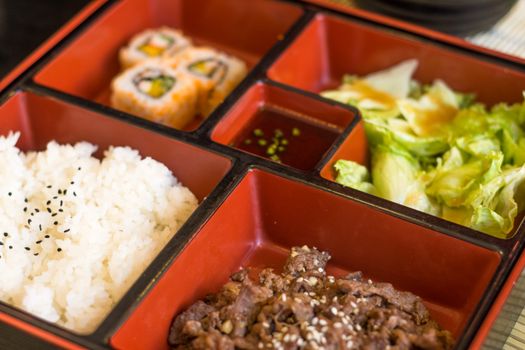
Photo: Marvin Sacdalan / Pexels
Japanese
Beef Teriyaki
The diets react (see scores below)
Common Ingredients
- sirloin steak
- soy sauce
- mirin
- sake
- sugar
- ginger
- garlic
- sesame seeds
Specific recipes may vary.
Incompatible with 7 of 11 diets
Diet Ratings
Traditional beef teriyaki sauce is built around mirin, sake, and added sugar — all significant sources of carbohydrates. Mirin alone contains roughly 14g of carbs per tablespoon, sake adds additional sugars, and the recipe explicitly includes sugar as an ingredient. Even modest amounts of this sauce can push a single serving well over the daily keto carb limit of 20-50g net carbs. While the sirloin steak itself is perfectly keto-friendly, the teriyaki sauce as traditionally prepared makes this dish incompatible with ketosis without substantial reformulation.
Beef Teriyaki is entirely incompatible with a vegan diet. The primary protein is sirloin steak, which is an animal muscle tissue and a direct animal product. There is no ambiguity here — beef is unequivocally excluded under every definition of veganism. The remaining ingredients (soy sauce, mirin, sake, sugar, ginger, garlic, sesame seeds) are all plant-derived and would otherwise be vegan-compatible, but the presence of beef makes this dish a clear avoid.
Beef Teriyaki is built around a sauce that contains multiple non-paleo ingredients. Soy sauce is derived from fermented soybeans and wheat — both legumes and grains are strictly excluded from the paleo diet. Mirin and sake are rice-based alcoholic condiments, making them grain-derived and off-limits. Sugar (refined) is explicitly excluded. While the sirloin steak, ginger, garlic, and sesame seeds are paleo-compliant, the core teriyaki sauce disqualifies this dish entirely. The problematic ingredients are not incidental — they are the defining flavor profile of the dish.
Beef Teriyaki conflicts with Mediterranean diet principles on multiple levels. Red meat (sirloin steak) is the primary protein and should be limited to only a few times per month under Mediterranean guidelines. The teriyaki sauce adds significant added sugar (via sugar and mirin) and high sodium (soy sauce), both of which are discouraged. The dish contains no olive oil, no legumes, no whole grains, and minimal vegetables — the core pillars of the Mediterranean diet are entirely absent. The cuisine is Japanese, not Mediterranean, so there is no traditional regional overlap to appeal to. Sesame seeds and garlic/ginger are the only mildly positive elements, but they do not offset the fundamental incompatibility of this dish.
Beef Teriyaki is built around sirloin steak, which is carnivore-approved, but the traditional teriyaki sauce contains multiple strictly excluded ingredients. Soy sauce is a fermented plant-based product (soybeans and wheat). Mirin and sake are plant-derived alcoholic/sweet rice condiments. Sugar is a processed plant-derived sweetener. Ginger and garlic are plant foods. Sesame seeds are plant seeds. The lone carnivore-compatible ingredient is the beef itself. The dish as prepared is overwhelmingly non-carnivore due to the sauce and aromatics, making it an avoid regardless of the quality of the protein base.
Beef Teriyaki as traditionally prepared contains multiple Whole30-excluded ingredients. Soy sauce is a soy product (legume-based), which is explicitly prohibited. Mirin is a sweet rice wine — it contains both alcohol and rice (a grain), making it doubly excluded. Sake is also an alcoholic rice wine, excluded on both counts. Sugar is an explicitly excluded added sweetener. While sirloin steak, ginger, garlic, and sesame seeds are all Whole30-compliant, the core teriyaki sauce ingredients are fundamentally incompatible with the program. A Whole30-compliant 'teriyaki-style' sauce could theoretically be made using coconut aminos, pineapple or orange juice as a sweetener, and compliant thickeners — but that would be a different dish entirely.
Beef Teriyaki as classically prepared contains two significant high-FODMAP ingredients: garlic and the teriyaki sauce base. Garlic is one of the highest-FODMAP foods tested by Monash University, containing very high levels of fructans even in tiny amounts (less than half a clove can exceed FODMAP thresholds). Soy sauce in small amounts (1-2 tablespoons) is considered low-FODMAP by Monash, and sirloin steak is naturally FODMAP-free. Mirin, sake, and sugar are low-FODMAP at typical cooking quantities. Ginger is low-FODMAP at up to 1 teaspoon per serve. Sesame seeds are low-FODMAP at standard serving sizes (1 tablespoon). However, the presence of garlic as a listed ingredient — even in a marinade or sauce that gets cooked — is a hard disqualifier during elimination phase. FODMAPs from garlic do leach into water-based sauces and remain bioactive. The dish cannot be approved as described without substituting garlic with garlic-infused oil.
Beef Teriyaki presents multiple DASH diet concerns. Soy sauce is extremely high in sodium — a single tablespoon contains roughly 900–1,000mg, and teriyaki sauce typically uses it generously, making it very difficult to stay within DASH sodium limits (2,300mg/day standard, 1,500mg/day low-sodium). Sirloin steak is a leaner cut of red meat, which DASH permits in limited quantities (no more than 6 oz/day of lean meat total), but red meat is still deprioritized versus poultry and fish. The added sugar from mirin and table sugar raises concerns about sweetened sauces. On the positive side, sirloin is relatively lean, ginger and garlic are DASH-friendly aromatics, and sesame seeds provide some magnesium and healthy fats. The dish could be made more DASH-compatible by substituting low-sodium soy sauce or coconut aminos and reducing sugar, which could elevate the score to 6–7. As commonly prepared in restaurants or home kitchens, however, the sodium load is the primary disqualifying factor, placing this firmly in the 'caution' range rather than 'avoid' only because the protein source is relatively lean and portions can be controlled.
Beef teriyaki presents a mixed Zone profile. Sirloin steak is a lean-to-moderate cut of beef that provides adequate protein (roughly 25g per 3-4 oz serving), but it carries more saturated fat than ideal Zone proteins like chicken breast or fish. The teriyaki sauce is the main concern: mirin, sake, and especially added sugar are high-glycemic carbohydrate sources with little fiber, meaning they count fully as net carbs and spike the glycemic load of the dish. A typical teriyaki glaze can add 10-20g of sugar, which consumes most or all of a meal's carbohydrate block allowance with nutritionally empty, high-GI carbs — the opposite of Zone-favorable low-GI vegetables. That said, the Zone is ratio-based: if portion of sauce is minimized, paired with a large serving of low-GI vegetables (broccoli, bok choy, asparagus), and fat is kept to monounsaturated sources, the meal can be balanced. Sesame seeds add a small amount of polyunsaturated fat. Ginger and garlic are Zone-positive polyphenol sources. The dish is workable but requires meaningful modification — sauce reduction or substitution — to fit cleanly into Zone blocks.
Some Zone practitioners note that Sears' later anti-inflammatory writings (e.g., 'The Mediterranean Zone') give more latitude to traditional fermented/seasoned preparations where sugar is used in small quantities as a flavoring agent rather than a primary carb source. In those interpretations, a lightly glazed teriyaki over vegetables could approach a reasonable Zone meal without heavy modification. Others argue sirloin's saturated fat content, while not extreme, pushes it toward less favorable Zone protein territory compared to fish or chicken.
Beef Teriyaki presents a mixed anti-inflammatory profile. On the positive side, ginger and garlic are well-established anti-inflammatory spices, and sesame seeds provide some omega-3s and lignans with antioxidant properties. Soy sauce (fermented) contributes modest beneficial compounds. However, several factors pull in a pro-inflammatory direction: sirloin beef is red meat, which anti-inflammatory guidelines recommend limiting due to saturated fat content and arachidonic acid precursors that can promote inflammatory eicosanoids. The teriyaki sauce is notably high in added sugar (mirin and explicit sugar), which is a significant inflammatory concern — elevated blood glucose triggers cytokine release and increases CRP. Mirin and sake contribute alcohol-derived sugars as well. The overall dish is not inherently 'avoid' territory because red meat is 'limit' rather than 'strictly avoid' in most anti-inflammatory frameworks, and the ginger/garlic provide genuine anti-inflammatory offset, but the sugar load from the teriyaki glaze meaningfully undermines the dish. Occasional consumption is acceptable; regular inclusion would be inconsistent with anti-inflammatory principles. Substituting chicken or salmon would substantially improve the profile, as would reducing the sugar content in the sauce.
Dr. Weil's anti-inflammatory framework categorizes red meat as 'limit' rather than 'avoid,' and some anti-inflammatory practitioners would rate a sirloin-based dish more leniently given that sirloin is a leaner cut with less saturated fat than fattier beef options. However, stricter anti-inflammatory protocols and researchers focused on advanced glycation end products (AGEs) — which form heavily when sugar-glazed meat is cooked at high heat — would rate this dish more harshly, potentially pushing toward 'avoid.'
Beef teriyaki built on sirloin steak offers a meaningful protein source — a 4 oz serving delivers roughly 26–28g protein — which aligns well with the 15–30g per meal target. However, sirloin carries moderate saturated fat (6–8g per serving), placing it in a less favorable position than lean poultry or fish for GLP-1 patients who are already prone to nausea, reflux, and slowed gastric emptying. The teriyaki sauce compounds the concern: mirin, sake, and added sugar contribute a significant glycemic load and can push sodium quite high (600–900mg per serving depending on soy sauce volume), neither of which supports the nutrient-density-per-calorie priority. Ginger and garlic are mild digestive aids and are not problematic. Sesame seeds add negligible fiber and a small amount of healthy unsaturated fat. The dish is not fried and is generally easy to chew, which helps with digestibility. Overall, this is an acceptable occasional choice for GLP-1 patients who tolerate red meat well, particularly if portion size is controlled and the sauce is used sparingly — but it is not an optimal regular staple.
Some GLP-1-focused dietitians accept leaner red meat cuts like sirloin as a legitimate protein source, especially for patients who struggle to meet protein targets on poultry and fish alone, and note that sirloin's fat content is meaningfully lower than ribeye or ground beef. Others flag that any red meat increases the risk of GI discomfort in patients already experiencing slowed gastric emptying, and that the high sugar content in traditional teriyaki sauce makes this dish harder to recommend compared to simpler preparations of the same protein.
*See how scores were generated at our methodology page.
Nutritional profile
Six traits that cut across every diet.
Fiber & Plants
How much whole-plant food and fiber it delivers.
Healthy Fats
The quality of its fats (unsaturated, omega-3).
Whole / Unprocessed
How close it is to its natural, unprocessed form.
Gut Gentle
How easy it is on digestion (low FODMAP, few irritants).
Low Glycemic
How little it spikes your blood sugar.
Protein Density
How much protein it packs per calorie.
Controversy Index
Higher controversy = more disagreement between diets.
Diet-Specific Tips
 DASH — 4/10
View tips
- Very high sodium from soy sauce — a major DASH concern
- Red meat (sirloin) is limited but permitted in small lean portions under DASH
- Added sugar from mirin and table sugar conflicts with DASH sugar limits
- Low-sodium soy sauce substitution would significantly improve DASH compatibility
- Lean cut of beef is preferable to fatty red meats
- Ginger, garlic, and sesame seeds are DASH-friendly ingredients
- Restaurant portions often exceed DASH red meat serving recommendations
 Zone — 5/10
View tips
- Sirloin is a moderate Zone protein — leaner than ribeye but higher in saturated fat than ideal Zone proteins like chicken or fish
- Teriyaki sauce contains sugar, mirin, and sake — all high-glycemic, low-fiber carbohydrate sources that use up carb blocks with poor nutritional value
- Ginger and garlic are polyphenol-rich and Zone-positive ingredients
- Sesame seeds contribute polyunsaturated fat — acceptable in small amounts
- Dish is salvageable in Zone if sauce is minimized and paired with abundant low-GI vegetables to fill carb blocks appropriately
- No fiber to offset the sugar in the sauce means high net carb impact from the glaze
 Anti-Inflammatory — 4/10
View tips
- Red meat (sirloin) — limited in anti-inflammatory diets due to saturated fat and arachidonic acid
- High added sugar content (mirin + sugar) — pro-inflammatory via glucose spikes and cytokine promotion
- Ginger — potent anti-inflammatory spice (inhibits NF-κB and COX enzymes)
- Garlic — anti-inflammatory allicin and organosulfur compounds
- Sesame seeds — lignans and modest omega-3 contribution
- Potential AGE formation from high-heat cooking of sugar-marinated meat
- Soy sauce (fermented) — neutral to mildly beneficial in moderation
 GLP-1 Friendly — 5/10
View tips
- Sirloin provides 26–28g protein per 4 oz serving — meets per-meal protein target
- Moderate saturated fat in sirloin may worsen nausea or reflux on GLP-1 medications
- Teriyaki sauce adds significant sugar and sodium — lowers nutrient density per calorie
- No fiber in this dish — would need a fiber-rich side (vegetables, brown rice) to meet fiber goals
- Not fried and generally easy to chew — digestibility is acceptable
- Ginger has mild anti-nausea properties, a minor positive for GLP-1 patients
- Portion control critical — a large serving increases fat and sugar load substantially
- Better protein alternatives (chicken breast, fish) available with lower fat and lower sauce sugar