Chinese
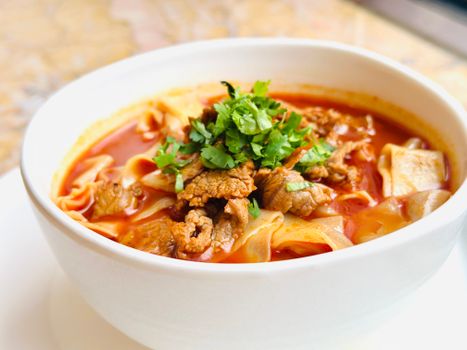
Biang Biang Noodles
The diets react (see scores below)
Common Ingredients
- wide wheat noodles
- chili oil
- Sichuan peppercorns
- black vinegar
- garlic
- scallions
- soy sauce
- bok choy
Specific recipes may vary.
Incompatible with 7 of 11 diets
Diet Ratings
Biang Biang Noodles are fundamentally incompatible with a ketogenic diet. The primary ingredient — wide wheat noodles — is a refined grain product with extremely high net carbs. A single serving (approximately 200g cooked) delivers roughly 60-80g of net carbohydrates, which alone exceeds the entire daily keto carb budget (20-50g). Wheat flour is a zero-tolerance ingredient in ketogenic eating. The remaining ingredients (chili oil, Sichuan peppercorns, black vinegar, garlic, scallions, soy sauce, bok choy) are mostly keto-friendly in small amounts, but they are entirely irrelevant given the disqualifying noodle base. There is no reasonable portion size that makes this dish keto-compatible.
Biang Biang noodles as prepared here are fully plant-based. Wide wheat noodles are made from flour and water (no egg in this version), chili oil is made from plant-based oils and dried chilies, Sichuan peppercorns are a berry/seed, black vinegar is fermented grain-based, garlic and scallions are vegetables, soy sauce is fermented soy and wheat, and bok choy is a leafy green. Every ingredient is derived from plants with no animal products present. This is also a relatively whole-food preparation — minimal processing, nutrient-dense vegetables, and bold flavors from fermented and spiced plant ingredients. The dish scores highly as a satisfying, substantive vegan main.
Biang Biang Noodles is fundamentally incompatible with the Paleo diet. The dish is built almost entirely on non-Paleo ingredients. Wide wheat noodles are a grain product and represent a core Paleo exclusion. Soy sauce contains both soy (a legume) and wheat (a grain), making it doubly prohibited. Chili oil is typically made with a seed oil (commonly soybean or vegetable oil), which is also excluded. Black vinegar, while less clearly disqualifying on its own, is grain-derived (fermented from rice, sorghum, or wheat) and would be avoided by strict Paleo adherents. The remaining ingredients — Sichuan peppercorns, garlic, scallions, and bok choy — are Paleo-compliant, but they represent a minor portion of the dish and cannot offset the multiple fundamental violations. There is no meaningful Paleo adaptation possible for this dish without replacing virtually every primary component.
Biang Biang Noodles contain several elements that align with Mediterranean principles — garlic, scallions, bok choy, black vinegar, and chili oil are all plant-forward, minimally processed ingredients. However, the base is wide wheat noodles, which are a refined grain rather than a whole grain, and refined grains are discouraged in favor of whole grains in the Mediterranean diet. The chili oil, while a plant-based fat, is not extra virgin olive oil, the canonical Mediterranean fat. The dish is vegetable-inclusive and low in saturated fat, keeping it from a full 'avoid,' but the refined noodle base and non-Mediterranean fat source prevent a full approval.
Some Mediterranean diet practitioners take a flexible, whole-diet view and would consider this dish acceptable given its abundance of vegetables, garlic, and plant-based fats, noting that refined grains consumed in moderation within an otherwise plant-rich diet are tolerated in several traditional Mediterranean regional cuisines (e.g., white pasta in southern Italy). Others would flag the refined wheat noodles as a meaningful concern aligned with modern clinical guidelines emphasizing whole grains.
Biang Biang Noodles is entirely plant-based and grain-based, containing zero animal products. Every single ingredient is excluded on the carnivore diet: wheat noodles are a grain/gluten product, chili oil is a plant oil with plant additives, Sichuan peppercorns and black vinegar are plant-derived condiments, garlic and scallions are vegetables, soy sauce is a fermented legume/grain product, and bok choy is a leafy vegetable. This dish is fundamentally incompatible with carnivore principles at every level.
Biang Biang Noodles contain multiple excluded ingredients that make this dish clearly non-compliant with Whole30. First and most critically, wide wheat noodles are a grain-based pasta/noodle product — grains (wheat) are explicitly excluded, and noodles are also specifically called out in the 'no recreating' rule as a prohibited food form. Second, soy sauce contains soy (a legume) and typically wheat, both of which are excluded on Whole30. Coconut aminos could substitute for soy sauce, but as the dish is described, soy sauce is an ingredient. These two violations alone make this dish a clear avoid.
Biang Biang noodles are fundamentally incompatible with the low-FODMAP elimination phase. The base ingredient — wide wheat noodles — is high in fructans, one of the most significant FODMAP triggers. A standard serving of wheat noodles (roughly 180g cooked) far exceeds any safe fructan threshold. Compounding this, the dish contains two additional high-FODMAP ingredients: garlic (high fructans even in tiny amounts) and scallions/green onions (the white bulb portion is high in fructans, though green tops are low-FODMAP). Soy sauce contains wheat and contributes further fructans, though in small amounts the impact is minor. Bok choy, chili oil, Sichuan peppercorns, and black vinegar are generally low-FODMAP and not problematic. However, the combination of wheat noodles plus garlic plus scallion bulbs makes this dish a high-FODMAP triple threat that cannot be made safe without fundamentally changing its character. There is no meaningful portion size at which standard wheat noodles become low-FODMAP.
Biang Biang Noodles present a mixed DASH profile. On the positive side, the dish includes bok choy (an excellent DASH vegetable rich in potassium, calcium, and magnesium), garlic and scallions (flavorful DASH-friendly aromatics), and black vinegar (low-sodium flavor enhancer). However, soy sauce is a major sodium concern — a single tablespoon contains roughly 900–1,000mg of sodium, and this dish typically uses a notable pour, potentially pushing a single serving well above 1,000mg of sodium alone. Chili oil adds significant fat (though largely unsaturated), and the refined wheat noodles lack the fiber benefits of whole grains emphasized in DASH. The absence of lean protein is also a nutritional gap for a main dish. The dish is not inherently processed or high in saturated fat, but its sodium load from soy sauce is the primary barrier to approval. Substituting low-sodium soy sauce, using whole wheat noodles, and controlling oil quantity could substantially improve its DASH compatibility.
NIH DASH guidelines explicitly flag high-sodium condiments like soy sauce as problematic; however, some DASH-oriented clinicians note that if low-sodium tamari or coconut aminos are substituted and oil portions are controlled, this dish's vegetable content and unsaturated fat profile make it reasonably compatible with an updated, flexible interpretation of DASH principles.
Biang Biang noodles are fundamentally incompatible with Zone principles in their standard form. The dish is built almost entirely on wide wheat noodles, which are a high-glycemic refined carbohydrate and would constitute the overwhelming macronutrient load of the meal. There is no meaningful protein source (listed as 'none'), which makes it impossible to achieve the 30% protein target without radical restructuring. The chili oil contributes fat, but it is omega-6-heavy seed oil rather than the monounsaturated fats (olive oil, avocado) preferred in Zone. The bok choy is a favorable Zone vegetable, and garlic, scallions, black vinegar, soy sauce, and Sichuan peppercorns are acceptable condiments, but these are minor supporting elements in a dish dominated by refined carbs and lacking lean protein entirely. To 'Zone-ify' this dish would require replacing most of the noodles with vegetables, adding 25g of lean protein, and swapping the chili oil for a monounsaturated fat source — at which point it is no longer Biang Biang noodles in any recognizable form. As served, the macro ratio is heavily skewed toward carbohydrates with inadequate protein and poor fat quality.
Biang Biang noodles present a mixed anti-inflammatory profile. On the positive side, the dish contains several genuinely anti-inflammatory ingredients: garlic has well-documented anti-inflammatory compounds (allicin, diallyl sulfide); Sichuan peppercorns contain hydroxy-alpha-sanshool and antioxidant compounds; black vinegar contains acetic acid and polyphenols with modest benefits; scallions provide flavonoids and quercetin; and bok choy is a cruciferous vegetable with glucosinolates, vitamin C, and antioxidants — a clear anti-inflammatory positive. Chili oil, if made from chili peppers, contributes capsaicin (anti-inflammatory) but the oil base matters significantly — if it's a seed oil like soybean or corn oil (common in commercial chili oils), that introduces high omega-6 content, which is a concern under anti-inflammatory guidelines. Soy sauce is generally neutral in small amounts though high in sodium. The main liability is the wide wheat noodles, which are refined carbohydrates — a staple concern in anti-inflammatory eating due to their glycemic impact and lack of fiber. The dish is entirely plant-based, which is a structural positive, and the spice profile is genuinely anti-inflammatory. However, the refined noodle base and uncertain oil quality prevent a full approval. As a whole-food, home-prepared version with a quality chili oil (e.g., sesame or chili-infused in a neutral or olive oil base), this dish skews toward the upper end of caution. As a restaurant or packaged version with refined seed oils, it sits lower.
Most anti-inflammatory frameworks would consider this dish acceptable given its strong spice profile and vegetable content, viewing the wheat noodles as a minor concern in the context of an otherwise plant-forward meal. However, stricter anti-inflammatory and low-glycemic protocols (such as those influenced by Dr. David Perlmutter or grain-free AIP approaches) would flag refined wheat as a significant driver of blood sugar spikes and intestinal permeability, pushing this dish toward avoid regardless of other ingredients.
Biang Biang noodles as prepared here are a poor fit for GLP-1 patients. The dish is built around wide wheat noodles (refined carbohydrates, low fiber, low protein density) with chili oil as a dominant flavor vehicle — meaning meaningful fat from oil and significant spice from both chili and Sichuan peppercorns. Both high fat content and spicy ingredients are known to worsen GLP-1 side effects including nausea, reflux, and GI discomfort. The dish lists no primary protein source, making it nutritionally imbalanced for a main course where 15–30g of protein is the target. Bok choy contributes modest fiber and micronutrients, and black vinegar and soy sauce are low-calorie condiments, but these positives are minor against the overall profile. Refined wheat noodles offer little fiber and spike blood sugar without contributing meaningful satiety per calorie. The combination of spice, fat, and refined carbs with no protein makes this a dish GLP-1 patients should avoid or substantially modify (e.g., add grilled chicken or tofu, reduce chili oil, request less spice).
Some GLP-1-aware dietitians would rate this as caution rather than avoid if portion size is small and chili oil is minimal, noting that bok choy provides hydration and micronutrients and that individual spice tolerance varies widely — some patients on GLP-1s tolerate moderate spice without GI issues. However, the absence of any protein source in the standard preparation is a consistent concern across the clinical community regardless of spice tolerance.
*See how scores were generated at our methodology page.
Nutritional profile
Six traits that cut across every diet.
Fiber & Plants
How much whole-plant food and fiber it delivers.
Healthy Fats
The quality of its fats (unsaturated, omega-3).
Whole / Unprocessed
How close it is to its natural, unprocessed form.
Gut Gentle
How easy it is on digestion (low FODMAP, few irritants).
Low Glycemic
How little it spikes your blood sugar.
Protein Density
How much protein it packs per calorie.
Controversy Index
Higher controversy = more disagreement between diets.
Diet-Specific Tips
 Vegan — 9/10
View tips
- Wide wheat noodles contain no egg in this formulation — confirmed plant-based
- Chili oil is plant-derived (oil + dried chilies)
- Soy sauce is vegan (fermented soy and wheat, no animal additives)
- Black vinegar is grain-fermented and animal-free
- All aromatics (garlic, scallions) and vegetables (bok choy) are fully plant-based
- No animal proteins, dairy, or hidden animal-derived additives identified
- Whole-food dominated ingredient list earns a high score within the approve range
 Mediterranean — 5/10
View tips
- Refined wheat noodles rather than whole grain — not ideal per Mediterranean guidelines
- Bok choy, garlic, and scallions are positive plant-based components
- Chili oil is a plant fat but not extra virgin olive oil, the preferred Mediterranean fat
- No animal protein — fully plant-based protein profile
- Black vinegar and Sichuan peppercorns are flavorful but non-traditional to Mediterranean cuisine
- Low in saturated fat overall, which aligns with Mediterranean principles
 DASH — 4/10
View tips
- High sodium load from soy sauce — a primary DASH concern
- Chili oil adds significant fat, though largely unsaturated
- Refined wheat noodles preferred over whole wheat in DASH
- Bok choy is an excellent DASH vegetable with potassium, calcium, and magnesium
- Garlic, scallions, and black vinegar are DASH-friendly flavor enhancers
- No lean protein source for a main dish — incomplete nutritional profile
- Low-sodium soy sauce substitution would meaningfully improve DASH score
 Anti-Inflammatory — 5/10
View tips
- Refined wheat noodles are pro-inflammatory (high glycemic, low fiber)
- Bok choy is a strong anti-inflammatory cruciferous vegetable
- Garlic, Sichuan peppercorns, and chili contribute meaningful anti-inflammatory compounds
- Chili oil base is critical — seed oil base (soybean, corn) raises omega-6 concerns
- Black vinegar and scallions add modest polyphenol benefits
- Entirely plant-based dish with no saturated fat or animal protein concerns
- High sodium from soy sauce is a minor concern but not directly inflammatory