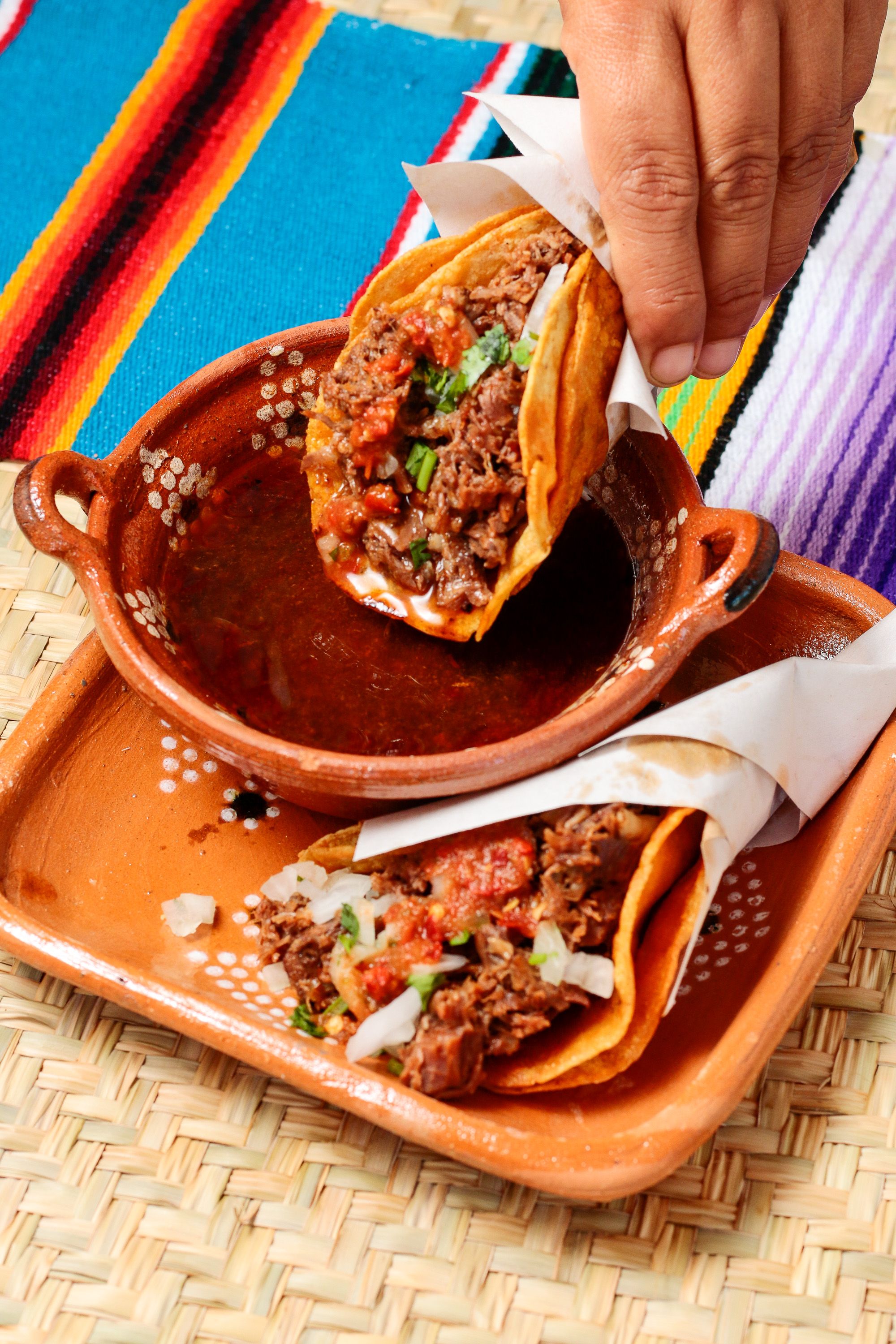
Photo: Sergio Arreola / Pexels
Mexican
Birria de Res
The diets react (see scores below)
Common Ingredients
- beef chuck
- guajillo chiles
- ancho chiles
- tomatoes
- onion
- garlic
- cumin
- cinnamon
Specific recipes may vary.
Incompatible with 4 of 11 diets
Diet Ratings
Birria de Res is primarily beef chuck, which is an excellent keto-friendly protein and fat source. The main concern lies in the dried chiles (guajillo and ancho), tomatoes, and onion, which contribute meaningful net carbs. Dried chiles in particular are more carb-dense than fresh — a typical birria recipe uses enough guajillo and ancho chiles to add 8-15g net carbs per serving from the sauce alone. Tomatoes and onion add further carbs. A moderate portion (1-1.5 cups of meat and broth) can fit within daily keto limits if the rest of the day's carb budget is managed carefully, but a generous restaurant-style serving could push total carbs over the threshold. The dish contains no grains, no added sugar, and the beef itself is ideal for keto, making it manageable with portion awareness.
Some strict keto practitioners argue that the cumulative carb load from dried chiles, tomatoes, and onion — even in a single moderate serving — makes birria too risky for those targeting the lower 20g net carb ceiling, particularly since the sauce is concentrated and portions are hard to control. Conversely, lazy keto and carnivore-adjacent keto followers may approve it freely, focusing on the high-protein, high-fat beef base and dismissing the vegetable-sourced carbs as negligible in the context of whole, unprocessed ingredients.
Birria de Res is a traditional Mexican beef stew. The primary protein is beef chuck, which is a direct animal product (bovine muscle tissue). This makes the dish entirely incompatible with a vegan diet. There is no ambiguity here — beef is unequivocally excluded under all vegan frameworks. The remaining ingredients (guajillo chiles, ancho chiles, tomatoes, onion, garlic, cumin, cinnamon) are all plant-based, but the presence of beef is a definitive disqualifier.
Birria de Res in this form is a clean, paleo-compliant dish. Beef chuck is an unprocessed, nutrient-dense protein approved by all paleo frameworks. Guajillo and ancho chiles are dried whole peppers — natural, unprocessed, and well within paleo guidelines. Tomatoes, onion, and garlic are whole vegetables with no paleo controversy. Cumin and cinnamon are natural spices used by hunter-gatherers and universally approved. There are no grains, legumes, dairy, refined sugars, seed oils, or processed additives in this ingredient list. The dish is essentially a slow-braised meat stew with whole-food aromatics and spices — exactly the kind of preparation paleo principles celebrate.
Birria de Res is centered on beef chuck, a red meat that the Mediterranean diet explicitly limits to a few times per month at most. Red meat — particularly fatty cuts like chuck — is one of the foods most clearly discouraged in Mediterranean dietary guidelines due to its saturated fat content and association with cardiovascular risk. While the dish does include several Mediterranean-friendly components (tomatoes, onion, garlic, cumin, and chiles are all plant-based, whole ingredients), the primary protein source fundamentally contradicts the diet's principles. The absence of olive oil as the fat medium and the red-meat-centric nature of the dish place it firmly in the 'avoid' category for regular consumption.
Birria de Res is built around beef chuck, which is an excellent carnivore-approved protein, but the dish is heavily loaded with plant-based ingredients that make it incompatible with the carnivore diet. Guajillo chiles, ancho chiles, tomatoes, onion, and garlic are all plant foods explicitly excluded from the carnivore diet. Cumin and cinnamon are plant-derived spices that even lenient carnivore practitioners typically avoid. The beef itself is fine, but as a prepared dish with this ingredient profile, it cannot be considered carnivore-compatible. The only salvageable component would be the beef chuck cooked in water with salt alone.
Birria de Res as listed contains entirely Whole30-compliant ingredients. Beef chuck is an approved protein; guajillo and ancho chiles are whole dried peppers (vegetables/spices); tomatoes, onion, and garlic are vegetables; and cumin and cinnamon are approved spices. There are no grains, legumes, dairy, added sugars, or any other excluded ingredients in this ingredient list. This is a classic whole-food, unprocessed preparation that aligns well with the Whole30 philosophy.
Birria de Res as traditionally prepared contains multiple high-FODMAP ingredients that make it unsuitable during the elimination phase. Garlic is one of the highest-FODMAP foods tested by Monash University (high in fructans at any culinary amount). Onion is similarly high in fructans and is a major FODMAP offender — both are used in significant quantities in birria. These two ingredients alone are disqualifying. Additionally, the dried chiles (guajillo, ancho) are cooked into the braising liquid along with tomatoes, creating a concentrated sauce where FODMAP compounds from garlic and onion infuse throughout the entire dish. Unlike garlic-infused oil (where FODMAPs don't transfer to fat), this is a water-based braise, so all fructans leach fully into the cooking liquid and coat the meat. Beef chuck itself is low-FODMAP, cumin is low-FODMAP at culinary amounts, cinnamon is low-FODMAP, tomatoes are low-FODMAP at standard servings, and guajillo/ancho chiles are not well-tested but dried chiles are generally considered low-FODMAP at small amounts. However, the garlic and onion make this dish a clear avoid for anyone in the elimination phase.
Birria de Res as listed uses beef chuck, which is a moderate-to-high fat cut of red meat with notable saturated fat content — a category DASH explicitly limits. However, the dish is built around a rich base of vegetables, chiles, tomatoes, onion, and garlic, which contribute potassium, magnesium, fiber, and beneficial phytonutrients aligned with DASH principles. The spice blend (cumin, cinnamon, guajillo and ancho chiles) adds flavor without sodium, which is a DASH-positive preparation approach. The primary concern is the saturated fat from beef chuck and the classification of red meat as a limited food under DASH. Sodium content depends heavily on preparation — homemade birria without added salt or high-sodium broth can be kept within DASH limits, but restaurant versions often contain significantly more sodium. If leaner beef cuts (round, sirloin) were substituted, the score would rise. As a portion-controlled, occasional meal with the fat trimmed and sodium managed, this dish is acceptable but not a DASH staple.
NIH DASH guidelines explicitly limit red meat and recommend lean poultry and fish as primary proteins, making beef chuck a suboptimal choice. However, updated clinical interpretations note that the Mediterranean-DASH hybrid approach (MIND diet) and evolving research on unprocessed red meat in context of an otherwise high-vegetable, low-sodium diet suggest occasional lean red meat consumption does not meaningfully worsen cardiovascular outcomes when overall dietary pattern is strong.
Birria de Res is a slow-braised beef stew made from chuck roast with a complex chile-based sauce. From a Zone perspective, the dish has several positive elements alongside some challenges. The chile-tomato-onion-garlic broth is rich in polyphenols and low-glycemic vegetables, aligning well with Zone anti-inflammatory principles. The spices (cumin, cinnamon) are Zone-friendly. However, beef chuck is a moderately fatty cut with meaningful saturated fat content, making it less ideal than leaner Zone proteins like skinless chicken or fish. The braising process also renders significant fat into the dish, making macro control harder without deliberate skimming or portioning. That said, beef chuck is not disqualifying — Zone allows lean beef in measured portions (~1 oz per protein block). With careful portion control (~3 oz lean meat, skimmed broth, paired with additional low-GI vegetables to hit 40% carbs), Birria de Res can be incorporated into a Zone meal. The carbohydrate contribution from the chiles, tomatoes, and onion is modest and low-glycemic, which is favorable. The main Zone challenge is managing the fat content and ensuring the protein portion doesn't overwhelm the block balance.
Early Zone writings (Enter the Zone) were stricter about limiting saturated fat from red meat, which would push chuck-based birria toward a lower score. However, Sears' later anti-inflammatory work (The OmegaRx Zone, Zone Perfect Meals in Minutes) acknowledged that occasional lean red meat is acceptable. Some Zone practitioners would rate traditional braised beef dishes more favorably given the polyphenol-rich chile sauce and low-GI vegetable base, especially if visible fat is trimmed or skimmed before serving.
Birria de Res presents a mixed anti-inflammatory profile. On the positive side, the dish is rich in genuinely anti-inflammatory spices and aromatics: guajillo and ancho chiles contain capsaicinoids and carotenoids (including beta-carotene) with documented anti-inflammatory activity; garlic provides allicin and organosulfur compounds; cumin and cinnamon both carry polyphenols and antioxidants that reduce inflammatory markers; tomatoes and onion contribute lycopene, quercetin, and flavonoids. These ingredients are strongly emphasized in anti-inflammatory eating. On the negative side, the primary protein is beef chuck, a fatty cut of red meat that is high in saturated fat and arachidonic acid — both of which are associated with pro-inflammatory pathways. Anti-inflammatory guidelines consistently place red meat in the 'limit' category, and a fatty braising cut like chuck is more concerning than lean cuts. The dish is essentially a slow-braised red meat stew, meaning the red meat is not a condiment but the centerpiece. The balance tips to 'caution': the spice and vegetable base is excellent, but the large portion of fatty beef drags the overall profile into neutral-to-mildly-concerning territory. Occasional consumption in reasonable portions is acceptable within the framework; regular, large-portion consumption is not advisable.
Some anti-inflammatory practitioners (including those aligned with Dr. Weil's more flexible pyramid) would argue that slow-braised traditional preparations with abundant spices and vegetables are preferable to processed or fast-food red meat, and that occasional grass-fed beef in a spice-rich context is acceptable. Conversely, stricter anti-inflammatory and plant-forward protocols would flag the fatty beef more harshly, recommending the dish be made with leaner protein (e.g., lamb shank, mushrooms, or legumes as a substitute) to preserve the excellent spice base while reducing saturated fat load.
Birria de res is a slow-braised beef chuck stew with a rich chile-tomato broth. Beef chuck is a fatty cut — typically 15–20g of fat per 3 oz serving — which is the primary concern for GLP-1 patients. High dietary fat worsens nausea, bloating, and reflux, which are already common side effects. The braise does render and dissolve some fat into the braising liquid (consommé), meaning the dish as a whole can be quite greasy depending on preparation. On the positive side, the protein content is meaningful (roughly 20–25g per serving), the chile-tomato broth base contributes some fiber and micronutrients (vitamin C, antioxidants from guajillo and ancho chiles), and the dish contains no refined carbohydrates or added sugars. The spice level of guajillo and ancho chiles is mild-to-moderate — not in the sriracha/habanero category — so spice is unlikely to be a significant GI trigger for most patients. The biggest GLP-1 concern is fat load: the fatty braising liquid (consommé) should be skimmed, and lean portions of the meat should be selected. Portion size matters substantially. A small, carefully portioned serving of the leaner meat with the consommé defatted is tolerable; a full bowl with fatty braising liquid and rich meat is problematic.
Some GLP-1-focused dietitians accept traditional braised beef dishes like birria when fat is actively skimmed off the broth and leaner muscle portions are selected, arguing the protein yield and meal satisfaction justify inclusion in moderation. Others flag all fatty beef cuts categorically due to the compounding effect of slowed gastric emptying and high fat load, recommending patients switch to leaner proteins (chicken breast, lean fish) until GI tolerance is well established.
*See how scores were generated at our methodology page.
Nutritional profile
Six traits that cut across every diet.
Fiber & Plants
How much whole-plant food and fiber it delivers.
Healthy Fats
The quality of its fats (unsaturated, omega-3).
Whole / Unprocessed
How close it is to its natural, unprocessed form.
Gut Gentle
How easy it is on digestion (low FODMAP, few irritants).
Low Glycemic
How little it spikes your blood sugar.
Protein Density
How much protein it packs per calorie.
Controversy Index
Higher controversy = more disagreement between diets.
Diet-Specific Tips
 Keto — 5/10
View tips
- Beef chuck is high-fat, high-protein and ideal for keto
- Dried guajillo and ancho chiles are carb-dense compared to fresh chiles, contributing 8-15g net carbs per serving in sauce
- Tomatoes and onion add additional net carbs
- No grains, no added sugars, whole unprocessed ingredients
- Portion control is critical — a standard serving can fit keto if daily carb budget is reserved
- Restaurant servings may easily exceed a manageable carb limit
 Paleo — 9/10
View tips
- Beef chuck is unprocessed, grass-fed preferred but all forms paleo-approved
- Guajillo and ancho chiles are whole dried peppers — no additives, fully paleo
- Tomatoes, onion, and garlic are unprocessed whole vegetables
- Cumin and cinnamon are natural spices with no paleo controversy
- No grains, legumes, dairy, seed oils, or refined sugars present
- Traditional slow-braised preparation aligns with whole-food paleo philosophy
 Whole30 — 9/10
View tips
- Beef chuck is a fully compliant Whole30 protein
- Guajillo and ancho chiles are whole dried peppers — compliant spices/vegetables
- All vegetables (tomatoes, onion, garlic) are explicitly allowed
- Cumin and cinnamon are approved spices
- No excluded ingredients present in this ingredient list
- Traditional preparation avoids grains, dairy, legumes, and added sugar
 DASH — 5/10
View tips
- Beef chuck is a red meat with moderate-to-high saturated fat, limited under DASH guidelines
- No added sodium in listed ingredients — spices and chiles provide flavor without salt, a DASH-positive attribute
- Tomatoes, onion, garlic, and chiles contribute potassium, fiber, and antioxidants aligned with DASH
- Sodium risk depends on preparation — homemade versions can be low-sodium, restaurant versions often are not
- Leaner beef substitutes (round, sirloin) or substituting with chicken or turkey would improve DASH compatibility
- Portion control is essential — a smaller serving alongside vegetables keeps this within acceptable DASH bounds
 Zone — 5/10
View tips
- Beef chuck has moderate-to-high saturated fat — less ideal than lean Zone proteins
- Braising renders additional fat into the dish requiring skimming for Zone compliance
- Chile-tomato-onion base provides low-glycemic, polyphenol-rich carbohydrate blocks
- Guajillo and ancho chiles are anti-inflammatory and Zone-favorable
- Portion control critical: ~3 oz lean meat per serving to stay within Zone protein block targets
- No high-glycemic carbohydrates in the ingredient list — a Zone positive
- Needs a low-GI carbohydrate side (vegetables) to complete the 40/30/30 ratio
 Anti-Inflammatory — 5/10
View tips
- Red meat (beef chuck) is the primary protein — high in saturated fat and arachidonic acid, categorized as 'limit' in anti-inflammatory frameworks
- Guajillo and ancho chiles provide anti-inflammatory carotenoids and capsaicinoids
- Garlic contributes allicin and organosulfur anti-inflammatory compounds
- Cinnamon and cumin are well-supported anti-inflammatory spices
- Tomatoes and onion add lycopene, quercetin, and flavonoids
- Slow-braised fatty cut concentrates saturated fat in the cooking liquid
- No trans fats, refined sugars, or processed additives present
- Spice and vegetable profile is exemplary; protein choice limits the overall rating
 GLP-1 Friendly — 4/10
View tips
- Beef chuck is a high-fat cut — saturated fat load is the primary concern for GLP-1 patients
- Braising liquid (consommé) concentrates fat and should be skimmed before serving
- Meaningful protein content (~20–25g per serving) is a positive factor
- Guajillo and ancho chiles are mild-moderate spice — unlikely to significantly worsen GI symptoms for most patients
- No refined carbohydrates or added sugars in base recipe
- Portion sensitivity is high — a small defatted serving is very different from a full bowl
- Nutrient-dense broth base with tomatoes, onion, garlic adds micronutrient value
- Slowed gastric emptying on GLP-1s amplifies discomfort from high-fat meals