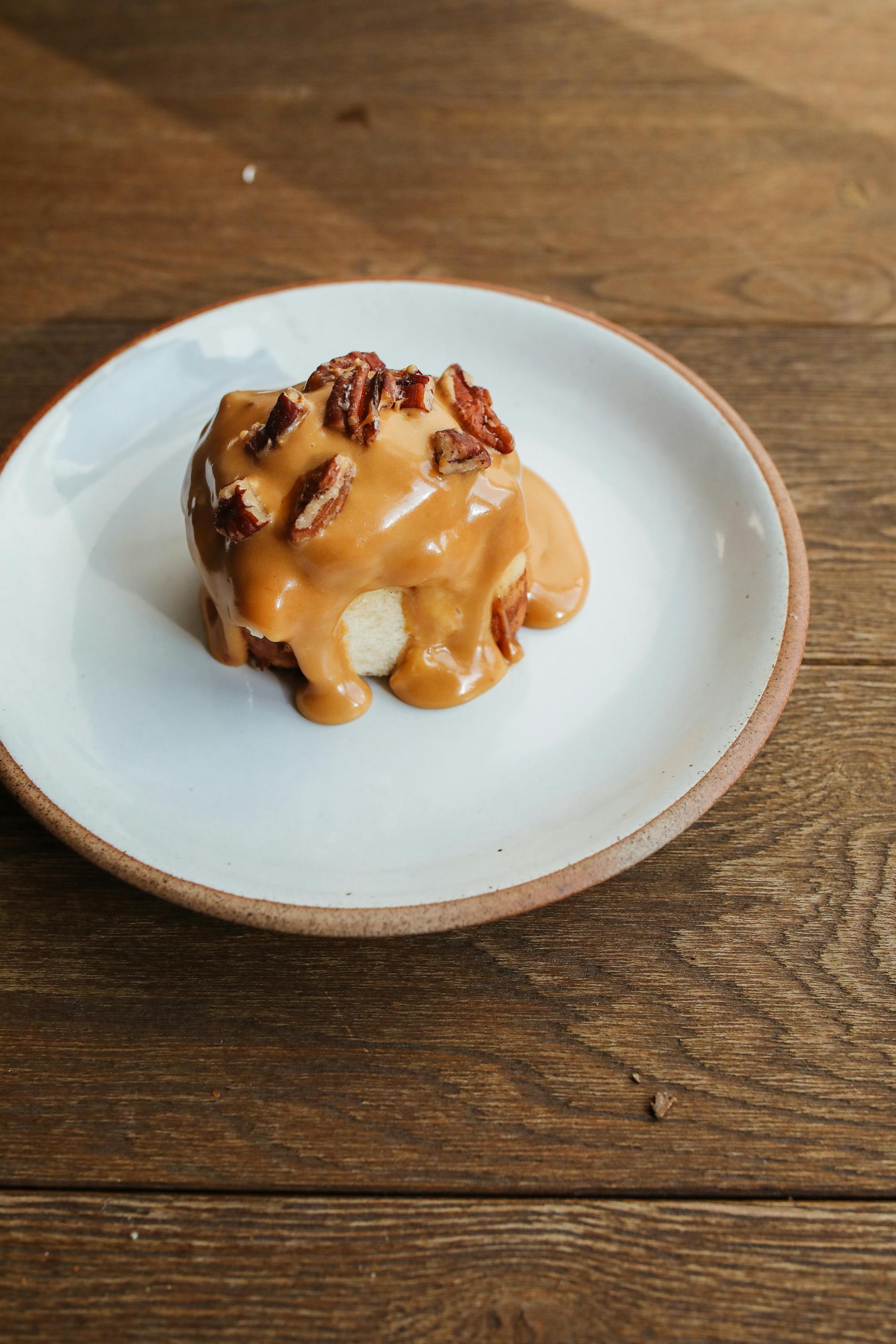
Photo: Polina Tankilevitch / Pexels
American
Biscuits and Gravy
The diets react (see scores below)

That’s a heavy plate — want to see the leaner version?
Common Ingredients
- all-purpose flourWhole wheat flour
Whole wheat flour replaces refined all-purpose flour: adds fiber and reduces the refined-grain penalty cited by dash, mediterranean, zone and glp-1.
- buttermilk
- butterExtra virgin olive oil
Extra virgin olive oil replaces butter: cuts saturated fat and adds monounsaturated fat / oleocanthal, the saturated-fat penalty cited by dash, mediterranean and anti-inflammatory.
- baking powder
- pork sausageTurkey sausage
Turkey sausage replaces pork sausage: lower saturated fat and sodium, the processed-red-meat penalty cited by dash, anti-inflammatory and mediterranean.
- milk
- black pepper
Specific recipes may vary.
Incompatible with 11 of 11 diets
Diet Ratings
Biscuits and Gravy is fundamentally incompatible with a ketogenic diet. The biscuits are made from all-purpose flour, a refined grain that is extremely high in net carbs, and the gravy is also thickened with flour. Buttermilk and milk add additional carbohydrates. A standard serving (2 biscuits with gravy) can easily contain 50-70g of net carbs, which alone exceeds or completely fills the entire daily keto carb budget. The pork sausage component is keto-friendly, but it cannot redeem a dish so structurally dependent on high-carb grains. There is no meaningful modification possible without completely replacing the core components.
Biscuits and Gravy contains multiple animal products that are strictly excluded from a vegan diet. The dish includes pork sausage (meat), buttermilk (dairy), butter (dairy), and milk (dairy). Every major component — both the biscuits and the gravy — relies on animal-derived ingredients. There is no ambiguity here; this dish is fundamentally incompatible with a vegan diet.
Biscuits and Gravy is fundamentally incompatible with the Paleo diet. The biscuits are made from all-purpose flour, a refined wheat grain that is explicitly excluded from Paleo. The gravy is thickened with more flour and relies on milk, a dairy product also excluded. Butter and buttermilk add further dairy violations. Nearly every ingredient except the pork sausage and black pepper conflicts with Paleo principles. This dish is a cornerstone of processed grain and dairy cooking with no meaningful Paleo substitution possible in its traditional form.
Biscuits and Gravy is fundamentally incompatible with Mediterranean diet principles on nearly every level. The dish centers on refined white flour (biscuits made with all-purpose flour), pork sausage (processed red meat high in saturated fat), butter (instead of olive oil), and a milk-based gravy thickened with more refined flour. Pork sausage is a processed meat product that Mediterranean guidelines restrict to rare consumption. Butter replaces the canonical olive oil. The biscuits are made from refined grains with no whole grain component. There are no vegetables, legumes, or plant-forward elements. This dish represents the antithesis of Mediterranean eating patterns: processed meat, refined grains, saturated animal fats, and no redeeming plant-based components.
Biscuits and Gravy is fundamentally incompatible with the carnivore diet. The biscuits are made from all-purpose flour (a grain) and leavened with baking powder, both strictly excluded plant-derived ingredients. The gravy is thickened with flour as well. Buttermilk and milk are dairy products that are debated on carnivore, but they are secondary concerns here — the dominant issue is the massive grain content throughout the dish. Even the one animal-derived protein (pork sausage) is likely overshadowed by the plant-based carbohydrate base. This dish is essentially a grain delivery vehicle with a small amount of pork, making it a clear avoid by any tier of the carnivore diet.
Biscuits and Gravy contains multiple excluded ingredients and violates core Whole30 rules. All-purpose flour is a grain (wheat) product, which is explicitly excluded. Buttermilk and milk are dairy products, which are excluded. Butter (regular, not ghee) is also excluded dairy. Beyond individual ingredients, biscuits are explicitly named in Rule 4 as a prohibited 'junk food recreation' — even if someone attempted a grain-free, dairy-free version, biscuits are on the banned list by name. This dish fails on nearly every front.
Biscuits and Gravy contains multiple high-FODMAP ingredients that make it clearly unsuitable during the elimination phase. All-purpose flour (wheat) is high in fructans — a major FODMAP — and forms the base of both the biscuits and the gravy roux. Buttermilk is high in lactose, and regular milk used in the gravy is also high in lactose at standard serving sizes. There is no realistic low-FODMAP serving size of this dish given that both structural components (biscuits and gravy) rely on high-FODMAP ingredients. Pork sausage and butter are themselves low-FODMAP, and black pepper is fine, but they cannot redeem the dish.
Biscuits and gravy is fundamentally incompatible with the DASH diet. The dish combines multiple DASH-discouraged components: pork sausage is a red/processed meat high in saturated fat and sodium; butter contributes saturated fat; refined all-purpose flour lacks the fiber of whole grains; and the milk-based gravy made with sausage drippings is high in both saturated fat and sodium. A typical serving can contain 800–1,200mg of sodium and 15–25g of saturated fat, significantly impacting both the sodium and saturated fat limits central to DASH. There are virtually no DASH-positive nutrients — no meaningful potassium, calcium, magnesium, or fiber contributions. The primary protein source (pork sausage) is explicitly the type of food DASH guidelines advise limiting or avoiding in favor of lean poultry, fish, beans, and nuts.
Biscuits and Gravy is one of the most Zone-unfavorable breakfast dishes in American cuisine. The biscuits are made from all-purpose flour (high-glycemic refined carbohydrate) and butter (saturated fat), creating a carb-heavy, saturated-fat-dominant base. The sausage gravy compounds the problem: pork sausage is a fatty, processed meat high in saturated fat and omega-6 fatty acids, thickened with more white flour and whole milk. The macronutrient profile is essentially the inverse of Zone targets — dominated by high-GI carbs and saturated fat, with relatively modest protein that comes packaged with excessive fat. There are no low-glycemic vegetables, no lean protein, and no monounsaturated fat sources. Reconstructing this dish to meet 40/30/30 Zone ratios would require such radical ingredient substitutions that the resulting dish would no longer resemble biscuits and gravy. Unlike many unfavorable foods that can be portion-controlled into a Zone meal, the structural composition of this dish makes Zone compliance essentially impossible without complete reformulation.
Biscuits and gravy is a quintessential pro-inflammatory dish across nearly every dimension of anti-inflammatory nutrition. The biscuits are made from refined all-purpose flour and butter — a combination of refined carbohydrates and saturated fat that promotes inflammatory signaling. Butter contributes saturated fat, which at high intake is associated with elevated inflammatory markers. Pork sausage, the primary protein, is a processed red meat high in saturated fat and sodium, both linked to increased CRP and IL-6. The white flour gravy base adds more refined carbohydrates with negligible fiber or micronutrient value. Whole milk contributes additional saturated fat. There are virtually no anti-inflammatory elements present: no omega-3 sources, no colorful vegetables, no antioxidants, no fiber-rich whole grains, no herbs with anti-inflammatory properties (black pepper provides negligible benefit at typical seasoning quantities). This dish concentrates multiple 'limit' and 'avoid' category items into a single meal.
Biscuits and gravy is one of the most problematic breakfast options for GLP-1 patients. The biscuits are made from refined all-purpose flour with butter and buttermilk, delivering high saturated fat and near-zero fiber with minimal protein. The sausage gravy adds more saturated fat from pork sausage and is thickened with more refined flour in a milk base. The overall dish is high in fat, high in refined carbohydrates, low in fiber, and low in protein relative to its calorie load — hitting nearly every 'avoid' criterion simultaneously. Slowed gastric emptying from GLP-1 medication means this heavy, greasy meal will sit in the stomach for an extended period, significantly increasing risk of nausea, bloating, and reflux. A standard serving provides roughly 400-600 calories with only 10-15g protein, negligible fiber, and 20-35g fat, mostly saturated — representing extremely poor nutrient density per calorie for a GLP-1 patient.
*See how scores were generated at our methodology page.
Nutritional profile
Six traits that cut across every diet.
Fiber & Plants
How much whole-plant food and fiber it delivers.
Healthy Fats
The quality of its fats (unsaturated, omega-3).
Whole / Unprocessed
How close it is to its natural, unprocessed form.
Gut Gentle
How easy it is on digestion (low FODMAP, few irritants).
Low Glycemic
How little it spikes your blood sugar.
Protein Density
How much protein it packs per calorie.
Controversy Index
Higher controversy = more disagreement between diets.