This dish contains raw or undercooked ingredients. Consume at your discretion.
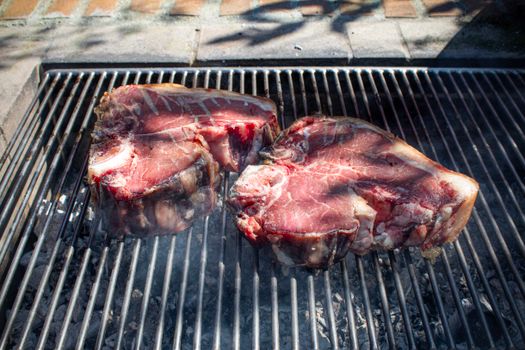
Photo: Regina Tommasi / Pexels
Italian
Bistecca alla Fiorentina
The diets react (see scores below)
Common Ingredients
- porterhouse steak
- olive oil
- sea salt
- black pepper
- lemon
- rosemary
Specific recipes may vary.
Incompatible with 4 of 11 diets
Diet Ratings
Bistecca alla Fiorentina is an exceptionally keto-friendly dish. The centerpiece is a thick-cut porterhouse steak — a high-fat, high-protein cut of beef with zero carbohydrates. The seasoning ingredients (olive oil, sea salt, black pepper, rosemary, lemon) contribute negligible net carbs, even accounting for a squeeze of lemon juice. The dish is whole, unprocessed, and naturally aligns with keto macros: high fat from the marbled beef and olive oil, quality protein, and essentially zero net carbs. This is a textbook example of a keto-ideal meal.
Bistecca alla Fiorentina is a thick-cut porterhouse steak — a direct cut of beef — making it an unambiguous animal product. There is no vegan version of this dish; the beef is the dish. The remaining ingredients (olive oil, sea salt, black pepper, lemon, rosemary) are all plant-derived and vegan-compliant, but they are merely seasonings for the central animal ingredient.
Bistecca alla Fiorentina is largely paleo-compliant: porterhouse steak is an unprocessed, nutrient-dense animal protein fully approved under paleo principles, and olive oil, black pepper, lemon, and rosemary are all clean, paleo-friendly additions. The two friction points are sea salt and the preparation context. Sea salt (added salt) is technically excluded under strict paleo rules — Cordain's original framework discourages added salt on the basis that Paleolithic humans did not have access to refined or mined salt. In practice, however, the majority of modern paleo practitioners and communities accept sea salt or mineral-rich salts in moderation, viewing the strict prohibition as overly rigid. This creates a medium-confidence split rather than a clear ruling. The dish itself is otherwise a near-ideal paleo meal.
Strict Cordain-school paleo (as outlined in Loren Cordain's 'The Paleo Diet') explicitly excludes added salt of any kind, including sea salt, arguing that pre-agricultural humans obtained sodium naturally from whole foods. Followers of this stricter interpretation would flag sea salt as a non-compliant ingredient and lower the dish's rating accordingly.
Bistecca alla Fiorentina is centered on a large porterhouse steak — red meat — which the Mediterranean diet limits to a few times per month at most. The supporting ingredients (olive oil, lemon, rosemary, sea salt, black pepper) are all exemplary Mediterranean pantry staples, but they cannot offset the dish's primary identity as a substantial red meat portion. The preparation is clean and unprocessed, which earns it a slight bump over the floor score, but the core protein fundamentally conflicts with Mediterranean principles of minimizing red meat consumption.
Some Italian culinary traditions, particularly Tuscan, frame Bistecca alla Fiorentina as an occasional celebratory food entirely consistent with traditional Mediterranean eating patterns — the argument being that traditional Mediterranean populations did eat red meat infrequently but did eat it, and this dish's simplicity and minimal processing make it preferable to highly processed meats. Occasional consumption (once or twice a month) could be accommodated within a broadly Mediterranean lifestyle.
Bistecca alla Fiorentina is built on an excellent carnivore-friendly base — a thick-cut porterhouse steak (T-bone with both strip and tenderloin, ruminant beef) — but the traditional preparation includes multiple plant-derived ingredients that disqualify it from the carnivore diet. Olive oil is a plant-based oil excluded from carnivore; lemon juice is a fruit and entirely off-limits; rosemary is an herb/plant; and black pepper is a plant spice. While sea salt is acceptable, the dish as traditionally prepared cannot be approved. A strict carnivore version would require removing olive oil, lemon, rosemary, and black pepper, leaving only the steak and salt — which would rate 9-10.
Bistecca alla Fiorentina is a quintessential whole-food dish consisting entirely of Whole30-compliant ingredients. A thick-cut porterhouse steak grilled over high heat, finished with olive oil, sea salt, black pepper, fresh lemon, and rosemary — every component is explicitly allowed on the Whole30 program. Meat, natural fats, herbs, spices, and citrus are all foundational Whole30 foods. There are no excluded ingredients, no processed additives, and no spirit-of-the-program concerns. This is exactly the type of clean, whole-food meal the Whole30 program is designed around.
Bistecca alla Fiorentina is an excellent low-FODMAP dish. The primary ingredient, porterhouse steak (beef), is a plain protein with zero FODMAPs. Olive oil is fat-based and FODMAP-free. Sea salt, black pepper, and lemon juice/zest are all low-FODMAP at culinary quantities. Rosemary, used as a herb garnish or seasoning, is low-FODMAP at typical serving amounts (a few sprigs). There are no onion, garlic, marinades with high-FODMAP ingredients, or other FODMAP-containing components. This dish is essentially a grilled steak with safe seasonings, making it highly suitable during the elimination phase.
Bistecca alla Fiorentina is a thick-cut porterhouse steak, a classic example of red meat high in saturated fat and cholesterol — both of which DASH guidelines explicitly limit. The NIH/NHLBI DASH eating plan recommends limiting red meat to no more than 6 oz per day (and ideally less), favoring lean poultry and fish instead. A traditional Bistecca alla Fiorentina is typically 2–4 lbs for two people, meaning a single portion can easily exceed 12–16 oz of beef with substantial saturated fat content (often 15–20g+ per serving). The positive elements — olive oil (a healthy unsaturated fat), lemon, rosemary, black pepper — are all DASH-compatible, but they cannot offset the core problem: a very large portion of fatty red meat. Sea salt, while used in moderation in this preparation, adds further sodium. DASH does not categorically prohibit red meat, but the quantity and fat content of a traditional Bistecca makes it incompatible with regular DASH eating.
Bistecca alla Fiorentina is a classic Italian T-bone/porterhouse steak, which presents a mixed Zone profile. The primary concern is the cut itself: a porterhouse is a fatty cut of beef, combining strip loin and tenderloin, with a notable saturated fat content that exceeds Zone-preferred lean protein sources. Dr. Sears consistently recommends lean proteins and cautions against fatty red meat due to its arachidonic acid content, which promotes pro-inflammatory eicosanoids — counter to the Zone's anti-inflammatory goals. However, the preparation is otherwise Zone-friendly: olive oil provides excellent monounsaturated fat, lemon adds polyphenols with negligible carbs, rosemary contributes polyphenols, and there are no high-glycemic carbohydrates present. The dish is essentially pure protein and fat with trace carbs, meaning it would need to be paired with substantial low-glycemic vegetables and a lean protein adjustment to achieve the 40/30/30 ratio in a full Zone meal. Portioning is critical — a traditional Bistecca is a very large cut (often 1–2 lbs), far exceeding the Zone's ~25g protein per meal target. A small, carefully portioned serving (~3 oz lean portions of the tenderloin side) with a large vegetable accompaniment could be made Zone-compatible, but as traditionally served this dish significantly overloads protein and fat blocks while providing zero carbohydrate blocks.
In Sears' earlier Zone books, fatty red meat is clearly 'unfavorable' due to arachidonic acid and saturated fat content. However, in later works such as 'The Zone Diet' and anti-inflammatory updates, Sears acknowledged that high-quality, grass-fed beef has a better omega-6/omega-3 ratio and a more acceptable fatty acid profile. If the porterhouse is sourced from grass-fed cattle, some Zone practitioners and Sears' later writings would place this in a more acceptable context, potentially raising the score to 6 if portioned appropriately with accompanying vegetables.
Bistecca alla Fiorentina is a large, bone-in porterhouse steak — a cut from beef that is high in saturated fat and arachidonic acid, both of which are pro-inflammatory when consumed in excess. Red meat is consistently placed in the 'limit' category across anti-inflammatory frameworks, including Dr. Weil's pyramid, due to its saturated fat content and association with elevated inflammatory markers (CRP, IL-6) in epidemiological research. The porterhouse is a particularly fatty cut, combining strip steak and tenderloin, and Florentine preparation typically involves a thick, large portion (often 1–1.5 kg), amplifying the red meat load. On the positive side, the supporting ingredients are genuinely anti-inflammatory: extra virgin olive oil contributes oleocanthal and monounsaturated fats; rosemary provides carnosic acid and rosmarinic acid with documented antioxidant and anti-inflammatory activity; lemon adds vitamin C and flavonoids; black pepper contains piperine, which has anti-inflammatory properties. Sea salt is nutritionally neutral. The high-heat grilling method is traditional and does not introduce trans fats or problematic seed oils. Ultimately, the dish earns a mid-range 'caution' score: the anti-inflammatory supporting ingredients partially offset the pro-inflammatory red meat base, but the large portion size and high saturated fat content of the cut prevent approval. Occasional consumption is acceptable within an anti-inflammatory lifestyle; regular consumption is not recommended.
Bistecca alla Fiorentina is a thick-cut porterhouse steak — a high-protein meal but one with significant drawbacks for GLP-1 patients. The porterhouse combines both strip and tenderloin cuts with a substantial fat cap and marbling, placing it firmly in the fatty red meat category. A traditional serving is very large (often 600g–1kg for two), which conflicts with small-portion recommendations. The protein content is excellent — a reasonable 150–200g portion delivers 30–40g of protein — but the accompanying saturated fat load is high, which can worsen GLP-1 side effects including nausea, bloating, and delayed gastric emptying (already slowed by the medication). The preparation is favorable: grilled or broiled with olive oil, salt, pepper, lemon, and rosemary — no frying, no heavy sauces, no refined carbs. Lemon and rosemary are digestive-friendly. However, the core ingredient — a fatty cut of beef consumed in the large portions traditional to this dish — is the limiting factor. If portioned conservatively (150–180g of the leaner tenderloin side, fat trimmed) and paired with high-fiber vegetables, this meal can fit into a GLP-1 diet occasionally. As traditionally served, it is too high in saturated fat and portion size for regular inclusion.
Some obesity medicine dietitians accept fatty red meat occasionally for GLP-1 patients who tolerate it well, arguing that the high protein density and satiety value outweigh the fat concern when portions are controlled; others recommend avoiding fatty beef cuts entirely given that slowed gastric emptying amplifies the nausea and reflux risk associated with high-fat meals, particularly in the early months of medication use.
*See how scores were generated at our methodology page.
Nutritional profile
Six traits that cut across every diet.
Fiber & Plants
How much whole-plant food and fiber it delivers.
Healthy Fats
The quality of its fats (unsaturated, omega-3).
Whole / Unprocessed
How close it is to its natural, unprocessed form.
Gut Gentle
How easy it is on digestion (low FODMAP, few irritants).
Low Glycemic
How little it spikes your blood sugar.
Protein Density
How much protein it packs per calorie.
Controversy Index
Higher controversy = more disagreement between diets.
Diet-Specific Tips
 Keto — 9/10
View tips
- Porterhouse steak is zero-carb and naturally high in fat and protein
- Olive oil adds healthy monounsaturated fat, reinforcing keto fat ratios
- All seasonings (salt, pepper, rosemary) are trace-carb or carb-free
- Lemon used as a finishing accent contributes minimal net carbs (<1g typical usage)
- No grains, sugars, starches, or high-carb ingredients present
- Whole, unprocessed preparation aligns with clean keto principles
 Paleo — 6/10
View tips
- Porterhouse steak is a whole, unprocessed cut of beef — fully paleo approved
- Olive oil is an accepted paleo fat
- Lemon, rosemary, and black pepper are clean paleo herbs and seasonings
- Sea salt is technically excluded under strict Cordain paleo rules but widely accepted by most modern paleo practitioners
- No grains, legumes, dairy, seed oils, or refined sugars present
- Dish is minimally processed and consistent with the spirit of the paleo philosophy
 Whole30 — 10/10
View tips
- Porterhouse steak is unprocessed beef — fully compliant
- Olive oil is a natural fat — explicitly allowed
- Sea salt, black pepper, and rosemary are compliant herbs and spices
- Lemon (juice and zest) is compliant fruit/fruit juice
- No grains, dairy, legumes, added sugar, or other excluded ingredients
- Dish is a traditional preparation with no junk-food or baked-good spirit concerns
 Low-FODMAP — 9/10
View tips
- Beef/porterhouse steak is FODMAP-free — plain proteins contain no fermentable carbohydrates
- Olive oil is fat-soluble and contains no FODMAPs
- Lemon juice and zest are low-FODMAP at standard culinary amounts (up to 1 tablespoon juice per Monash)
- Rosemary is a low-FODMAP herb at typical garnish/seasoning quantities
- Sea salt and black pepper are FODMAP-free
- No garlic, onion, marinades, or other high-FODMAP ingredients present
- Simple preparation minimizes risk of hidden FODMAP sources
 Zone — 5/10
View tips
- Porterhouse is a fatty beef cut — higher in saturated fat and arachidonic acid than Zone-preferred lean proteins
- Large traditional serving size vastly exceeds Zone's ~25g protein / 3-block meal target
- Zero carbohydrate blocks present — must be paired with low-glycemic vegetables to achieve 40/30/30 ratio
- Olive oil is an ideal Zone fat source (monounsaturated)
- Lemon and rosemary contribute beneficial polyphenols with negligible macro impact
- No high-glycemic carbohydrates, processed ingredients, or trans fats — clean preparation
- Grass-fed sourcing would improve omega-6/omega-3 ratio and Zone compatibility
- Can fit Zone as a component meal if portion is reduced to tenderloin side (~3 oz) and paired with abundant vegetables
 Anti-Inflammatory — 4/10
View tips
- Porterhouse beef is high in saturated fat and arachidonic acid — consistently categorized as 'limit' in anti-inflammatory frameworks
- Large traditional portion size amplifies red meat inflammatory load
- Extra virgin olive oil contributes oleocanthal, a natural anti-inflammatory compound
- Rosemary contains carnosic acid and rosmarinic acid with antioxidant and anti-inflammatory properties
- Black pepper provides piperine, which supports anti-inflammatory pathways
- Lemon adds vitamin C and flavonoids
- No seed oils, trans fats, refined carbohydrates, or processed additives
- Simple, whole-ingredient preparation is a positive within the anti-inflammatory framework
 GLP-1 Friendly — 4/10
View tips
- High saturated fat from porterhouse cut with marbling and fat cap
- Excellent protein content if portioned appropriately (30–40g per controlled serving)
- Traditional serving size far exceeds GLP-1 small-portion recommendations
- No fiber — should be paired with vegetables or legumes
- Clean preparation (grilled, no heavy sauces) is a genuine positive
- High fat content risks worsening nausea, bloating, and reflux due to slowed gastric emptying
- Olive oil is a preferred unsaturated fat but adds additional fat load
- Occasional inclusion is feasible if portioned to 150–180g and leaner tenderloin side is prioritized