Photo: Bingqian Li / Pexels
French
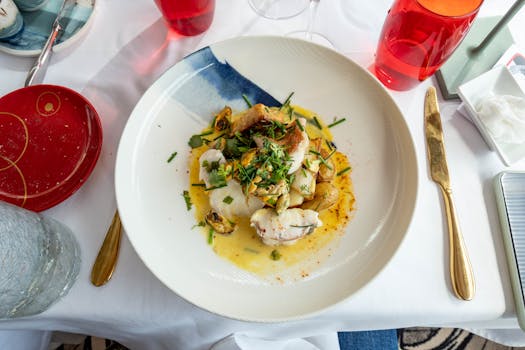
Blanquette de Veau
The diets react (see scores below)
Common Ingredients
- veal
- pearl onions
- mushrooms
- butter
- flour
- cream
- egg yolk
- white wine
Specific recipes may vary.
Incompatible with 7 of 11 diets
Diet Ratings
Blanquette de Veau is a classic French braised veal dish that presents a significant keto problem in its traditional form: the sauce is thickened with flour (a grain-based starch), which adds meaningful net carbs and is fundamentally incompatible with strict keto. Pearl onions also contribute moderate carbs. However, the dish has strong keto-friendly elements — veal is a quality protein, butter and cream are ideal keto fats, egg yolk enriches the sauce with fat, mushrooms are low-carb, and white wine carbs largely cook off. The dish can be made keto-compatible by substituting the flour roux with xanthan gum or simply reducing the cream sauce, making it a 'caution' rather than an outright avoid. As traditionally prepared, it is borderline due to the flour-based velouté.
Some lazy keto practitioners argue the small amount of flour used in a roux for a single serving is negligible in net carbs and would approve this dish as-is, especially if pearl onions are reduced. Strict/clinical keto adherents, however, would flag any grain-based thickener as an automatic disqualifier regardless of quantity.
Blanquette de Veau is fundamentally incompatible with a vegan diet. The dish is built almost entirely around animal products: veal (baby cow meat) is the primary protein, and the classic sauce is enriched with butter, heavy cream, and egg yolk — all animal-derived dairy and egg ingredients. There is no plant-based version of this dish that could be called Blanquette de Veau in any traditional sense. Every major component violates vegan principles.
Blanquette de Veau is fundamentally incompatible with the paleo diet despite its excellent protein base. The classic French preparation relies on a roux (butter + flour) as its thickening agent — wheat flour is a grain and a clear paleo violation. The cream-based sauce is dairy, also excluded. Butter, while debated, is dairy and generally discouraged. The egg yolk used to enrich the sauce is paleo-approved, as are the veal, mushrooms, pearl onions, and white wine (caution). However, the structural foundation of the dish — flour and cream — cannot be removed without fundamentally changing the dish. This is not a borderline case; the dish as traditionally prepared fails on multiple hard exclusions.
Blanquette de Veau is a classic French dish that conflicts with Mediterranean diet principles on multiple fronts. Veal is red meat, which should be limited to only a few times per month. The sauce is built on butter (not olive oil), white flour (refined grain used as thickener), and heavy cream enriched with egg yolk — a combination that is high in saturated fat and contradicts the Mediterranean emphasis on olive oil as the primary fat. While mushrooms, pearl onions, and white wine are Mediterranean-friendly components, they are minor elements in a dish dominated by animal protein and a rich dairy-based sauce. This is quintessentially French classical cuisine, not Mediterranean in character or nutritional profile.
Blanquette de Veau is fundamentally incompatible with the carnivore diet despite featuring veal as its primary protein. The dish contains multiple plant-based ingredients — pearl onions, mushrooms, flour, and white wine — all of which are strictly excluded from a carnivore diet. Flour (a grain derivative) is used as a thickener, white wine is a fermented plant product, and the vegetables add further plant compounds. While butter, cream, and egg yolk are animal-derived and debated within carnivore circles, they are secondary concerns here. The core issue is that this is a heavily plant-integrated French stew that cannot be considered carnivore in any tier of the diet, including the more permissive 'animal-based' approaches. The veal itself would be approved, but the dish as prepared is an avoid.
Blanquette de Veau contains multiple Whole30-excluded ingredients. Butter (regular, not ghee) is a dairy product and is excluded — only ghee/clarified butter is permitted. Flour (wheat) is a grain and is explicitly excluded. Cream is dairy and excluded. The combination of these three ingredients alone makes this dish clearly non-compliant, regardless of the otherwise-allowed veal, mushrooms, pearl onions, egg yolk, and white wine.
Blanquette de Veau contains multiple high-FODMAP ingredients that make it unsuitable during the elimination phase. Pearl onions are high in fructans and are essentially whole onions — a major FODMAP trigger at any culinary serving size. Mushrooms (commonly button or cremini) are high in polyols (mannitol) and are high-FODMAP at standard serving sizes used in this dish. Flour (wheat) used to make the roux contains fructans and is high-FODMAP. Cream is generally low-FODMAP in small amounts (heavy cream has low lactose), but the combination of these other high-FODMAP ingredients makes this dish a clear avoid. The veal, butter, egg yolk, and white wine are low-FODMAP components, but they cannot offset the three significant FODMAP sources (pearl onions, mushrooms, wheat flour).
Blanquette de Veau is a classic French white stew that is fundamentally incompatible with the DASH diet in its traditional form. The dish is built on a rich sauce made with butter, heavy cream, and egg yolks — a combination that delivers substantial saturated fat and cholesterol in every serving. DASH guidelines explicitly limit saturated fat and total fat intake, and cream-based sauces are a primary example of what the diet discourages. While veal itself is a relatively lean red meat, red meat is still limited under DASH, and in this preparation it is surrounded by high-fat dairy ingredients that dominate the dish's nutritional profile. The flour-and-butter roux base further adds refined carbohydrates and saturated fat. Pearl onions and mushrooms are DASH-friendly vegetables, but they cannot offset the impact of the cream and butter. White wine contributes minimal concern. Overall, the saturated fat load from butter, cream, and egg yolk makes this dish a poor fit for DASH principles regardless of portion size.
Blanquette de Veau presents a mixed Zone Diet profile. The primary protein — veal — is a relatively lean meat that can work within Zone protein blocks, though veal shoulder (commonly used) carries more fat than the leanest Zone proteins like skinless chicken or fish. The vegetables (pearl onions, mushrooms) are favorable low-glycemic Zone carbohydrates. However, the classic sauce is the major problem: butter, heavy cream, egg yolk, and flour combine to create a sauce that is high in saturated fat and contains a refined-carb thickener, directly conflicting with Zone's emphasis on monounsaturated fats and low-glycemic carbohydrates. The white wine adds minimal carb load. As traditionally prepared, the fat ratio skews heavily toward saturated fat and the macro balance tilts away from the 40/30/30 target. It is not an 'avoid' because a modified preparation — using reduced cream, substituting olive oil for butter, and thickening with a small amount of cornstarch or simply reducing the sauce — could bring it into Zone compliance. As traditionally served in a French restaurant, however, it requires significant portion control and awareness that the sauce constitutes an unfavorable fat source.
Some Zone practitioners in the later Sears anti-inflammatory framework note that egg yolks provide beneficial arachidonic acid context and that cream in small amounts is not catastrophically Zone-breaking. Veal is also one of the leaner red meats. A small, carefully portioned serving of Blanquette alongside a large vegetable side could approximate Zone ratios, which is why some Zone-aware French cuisine adherents classify this as a manageable caution rather than a near-avoid.
Blanquette de Veau is a classic French braised veal dish with a cream-and-egg-yolk enriched white sauce (velouté), and its anti-inflammatory profile is quite poor. Veal is a lean white meat, somewhat better than red beef but still an animal protein without omega-3 benefits. The more significant problems are the sauce components: butter and heavy cream together contribute substantial saturated fat, which is explicitly in the 'limit' category. The flour-thickened roux base adds refined carbohydrate with no fiber benefit. Egg yolk adds some nutrition (selenium, choline) but also arachidonic acid, which is mildly pro-inflammatory in excess. White wine is used in small quantities for cooking and largely evaporates, so its impact is negligible. Mushrooms are a positive element — they are an emphasized anti-inflammatory food. Pearl onions also contribute some quercetin and prebiotic fiber. However, the dominant character of this dish is defined by its rich cream-butter-flour sauce, placing it firmly in pro-inflammatory territory despite the beneficial mushrooms and onions. This is not an 'avoid' in the strict sense (no trans fats, no high-fructose corn syrup, no processed additives), but it sits at the lower end of the caution range due to the combination of saturated fat, refined flour, and absence of anti-inflammatory fats or polyphenol-rich components in meaningful quantities.
Some anti-inflammatory practitioners note that saturated fat from whole food sources like cream and butter is less harmful than once believed, and that the context of an occasional traditional meal matters more than individual ingredients — Dr. Weil's framework does allow moderate full-fat dairy rather than a strict ban. However, most updated anti-inflammatory guidance (IF Rating system, mainstream anti-inflammatory pyramid) consistently lists cream-heavy, butter-rich preparations as pro-inflammatory due to saturated fat's role in upregulating NF-κB and raising inflammatory markers like CRP.
Blanquette de Veau is a classic French braised veal stew with meaningful protein from veal, but the sauce is built on a roux (butter + flour) and finished with cream and egg yolk — a classic liaison that makes it notably high in saturated fat and calories per serving. The fat-heavy cream sauce is precisely the profile that worsens GLP-1 side effects: nausea, reflux, bloating, and slowed gastric emptying means this rich sauce will sit heavily in the stomach. Veal itself is a relatively lean protein, and the mushrooms and pearl onions add modest fiber and micronutrients, which are positives. White wine contributes negligible alcohol after cooking. However, the butter-cream-egg yolk combination significantly elevates saturated fat per serving, reduces nutrient density per calorie, and is likely to cause GI discomfort for GLP-1 patients — especially at standard French restaurant portion sizes. A home-modified version with reduced cream, substituted half-and-half or Greek yogurt for the cream, and less butter could shift this toward an approve rating, but the traditional preparation lands squarely in caution territory.
Some GLP-1-focused dietitians may rate this more harshly (toward avoid) given the cream-and-butter sauce, arguing that any high-saturated-fat preparation reliably worsens nausea and reflux regardless of the lean protein base. Others note that veal's protein quality and the small serving sizes typical of GLP-1 patients may make an occasional modest portion acceptable, particularly if the patient is tolerating fats reasonably well at their current medication dose.
*See how scores were generated at our methodology page.
Nutritional profile
Six traits that cut across every diet.
Fiber & Plants
How much whole-plant food and fiber it delivers.
Healthy Fats
The quality of its fats (unsaturated, omega-3).
Whole / Unprocessed
How close it is to its natural, unprocessed form.
Gut Gentle
How easy it is on digestion (low FODMAP, few irritants).
Low Glycemic
How little it spikes your blood sugar.
Protein Density
How much protein it packs per calorie.
Controversy Index
Higher controversy = more disagreement between diets.
Diet-Specific Tips
 Keto — 4/10
View tips
- Flour-based roux in the sauce is a keto disqualifier in traditional preparation — adds net carbs and is grain-derived
- Pearl onions are higher in carbs than most keto-approved vegetables (~10g net carbs per 100g)
- Butter, heavy cream, and egg yolk are excellent high-fat keto ingredients
- Veal is a quality, moderate-fat protein well-suited to keto
- Mushrooms are low-carb and keto-friendly
- White wine contributes minimal residual carbs after cooking
- Dish is easily modified for keto by replacing flour with xanthan gum or omitting thickener
 Zone — 4/10
View tips
- Veal is a relatively lean protein but not as optimal as poultry or fish for Zone
- Heavy cream and butter create a predominantly saturated-fat sauce, conflicting with Zone's monounsaturated fat preference
- Flour-based thickening adds refined high-glycemic carbohydrates to the fat load
- Pearl onions and mushrooms are favorable low-glycemic Zone carbohydrates
- White wine contributes negligible carb impact in cooking quantities
- Traditional preparation makes 40/30/30 macro balance very difficult to achieve
- Dish can be modified (reduced cream, olive oil substitution) to improve Zone compatibility
- As a restaurant dish, portion and sauce quantity control is difficult
 Anti-Inflammatory — 5/10
View tips
- Heavy cream and butter provide significant saturated fat — consistently flagged as pro-inflammatory in anti-inflammatory frameworks
- Flour-based roux adds refined carbohydrate with no fiber or micronutrient benefit
- Veal is a lean protein but lacks anti-inflammatory omega-3 fatty acids
- Mushrooms (positive): a specifically emphasized anti-inflammatory food with beta-glucans and immunomodulatory compounds
- Pearl onions contribute quercetin and mild prebiotic fiber — minor positive
- No omega-3 sources, antioxidant-rich vegetables, or polyphenol-dominant ingredients to offset the cream-butter base
- Not a processed food, so avoids trans fats and additives — scores slightly above the 'avoid' range
 GLP-1 Friendly — 4/10
View tips
- Veal is a lean protein source — positive for protein priority
- Cream, butter, and egg yolk liaison creates high saturated fat load per serving
- Rich cream sauce is strongly associated with worsened GLP-1 GI side effects (nausea, reflux, bloating)
- Slowed gastric emptying means heavy cream-based sauces sit in stomach longer and amplify discomfort
- Mushrooms and pearl onions add modest fiber and micronutrients
- Flour-based roux adds refined carbohydrates with low nutritional value
- Traditional portion sizes are generous — portion control critical if consumed
- Low fiber overall — does not meaningfully support the 25-30g daily fiber target
- White wine alcohol largely cooks off — not a significant concern
- Home modification reducing cream volume could improve rating substantially