This dish contains raw or undercooked ingredients. Consume at your discretion.
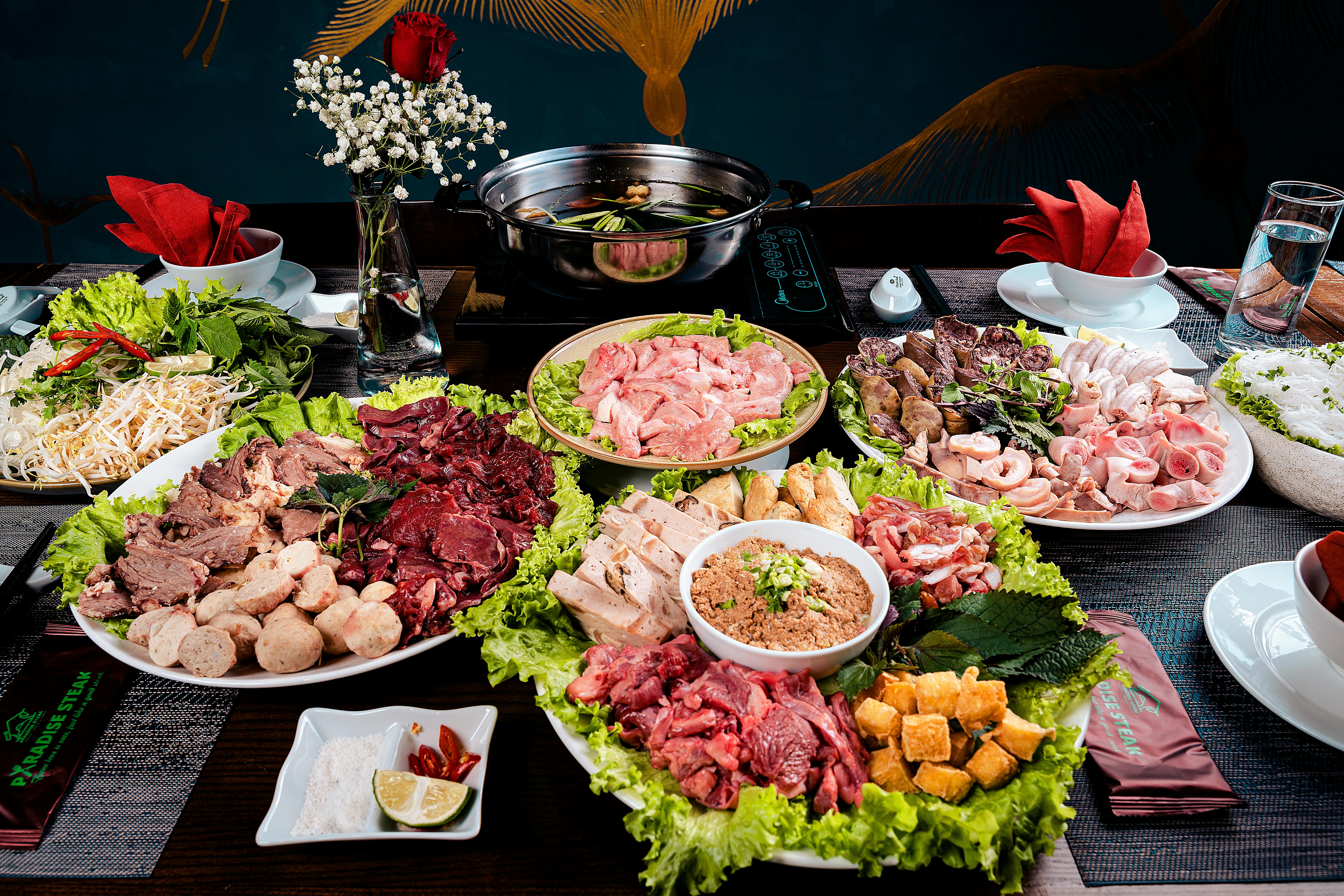
Photo: Đậu Photograph / Pexels
The diets react (see scores below)
Common Ingredients
- beef
- lemongrass
- rice paper
- cucumber
- mint
- peanuts
- fish sauce
- lettuce
Specific recipes may vary.
Incompatible with 6 of 11 diets
Diet Ratings
Bò 7 Món (Vietnamese 7-course beef) is fundamentally incompatible with keto in its traditional form. The dish prominently features rice paper (bánh tráng), which is a grain-based wrapper with approximately 20-25g net carbs per sheet, and peanuts add moderate carbs as well. Across the seven courses, multiple preparations typically involve sugar-based marinades, and the rice paper wrapping component is central to the dining experience. Even if the beef itself is keto-friendly, the rice paper alone can blow a full day's carb budget in just a few wraps. Lemongrass, fish sauce, and cucumber are low-carb, and lettuce and mint are fine, but the structural rice paper component makes this dish a clear avoid in its standard form.
Bò 7 Món ('Beef Seven Ways') is a Vietnamese multi-course beef feast that is fundamentally defined by beef as its primary and essential ingredient. Multiple preparations of beef (grilled, steamed, fondue-style, etc.) form the core of every course. Additionally, fish sauce — a fermented fish product — is listed as an ingredient, adding a second animal-derived component. Both beef and fish sauce are unambiguously non-vegan. There is no plant-based version of this dish that could reasonably be called Bò 7 Món, as beef is intrinsic to its identity.
Bò 7 Món (Vietnamese 7-course beef) contains several non-paleo ingredients that disqualify the dish. Rice paper is made from rice flour, a grain product explicitly excluded from the paleo diet. Peanuts are legumes, also firmly excluded. Fish sauce, while derived from fish, is a processed condiment typically containing added salt and sometimes sugar or other additives, placing it outside strict paleo guidelines. The remaining ingredients — beef, lemongrass, cucumber, mint, and lettuce — are fully paleo-approved, but the rice paper and peanuts alone are clear disqualifiers.
Bò 7 Món is a Vietnamese 'seven courses of beef' feast where beef is the central and dominant protein across multiple preparations. From a Mediterranean diet perspective, beef is classified as red meat and should be limited to only a few times per month. A dish structured entirely around multiple servings of beef in one meal directly contradicts this guideline. Some redeeming elements exist — fresh vegetables (lettuce, cucumber, mint), herbs, rice paper wraps, and peanuts align well with Mediterranean plant-forward principles, and fish sauce provides umami similarly to fermented condiments used in Mediterranean cuisines. However, the sheer quantity and centrality of beef across seven courses makes this fundamentally incompatible with Mediterranean diet frequency recommendations.
Some Mediterranean diet interpreters would note the abundant fresh herbs, vegetables, and lettuce wraps as positive elements, and might argue that a small tasting portion of one or two of the less fatty beef courses (e.g., grilled lemongrass beef) could fit within occasional red meat allowances — similar to how some traditional Southern European cuisines include festive meat-centered meals infrequently.
Bò 7 Món is a Vietnamese seven-course beef dish that, despite featuring beef as its primary protein, is heavily embedded in plant-based accompaniments that are central to the dish as served. The ingredient list includes rice paper (grain-based), cucumber, mint, lettuce, peanuts, and lemongrass — all strictly excluded on the carnivore diet. Fish sauce may contain added sugars or fermented plant matter. While the beef itself would be carnivore-approved, the dish as a whole cannot be consumed as intended without violating nearly every plant-exclusion rule of the carnivore diet. One could theoretically eat only the beef portions plain, but that would not constitute eating 'Bò 7 Món' as a dish.
Bò 7 Món (Vietnamese 7-course beef) contains two clearly excluded ingredients: rice paper (a grain-based wrapper made from rice flour) and peanuts (a legume, explicitly excluded on Whole30). Rice paper is a grain product and also falls under the 'no recreating wraps/tortillas' rule. Peanuts are explicitly called out as excluded legumes in the official Whole30 guidelines. The remaining ingredients — beef, lemongrass, cucumber, mint, fish sauce, and lettuce — are all individually Whole30-compatible, but the dish as traditionally prepared cannot be made compliant without fundamentally altering its character.
Bò 7 Món ('seven courses of beef') is a Vietnamese celebratory feast featuring beef prepared multiple ways with fresh accompaniments. Assessing the listed ingredients: beef is low-FODMAP; rice paper (rice-based) is low-FODMAP; cucumber, lettuce, and mint are low-FODMAP vegetables/herbs; fish sauce is low-FODMAP in standard amounts (1-2 tbsp). The two problematic ingredients are lemongrass and peanuts. Lemongrass is low-FODMAP at 1 stalk per Monash but is a fructan source at higher amounts — and in a 7-course meal it may appear repeatedly across multiple dishes, potentially accumulating. Peanuts are low-FODMAP at 28g (a small handful) per Monash, but become high-FODMAP at larger servings due to GOS content. In a multi-course feast where peanuts are used as a garnish across several courses, cumulative intake could easily exceed the safe threshold. The multi-course nature of this dish is the core concern: even if individual components are low-FODMAP at small servings, FODMAP stacking across 7 courses is a real risk. The dish as typically served in a restaurant feast context warrants caution rather than approval.
Monash University rates peanuts and lemongrass as low-FODMAP at defined small servings, and a strict reading of individual ingredients would suggest most components are safe. However, clinical FODMAP practitioners typically advise caution with multi-course meals during elimination due to cumulative FODMAP stacking — the total FODMAP load across 7 courses may exceed tolerance thresholds even when each individual dish appears compliant.
Bò 7 Món (Seven Courses of Beef) is a Vietnamese multi-course beef feast. While it includes many DASH-friendly components — fresh vegetables (lettuce, cucumber), herbs (mint), lemongrass, and rice paper — the dish is centered on beef as the primary protein, which DASH recommends limiting (especially red meat). The beef preparations across the seven courses often include grilled, fondue, and various cooked methods, some of which may involve higher-fat cuts. Fish sauce is a significant sodium concern, as even small amounts add substantial sodium (1 tablespoon ≈ 1,000–1,400mg sodium), and multiple courses with fish sauce dipping sauces can push sodium well above DASH limits. Peanuts are DASH-compatible in small portions (nuts/seeds group), and the fresh vegetable components are strongly aligned with DASH. The dish earns a 'caution' verdict: the fresh vegetable and herb components are excellent, but red meat as the central protein and high fish sauce sodium content require meaningful modifications for DASH adherence.
NIH DASH guidelines clearly restrict red meat and high-sodium condiments like fish sauce, suggesting stricter caution or avoidance. However, some updated DASH-aligned clinical nutritionists note that if lean beef cuts are used in modest portions across the courses, the overall meal pattern — rich in vegetables, herbs, and wrap-style eating — may align reasonably well with DASH principles when fish sauce is minimized or replaced with a low-sodium alternative.
Bò 7 Món (Seven Courses of Beef) is a Vietnamese feast featuring beef prepared multiple ways — grilled, steamed, fondue-style, and wrapped — with rice paper, fresh herbs, vegetables, and peanut-based dipping sauces. From a Zone perspective, this dish has several favorable elements: fresh lettuce, cucumber, mint, and lemongrass are excellent low-glycemic Zone carbohydrates; fish sauce is low-calorie and Zone-neutral; and the fresh wrap format encourages moderate portioning. However, there are meaningful challenges. Beef is a 'caution' protein in Zone — Dr. Sears categorizes it as 'unfavorable' due to higher saturated fat content compared to lean poultry or fish, though lean cuts (like beef tenderloin used in some bò 7 món preparations) are more acceptable. Peanuts contribute fat that skews toward omega-6 rather than the preferred monounsaturated fats from avocado or almonds. Rice paper, while lower glycemic than white bread, is still a refined starch that adds carbohydrate blocks with minimal fiber. The multi-preparation nature of the dish means fat and calorie content varies significantly by course — some preparations (like bò nướng mỡ chài, beef wrapped in caul fat) are quite high in saturated fat. With careful course selection, emphasizing leaner beef preparations, loading on the fresh vegetables and herbs, limiting rice paper to 1-2 wraps, and watching peanut sauce portions, this meal can be worked into Zone ratios, but it requires active management.
Some Zone practitioners would rate this more favorably, noting that the overall meal structure — protein-centric with abundant fresh vegetables and herbs as carbohydrate sources — naturally approximates Zone ratios better than many Western meals. Dr. Sears' later writings (The OmegaRx Zone, The Mediterranean Zone) became more lenient about lean red meat in moderation, and the anti-inflammatory properties of lemongrass and mint align with his polyphenol emphasis. A strict early-Zone reading would penalize the beef fat content and rice paper more heavily.
Bò 7 Món ('Beef 7 Ways') is a Vietnamese celebratory meal featuring beef prepared in multiple styles — typically grilled, steamed, wrapped, and cooked in vinegar. The ingredient profile is mixed from an anti-inflammatory perspective. On the positive side: lemongrass contains citral and other compounds with demonstrated anti-inflammatory properties; fresh herbs like mint provide polyphenols and antioxidants; cucumber offers hydration and mild antioxidants; lettuce adds fiber and micronutrients; rice paper is a light, low-gluten wrapper; and peanuts provide some resveratrol and healthy fats (though they are omega-6-heavy). Fish sauce is high in sodium but is used in small amounts and is a fermented product with some probiotic value. The primary concern is beef as the centerpiece protein — red meat is categorized as 'limit' in the anti-inflammatory framework due to saturated fat content and arachidonic acid, which can promote inflammatory cascades. The diversity of preparations in a 7-course beef meal means substantial red meat consumption in a single sitting, which is the key issue. The dish is not inherently processed and the surrounding ingredients (herbs, vegetables, lemongrass) are anti-inflammatory positives, but the volume of red meat and the celebratory/feast nature of the dish work against it for regular consumption.
Dr. Weil's framework does not prohibit red meat entirely — it recommends limiting rather than avoiding it, and grass-fed beef has a more favorable omega-3 to omega-6 ratio than grain-fed. Some anti-inflammatory practitioners would view a single celebratory meal of this kind, balanced with fresh herbs and vegetables, as acceptable. However, more restrictive anti-inflammatory protocols (e.g., those emphasizing plant-forward eating) would flag any multi-course red meat meal as clearly pro-inflammatory due to cumulative saturated fat and heme iron load.
Bò 7 Món is a Vietnamese multi-course beef feast featuring seven preparations of beef — including grilled, fondue-style, steamed, and wrapped varieties. The dish has genuine nutritional strengths: fresh herbs, lettuce, cucumber, and rice paper wrappings provide fiber and water content; lemongrass and mint are easy on digestion; and fish sauce adds flavor with minimal calories. However, the primary protein is beef, which introduces meaningful variability. Some preparations within the seven courses are lean (grilled lemongrass beef, beef wrapped in betel leaf), while others involve fattier cuts or cooking methods (beef fondue in tallow, beef steamed in coconut). Peanuts add healthy unsaturated fat but also increase caloric density in small portions. The multi-course format can inadvertently encourage overeating, which is counterproductive on GLP-1 medications. The high-sodium fish sauce may also contribute to water retention and should be used sparingly. Overall, this dish can be GLP-1-compatible if lean preparations are prioritized and portions are controlled, but the inherent variability across the seven courses makes a firm verdict difficult.
GLP-1 nutrition specialists are split on beef broadly: some accept lean beef cuts as a quality complete protein source that supports muscle preservation, while others flag all red meat due to saturated fat content and its potential to slow gastric emptying further in patients already experiencing delayed motility. The specific fat content of individual Bò 7 Món courses varies significantly, making dish-level consensus difficult to establish.
*See how scores were generated at our methodology page.
Nutritional profile
Six traits that cut across every diet.
Fiber & Plants
How much whole-plant food and fiber it delivers.
Healthy Fats
The quality of its fats (unsaturated, omega-3).
Whole / Unprocessed
How close it is to its natural, unprocessed form.
Gut Gentle
How easy it is on digestion (low FODMAP, few irritants).
Low Glycemic
How little it spikes your blood sugar.
Protein Density
How much protein it packs per calorie.
Controversy Index
Higher controversy = more disagreement between diets.
Diet-Specific Tips
 Low-FODMAP — 5/10
View tips
- Beef is low-FODMAP and safe as the primary protein
- Rice paper wrappers are rice-based and low-FODMAP
- Peanuts are low-FODMAP at ≤28g but GOS content rises at larger servings — cumulative use across 7 courses is a risk
- Lemongrass is low-FODMAP at 1 stalk but is a fructan source at higher amounts; repeated use across multiple courses may stack
- Fish sauce is low-FODMAP at standard condiment amounts (1-2 tbsp)
- Fresh herbs (mint), cucumber, and lettuce are all low-FODMAP
- FODMAP stacking across a 7-course meal is the primary concern even if individual components appear safe
 DASH — 5/10
View tips
- Red meat (beef) as primary protein — DASH recommends limiting red meat
- Fish sauce is high in sodium — multiple applications across courses can exceed daily DASH sodium limits
- Fresh vegetables (lettuce, cucumber), herbs (mint), and lemongrass are strongly DASH-compatible
- Rice paper wraps are low in fat and sodium — neutral to positive
- Peanuts are DASH-approved in portion-controlled amounts (nuts/seeds group)
- Multi-course format means total sodium and fat intake across all seven courses is likely high
- Low-sodium fish sauce or reduced use would improve DASH compatibility significantly
 Zone — 6/10
View tips
- Beef protein is 'unfavorable' in Zone due to saturated fat, though lean cuts are acceptable in moderation
- Abundant fresh vegetables (lettuce, cucumber, mint) provide excellent low-glycemic Zone carbohydrate blocks
- Rice paper is a refined starch with moderate glycemic load — limits should apply (1-2 pieces per serving)
- Peanuts are omega-6 heavy fat source, less ideal than Zone-preferred monounsaturated fats (avocado, almonds)
- Fish sauce is Zone-neutral — adds flavor with negligible macronutrient impact
- Multi-course format allows selective choice of leaner preparations to better fit Zone protein guidelines
- No added sugars or high-glycemic starches beyond rice paper — overall carbohydrate profile is reasonable
 Anti-Inflammatory — 5/10
View tips
- Red meat as primary and voluminous protein — categorized as 'limit' in anti-inflammatory guidelines
- Multi-course format means high total red meat intake in one meal
- Lemongrass is anti-inflammatory (citral, terpenes)
- Fresh herbs (mint) provide polyphenols and antioxidants
- Peanuts contribute some beneficial fats but are omega-6-heavy
- Fish sauce adds sodium but used in small amounts; fermented origin is a mild positive
- Rice paper and fresh vegetables are neutral to mildly positive
- No trans fats, processed additives, refined sugars, or seed oils identified
 GLP-1 Friendly — 5/10
View tips
- Beef is a high-quality complete protein but fat content varies significantly by cut and cooking method across the seven courses
- Some preparations likely contain higher saturated fat (tallow-based fondue, fattier cuts), which can worsen GLP-1 GI side effects
- Fresh herbs, lettuce, and cucumber provide fiber, micronutrients, and water content — positives for GLP-1 patients
- Rice paper is a refined carbohydrate with low fiber and low protein density — caution for small-appetite patients needing nutrient density
- Peanuts add healthy unsaturated fat but increase caloric load; portion sensitivity is high
- Multi-course format risks cumulative overeating despite individually moderate servings
- Fish sauce is high sodium — relevant for water retention and cardiovascular considerations
- Lemongrass and mint support easy digestibility and are GLP-1 friendly