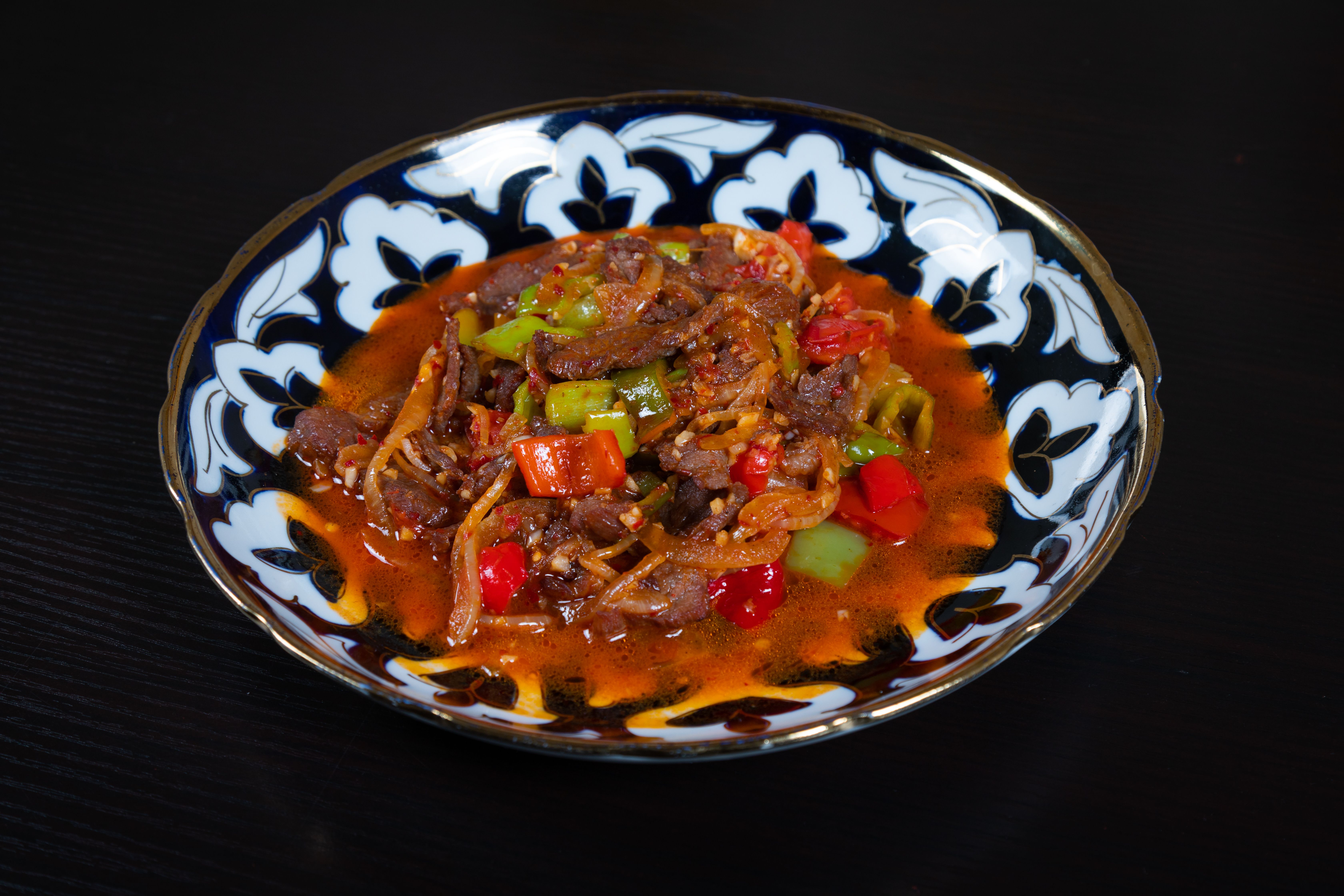
Photo: Collab Media / Pexels
Vietnamese
Vietnamese Beef Stew (Bò Kho)
The diets react (see scores below)
Common Ingredients
- beef
- lemongrass
- star anise
- carrots
- tomato
- fish sauce
- annatto
- French bread
Specific recipes may vary.
Incompatible with 7 of 11 diets
Diet Ratings
Vietnamese Beef Stew (Bò Kho) is fundamentally incompatible with keto in its traditional form due to two major disqualifying components. First, French bread is a staple accompaniment — a high-gluten grain product with extremely high net carbs (roughly 40-50g per serving) that directly violates ketogenic rules. Second, the dish includes carrots, which are moderately starchy, and tomatoes, both adding meaningful net carbs. The spices (lemongrass, star anise, annatto) and fish sauce are keto-friendly in the quantities used, and beef is an excellent keto protein. However, the bread alone is a hard disqualifier. The stew base without bread could potentially be adapted to a caution-level dish with portion control on carrots and tomatoes, but as traditionally served, it must be avoided.
Vietnamese Beef Stew (Bò Kho) contains multiple animal products that disqualify it entirely from a vegan diet. Beef is a direct animal product (red meat), and fish sauce is derived from fermented fish — both are clear violations of vegan principles. There is no ambiguity here. The remaining ingredients (lemongrass, star anise, carrots, tomato, annatto, French bread) are plant-based, but the presence of two distinct animal-derived ingredients makes this dish firmly off-limits for vegans.
Vietnamese Beef Stew (Bò Kho) contains two clear paleo violations that make it incompatible with the diet. French bread is a grain-based product (wheat) and is strictly excluded under all paleo frameworks. Fish sauce, while made from fermented fish, almost universally contains added salt and often preservatives, making it a processed/additive-containing condiment that falls outside strict paleo guidelines. The remaining ingredients — beef, lemongrass, star anise, carrots, tomato, and annatto (a natural seed-based coloring/spice) — are all paleo-approved. However, the presence of French bread as a core serving component of the dish is a hard disqualifier. The dish could theoretically be adapted by omitting the bread and substituting compliant seasoning for fish sauce, but as traditionally prepared it is not paleo-compatible.
Bò Kho is primarily a beef-based stew, and red meat is limited to only a few times per month in the Mediterranean diet. Compounding this, the dish is traditionally served with French bread (a refined grain), which further contradicts Mediterranean principles. While the vegetable components (carrots, tomato, lemongrass) and aromatic spices are positive, they do not offset the two core problematic elements: red meat as the primary protein and refined white bread as the accompaniment. Fish sauce adds sodium but is a minor concern. The overall dish pattern is incompatible with Mediterranean dietary guidelines.
Vietnamese Beef Stew (Bò Kho) is fundamentally incompatible with the carnivore diet despite containing beef as the primary protein. The dish includes multiple plant-based ingredients that are strictly excluded: lemongrass and star anise are plant spices, carrots and tomato are vegetables, and annatto is a plant-derived coloring agent. Most critically, the dish is traditionally served with French bread, a grain-based food that is completely off-limits. Fish sauce is the one carnivore-compatible ingredient (fermented fish). While the beef base is appropriate, the overwhelming presence of plant ingredients, spices, vegetables, and grain-based accompaniments makes this dish a clear avoid. Stripping it down to just beef and fish sauce would be a fundamentally different dish.
Vietnamese Beef Stew (Bò Kho) is served with French bread, which is a grain-based product and explicitly excluded on Whole30. The stew itself contains mostly compliant ingredients — beef, lemongrass, star anise, carrots, tomato, fish sauce, and annatto are all Whole30-compatible — but the French bread (bánh mì) is a core part of how this dish is traditionally served and is listed as an ingredient. Grains, including wheat-based bread, are categorically excluded for the 30 days. The stew portion alone could be made compliant, but as presented with French bread, the dish as a whole must be rated 'avoid.'
Vietnamese Beef Stew (Bò Kho) contains multiple high-FODMAP ingredients that make it unsuitable during the elimination phase. The most significant concern is the French bread (bánh mì), which is wheat-based and high in fructans — a major FODMAP trigger. Star anise is high in FODMAPs (fructans/polyols) even in small culinary amounts per Monash testing. Lemongrass is generally considered low-FODMAP in typical culinary quantities but requires portion awareness. Beef itself is a safe, zero-FODMAP protein. Carrots are low-FODMAP at standard servings (up to 1 cup). Tomato is low-FODMAP at small servings (65g or roughly half a medium tomato) but becomes moderate at larger portions. Fish sauce is low-FODMAP in standard serving sizes (2 tablespoons). Annatto (achiote) lacks formal Monash testing but is used in very small amounts as a coloring agent, presenting minimal risk. The dish is primarily failed by the French bread component and star anise, both of which are high-FODMAP. To make this dish compliant, French bread would need to be replaced with a gluten-free alternative and star anise would need to be omitted or carefully limited, though omitting star anise fundamentally changes the dish's flavor profile.
Some clinical FODMAP practitioners may argue the dish could be modified (removing bread, limiting star anise) to become compliant, and Monash's testing of star anise in very small culinary quantities is not extensively documented — some practitioners permit small amounts of whole star anise used for infusion and then removed, as FODMAPs may not fully transfer into the broth. However, during strict elimination, the combination of wheat bread and star anise makes the standard dish high-risk.
Vietnamese Beef Stew (Bò Kho) contains several DASH-compatible elements — carrots, tomatoes, and aromatic spices like lemongrass and star anise are all DASH-friendly. However, the dish presents meaningful concerns for DASH adherence. Beef is a red meat, which DASH explicitly limits due to saturated fat content; depending on the cut (commonly brisket or chuck), it can be high in both total and saturated fat. Fish sauce is a high-sodium condiment — even small amounts can contribute 500–1,000mg+ of sodium per serving, pushing the dish toward or beyond DASH sodium thresholds (especially the 1,500mg low-sodium target). Traditional serving with French bread (refined grain, moderate sodium) further reduces DASH alignment. The dish is not inherently disqualifying — lean cuts, reduced fish sauce, and omitting bread can bring it closer to DASH compliance — but as commonly prepared, it warrants caution.
NIH DASH guidelines categorically limit red meat and high-sodium condiments like fish sauce, which would push this dish toward 'avoid.' However, updated clinical interpretations note that lean beef cuts in modest portions (3oz) are acceptable within DASH's lean protein allowance, and that the vegetable-rich base with potassium-providing carrots and tomatoes partially offsets sodium concerns — some DASH-oriented dietitians would permit a modified version with low-sodium broth substituted for some fish sauce.
Vietnamese Beef Stew (Bò Kho) presents a mixed Zone Diet profile. On the positive side, the dish contains anti-inflammatory spices (lemongrass, star anise) and favorable low-glycemic vegetables like carrots and tomato, both of which provide good Zone carb blocks. Fish sauce is a low-calorie flavor enhancer that doesn't disrupt Zone ratios. However, several factors complicate Zone compatibility: (1) Beef, while a valid Zone protein, is typically fattier than ideal Zone proteins like chicken breast or fish — the cut matters significantly, and traditional Bò Kho often uses chuck or brisket with higher saturated fat content; (2) French bread (bánh mì) is a standard accompaniment and is a high-glycemic refined carbohydrate that Sears explicitly classifies as 'unfavorable' and would spike insulin response; (3) Annatto is a colorant with negligible macro impact. The stew base itself — if made with a lean beef cut and served without bread, or with only a very small portion of bread — could be adapted into a reasonable Zone meal. The carrots and tomatoes provide good favorable carb blocks. The 40/30/30 ratio would require careful attention to beef portion size (limiting to ~3 oz / 85g per serving), minimizing fat from the beef, and either eliminating or severely limiting the French bread. As served traditionally with a full portion of bread, this dish skews toward higher-glycemic carbs and higher saturated fat, making it a 'caution' that requires significant modification to fit Zone protocols.
Some Zone practitioners following Sears' later writings (particularly 'The Zone' and his anti-inflammatory protocol updates) may be more permissive about the beef fat content, noting that the anti-inflammatory spices and omega-3-supporting fish sauce ingredients partially offset concerns. Additionally, if the French bread is treated as a minimal garnish rather than a full carb source, and vegetables provide the primary carb blocks, the dish improves considerably in Zone terms. The key debate is whether this is a 'caution/adaptable' or 'caution/problematic' — practitioners differ on how much bread accompaniment to allow.
Bò Kho presents a genuinely mixed anti-inflammatory profile. On the positive side, the dish features several strongly anti-inflammatory ingredients: lemongrass contains citral and other polyphenols with documented anti-inflammatory effects; star anise provides anethole, a compound with antioxidant and anti-inflammatory properties; carrots deliver beta-carotene and other carotenoids; tomatoes contribute lycopene; and annatto (achiote) is rich in bixin and norbixin, carotenoid antioxidants. These spices and vegetables meaningfully counterbalance the protein base. The central concern is beef, which the anti-inflammatory framework places in the 'limit' category — red meat contains arachidonic acid and saturated fat, and regular consumption is associated with elevated CRP and other inflammatory markers. The broth-based preparation (as opposed to grilling or charring) is a modest mitigating factor, as it avoids the formation of advanced glycation end-products (AGEs) that high-heat cooking produces. Fish sauce contributes sodium but no significant inflammatory load. The French bread component adds refined carbohydrates, which the anti-inflammatory framework discourages, though it is typically served as an accompaniment rather than a primary ingredient. Overall, the dish is not a poor anti-inflammatory choice if beef portions are moderate, but the red meat base and refined bread prevent a full approval.
Some anti-inflammatory practitioners, particularly those following Dr. Weil's flexible pyramid, would rate this more favorably, arguing that the density of anti-inflammatory spices and the broth-based cooking method partially offset the beef, especially if grass-fed beef is used (higher CLA and omega-3 content). Stricter anti-inflammatory and AIP-aligned approaches would push this closer to 'avoid,' citing beef's arachidonic acid load and the refined carbohydrate content of the bread as meaningful inflammatory drivers.
Vietnamese Beef Stew (Bò Kho) has a mixed nutritional profile for GLP-1 patients. On the positive side, beef provides meaningful protein (~20-25g per serving), and the broth-based format is easy to eat in small portions with high water content supporting hydration. Carrots and tomato add fiber, micronutrients, and antioxidants. Lemongrass, star anise, and annatto are GLP-1-friendly aromatics and colorings with no significant drawbacks. However, the primary concern is the beef itself — Bò Kho is traditionally made with fatty cuts such as chuck or brisket, which carry significant saturated fat that can worsen GLP-1 side effects including nausea, bloating, and delayed gastric emptying. The dish's fat content is highly cut-dependent. The second concern is the French bread accompaniment, which is a traditional serving component — refined, low in fiber, low in protein, and a source of empty calories that GLP-1 patients can ill afford. Without the bread and made with a leaner cut, this dish rates higher. As served traditionally with bread and fatty beef, it warrants caution.
Some GLP-1-focused dietitians accept fatty braised beef cuts in moderate portions because the long cook time breaks down connective tissue for easier digestion and the broth dilutes fat per bite; others flag any fatty red meat as a consistent GI trigger and recommend substituting chicken or lean beef shank. The French bread component also divides opinion — some clinicians allow it as a small carbohydrate anchor to reduce nausea, while others recommend omitting it entirely given its low nutrient density.
*See how scores were generated at our methodology page.
Nutritional profile
Six traits that cut across every diet.
Fiber & Plants
How much whole-plant food and fiber it delivers.
Healthy Fats
The quality of its fats (unsaturated, omega-3).
Whole / Unprocessed
How close it is to its natural, unprocessed form.
Gut Gentle
How easy it is on digestion (low FODMAP, few irritants).
Low Glycemic
How little it spikes your blood sugar.
Protein Density
How much protein it packs per calorie.
Controversy Index
Higher controversy = more disagreement between diets.
Diet-Specific Tips
 DASH — 4/10
View tips
- Red meat (beef) is limited on DASH due to saturated fat
- Fish sauce is very high in sodium, potentially exceeding DASH daily limits in a single serving
- Carrots and tomatoes are DASH-approved vegetables providing potassium and fiber
- Aromatic spices (lemongrass, star anise, annatto) are sodium-free and DASH-neutral
- French bread is a refined grain and adds sodium — whole grain bread would be preferred
- Lean beef cuts and reduced fish sauce can significantly improve DASH compatibility
- As commonly prepared, sodium content likely exceeds the 1,500–2,300mg DASH threshold per serving
 Zone — 5/10
View tips
- Beef protein is valid but cut selection matters — lean cuts like eye of round align better with Zone than traditional fatty chuck/brisket
- French bread accompaniment is a high-glycemic 'unfavorable' carbohydrate per Sears' Zone classification
- Carrots and tomato provide favorable low-glycemic Zone carb blocks
- Lemongrass and star anise are anti-inflammatory additions consistent with Sears' polyphenol emphasis
- Fish sauce adds negligible macro impact while enhancing flavor without disrupting Zone ratios
- Dish can be adapted to Zone by using lean beef, controlling portion to ~3oz, and eliminating or minimizing bread
- Traditional preparation likely has higher saturated fat from braising fatty beef cuts
 Anti-Inflammatory — 5/10
View tips
- Beef (red meat): pro-inflammatory — saturated fat and arachidonic acid, anti-inflammatory framework recommends limiting
- Lemongrass: anti-inflammatory — citral and polyphenols with documented anti-inflammatory activity
- Star anise: anti-inflammatory — anethole has antioxidant and anti-inflammatory properties
- Carrots and tomato: anti-inflammatory — carotenoids, lycopene, and antioxidants
- Annatto: anti-inflammatory — rich in carotenoid antioxidants (bixin, norbixin)
- French bread: mildly pro-inflammatory — refined carbohydrates spike blood glucose and may promote inflammatory signaling
- Fish sauce: neutral — sodium concern but no significant inflammatory additives
- Broth-based cooking: neutral to mild positive — avoids high-heat AGE formation compared to grilled or charred preparations
 GLP-1 Friendly — 4/10
View tips
- Beef cut is critical — fatty chuck or brisket raises saturated fat significantly and worsens GLP-1 GI side effects
- French bread is a refined carbohydrate with low protein and fiber — a poor caloric use for GLP-1 patients
- Broth-based format supports hydration and easy digestibility in small portions
- Moderate protein per serving (~20-25g) from beef is a positive
- Carrots and tomato contribute fiber and micronutrients but total fiber per serving remains modest
- Spice profile (lemongrass, star anise) is GLP-1 friendly with no nausea-triggering heat
- Fish sauce adds sodium — relevant for patients monitoring blood pressure but not a GLP-1-specific concern
- Dish scores higher if prepared with lean beef shank and bread is omitted or replaced with a high-fiber alternative