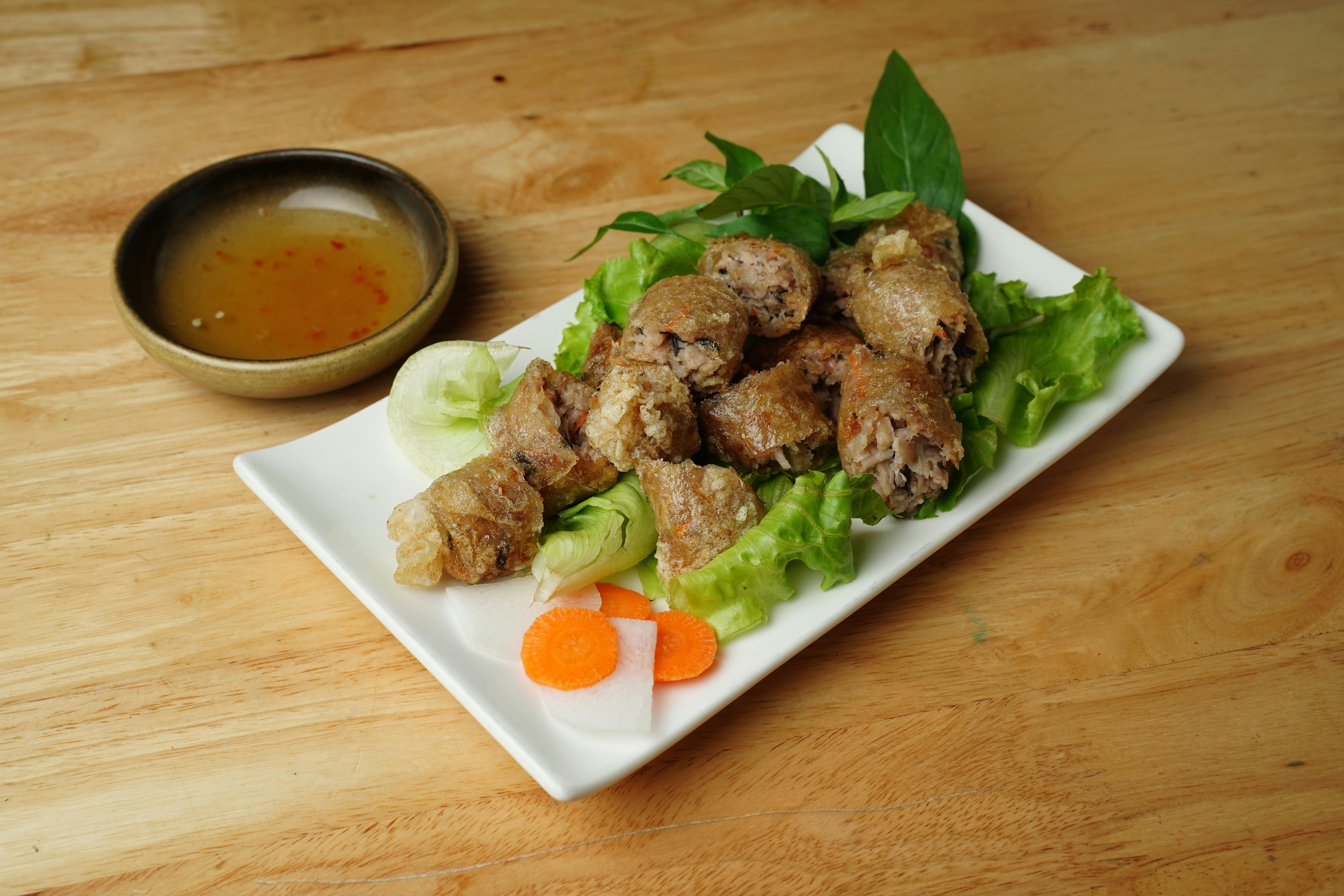
Photo: Kai-Chieh Chan / Pexels
The diets react (see scores below)
Common Ingredients
- pork belly
- ground pork
- rice vermicelli
- fish sauce
- lime juice
- pickled vegetables
- mint
- cilantro
Specific recipes may vary.
Incompatible with 7 of 11 diets
Diet Ratings
Bun Cha is fundamentally built around rice vermicelli noodles, which are a high-carb grain-based ingredient. A standard serving of rice vermicelli contains approximately 40-50g of net carbs on its own, which meets or exceeds the entire daily keto carb budget in a single component. The pork belly and ground pork are excellent keto proteins and fats, and the herbs, fish sauce, and pickled vegetables are largely low-carb condiments. However, the rice vermicelli is not a minor ingredient — it is a structural, defining component of the dish. Removing it would fundamentally change the dish into something else entirely. The dish as traditionally prepared is incompatible with ketosis.
Bun Cha contains multiple animal-derived ingredients that are strictly excluded from a vegan diet. Pork belly and ground pork are direct animal flesh, while fish sauce is derived from fermented fish — both are unambiguous animal products. There is no plant-based version of this dish in its traditional form, and no interpretation of vegan ethics accommodates the consumption of mammal or fish flesh.
Bun Cha is fundamentally built around rice vermicelli, which is a grain-based noodle and a clear paleo exclusion. While several components are paleo-friendly — pork belly, ground pork, lime juice, fresh herbs (mint, cilantro), and even fish sauce in its natural fermented form — the rice vermicelli is a non-negotiable grain product that disqualifies the dish as a whole. Pickled vegetables may also contain added salt or sugar depending on preparation, adding further concern. The dish cannot be considered paleo in its traditional form.
Bun Cha is centered on pork belly and ground pork — both red/processed meats high in saturated fat — which the Mediterranean diet limits to a few times per month. Pork belly in particular is a fatty cut that directly contradicts core Mediterranean principles. The rice vermicelli is a refined grain with minimal fiber. While the dish does include fresh herbs (mint, cilantro), pickled vegetables, and lime juice — all positive elements — these are peripheral components that do not offset the dominant protein and carbohydrate sources. Fish sauce, though high in sodium, is a minor ingredient. The overall profile is dominated by red meat and refined carbohydrates, placing this firmly in the 'avoid' category.
Bun Cha is fundamentally incompatible with the carnivore diet. While it does contain carnivore-friendly animal proteins (pork belly and ground pork), the dish is dominated by plant-based and processed ingredients that are strictly excluded. Rice vermicelli is a grain-based carbohydrate, a core exclusion on any carnivore protocol. Pickled vegetables, mint, and cilantro are all plant foods. Lime juice is fruit-derived. Even fish sauce, while animal-derived, is typically fermented with sugar and plant additives. This dish is a Vietnamese noodle dish at its core — the plant ingredients are not optional garnishes but structural, defining components of the recipe. No meaningful adaptation would leave the dish recognizable as Bun Cha.
Bun Cha contains rice vermicelli, which is a grain-based noodle (rice is an excluded grain on Whole30). This is a hard disqualifier. Additionally, the pickled vegetables may contain added sugar, which is also excluded. The remaining ingredients — pork belly, ground pork, fish sauce, lime juice, mint, and cilantro — are generally Whole30-compliant (fish sauce should be checked for added sugar or non-compliant additives, but is commonly acceptable). However, the rice vermicelli alone makes this dish non-compliant as prepared. Traditional Bun Cha cannot be made Whole30-compliant without fundamentally altering the dish by removing the noodles, which are central to its identity.
Bun Cha is largely low-FODMAP in its core components — pork belly and ground pork are protein sources with no FODMAPs, rice vermicelli is a gluten-free rice-based noodle that is low-FODMAP, fresh herbs like mint and cilantro are low-FODMAP in normal culinary amounts, and lime juice is low-FODMAP. Fish sauce itself is low-FODMAP in small quantities (1-2 tbsp). However, the dish carries significant caution flags in practice. First, traditional Bun Cha marinades and dipping sauces (nuoc cham) almost universally include garlic and/or shallots, which are high-FODMAP fructan sources — these are not listed but are near-universal in authentic recipes. Second, 'pickled vegetables' is vague; if it includes pickled daikon and carrot, these are low-FODMAP, but if it includes pickled onion or garlic, it becomes high-FODMAP. Third, fish sauce in large quantities (over ~2 tbsp) may accumulate excess fructose. The restaurant or home preparation context matters enormously — as ordered in a restaurant, hidden garlic and shallots in the marinade or dipping sauce are almost certain, making this dish risky during strict elimination.
Monash University rates rice vermicelli, pork, and fresh herbs as clearly low-FODMAP, and the dish could theoretically be made safe with careful ingredient control. However, clinical FODMAP practitioners would flag that authentic Bun Cha almost always contains garlic and shallots in marinades and nuoc cham dipping sauce, making restaurant versions unsuitable during the elimination phase without specific modification requests.
Bun Cha presents multiple significant concerns for DASH diet adherence. Pork belly is a high-saturated-fat, high-cholesterol red meat that DASH explicitly limits. Fish sauce is extremely high in sodium (roughly 1,400–1,600mg per 2 tablespoons), and the dipping broth in Bun Cha is fish-sauce-heavy, making it easy to exceed the DASH sodium ceiling of 2,300mg (or 1,500mg for low-sodium DASH) in a single serving. Ground pork, while leaner than belly, is still a red meat. Pickled vegetables, while providing some vegetable servings, are typically high in sodium as well. The combination of high-sodium fish sauce broth, high-saturated-fat pork belly, and pickled vegetables stacks sodium and saturated fat concerns in one dish. The positive elements — rice vermicelli (moderate glycemic), fresh herbs (mint, cilantro), and lime juice — do not offset these core DASH violations. This dish as traditionally prepared is incompatible with DASH principles.
Bun Cha presents a mixed Zone profile. On the positive side, the dish contains lean ground pork (acceptable Zone protein when portioned to ~25g), abundant fresh herbs (mint, cilantro) as favorable low-glycemic carb additions, pickled vegetables (favorable low-glycemic carbs with polyphenol benefits), fish sauce (negligible macros, adds flavor without Zone disruption), and lime juice (low-glycemic). The problematic elements are: (1) pork belly is a high-saturated-fat protein that significantly skews the fat block toward unfavorable saturated fat rather than Zone-preferred monounsaturated fats — it is not a lean protein; (2) rice vermicelli is a high-glycemic carbohydrate that Sears classifies as unfavorable, similar to white rice, and will spike insulin rather than maintaining the Zone's steady hormonal balance; (3) the traditional dish serves generous portions of both noodles and fatty pork, making the 40/30/30 ratio very difficult to achieve without major modifications. To bring Bun Cha into Zone compliance, a practitioner would need to dramatically reduce noodle quantity, substitute pork tenderloin or lean ground pork for pork belly, and add more vegetables. As traditionally served, it skews high-glycemic and high-saturated-fat.
Some Zone practitioners note that Sears' later anti-inflammatory writings (Zone Diet books post-2000) became somewhat more permissive about saturated fat in context of an overall anti-inflammatory diet. Additionally, the pickled vegetables, herbs, and fish sauce make Bun Cha a polyphenol-rich dish that aligns with Sears' emphasis on gut health and the Mediterranean-Asian dietary patterns he highlights in later works. A careful practitioner could portion a small amount of vermicelli (1 carb block ≈ ~9g net carbs of cooked noodles), use only the ground pork patties while avoiding pork belly, and load up on the herb-and-vegetable accompaniments to construct a reasonable Zone meal.
Bun Cha presents a mixed anti-inflammatory profile. On the positive side, it features several strongly anti-inflammatory elements: fresh herbs (mint and cilantro) provide polyphenols and antioxidants; lime juice offers vitamin C and flavonoids; rice vermicelli is a relatively neutral, gluten-free carbohydrate; fish sauce (fermented) adds some depth without major inflammatory concern; and pickled vegetables contribute beneficial acids and phytonutrients. However, the dish is anchored by pork belly — a high-fat, high-saturated-fat cut that is explicitly in the 'limit' category due to its saturated fat content, which is associated with elevated inflammatory markers (CRP, IL-6) in research. Ground pork is somewhat better but still a red meat. The dish is not fried in seed oils and avoids processed additives, which is a meaningful positive. Overall, the herb-heavy, fresh Vietnamese preparation style mitigates some of the pork belly concern, but the saturated fat load from pork belly prevents this from reaching 'approve' territory. Substituting pork belly with a leaner protein (chicken thigh, shrimp, or tofu) would shift this firmly into the approve range.
Some anti-inflammatory practitioners argue that minimally processed pork, especially in modest portions alongside abundant herbs and fermented foods, has a more neutral inflammatory effect than the 'red meat = inflammatory' framing suggests — particularly if the pork is pasture-raised with better fat profiles. Conversely, stricter anti-inflammatory protocols (and AIP-adjacent frameworks) would flag pork belly's saturated fat and arachidonic acid content as clearly pro-inflammatory and recommend avoiding this dish or heavily modifying it.
Bun Cha is a traditional Vietnamese dish that presents a mixed nutritional profile for GLP-1 patients. The primary concern is pork belly, a high-fat, high-saturated-fat cut that worsens GLP-1 side effects including nausea, bloating, and reflux due to its slow digestibility and fat load. Ground pork (the patties) is moderately better but still contributes meaningful saturated fat. On the positive side, the dish has real strengths: rice vermicelli is easy to digest and portion-controllable; fish sauce and lime provide flavor with minimal calories; pickled vegetables add beneficial probiotics and fiber; and fresh herbs (mint, cilantro) support digestion. The broth-based serving format also aids hydration. However, the fat content from pork belly is a significant drawback that prevents approval. A modified version substituting ground pork-only patties (no belly) with leaner preparation would score considerably higher (6-7). As served traditionally, the pork belly component tips this into caution territory.
Some GLP-1-focused dietitians may rate this more favorably given its broth-based format, fresh herbs, and relatively moderate portion sizes typical of Vietnamese cuisine — arguing the fat is distributed across the meal and the overall calorie density is lower than Western fatty dishes. Others take a stricter line on any pork belly inclusion, citing the saturated fat and slow gastric emptying as unacceptable risks for patients already experiencing GI side effects.
*See how scores were generated at our methodology page.
Nutritional profile
Six traits that cut across every diet.
Fiber & Plants
How much whole-plant food and fiber it delivers.
Healthy Fats
The quality of its fats (unsaturated, omega-3).
Whole / Unprocessed
How close it is to its natural, unprocessed form.
Gut Gentle
How easy it is on digestion (low FODMAP, few irritants).
Low Glycemic
How little it spikes your blood sugar.
Protein Density
How much protein it packs per calorie.
Controversy Index
Higher controversy = more disagreement between diets.
Diet-Specific Tips
 Low-FODMAP — 5/10
View tips
- Rice vermicelli is low-FODMAP — safe gluten-free grain base
- Pork belly and ground pork are FODMAP-free protein sources
- Traditional marinades almost always contain garlic and/or shallots (high-FODMAP fructans) — not listed but nearly universal in authentic preparation
- Nuoc cham dipping sauce typically contains garlic, a high-FODMAP ingredient
- Pickled vegetables are likely low-FODMAP (daikon/carrot) but could include high-FODMAP pickled onion
- Fish sauce is low-FODMAP at standard serving sizes (1-2 tbsp)
- Mint and cilantro are low-FODMAP at culinary amounts
- Safe as a home-prepared dish with garlic/shallot omission; risky as a restaurant dish
 Zone — 4/10
View tips
- Pork belly is high in saturated fat — not a Zone-favorable lean protein
- Rice vermicelli is a high-glycemic unfavorable carbohydrate in Zone terminology
- Ground pork component is more Zone-adaptable than pork belly if portioned correctly
- Pickled vegetables, mint, and cilantro are excellent Zone-favorable low-glycemic carbs
- Fish sauce and lime juice are essentially macro-neutral and Zone-compatible
- Traditional serving portions of noodles far exceed a single Zone carb block
- Dish requires significant modification (reduce noodles, eliminate pork belly) to approach Zone compliance
 Anti-Inflammatory — 5/10
View tips
- Pork belly is high in saturated fat — a pro-inflammatory component linked to elevated CRP and IL-6
- Ground pork is a red meat in the 'limit' category for anti-inflammatory eating
- Fresh herbs (mint, cilantro) are rich in anti-inflammatory polyphenols and antioxidants
- Lime juice provides vitamin C and flavonoids with antioxidant activity
- Pickled vegetables support gut microbiome diversity — an indirect anti-inflammatory benefit
- Rice vermicelli is gluten-free and a relatively neutral carbohydrate with moderate glycemic impact
- No seed oils, trans fats, or artificial additives — a meaningful positive for this type of cuisine
- Portion size of pork belly is a key modifier — smaller portions significantly reduce inflammatory burden
 GLP-1 Friendly — 4/10
View tips
- Pork belly is high in saturated fat — a significant negative for GLP-1 patients prone to nausea and slowed gastric emptying
- Ground pork patties contribute additional fat, though less than belly
- Protein content is moderate but not high-density per calorie due to fat load
- Rice vermicelli is easy to digest and portion-friendly
- Pickled vegetables provide fiber and digestive support
- Broth-based format aids hydration — a positive
- Fresh herbs support digestion and add micronutrients with negligible calories
- No fried components — a relative advantage over many pork dishes
- Dish is salvageable with ingredient modification (remove belly, use leaner pork)