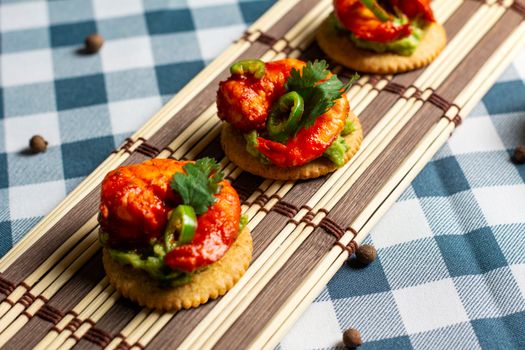
Photo: Gerardo Pantoja / Pexels
Mexican
Camarones al Mojo de Ajo
The diets react (see scores below)
Common Ingredients
- shrimp
- garlic
- butter
- lime juice
- white wine
- parsley
- red pepper flakes
- olive oil
Specific recipes may vary.
Incompatible with 4 of 11 diets
Diet Ratings
Camarones al Mojo de Ajo is an excellent keto dish. Shrimp is a lean, high-quality protein with virtually zero carbs. The sauce is built on butter and olive oil, providing healthy fats. Garlic adds minimal carbs at typical serving amounts. Lime juice contributes negligible carbs in small quantities. Parsley and red pepper flakes are trace ingredients. The only minor concern is white wine, which contains residual sugars and carbs, but in a typical sauce preparation the quantity per serving is small (most alcohol cooks off, leaving minimal carbs). Overall net carbs per serving are well within keto limits, and the fat profile from butter and olive oil is ideal.
Strict keto protocols may flag the white wine, as even small amounts of alcohol-derived sugars and carbohydrates can be a concern for those in early ketosis or with strict carb limits. Some purists recommend substituting chicken broth or simply omitting wine entirely.
Camarones al Mojo de Ajo contains multiple animal-derived ingredients that disqualify it entirely from a vegan diet. Shrimp is seafood — an animal product — and is the primary protein of the dish. Butter is a dairy product derived from cow's milk. Both are unambiguously excluded under all mainstream vegan standards. There is no meaningful debate within the vegan community about either ingredient.
Camarones al Mojo de Ajo is largely paleo-friendly but contains two debated ingredients: butter and white wine. Shrimp, garlic, lime juice, parsley, red pepper flakes, and olive oil are all straightforwardly paleo-approved. Butter is a dairy product — excluded under strict Cordain-school paleo — though many modern paleo practitioners accept it, particularly grass-fed butter, as a minimally processed animal fat. White wine is an alcoholic, processed product (fermented grain/fruit); alcohol falls into a gray area within paleo and is generally considered a 'caution' ingredient at best. Together, these two ingredients prevent a clean approval, landing the dish in caution territory. Substituting ghee or olive oil for butter and omitting or replacing the wine with extra lime juice and broth would make this dish fully paleo-compliant.
Strict Cordain-school paleo excludes butter entirely as a dairy derivative and would flag white wine as a non-paleo processed product, potentially rating this dish closer to 'avoid.' Conversely, more permissive modern paleo frameworks (Mark Sisson's Primal Blueprint, Whole30 in spirit) often accept grass-fed butter and occasional wine, which would push this toward a soft 'approve.'
Camarones al Mojo de Ajo is built around shrimp, which is an excellent Mediterranean-compatible protein (seafood eaten 2-3 times weekly is strongly encouraged). Garlic, olive oil, lime juice, parsley, and red pepper flakes are all highly compatible with Mediterranean principles. The complicating factor is butter, which is not a canonical Mediterranean fat — olive oil is the preferred primary fat. The inclusion of both butter and olive oil places this dish in a moderate zone: the seafood base and aromatics are ideal, but the butter adds saturated fat inconsistent with strict Mediterranean guidelines. White wine is a minor ingredient used in cooking and is generally acceptable. Overall, this is a near-approve dish that would fully align if butter were replaced with additional olive oil.
Some Mediterranean diet practitioners, particularly those referencing southern Italian coastal traditions where small amounts of butter occasionally appear in seafood preparations, would consider this dish fully approvable given the dominant presence of olive oil, garlic, and seafood. Strict clinical guidelines (e.g., Predimed protocol) would flag butter as a discouraged fat and recommend substitution.
Camarones al Mojo de Ajo contains multiple non-carnivore ingredients that disqualify it from the diet. While shrimp is an approved animal protein and butter is a debated but widely accepted dairy fat, the dish includes several plant-derived ingredients: garlic, lime juice, white wine (fermented plant product), parsley (herb), red pepper flakes (spice), and olive oil (plant-derived fat). The combination of these plant foods makes this dish incompatible with carnivore principles. Even the most lenient carnivore practitioners who allow spices and condiments in small amounts would object to the volume and variety of plant ingredients here — garlic, lime juice, white wine, fresh herbs, and plant oil together represent a significant departure from animal-only eating.
This dish contains butter, which is a dairy product explicitly excluded on Whole30. The only dairy exception is ghee or clarified butter — regular butter is not allowed. Additionally, white wine is an alcoholic ingredient, and alcohol is excluded on Whole30. All other ingredients (shrimp, garlic, lime juice, parsley, red pepper flakes, olive oil) are fully compliant. However, two clearly excluded ingredients (butter and white wine) make this dish non-compliant as described. A compliant version could be made by substituting ghee for butter and omitting the white wine (or replacing it with compliant chicken broth or additional lime juice).
Camarones al Mojo de Ajo is built around shrimp (low-FODMAP) but its defining ingredient is garlic — used in significant quantities as the dish's centerpiece (mojo de ajo literally means 'garlic sauce'). Whole or minced garlic is high-FODMAP due to fructans and must be avoided during elimination. The critical question is preparation: if the garlic is cooked/infused in oil and then removed before eating, the resulting garlic-infused oil is low-FODMAP because fructans are water-soluble and do not transfer into fat. However, in traditional preparation, garlic cloves are typically left in the dish and consumed, making this high-FODMAP. Butter adds minor lactose concern at large amounts but is generally low-FODMAP at typical serving sizes. White wine is low-FODMAP in small amounts (~150ml). Lime juice, parsley, red pepper flakes, and olive oil are all low-FODMAP. The dish can be made low-FODMAP by using garlic-infused oil and removing garlic pieces, but as traditionally prepared with garlic consumed, it scores as a caution-to-avoid.
Monash University confirms garlic is high-FODMAP at any culinary serving due to fructans, but garlic-infused oil is explicitly rated low-FODMAP. Many FODMAP practitioners flag this dish entirely during elimination because restaurant or home versions almost always include consumed garlic pieces; the safe version requires a deliberate substitution that fundamentally alters the dish's character.
Camarones al Mojo de Ajo is built around shrimp, a lean protein that DASH explicitly endorses, and garlic, olive oil, lime juice, parsley, and red pepper flakes — all DASH-friendly ingredients. Shrimp is low in saturated fat and calories and provides magnesium and potassium. However, two ingredients create hesitation: butter adds saturated fat, which DASH limits, and shrimp itself carries moderate dietary cholesterol (though DASH guidelines focus more on saturated fat than dietary cholesterol per updated interpretations). White wine contributes minimal nutritional concern. The dish is naturally low in sodium if prepared at home without added salt, which is a clear advantage. The primary concern is butter — substituting additional olive oil for butter would move this dish solidly into 'approve' territory. As prepared with butter, it sits in cautious-moderate territory: acceptable for a DASH follower when portion-controlled and prepared with minimal or no added salt.
NIH DASH guidelines restrict saturated fat broadly, which would flag the butter content here. However, updated clinical interpretations note that butter in modest amounts within an otherwise DASH-compliant dish is unlikely to undermine the overall dietary pattern, and some DASH-oriented dietitians permit small amounts of butter when the rest of the meal is low in saturated fat. The cholesterol concern from shrimp has diminished since the 2020–2025 Dietary Guidelines removed the 300mg/day cholesterol cap.
Camarones al Mojo de Ajo has a strong Zone foundation but requires portioning adjustments. Shrimp is an excellent lean protein — very low in fat and high in protein, making it nearly ideal as a Zone protein block. Garlic, lime juice, parsley, and red pepper flakes are all favorable Zone carbohydrate contributors (very low glycemic, anti-inflammatory polyphenols). The fat profile is the key issue: this dish uses both butter (saturated fat) and olive oil (monounsaturated fat). Zone protocol, especially early Sears, discourages saturated fat and favors monounsaturated fat. The white wine adds a small carbohydrate load that is mostly cooked off but still worth noting. If olive oil is used as the primary fat and butter is minimized or eliminated, this dish moves closer to a Zone-ideal meal. As traditionally prepared with a significant butter component, it lands in 'caution' territory — usable and nutritionally reasonable, but the saturated fat from butter conflicts with Zone's fat quality guidelines. Pairing with a low-glycemic vegetable side (e.g., sautéed zucchini or a green salad) would complete the Zone block balance, as the dish itself is carbohydrate-light.
Dr. Sears' later works (The OmegaRx Zone, Zone Perfect Meals in Minutes) show a softened stance on small amounts of saturated fat, especially when the overall meal is anti-inflammatory. Some Zone practitioners argue that a modest amount of butter in a dish otherwise rich in olive oil, garlic (polyphenols), and omega-3-leaning shrimp is entirely acceptable within the Zone framework. In that reading, this dish could score as high as 7-8 with appropriate portioning.
Camarones al Mojo de Ajo has a mixed anti-inflammatory profile. On the positive side, shrimp provides lean protein and contains astaxanthin, a potent antioxidant carotenoid, along with modest amounts of omega-3 fatty acids and selenium. Garlic is a well-established anti-inflammatory ingredient rich in allicin and organosulfur compounds shown to reduce inflammatory markers. Olive oil (if extra virgin) contributes oleocanthal and polyphenols. Red pepper flakes provide capsaicin, which has documented anti-inflammatory effects. Lime juice adds vitamin C and flavonoids. Parsley offers antioxidants and vitamin K. The main concern is butter, a saturated fat that the anti-inflammatory framework places in the 'limit' category. While the amount used in this dish is likely moderate, it does introduce saturated fat that can promote inflammatory pathways when consumed in quantity. White wine is neutral to mildly concerning — not red wine with resveratrol, but small cooking quantities are unlikely to be a major issue. Shrimp itself is debated: some anti-inflammatory practitioners note its relatively high cholesterol and omega-6 content compared to fatty fish, though mainstream sources consider lean shellfish acceptable. Overall, this dish leans anti-inflammatory due to garlic, olive oil, chili, and lean protein, but the butter and absence of omega-3-rich fish keep it in the 'caution' range rather than a full approval.
Most anti-inflammatory guidance would consider this dish acceptable given its garlic, olive oil, and spice components — Dr. Weil's pyramid endorses seafood broadly and includes these flavor bases. However, strict anti-inflammatory practitioners would flag the butter (saturated fat) and suggest substituting additional extra virgin olive oil to shift the profile toward a more unambiguous approval; some protocols also express caution about shrimp due to its omega-6-to-omega-3 ratio compared to fatty fish.
Camarones al Mojo de Ajo is built around shrimp, which is an excellent lean protein source for GLP-1 patients — low in fat, high in protein, and easy to digest. The garlic, lime juice, and parsley add nutrients with minimal caloric cost. However, the combination of butter and olive oil is the key concern: traditional preparations use a meaningful amount of butter, which adds saturated fat and increases the caloric density of the dish beyond what is ideal for GLP-1 patients who need nutrient-dense, low-fat meals. The white wine contributes alcohol. Red pepper flakes may worsen reflux or nausea in sensitive patients, particularly those experiencing GLP-1 GI side effects. If prepared with olive oil only (no butter), reduced pepper flakes, and the white wine omitted or minimized, this dish would score higher and approach an approve rating. As typically prepared, it lands in caution territory — a good protein base undermined by the fat profile of the sauce.
Some GLP-1-focused dietitians consider butter-based shrimp dishes acceptable in moderation given the high protein density of shrimp and the relatively small volume of fat in a single serving, arguing that the overall fat load is manageable if portions are controlled. Others flag butter more firmly due to the heightened sensitivity to fat-induced nausea and delayed gastric emptying on GLP-1 medications, recommending an olive-oil-only preparation as the safer default.
*See how scores were generated at our methodology page.
Nutritional profile
Six traits that cut across every diet.
Fiber & Plants
How much whole-plant food and fiber it delivers.
Healthy Fats
The quality of its fats (unsaturated, omega-3).
Whole / Unprocessed
How close it is to its natural, unprocessed form.
Gut Gentle
How easy it is on digestion (low FODMAP, few irritants).
Low Glycemic
How little it spikes your blood sugar.
Protein Density
How much protein it packs per calorie.
Controversy Index
Higher controversy = more disagreement between diets.
Diet-Specific Tips
 Keto — 9/10
View tips
- Shrimp is zero-carb, high-quality protein — ideal for keto
- Butter and olive oil provide excellent healthy fat content
- Garlic is low-carb at typical mojo de ajo quantities
- White wine adds minimal residual carbs per serving after cooking, but is a minor flag for strict keto
- Lime juice contributes negligible net carbs in sauce portions
- No grains, starches, or added sugars in the ingredient list
- Whole, unprocessed ingredients align with keto principles
 Paleo — 5/10
View tips
- Shrimp is a fully paleo-approved protein
- Olive oil, garlic, lime juice, parsley, and red pepper flakes are all paleo-approved
- Butter is a dairy product — excluded by strict paleo (Cordain), accepted by many modern paleo practitioners
- White wine is a processed, fermented product — classified as caution/alcohol within paleo
- No grains, legumes, refined sugar, seed oils, or artificial additives present
- Dish can be made fully paleo with simple substitutions (ghee or olive oil for butter, omit wine)
 Mediterranean — 6/10
View tips
- Shrimp is an ideal Mediterranean protein source, encouraged 2-3 times weekly
- Olive oil, garlic, parsley, and red pepper flakes are core Mediterranean ingredients
- Butter is not a canonical Mediterranean fat and adds saturated fat inconsistent with guidelines
- Olive oil is present alongside butter, partially offsetting the concern
- White wine used in cooking is generally acceptable in Mediterranean cuisine
- No refined grains, added sugars, or highly processed ingredients present
 DASH — 6/10
View tips
- Shrimp is a DASH-approved lean protein source
- Butter adds saturated fat, which DASH limits
- Olive oil is the preferred fat in DASH — partially offsets butter concern
- Naturally low sodium if no salt is added during preparation
- Garlic, parsley, lime juice, and red pepper flakes are all DASH-compatible
- Moderate dietary cholesterol from shrimp is less of a concern under current guidelines
- Substituting olive oil for butter would raise score to 8
 Zone — 6/10
View tips
- Shrimp is a near-ideal Zone lean protein — low fat, high protein, easily portioned in 7g blocks
- Butter introduces saturated fat, which conflicts with Zone's preference for monounsaturated fats
- Olive oil is a favorable Zone fat source (monounsaturated)
- Garlic, parsley, lime juice, and red pepper flakes are favorable low-glycemic carb contributors with anti-inflammatory polyphenols
- Dish is carbohydrate-light and would need a low-GI vegetable side to complete Zone macronutrient ratios
- White wine contributes minimal residual carbohydrates after cooking — negligible Zone impact
- Reducing butter and increasing olive oil as the primary fat would significantly improve Zone compatibility
 Anti-Inflammatory — 6/10
View tips
- Shrimp provides lean protein, astaxanthin, selenium, and modest omega-3s
- Garlic is a well-documented anti-inflammatory ingredient (allicin, organosulfur compounds)
- Olive oil contributes oleocanthal and polyphenols — strongly anti-inflammatory if extra virgin
- Red pepper flakes add capsaicin with anti-inflammatory properties
- Butter introduces saturated fat, a 'limit' ingredient in anti-inflammatory frameworks
- White wine is neutral in small cooking quantities but lacks the resveratrol benefit of red wine
- Lime juice and parsley add antioxidants and vitamin C
 GLP-1 Friendly — 6/10
View tips
- Shrimp is a lean, high-protein, easy-to-digest protein — strongly positive for GLP-1 patients
- Butter adds saturated fat that can worsen nausea, bloating, and reflux due to slowed gastric emptying
- White wine introduces alcohol, which is cautioned against on GLP-1 medications even in cooked form
- Olive oil is a preferred unsaturated fat but adds to total fat load alongside butter
- Red pepper flakes may trigger or worsen GI side effects in sensitive patients
- Low fiber content — pairs best with a high-fiber side such as beans or roasted vegetables
- Small-portion friendly — shrimp works well in the reduced-appetite context of GLP-1 use
- Easily modified toward a higher score by substituting olive oil for butter and omitting wine