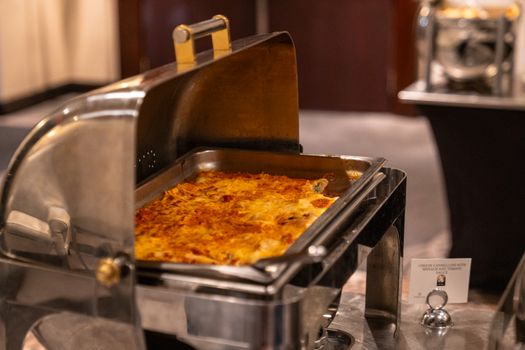
Photo: Justin Agyarko / Pexels
The diets react (see scores below)
Common Ingredients
- cannelloni pasta
- ground beef
- ricotta
- spinach
- tomato sauce
- béchamel
- Parmesan
- mozzarella
Specific recipes may vary.
Incompatible with 7 of 11 diets
Diet Ratings
Cannelloni is fundamentally incompatible with a ketogenic diet. The dish is built around cannelloni pasta tubes, which are made from refined wheat flour and are extremely high in net carbs — a single serving can easily contain 40-60g of net carbs from the pasta alone, instantly exceeding the daily keto limit. The tomato sauce adds additional sugars and carbs, and the béchamel sauce (made with flour and milk) compounds the carbohydrate load further. While some individual ingredients like ground beef, ricotta, spinach, Parmesan, and mozzarella are keto-friendly, the structural pasta component makes this dish impossible to consume on keto in any meaningful portion without breaking ketosis.
This cannelloni dish contains multiple animal products that are strictly excluded from a vegan diet. Ground beef is animal flesh, ricotta is a dairy cheese, béchamel sauce is traditionally made with butter and milk, Parmesan is an aged dairy cheese, and mozzarella is a dairy cheese. The dish is fundamentally incompatible with veganism across every major protein and sauce component. Only the cannelloni pasta, spinach, and tomato sauce are potentially plant-based.
Cannelloni is fundamentally incompatible with the paleo diet. The dish is built around cannelloni pasta, a wheat-based grain product that is strictly excluded from paleo. Beyond the pasta, multiple dairy ingredients — ricotta, béchamel (typically made with butter and flour), Parmesan, and mozzarella — are all excluded. The only paleo-compliant ingredients in the entire dish are the ground beef, spinach, and tomato sauce. This dish violates core paleo principles on nearly every front: grains, dairy, and processed flour-based sauces all appear together. There is no meaningful paleo adaptation possible without deconstructing the dish entirely.
Cannelloni with ground beef is problematic from a Mediterranean diet perspective on multiple fronts. Red meat (ground beef) is a primary protein, which should be limited to a few times per month. The dish combines refined pasta (not whole grain), béchamel sauce (butter-based, high in saturated fat), and multiple full-fat dairy components (ricotta, Parmesan, mozzarella). While spinach and tomato sauce are positive Mediterranean elements, they are minor components in an otherwise heavy, dairy- and red-meat-laden dish. The overall profile — refined grains, red meat, excessive saturated fat from béchamel and multiple cheeses — conflicts with Mediterranean principles of moderation in animal products and emphasis on olive oil over butter-based sauces.
Some traditional Southern Italian and Sicilian culinary traditions incorporate pasta dishes with meat and cheese as celebratory or Sunday meals, consumed occasionally. A Mediterranean-aligned adaptation substituting ground beef with lentils or turkey, using whole-grain pasta, and replacing béchamel with more olive oil and tomato sauce could make this acceptable as an occasional dish.
Cannelloni is fundamentally incompatible with the carnivore diet. The dish is built around cannelloni pasta, a grain-based food, which alone disqualifies it entirely. Beyond the pasta, it contains multiple additional plant-derived and processed ingredients: spinach (a leafy vegetable), tomato sauce (plant-based), and béchamel (typically made with flour). While the ground beef and dairy components (ricotta, Parmesan, mozzarella) are animal-derived, they are wholly insufficient to redeem a dish that is structurally dependent on grains and vegetables. This is a classic Italian comfort food with no viable carnivore adaptation without completely rebuilding the dish from scratch.
Cannelloni contains multiple excluded ingredients that make it entirely incompatible with the Whole30 program. The cannelloni pasta itself is a grain-based food (wheat) and is explicitly excluded. Additionally, ricotta, Parmesan, and mozzarella are all dairy products, which are excluded on Whole30. Béchamel sauce is traditionally made with butter (excluded dairy) and flour (excluded grain). There is no compliant workaround that would preserve the dish as cannelloni — the pasta tubes are the very structure of the dish. The ground beef and spinach are compliant, but they are minor components in an otherwise wholly non-compliant recipe.
Cannelloni is a high-FODMAP dish with multiple problematic ingredients that make it unsuitable during the elimination phase. The cannelloni pasta is made from wheat flour, which is high in fructans — a major FODMAP trigger. Ricotta cheese is high in lactose and would need to be limited to very small amounts (under 2 tbsp) to remain low-FODMAP, yet it is typically a primary filling ingredient. Béchamel sauce is traditionally made with wheat flour (fructans) and milk (lactose), compounding the problem. Tomato sauce, while potentially low-FODMAP if made without onion or garlic, very commonly contains both high-FODMAP ingredients. The combination of wheat pasta, ricotta filling, and wheat-based béchamel makes this dish high-FODMAP regardless of portion size. Ground beef, spinach (in moderate amounts), Parmesan, and mozzarella are individually low-FODMAP, but they cannot rescue this dish from its core high-FODMAP components.
Cannelloni as traditionally prepared presents a mixed DASH diet profile. The dish contains several DASH-friendly elements — spinach (rich in potassium, magnesium, and fiber), tomato sauce (lycopene, potassium), and some lean protein from beef. However, the overall dish is problematic for DASH adherence due to multiple high-saturated-fat dairy components (ricotta, Parmesan, mozzarella, béchamel made with butter and full-fat milk), ground beef as the primary protein (red meat, which DASH limits), refined pasta rather than whole grain, and the cumulative sodium from cheese, tomato sauce, and béchamel. The combination of full-fat cheeses and béchamel sauce significantly elevates saturated fat content beyond DASH targets. Sodium can easily exceed 800–1,000mg per serving depending on preparation. The dish is not inherently off-limits — the spinach and tomato components align with DASH — but the overall composition tilts it toward a 'caution' rating requiring significant modification to fit DASH guidelines.
NIH DASH guidelines clearly limit red meat and full-fat dairy, making traditional cannelloni a marginal choice at best. However, some DASH-oriented nutritionists note that a modified version using part-skim ricotta, reduced-fat mozzarella, lean ground turkey or chicken, whole-grain pasta, and a low-sodium tomato sauce could meaningfully improve the dish's DASH compatibility — suggesting the recipe itself is adaptable rather than categorically problematic.
Cannelloni presents multiple Zone compliance challenges that make it difficult to incorporate without significant modification. The cannelloni pasta itself is a high-glycemic refined carbohydrate — an 'unfavorable' carb in Zone terminology — that contributes a large carb block load with a high glycemic index. The béchamel sauce adds saturated fat from butter and flour (more high-glycemic carbs), further skewing the ratio. The cheese combination (ricotta, Parmesan, mozzarella) layers in additional saturated fat. On the positive side, the dish does contain some Zone-friendly elements: spinach is an excellent low-glycemic vegetable carb source, ground beef provides protein (though a leaner cut would be preferred), and tomato sauce offers polyphenols. However, the overall macro profile of a typical serving is heavily carbohydrate-dominant from the pasta and béchamel, with saturated fat dominating the fat profile and the 40/30/30 ratio being very difficult to achieve. A Zone practitioner could theoretically eat a very small portion alongside a large side salad and lean protein to rebalance ratios, but the dish as traditionally served is a poor Zone meal. It earns a 4 rather than lower because it does contain protein and favorable ingredients, but the pasta and béchamel make it structurally challenging.
Cannelloni presents a mixed anti-inflammatory profile. On the positive side, spinach contributes antioxidants (lutein, zeaxanthin, vitamin K) and anti-inflammatory phytonutrients, and tomato sauce provides lycopene — a well-studied carotenoid with anti-inflammatory properties that actually increases in bioavailability when cooked. Ricotta and Parmesan, while dairy-based, are relatively moderate in saturated fat compared to heavy cream or butter, and ricotta contributes some protein and calcium. However, the dish carries several pro-inflammatory concerns: ground beef is a red meat, which anti-inflammatory guidelines recommend limiting due to saturated fat content and its association with elevated CRP and arachidonic acid load. The béchamel sauce typically contains butter and whole milk, adding saturated fat. The combination of ricotta, mozzarella, and Parmesan means a high total full-fat dairy load. Cannelloni pasta is a refined carbohydrate, which can promote insulin response and low-grade inflammation. The dish is calorie-dense and rich in saturated fat, which is the dominant concern here. It is not an avoid because of the meaningful antioxidant and vegetable contributions (spinach, tomatoes), but it is far from aligned with anti-inflammatory eating principles as a regular meal choice.
Cannelloni is a nutritionally mixed dish for GLP-1 patients. On the positive side, the combination of ground beef, ricotta, and Parmesan does contribute meaningful protein, and spinach adds some fiber and micronutrient value. However, the dish carries several significant drawbacks in this context. The béchamel sauce is high in saturated fat and refined flour, adding calorie-dense, low-nutrient content. The multi-cheese layer (ricotta, Parmesan, mozzarella) further raises the saturated fat load. Ground beef, unless very lean (90%+ lean), contributes additional saturated fat. The refined pasta shell is low in fiber and slows digestibility further on top of GLP-1's already slowed gastric emptying — this combination can worsen bloating, nausea, and reflux. Caloric density per small serving is high relative to its protein and fiber payoff, which conflicts with the nutrient-density-per-calorie priority. A small GLP-1-appropriate portion may deliver only moderate protein (roughly 15–20g depending on beef quantity and portion size) while delivering significant fat and refined carbohydrates. It is not an 'avoid' because it contains real food ingredients with genuine nutritional value, but it is not optimized for GLP-1 patients without significant modifications (leaner beef, reduced or eliminated béchamel, whole wheat pasta, larger spinach proportion).
Some GLP-1-focused dietitians may rate a carefully portioned homemade version more favorably, arguing that the ricotta-beef-spinach filling provides a reasonable protein-to-calorie ratio and that fat content concerns are overstated if saturated fat per serving remains moderate. Others would flag the béchamel and refined pasta as non-negotiable drawbacks given how consistently GLP-1 patients report worsened nausea and bloating with heavy, starchy, cream-sauced dishes — individual GI tolerance varies considerably.
*See how scores were generated at our methodology page.
Nutritional profile
Six traits that cut across every diet.
Fiber & Plants
How much whole-plant food and fiber it delivers.
Healthy Fats
The quality of its fats (unsaturated, omega-3).
Whole / Unprocessed
How close it is to its natural, unprocessed form.
Gut Gentle
How easy it is on digestion (low FODMAP, few irritants).
Low Glycemic
How little it spikes your blood sugar.
Protein Density
How much protein it packs per calorie.
Controversy Index
Higher controversy = more disagreement between diets.
Diet-Specific Tips
 DASH — 4/10
View tips
- Ground beef is a red meat — DASH recommends limiting red meat and preferring poultry or fish
- Multiple full-fat dairy components (ricotta, mozzarella, Parmesan, béchamel) elevate saturated fat well above DASH targets
- Béchamel sauce adds saturated fat from butter and potentially full-fat milk
- Refined pasta rather than whole grain reduces fiber and micronutrient value
- Spinach is a strong DASH-positive ingredient — rich in potassium, magnesium, and fiber
- Tomato sauce contributes potassium and lycopene but adds sodium
- Cumulative sodium from cheeses and sauce likely exceeds 800–1,000mg per serving
- Portion size matters significantly — a single stuffed cannelloni vs. a full serving changes the nutritional calculus
 Zone — 4/10
View tips
- Cannelloni pasta is a refined, high-glycemic 'unfavorable' carbohydrate that dominates the dish's carb load
- Béchamel sauce adds both saturated fat (butter) and additional refined carbs (flour), compounding the Zone imbalance
- Multi-cheese combination (ricotta, Parmesan, mozzarella) skews fat profile toward saturated rather than preferred monounsaturated fats
- Spinach is a Zone-favorable low-glycemic vegetable that partially redeems the carbohydrate quality
- Ground beef provides protein but is less lean than preferred Zone sources like skinless chicken or fish
- Tomato sauce contributes polyphenols and lycopene, aligning with Sears' anti-inflammatory emphasis
- As served, the 40/30/30 ratio is severely distorted — likely closer to 60%+ carbs with saturated fat dominating the fat portion
- Portion control could technically fit a small serving into a Zone meal plan, but the structural ratio imbalance is hard to overcome
 Anti-Inflammatory — 4/10
View tips
- Ground beef (red meat) — limited in anti-inflammatory guidelines due to saturated fat and arachidonic acid
- Béchamel sauce adds saturated fat via butter and whole milk
- High total full-fat dairy load (ricotta + mozzarella + Parmesan)
- Refined pasta carbohydrates promote insulin response and low-grade inflammation
- Spinach provides anti-inflammatory antioxidants (lutein, zeaxanthin, vitamin K)
- Cooked tomato sauce delivers bioavailable lycopene — a beneficial carotenoid
 GLP-1 Friendly — 4/10
View tips
- Béchamel sauce is high in saturated fat and refined flour — worsens nausea, bloating, and reflux risk on GLP-1s
- Refined pasta shell has low fiber and compounds GLP-1's slowed gastric emptying
- Multi-cheese profile (ricotta, mozzarella, Parmesan) raises saturated fat load significantly
- Ground beef protein contribution is meaningful but depends heavily on fat percentage of the beef used
- Spinach provides some fiber and micronutrients — a positive element
- High caloric density per small serving relative to protein and fiber delivered
- Not inherently fried or sugary, but overall macronutrient profile is poorly matched to GLP-1 dietary priorities
- Portion sensitivity is high — even a small serving carries substantial fat and refined carbohydrate