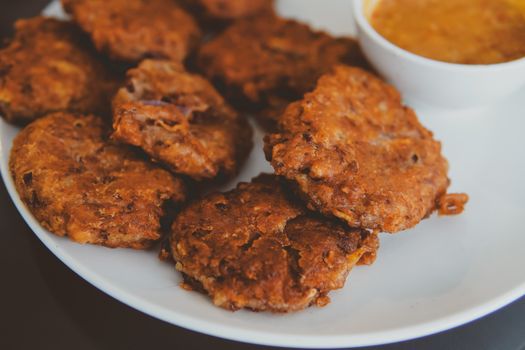
Photo: Su La Pyae / Pexels
Caribbean
Conch Fritters
The diets react (see scores below)
Common Ingredients
- conch
- flour
- bell pepper
- onion
- Scotch bonnet
- baking powder
- celery
- lime
Specific recipes may vary.
Incompatible with 7 of 11 diets
Diet Ratings
Conch fritters are fundamentally incompatible with a ketogenic diet. The primary batter is made with wheat flour, which is a grain-based ingredient that alone can deliver 20-30g+ of net carbs per serving. Baking powder adds minor carbs as well. While conch itself is a lean seafood protein that is keto-neutral, and the vegetables (bell pepper, onion, celery, Scotch bonnet, lime) are used in small amounts and contribute modest carbs, the flour-based batter is the dealbreaker. A standard serving of 4-6 fritters could easily contain 30-50g of net carbs from flour alone, instantly blowing a daily keto carb budget. This is a deep-fried battered food structurally identical to hush puppies or corn fritters in terms of keto compatibility.
Conch fritters contain conch as their primary protein, which is a marine mollusk and therefore an animal product. All animal flesh, including seafood and mollusks, is strictly excluded from a vegan diet. The remaining ingredients (flour, bell pepper, onion, Scotch bonnet, baking powder, celery, lime) are all plant-based, but the presence of conch makes this dish entirely incompatible with vegan dietary standards.
Conch Fritters are disqualified primarily by flour and baking powder. Flour is a refined wheat grain product — one of the clearest exclusions in the paleo framework — and baking powder typically contains cornstarch, another grain derivative. While conch (a shellfish/mollusk) is fully paleo-approved as a lean, wild-caught seafood, and the aromatics (bell pepper, onion, Scotch bonnet, celery, lime) are all clean paleo vegetables and citrus, the grain-based batter that defines this dish as 'fritters' makes it a firm avoid. The dish cannot be considered paleo in its traditional form; the flour is not incidental — it is the structural foundation of the recipe.
Conch fritters present a mixed Mediterranean diet picture. The primary protein — conch, a shellfish/mollusk — aligns well with the Mediterranean emphasis on seafood eaten 2-3 times weekly. The vegetable ingredients (bell pepper, onion, celery, Scotch bonnet, lime) are wholesome and Mediterranean-friendly. However, the preparation method is the critical issue: the fritters are deep-fried batter made with refined white flour and baking powder, which contradicts Mediterranean principles that favor whole grains, minimal refined carbohydrates, and olive oil as the primary fat rather than frying oil. The refined flour base and deep-frying push this dish into the 'caution' zone despite its seafood and vegetable content.
Some Mediterranean diet practitioners argue that occasional fried seafood dishes have historical precedent in coastal Mediterranean cuisines (e.g., Italian 'fritto misto' or Spanish 'pescaíto frito'), and that the quality of the protein and vegetables still provides nutritional value. In this view, conch fritters eaten occasionally alongside an otherwise Mediterranean pattern would be acceptable.
Conch Fritters are fundamentally incompatible with the carnivore diet. While conch is a valid animal protein (shellfish/seafood), the dish is built around a plant-based batter made with flour and baking powder, and loaded with multiple plant foods: bell pepper, onion, Scotch bonnet pepper, celery, and lime. Flour alone is a grain-derived carbohydrate that is categorically excluded from carnivore. The fritter format — where the conch is essentially a minor ingredient suspended in a plant-flour batter — makes this dish structurally a plant/grain food with seafood added, not the reverse. Every single non-conch ingredient violates carnivore principles.
Conch Fritters are explicitly disqualified on multiple grounds. First, the recipe contains flour, which is a grain (wheat) and is excluded on Whole30. Second, and equally important, fritters are fried battered snacks that fall squarely into the 'no recreating junk food' rule — they are functionally identical in spirit to chips or fried snacks. Baking powder, while not an excluded ingredient per se, is a hallmark of batter-based fried food preparation. The conch, bell pepper, onion, Scotch bonnet, celery, and lime are all Whole30-compliant individually, but the dish as a whole cannot be made compliant by simply swapping the flour, as the fritter format itself violates the spirit of the program.
Conch Fritters contain two major high-FODMAP ingredients that make this dish unsuitable during the elimination phase. First, wheat flour is the batter base and is high in fructans at any standard serving size. Second, onion is one of the highest-FODMAP foods tested by Monash University, rich in fructans, and problematic even in small amounts. These two ingredients alone would make this dish a clear 'avoid.' Bell pepper (red is low-FODMAP; green contains higher fructans), celery (low-FODMAP at small portions), Scotch bonnet pepper, lime, and conch (a shellfish, inherently low-FODMAP as a protein) are not the issues. The combination of wheat flour batter and onion means there is no realistic portion of this dish that would be low-FODMAP.
Conch fritters present a mixed DASH profile. The conch itself is a lean seafood protein that aligns well with DASH principles — it's low in saturated fat and provides beneficial nutrients. The vegetable inclusions (bell pepper, onion, celery, Scotch bonnet) and lime are all DASH-friendly. However, the dish is deep-fried in its traditional Caribbean preparation, which significantly increases total fat content and caloric density. The refined white flour batter adds little nutritional value and contributes to the glycemic load. Sodium is a concern — conch has moderate natural sodium, and batter mixes and seasoning in traditional preparations can push sodium higher. As a fried snack, portion control is critical. The ingredients list itself is relatively clean (no added salt is listed explicitly), which is a positive, but the frying method is the main DASH concern. This dish could be made more DASH-compatible by baking or air-frying and using whole grain flour.
NIH DASH guidelines emphasize limiting fried foods and refined grains, placing traditional deep-fried fritters in the caution-to-avoid range. However, updated clinical interpretations note that when made with lean seafood, abundant vegetables, and minimal added sodium — and consumed in small portions — such dishes can fit within an overall DASH-compliant dietary pattern, particularly if the frying oil is a heart-healthy vegetable oil rather than a tropical or saturated fat source.
Conch fritters present a mixed Zone profile. The primary protein — conch — is an excellent lean seafood source, low in fat and high in quality protein, making it a favorable Zone protein block. The vegetables (bell pepper, onion, celery, Scotch bonnet, lime) are all favorable low-glycemic Zone carb contributors. However, the fritter format is the core problem: the dish relies heavily on refined white flour as a binder/coating, and the fritters are deep-fried (implied by the traditional preparation), which dramatically shifts the macro ratio. Flour is a high-glycemic, 'unfavorable' carbohydrate in Zone terminology, and frying adds significant fat — likely from omega-6-heavy seed oils rather than monounsaturated fats. The resulting dish skews heavily toward unfavorable carbs and potentially pro-inflammatory fats, making the 40/30/30 Zone ratio very difficult to achieve. While the conch itself is Zone-ideal, the preparation method overrides that advantage. It can be a Zone meal component only in very small portions, which is impractical for a snack food.
Conch fritters present a mixed anti-inflammatory profile. On the positive side, conch (a lean shellfish) provides lean protein, some omega-3s, zinc, and magnesium. The vegetable base — bell pepper, onion, Scotch bonnet, celery, and lime — is genuinely anti-inflammatory, offering quercetin, vitamin C, capsaicin, and antioxidant polyphenols. Scotch bonnet chili in particular is rich in capsaicin, a well-documented anti-inflammatory compound. However, the fritter format introduces significant concerns: the dish is made with refined white flour and is almost certainly deep-fried in high-heat cooking oil (typically a refined seed oil such as corn or vegetable oil), which are pro-inflammatory by anti-inflammatory diet standards. Refined flour contributes to glycemic load, and deep-frying in omega-6-heavy seed oils undermines the beneficial ingredients. If the fritters were pan-seared in olive oil and made with whole grain flour, the profile would improve considerably. As prepared in the traditional Caribbean style, the cooking method offsets the food quality of the ingredients.
Some nutritionists would argue the anti-inflammatory benefits of the vegetable and shellfish ingredients, along with the relatively small amount of oil absorbed per serving, make this an acceptable occasional food within a broadly anti-inflammatory diet pattern — especially compared to ultra-processed snacks. Dr. Weil's approach emphasizes overall dietary patterns over single-dish judgments, so an occasional fritter in an otherwise anti-inflammatory diet would not be condemned. Conversely, stricter anti-inflammatory and autoimmune protocols would flag both the refined flour and deep-frying in seed oils as meaningful inflammatory contributors.
Conch fritters are a deep-fried snack where the primary cooking method — frying — is the dominant concern for GLP-1 patients. The conch itself is a lean, high-protein shellfish that would otherwise be a solid choice, but once battered with refined flour and deep-fried, the dish becomes high in fat, high in refined carbohydrates, and low in fiber. Fried foods are among the worst tolerated foods for GLP-1 patients due to slowed gastric emptying — fat-heavy fried items sit in the stomach for extended periods, significantly worsening nausea, bloating, and reflux. The Scotch bonnet pepper adds a further concern, as very spicy ingredients can aggravate GI discomfort and reflux in GLP-1 patients. The refined flour batter contributes empty calories with minimal nutritional return. While bell pepper, onion, celery, and lime offer minor micronutrient value, they do not offset the core problems. This is a snack that packages a potentially good protein source (conch) inside a preparation method that directly contradicts nearly every GLP-1 dietary priority.
*See how scores were generated at our methodology page.
Nutritional profile
Six traits that cut across every diet.
Fiber & Plants
How much whole-plant food and fiber it delivers.
Healthy Fats
The quality of its fats (unsaturated, omega-3).
Whole / Unprocessed
How close it is to its natural, unprocessed form.
Gut Gentle
How easy it is on digestion (low FODMAP, few irritants).
Low Glycemic
How little it spikes your blood sugar.
Protein Density
How much protein it packs per calorie.
Controversy Index
Higher controversy = more disagreement between diets.
Diet-Specific Tips
 Mediterranean — 4/10
View tips
- Conch is a shellfish/mollusk, consistent with Mediterranean seafood recommendations
- Deep-frying method significantly increases unhealthy fat content
- Refined white flour batter contradicts preference for whole grains
- Bell pepper, onion, celery, and lime are Mediterranean-approved vegetables
- No olive oil as primary fat — frying oil type is unspecified and likely not EVOO
- High caloric density from frying is inconsistent with Mediterranean eating patterns
 DASH — 4/10
View tips
- Conch is a lean seafood protein — DASH-compatible protein source
- Deep-frying significantly increases total fat and caloric density — a DASH concern
- Refined white flour batter lacks fiber and micronutrients emphasized by DASH
- Vegetables (bell pepper, onion, celery) and lime are positive DASH-aligned ingredients
- No explicit high-sodium ingredients listed, but preparation sodium can vary widely
- Portion control critical — high caloric density for a snack category
- Baked or air-fried versions with whole grain flour would score meaningfully higher
 Zone — 4/10
View tips
- Conch is an excellent lean protein — favorable Zone protein block
- Refined white flour is a high-glycemic 'unfavorable' carbohydrate in Zone protocol
- Deep-frying likely uses omega-6-heavy seed oils, which are pro-inflammatory and counter to Zone anti-inflammatory principles
- Vegetables (bell pepper, onion, celery) are favorable low-glycemic Zone carb contributors
- The fritter format makes it structurally difficult to achieve 40/30/30 ratio without very small portions
- Fried snack format is nutritionally hard to balance within a Zone block framework
 Anti-Inflammatory — 4/10
View tips
- Conch is a lean shellfish with modest omega-3s and beneficial minerals (zinc, magnesium)
- Scotch bonnet and bell pepper provide capsaicin, quercetin, and vitamin C — anti-inflammatory compounds
- Onion and celery add flavonoids and antioxidant polyphenols
- Lime contributes vitamin C and flavonoids
- Refined white flour raises glycemic load and lacks fiber — pro-inflammatory
- Traditional deep-frying likely uses refined seed oils (corn, vegetable) high in omega-6 fatty acids
- High-heat frying can oxidize oils, generating pro-inflammatory compounds
- Overall cooking method significantly undermines the quality of anti-inflammatory ingredients