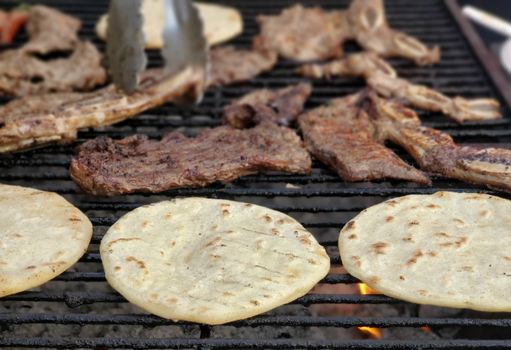
Photo: ELIZABETH MIRANDA / Pexels
Mexican
Carne Asada
The diets react (see scores below)
Common Ingredients
- skirt steak
- lime juice
- orange juice
- garlic
- cilantro
- cumin
- jalapeño
- olive oil
Specific recipes may vary.
Incompatible with 4 of 11 diets
Diet Ratings
Carne Asada is fundamentally a keto-friendly dish — skirt steak is an excellent high-fat, high-protein base with zero carbs. The marinade ingredients are largely acceptable: garlic, cilantro, cumin, jalapeño, and olive oil add negligible carbs. The concern is the orange juice, which contains natural sugars (fructose) and adds meaningful carbs to the marinade. A typical marinade using 1/4 cup of orange juice contributes roughly 6-7g of net carbs, most of which is absorbed into the meat during marinating. Lime juice adds a small amount (~1-2g net carbs). For a strict keto follower keeping under 20g/day, this marinade pushes the boundaries, especially if consumed regularly or in larger portions. The dish earns a 'caution' rather than 'avoid' because the meat itself is ideal and the carbs come primarily from the marinade rather than a starchy component.
Lazy keto and flexible keto practitioners often approve this dish outright, arguing that the orange juice is used in small quantities as a marinade (not consumed directly) and that absorption is minimal, making the effective carb impact negligible per serving. Strict keto protocols, however, flag any fruit juice — including orange juice — as incompatible due to the fructose content and potential insulin response.
Carne Asada is centered on skirt steak, which is beef — a direct animal product and a clear violation of vegan dietary principles. No amount of plant-based marinade ingredients (lime juice, orange juice, garlic, cilantro, cumin, jalapeño, olive oil) can offset the presence of animal flesh as the primary and defining ingredient. This is unambiguously non-vegan.
Carne Asada as prepared here is an excellent paleo dish. Skirt steak is an unprocessed cut of beef that would have been available to Paleolithic humans. The marinade ingredients — lime juice, orange juice, garlic, cilantro, cumin, and jalapeño — are all whole, natural foods (fruits, vegetables, herbs, and spices). Olive oil is a paleo-approved fat. There are no grains, legumes, dairy, refined sugars, seed oils, or processed additives in this recipe. The dish is essentially whole meat marinated in natural plant-based ingredients, which aligns perfectly with paleo principles.
Carne Asada's primary ingredient is skirt steak, a red meat, which Mediterranean diet guidelines restrict to just a few times per month. Red meat is considered a peripheral food that contradicts the plant-forward, fish-and-legume-centered protein philosophy of the diet. While the marinade is genuinely Mediterranean-friendly — olive oil, garlic, citrus juice, and cumin are all compatible or analogous to Mediterranean aromatics — these positive elements cannot offset the core issue of a red meat–centered dish. The dish scores a 3 rather than a 1 because the preparation method (grilled, not fried), portion context, and high-quality marinade ingredients are meaningfully better than, say, a processed sausage or fast-food burger.
Some Mediterranean diet interpreters argue that occasional lean cuts of red meat, when grilled and accompanied by vegetables, fit within the 'few times per month' allowance, particularly in traditional southern European and Middle Eastern contexts where grilled meats appear at celebratory meals. From this view, a modest portion of Carne Asada could qualify as a 'caution' rather than 'avoid,' especially given the olive oil base and whole-food marinade.
While skirt steak is an excellent carnivore cut, Carne Asada as prepared here is heavily marinated in plant-based ingredients that disqualify it entirely from the carnivore diet. Lime juice, orange juice, garlic, cilantro, cumin, jalapeño, and olive oil are all plant-derived and explicitly excluded under carnivore rules. The olive oil is a plant oil, the citrus juices are fruit-derived, and the spices and aromatics (cumin, cilantro, garlic, jalapeño) are all plant foods. This dish is essentially a beef vehicle for a plant-heavy marinade. The beef itself would score a 9, but the preparation transforms it into a non-compliant dish.
Carne asada as described consists entirely of Whole30-compliant ingredients. Skirt steak is a whole, unprocessed meat. Lime juice and orange juice are 100% fruit juices, which per the updated Whole30 guidelines are fully compatible in any context, including as marinade components. Garlic, cilantro, cumin, and jalapeño are all whole vegetables, herbs, or spices explicitly allowed. Olive oil is a natural fat fully approved on the program. There are no excluded ingredients — no grains, legumes, dairy, added sugars, alcohol, or any other banned substances. This is a clean, whole-food preparation that aligns perfectly with the spirit of the Whole30 program.
Carne asada as traditionally prepared contains garlic as a key marinade ingredient, which is high-FODMAP due to fructans even in small amounts. Garlic cloves used in marinades transfer significant fructan content into the meat, especially during extended marinating. This alone warrants an 'avoid' rating during the elimination phase. Orange juice in larger marinade quantities can also contribute excess fructose. While skirt steak, olive oil, lime juice, cilantro, cumin, and jalapeño are all low-FODMAP, the garlic is a disqualifying ingredient that cannot be overlooked at any standard serving.
Carne asada made with skirt steak sits in DASH's caution zone. Skirt steak is red meat, which DASH explicitly limits due to its saturated fat content — DASH recommends no more than 6 oz of lean meat/poultry/fish per day and encourages reducing red meat consumption. However, this preparation has notable redeeming qualities: it uses olive oil (a DASH-approved unsaturated fat), citrus juices (lime and orange) providing potassium and vitamin C, and no added sodium from sauces or processed ingredients. The marinade is entirely whole-food-based with garlic, cilantro, cumin, and jalapeño — no high-sodium condiments. Skirt steak is moderately fatty (more so than sirloin or flank), contributing saturated fat that DASH limits. Sodium is naturally low in this preparation. Consumed occasionally in a 3-4 oz portion as part of a DASH meal with vegetables, beans, and whole grains, this is acceptable. Regular consumption of red meat, even in lean preparations, conflicts with DASH emphasis on poultry, fish, and plant proteins.
NIH DASH guidelines categorize red meat as a food to limit due to saturated fat and cardiovascular risk associations. However, some updated clinical interpretations note that unprocessed lean red meat in modest portions (≤3 oz, a few times per week) does not significantly elevate cardiovascular risk compared to processed meats, and that the quality of the overall dietary pattern matters more than any single food.
Carne asada is a grilled skirt steak preparation that sits in Zone 'caution' territory primarily due to the protein source. Skirt steak is a moderately fatty cut of beef — not as lean as skinless chicken breast or fish — and contains a meaningful amount of saturated fat. However, the marinade is genuinely Zone-friendly: lime juice and orange juice provide low-glycemic polyphenols and flavor without significant carb load (in the quantities used as a marinade), olive oil contributes ideal monounsaturated fat, and garlic, cilantro, cumin, and jalapeño are all favorable Zone additions with anti-inflammatory and polyphenol benefits. The protein itself is solid lean mass, and with careful portioning (a 3 oz / ~85g serving to hit ~21-25g protein), carne asada can anchor a Zone meal effectively when paired with low-glycemic vegetables and a controlled fat addition. The primary concerns are: (1) skirt steak has higher saturated fat than Dr. Sears' preferred lean proteins, and (2) the orange juice in the marinade adds some sugar, though the quantity absorbed is minimal during grilling. Overall, this is a workable Zone protein with attention to portion size and cut quality.
Dr. Sears' earlier Zone writing (Enter the Zone, 1995) was more strictly cautionary about red meat due to saturated fat and arachidonic acid content, which he linked to pro-inflammatory eicosanoids. However, in his later work (The Zone Diet and anti-inflammatory research), Sears acknowledged that lean cuts of red meat in controlled portions are acceptable Zone protein blocks. Some Zone practitioners treat any red meat as unfavorable, while others accept lean beef readily. The orange juice in the marinade is technically an 'unfavorable' carb in Zone terminology due to its glycemic impact, though in marinade quantities the absorbed carbohydrate is negligible.
Carne asada presents a mixed anti-inflammatory profile. The primary concern is skirt steak, a red meat that is high in saturated fat and arachidonic acid — both associated with pro-inflammatory signaling when consumed regularly. However, the marinade is genuinely anti-inflammatory: olive oil provides oleocanthal and monounsaturated fats, garlic and cumin offer potent anti-inflammatory phytochemicals, jalapeño contains capsaicin (a known anti-inflammatory compound), and citrus juices (lime, orange) contribute vitamin C and flavonoids that support antioxidant defense. Cilantro adds polyphenols. The marinade also tenderizes the meat, potentially reducing the need for large portions. The dish is not inherently processed and contains no refined carbohydrates, seed oils, trans fats, or artificial additives. Overall, this is a case where a pro-inflammatory protein is offset by a strongly anti-inflammatory preparation. Occasional consumption as part of a broadly anti-inflammatory dietary pattern is reasonable, but it should not be a dietary staple. Leaner cuts or smaller portions would improve the profile.
Most anti-inflammatory authorities including Dr. Andrew Weil permit lean red meat in moderation, and the herb-and-spice-heavy marinade here is clearly beneficial — so some practitioners would view occasional carne asada as compatible with an anti-inflammatory diet. However, skirt steak is a relatively fatty cut, and stricter anti-inflammatory frameworks (such as those emphasizing plant-forward eating or targeting inflammatory conditions like rheumatoid arthritis) would flag regular red meat consumption as problematic regardless of preparation, given consistent associations between red meat and elevated CRP and IL-6 in epidemiological research.
Carne asada made with skirt steak is a moderate-protein, higher-fat preparation. Skirt steak delivers solid protein (~26g per 4oz serving) but comes with meaningful saturated fat (~8-10g per serving) and total fat (~15-18g), which can worsen GLP-1 side effects like nausea, bloating, and reflux due to slowed gastric emptying. The marinade is a genuine positive — lime and orange juice, garlic, cumin, and cilantro add flavor without empty calories, and olive oil contributes unsaturated fat. The jalapeño is a mild concern for patients with active GI sensitivity or reflux. Portion size is critical: a modest 3-4oz serving is manageable and provides useful protein, but a typical restaurant portion (6-8oz+) significantly increases fat load. No fiber to speak of, so pairing with high-fiber sides (beans, grilled vegetables, corn tortillas) is important to meet daily targets. This is not an avoid — it's real food with genuine protein value — but the saturated fat content of skirt steak and the spice level require caution for GLP-1 patients, especially early in treatment.
Some GLP-1-focused dietitians accept lean cuts of beef including skirt steak as a legitimate protein source given its amino acid profile and patient adherence benefits, particularly for cultural dietary patterns. Others recommend substituting flank steak or sirloin, which are meaningfully leaner, arguing that the saturated fat in skirt steak consistently triggers nausea and delayed gastric distress in GLP-1 patients more than the protein benefit justifies.
*See how scores were generated at our methodology page.
Nutritional profile
Six traits that cut across every diet.
Fiber & Plants
How much whole-plant food and fiber it delivers.
Healthy Fats
The quality of its fats (unsaturated, omega-3).
Whole / Unprocessed
How close it is to its natural, unprocessed form.
Gut Gentle
How easy it is on digestion (low FODMAP, few irritants).
Low Glycemic
How little it spikes your blood sugar.
Protein Density
How much protein it packs per calorie.
Controversy Index
Higher controversy = more disagreement between diets.
Diet-Specific Tips
 Keto — 6/10
View tips
- Skirt steak is zero-carb and high in fat and protein — ideal for keto
- Orange juice in the marinade introduces natural sugars (~6-7g net carbs per 1/4 cup used)
- Lime juice adds minor carbs (~1-2g net carbs)
- Garlic, cilantro, cumin, jalapeño, and olive oil are keto-friendly with negligible carbs
- Net carb impact per serving is moderate but depends on marinade quantity and absorption
- Substituting orange juice with a small amount of lime juice or orange extract would make this fully keto-approved
 Paleo — 9/10
View tips
- Skirt steak is an unprocessed, whole cut of beef — fully paleo approved
- Lime and orange juice provide natural acidity with no added sugars or processing
- Garlic, cilantro, cumin, and jalapeño are all paleo-compliant herbs, spices, and vegetables
- Olive oil is a preferred paleo fat source
- No grains, legumes, dairy, seed oils, or refined sugars present
- Straightforward preparation mirrors how hunter-gatherers would have prepared meat with available plants
 Whole30 — 9/10
View tips
- Skirt steak is an unprocessed whole meat — fully compliant
- Lime and orange juice are 100% fruit juices, explicitly allowed per updated Whole30 guidelines including as marinades
- Garlic, cilantro, cumin, and jalapeño are all compliant herbs, spices, and vegetables
- Olive oil is an approved natural fat
- No excluded ingredients present
- Dish honors the whole-food spirit of the program
 DASH — 5/10
View tips
- Skirt steak is red meat — DASH limits red meat due to saturated fat content
- No added sodium in this preparation — a significant positive versus typical restaurant carne asada
- Olive oil used instead of saturated fat — aligns with DASH fat guidelines
- Whole-food marinade with citrus, garlic, and spices — no processed high-sodium ingredients
- Moderate saturated fat from skirt steak (higher fat cut than flank or sirloin)
- Acceptable in small portions (3-4 oz) occasionally within a broader DASH-compliant meal
- DASH emphasizes fish, poultry, beans, and nuts over red meat as protein sources
 Zone — 6/10
View tips
- Skirt steak is moderately fatty red meat — higher saturated fat than Zone-ideal lean proteins like chicken or fish
- Olive oil in the marinade is a monounsaturated fat — ideal Zone fat source
- Orange juice adds some sugar/glycemic load, but absorbed quantity from marinade is minimal
- Garlic, cilantro, cumin, and jalapeño are anti-inflammatory, polyphenol-rich Zone-favorable additions
- Portion control critical: ~3 oz serving to stay within Zone protein block targets (~25g protein)
- Can be Zone-balanced effectively when paired with low-glycemic vegetables as carb blocks
 Anti-Inflammatory — 5/10
View tips
- Skirt steak is red meat with notable saturated fat and arachidonic acid — pro-inflammatory at regular intake
- Olive oil in marinade provides oleocanthal and MUFAs — anti-inflammatory
- Garlic, cumin, jalapeño (capsaicin), and cilantro all contribute anti-inflammatory phytochemicals
- Citrus juices add vitamin C and flavonoids supporting antioxidant activity
- No processed ingredients, seed oils, refined sugars, or trans fats
- Occasional consumption is acceptable; not suitable as a dietary staple
 GLP-1 Friendly — 5/10
View tips
- Skirt steak is a higher-fat cut — saturated fat load can worsen nausea and GI side effects
- Solid protein content (~26g per 4oz) supports muscle preservation priority
- Jalapeño may trigger reflux or GI discomfort in sensitive patients
- Olive oil marinade contributes unsaturated fat — preferable to saturated but adds to overall fat content
- No fiber — must be paired with high-fiber sides to be a balanced GLP-1 meal
- Portion-sensitive: small serving is acceptable, large restaurant portions are problematic
- Marinade ingredients (citrus, garlic, cumin, cilantro) are well-tolerated and nutritionally neutral to positive