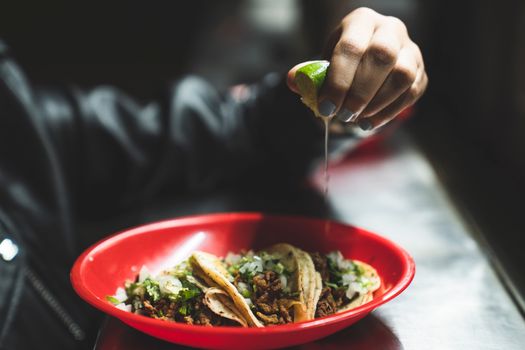
Photo: Los Muertos Crew / Pexels
Mexican
Carnitas
The diets react (see scores below)
Common Ingredients
- pork shoulder
- orange
- lime
- garlic
- bay leaf
- cumin
- Mexican oregano
- salt
Specific recipes may vary.
Incompatible with 3 of 11 diets
Diet Ratings
Carnitas is fundamentally keto-friendly — pork shoulder is a high-fat, high-protein meat with zero carbs. The spices (cumin, oregano, bay leaf, garlic, salt) add negligible carbs. The concern lies with the orange and lime juice used during braising. A typical carnitas recipe uses the juice of 1-2 oranges, contributing roughly 10-20g of sugar/net carbs to the batch. Divided across multiple servings, each portion likely adds 2-5g net carbs from citrus, which is manageable but not negligible. The orange is the primary keto concern — it introduces natural sugars that strict keto practitioners flag. With portion control and awareness of the citrus component, carnitas fits into a keto day, but it's not a pure 'approve' due to the orange sugar content.
Strict keto practitioners argue that any use of orange juice — even diluted across a batch — introduces unnecessary sugar and glycemic load that should be avoided entirely; they recommend substituting orange with additional lime juice or lard-only braising to keep it fully compliant. Lazy keto and most mainstream keto practitioners consider the per-serving carb contribution minor and approve carnitas freely.
Carnitas is a traditional Mexican braised pork dish. The primary and defining ingredient is pork shoulder, a direct animal product from a slaughtered pig. This is unambiguously non-vegan under every definition of veganism. The remaining ingredients (orange, lime, garlic, bay leaf, cumin, Mexican oregano, salt) are all plant-based, but they are flavoring components that do not change the fundamental nature of the dish. No vegan organization or framework would consider this dish compatible with a vegan diet.
Carnitas is fundamentally a paleo-friendly dish — pork shoulder is an unprocessed, whole meat, and the flavorings (orange, lime, garlic, bay leaf, cumin, Mexican oregano) are all paleo-approved. However, the recipe includes added salt, which is excluded under strict paleo rules. Salt is the single ingredient keeping this from a full approval. Most modern paleo practitioners and resources quietly permit small amounts of mineral-rich salt (sea salt, pink Himalayan), but the foundational Cordain framework excludes added salt as a Neolithic/agricultural-era addition not consumed by Paleolithic hunter-gatherers in purified form. Without the salt, this dish would score a 9.
Many mainstream paleo practitioners — including Mark Sisson and the Whole30 protocol — permit sea salt or unrefined mineral salts in cooking, arguing that sodium is an essential mineral and trace amounts of natural salt are functionally distinct from highly processed table salt. Under this more permissive interpretation, carnitas would be fully approved.
Carnitas is made from pork shoulder, a fatty red/processed-style meat that the Mediterranean diet restricts to a few times per month at most. Pork shoulder is high in saturated fat, and the slow-cooked preparation (often using lard in traditional versions) further diverges from Mediterranean principles. While the supporting ingredients — citrus, garlic, bay leaf, cumin, oregano — are wholesome and Mediterranean-friendly, the primary protein is the dominant nutritional concern. Pork is not a staple of the Mediterranean diet, and a dish centered entirely around a large portion of fatty pork contradicts the diet's emphasis on plant-forward eating, fish, and lean poultry. This dish is not inherently processed or sugar-laden, which keeps it from scoring a 1, but its core ingredient is fundamentally misaligned with Mediterranean dietary patterns.
While pork shoulder is a carnivore-approved animal protein, traditional carnitas as prepared here is disqualifying due to multiple plant-derived ingredients. Orange and lime are fruits providing citrus juice and zest; garlic is a plant bulb; bay leaf, cumin, and Mexican oregano are all plant-based spices and herbs. The only carnivore-acceptable components are the pork shoulder and salt. The dish as a whole cannot be approved in its traditional form — it is fundamentally a plant-seasoned, citrus-braised preparation that violates the core exclusion of all plant foods.
Carnitas made with pork shoulder, orange, lime, garlic, bay leaf, cumin, Mexican oregano, and salt are fully Whole30 compliant. Every ingredient is either a whole animal protein, a whole fruit (orange and lime providing natural acidity and flavor), or a compliant herb, spice, or seasoning. No excluded ingredients are present — no added sugars, grains, legumes, dairy, or disallowed additives. The citrus fruits are whole foods whose juices are explicitly compatible per Whole30 guidelines. This is a straightforward, minimally processed preparation that aligns perfectly with the program's whole-food philosophy.
Pork shoulder is naturally low-FODMAP and forms the bulk of this dish. The spices (cumin, bay leaf, salt) are low-FODMAP at culinary amounts. Orange and lime juice/zest used in cooking are generally present in small enough quantities that they don't contribute significant FODMAPs. Mexican oregano is low-FODMAP at typical serving amounts. The primary concern is garlic — a high-FODMAP ingredient due to fructans that is explicitly listed and commonly used in substantial amounts in carnitas recipes. Garlic is high-FODMAP even at small doses (Monash rates garlic as high-FODMAP from as little as 1/4 clove). If garlic cloves are cooked into the meat and then removed (or if only garlic-infused oil is used), the dish could be low-FODMAP since fructans are water-soluble and remain in the cooking liquid rather than transferring significantly to fat-based drippings. However, the ingredient listing implies whole garlic cooked with the pork, which typically means fructans leach into the braising liquid and potentially into the meat itself during slow cooking. This makes a standard serving of carnitas as typically prepared a caution-level food during elimination phase.
Some FODMAP practitioners argue that long slow-cooking with garlic cloves (which can be removed before serving) results in minimal fructan transfer to the meat itself, especially in drier cooking methods. However, Monash University's guidance is clear that garlic in any form cooked with food poses a FODMAP risk, and most elimination-phase protocols would flag this recipe as problematic unless garlic is definitively substituted with garlic-infused oil.
Carnitas made from pork shoulder present a mixed picture for DASH compliance. Pork shoulder is a fattier cut with meaningful saturated fat content — DASH guidelines limit saturated fat and red/fatty meats. However, the preparation here is relatively clean: citrus (orange, lime), garlic, and spices add flavor without added sodium beyond the listed salt, and no lard or heavy oils are specified. The dish lacks the extreme sodium load of processed meats like bacon or ham, but pork shoulder's fat profile and classification as a red/fatty meat means it is not a DASH-emphasized protein. Leaner pork cuts (tenderloin, loin) would score higher. Portion control is key — a modest serving (3 oz) within a DASH meal containing vegetables and whole grains is manageable, but larger servings or frequent consumption conflicts with DASH principles. The added salt is also a concern depending on quantity.
NIH DASH guidelines broadly limit fatty meats and emphasize lean poultry and fish as preferred proteins. However, some updated clinical DASH interpretations note that minimally processed pork in moderate portions — especially when prepared without added saturated fat sources like lard — can fit within a flexible DASH framework, particularly when overall dietary sodium and saturated fat targets are met for the day.
Carnitas presents a mixed Zone profile. Pork shoulder is a flavorful, protein-rich cut, but it is significantly higher in saturated fat and total fat than the lean proteins Dr. Sears prioritizes (skinless chicken, fish, egg whites). A typical serving of braised pork shoulder can deliver 20-25g of protein per 3-4 oz, but also 10-15g of fat — much of it saturated — which makes hitting the 30% fat target relatively easy but overshoots the saturated fat ideal. The preparation method (slow-braised, often finished by crisping in its own rendered lard) concentrates fat further. On the positive side, the carbohydrate ingredients (orange, lime juice, garlic) are low-glycemic and used in modest amounts, so they don't spike the carb block count meaningfully. Aromatic spices (cumin, oregano, bay leaf) are polyphenol-rich, which aligns with Sears' anti-inflammatory emphasis. Practically, carnitas can be incorporated into a Zone meal by: (1) trimming visible fat and draining rendered fat post-cooking, (2) measuring a modest 3 oz portion as your protein block anchor, and (3) pairing with plenty of favorable low-GI carbs (e.g., lettuce wraps, salsa, diced peppers) and skipping added fat blocks since the meat already provides fat. The dish is not ideal Zone fare, but it is far from unusable.
Early Zone writings (Enter the Zone, 1995) placed fatty cuts of pork firmly in the 'unfavorable' protein column due to saturated fat content and the eicosanoid-disrupting effects Sears attributed to arachidonic acid precursors in fatty meats. However, Sears' later work (The OmegaRx Zone, Toxic Fat) shifted emphasis toward omega-6 to omega-3 ratios and overall inflammatory load rather than saturated fat per se. Some contemporary Zone practitioners argue that well-trimmed pork shoulder, drained of rendered fat, is acceptable protein in moderate blocks — particularly given that the dish contains no processed additives or seed oils. The verdict thus depends on which era of Sears' framework is applied.
Carnitas is a traditional Mexican dish made by slow-cooking pork shoulder in its own fat. The ingredient list here is relatively clean — no processed additives, refined carbohydrates, or seed oils — and includes several genuinely anti-inflammatory components: garlic (allicin, organosulfur compounds), cumin (antioxidant phytochemicals), Mexican oregano (rosmarinic acid, flavonoids), bay leaf (eugenol, antioxidants), and citrus from orange and lime (vitamin C, flavonoids, d-limonene). These spices and aromatics provide meaningful anti-inflammatory support. However, the primary ingredient — pork shoulder — is a fatty cut of red/processed-adjacent meat with notable saturated fat content (primarily from intramuscular fat and skin-on preparations). Anti-inflammatory frameworks generally recommend limiting red and fatty meats due to their arachidonic acid content, saturated fat load, and association with elevated CRP and IL-6 markers. Pork shoulder in particular is fattier than lean cuts like pork loin or poultry. The traditional preparation also involves rendering in lard or the meat's own fat, which intensifies the saturated fat profile. Overall, the dish lands in caution territory: the spice and aromatic profile is a genuine asset, but the core protein and fat source work against anti-inflammatory goals. Acceptable occasionally, especially in modest portions alongside fiber-rich accompaniments.
Some anti-inflammatory researchers and ancestral health advocates (e.g., Paul Saladino, Weston A. Price Foundation) argue that unprocessed animal fats from traditionally raised pork are not meaningfully pro-inflammatory and that whole-food preparation without additives or seed oils is what matters most. Mainstream anti-inflammatory frameworks including Dr. Weil's pyramid, however, consistently place fatty red and pork cuts in the 'limit' category due to saturated fat and arachidonic acid content.
Carnitas made from pork shoulder is a protein-rich dish, but pork shoulder is a moderately to high-fat cut (roughly 20-25g fat per 100g cooked), which is the primary concern for GLP-1 patients. The fat content can worsen nausea, bloating, and reflux — common GLP-1 side effects — especially since the slow-cooked, braised preparation renders fat throughout the meat rather than allowing it to be trimmed away. On the positive side, carnitas prepared this way (braised, not fried) is reasonably easy to digest compared to fried or heavily processed pork, and the citrus-herb seasoning profile is mild and unlikely to trigger GI irritation. Protein content is solid (~25-28g per 3oz serving), supporting the #1 dietary priority. However, saturated fat content is high relative to leaner alternatives like chicken breast or fish, and portions need to be kept small to avoid triggering nausea. This is a caution-level food that can fit into a GLP-1 diet in modest portions, ideally paired with fiber-rich sides (beans, vegetables) to improve the overall nutritional profile of the meal.
Some GLP-1-focused dietitians accept carnitas in moderate portions because the protein density is meaningful and the braised preparation avoids added fats like frying oils; they argue the saturated fat concern is overstated for an occasional serving. Others are more restrictive, noting that pork shoulder's fat content consistently ranks among the top triggers for GLP-1-related nausea and delayed gastric emptying symptoms, and recommend leaner pork cuts (loin, tenderloin) as a substitute.
*See how scores were generated at our methodology page.
Nutritional profile
Six traits that cut across every diet.
Fiber & Plants
How much whole-plant food and fiber it delivers.
Healthy Fats
The quality of its fats (unsaturated, omega-3).
Whole / Unprocessed
How close it is to its natural, unprocessed form.
Gut Gentle
How easy it is on digestion (low FODMAP, few irritants).
Low Glycemic
How little it spikes your blood sugar.
Protein Density
How much protein it packs per calorie.
Controversy Index
Higher controversy = more disagreement between diets.
Diet-Specific Tips
 Keto — 6/10
View tips
- Pork shoulder is zero-carb, high-fat, and ideal for keto
- Orange juice introduces natural sugars (~10-20g per full batch)
- Per-serving net carbs from citrus are modest (~2-5g) with standard portions
- Lime, garlic, and spices contribute negligible net carbs
- No grains, starches, or added sugars beyond the fruit
- High fat content from pork shoulder supports ketogenic macros
- Preparation method (braising, then crisping in fat) further increases fat content
 Paleo — 5/10
View tips
- Pork shoulder is unprocessed whole meat — fully paleo approved
- Orange and lime provide natural citrus acidity — paleo approved
- Garlic, cumin, bay leaf, and Mexican oregano are all paleo-approved herbs and spices
- Added salt is excluded under strict Cordain-school paleo rules
- No grains, legumes, dairy, seed oils, or refined sugar present
- Most real-world paleo practitioners would accept this dish with sea salt
 Whole30 — 9/10
View tips
- Pork shoulder is a whole, unprocessed meat — fully compliant
- Orange and lime are whole fruits; their juice used in cooking is explicitly Whole30-compatible
- Garlic, cumin, Mexican oregano, and bay leaf are all compliant herbs and spices
- Salt is explicitly allowed, including as a seasoning
- No excluded ingredients: no grains, dairy, legumes, added sugars, or disallowed additives
- Traditional preparation aligns with Whole30's whole-food cooking spirit
 Low-FODMAP — 5/10
View tips
- Garlic is the primary FODMAP concern — high in fructans at any reasonable dose per Monash University
- Pork shoulder is naturally low-FODMAP and safe as the protein base
- Orange and lime used in typical carnitas quantities are low-FODMAP
- Cumin, bay leaf, Mexican oregano, and salt are low-FODMAP at culinary amounts
- Fructans from garlic are water-soluble and can leach into braising liquid/meat during slow cooking
- Substituting garlic with garlic-infused oil would make this dish low-FODMAP
 DASH — 4/10
View tips
- Pork shoulder is a high-fat cut with significant saturated fat, conflicting with DASH fat limits
- No processed or cured meat ingredients — lower sodium risk than bacon, ham, or chorizo
- Citrus and spices are DASH-positive flavor components that reduce need for excess salt
- Added salt is a concern; quantity not specified — could push sodium higher
- DASH emphasizes lean poultry and fish over fatty pork cuts
- Portion size critical — 3 oz serving is more compatible than larger servings
- Leaner pork alternatives (tenderloin) would significantly improve DASH compatibility
 Zone — 5/10
View tips
- Pork shoulder is a moderately fatty, higher saturated fat protein — classified as 'unfavorable' in classic Zone terminology
- Fat content can be partially mitigated by trimming and draining rendered fat post-cooking
- Carbohydrate contributors (orange, lime, garlic) are low-glycemic and block-friendly
- No added seed oils, refined sugars, or processed ingredients — clean whole-food profile
- Polyphenol-rich spices (cumin, Mexican oregano) support anti-inflammatory Zone goals
- Portion control is essential: a 3 oz serving keeps protein near 1 Zone block while managing fat overage
- Best used as a Zone meal component paired with abundant favorable low-GI vegetables
 Anti-Inflammatory — 4/10
View tips
- Pork shoulder is a high-saturated-fat cut associated with elevated inflammatory markers in research
- Arachidonic acid in pork may contribute to pro-inflammatory eicosanoid production
- Garlic provides allicin and organosulfur compounds with well-documented anti-inflammatory effects
- Cumin and Mexican oregano offer antioxidant and anti-inflammatory phytochemicals
- Citrus (orange, lime) contributes vitamin C and flavonoids that support antioxidant defense
- No processed ingredients, refined carbohydrates, seed oils, or artificial additives
- Traditional preparation renders significant fat, increasing the saturated fat load per serving
- Portion size and accompaniments (e.g., fiber-rich beans, vegetables) meaningfully affect the overall inflammatory profile of the meal
 GLP-1 Friendly — 5/10
View tips
- Pork shoulder is a high-fat cut with significant saturated fat — a known GLP-1 side effect trigger
- Braised preparation (not fried) is a meaningful positive — no added frying oils
- Solid protein content (~25-28g per 3oz serving) supports the #1 dietary priority
- Citrus and herb seasoning is mild and GI-friendly — no spicy or acidic irritants beyond manageable citrus
- High fat per serving increases risk of nausea, bloating, and reflux on GLP-1 medications
- Portion sensitivity is critical — small servings reduce fat load and side effect risk
- Best consumed as part of a balanced meal with fiber-rich sides to improve nutrient density