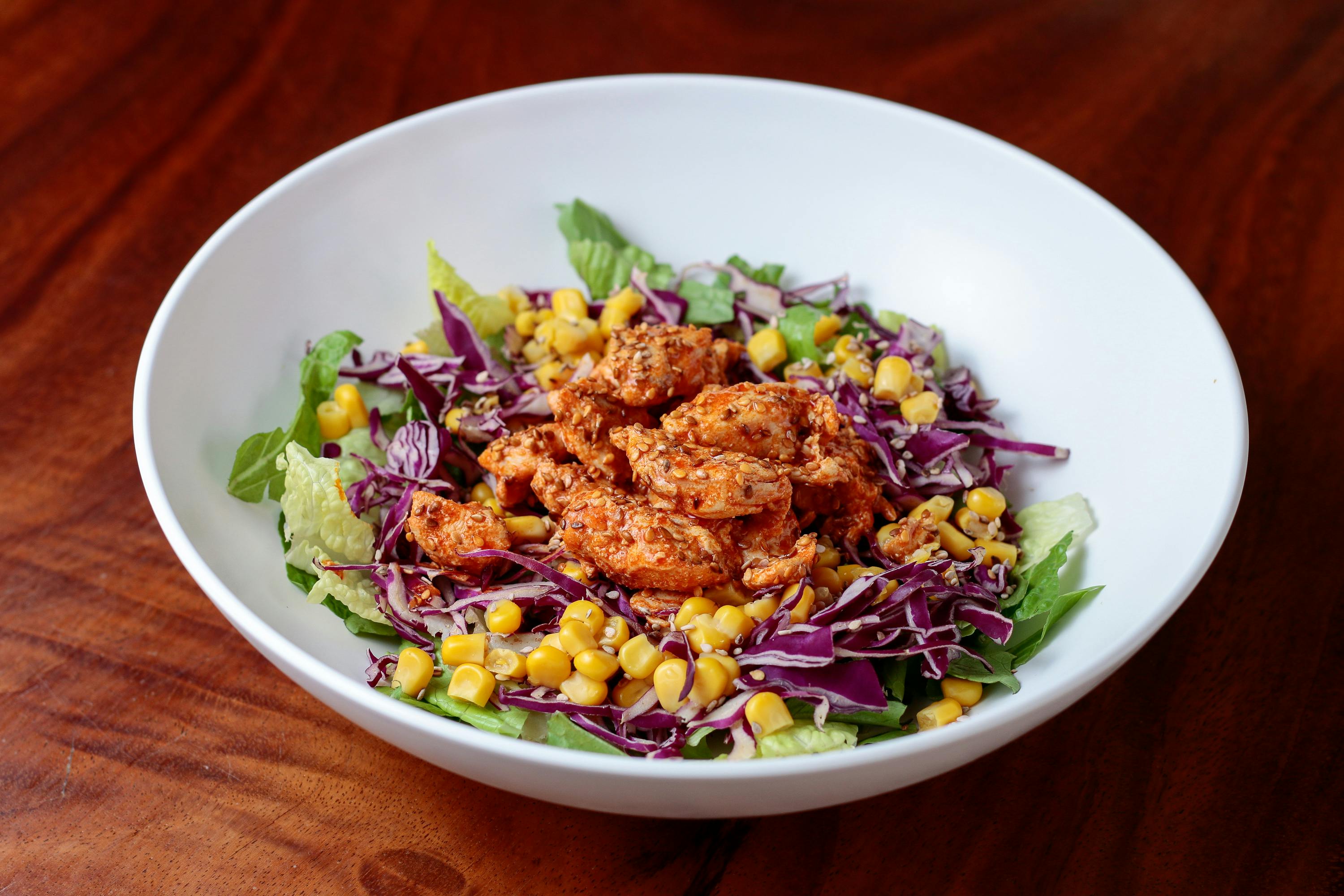
Photo: Sergio Arreola / Pexels
American
Carolina BBQ Chicken
The diets react (see scores below)
Common Ingredients
- chicken
- yellow mustard
- apple cider vinegar
- brown sugar
- Worcestershire sauce
- hot sauce
- paprika
Specific recipes may vary.
Incompatible with 4 of 11 diets
Diet Ratings
Carolina BBQ Chicken is built on a solid keto protein base (chicken), but the traditional mustard-based BBQ sauce includes brown sugar as a key ingredient, which is a direct source of added sugar and raises net carbs meaningfully. A standard serving of this sauce can add 5-15g of net carbs depending on quantity used, which eats into the daily 20-50g budget quickly. The mustard, apple cider vinegar, hot sauce, paprika, and Worcestershire sauce are mostly keto-friendly in small amounts, but the brown sugar is the disqualifying element. With sugar substitution (erythritol, monk fruit), this dish becomes fully keto-compatible. As written, it warrants caution and portion control rather than avoidance, since the chicken itself is keto-ideal and the sauce carbs are portion-manageable for those on a 50g threshold.
Strict keto practitioners would argue that any added sugar — even in small sauce quantities — has no place in a ketogenic diet and would push this toward 'avoid,' citing that brown sugar triggers an insulin response regardless of total quantity. Lazy keto adherents, however, often allow dishes like this if the total daily carb count stays under 50g, treating the sauce as an acceptable carb expenditure.
Carolina BBQ Chicken contains chicken as its primary protein, which is poultry and a direct animal product. This is a clear violation of vegan dietary principles. Additionally, Worcestershire sauce in its traditional form contains anchovies (a fish-derived ingredient), further compounding the non-vegan status of this dish. There is no ambiguity here — this dish is entirely incompatible with a vegan diet.
While chicken is a core paleo protein, the Carolina BBQ sauce contains multiple non-paleo ingredients that disqualify this dish. Brown sugar is refined sugar, which is explicitly excluded from paleo. Worcestershire sauce typically contains added sugar, molasses, tamarind, and often anchovies with additives and preservatives — making it a processed condiment. Most commercial hot sauces contain added salt and preservatives. Yellow mustard, while borderline, often includes added salt and sometimes other additives. The combination of refined sugar and processed condiments makes this dish clearly non-paleo in its standard preparation. A paleo-adapted version could substitute honey or dates for brown sugar and use compliant condiment alternatives, but as traditionally prepared this dish does not meet paleo standards.
Carolina BBQ Chicken centers on poultry, which is acceptable in the Mediterranean diet in moderate amounts (a few servings per week). However, the dish is defined by a distinctly non-Mediterranean flavor profile and sauce that includes brown sugar (added sugar), Worcestershire sauce (processed condiment), and hot sauce — none of which are traditional Mediterranean ingredients. The mustard and apple cider vinegar are not problematic in small amounts, but the added sugar and processed sauces push this away from Mediterranean principles. The chicken itself is lean and permissible, but the preparation method and sauce composition are misaligned with the diet's emphasis on whole, minimally processed foods with olive oil, herbs, and lemon as flavor bases.
Some flexible Mediterranean diet interpretations focus primarily on the protein source rather than the seasoning method, and would classify any grilled or baked chicken dish as acceptable regardless of the sauce. In this view, the moderate sugar and condiment content are minor concerns that don't override the lean poultry base.
While chicken itself is an acceptable animal protein on carnivore, this Carolina BBQ Chicken is heavily loaded with plant-derived and processed non-carnivore ingredients. Yellow mustard (plant-derived, contains vinegar and spices), apple cider vinegar (plant-derived fermented product), brown sugar (pure plant-derived sugar), Worcestershire sauce (contains tamarind, molasses, onion, and other plant additives), hot sauce (plant-based pepper sauce), and paprika (plant-derived spice) all violate carnivore principles. The sauce is essentially a plant-based condiment coating the chicken, making the dish fundamentally incompatible with the carnivore diet regardless of the animal protein base.
Brown sugar is an added sugar, which is explicitly excluded on the Whole30 program. Regardless of the other compliant ingredients (chicken, yellow mustard, apple cider vinegar, hot sauce, paprika), the presence of brown sugar makes this dish non-compliant. Additionally, many commercial Worcestershire sauces contain added sugar or other non-compliant ingredients, compounding the issue. The dish would need to be reformulated — replacing brown sugar with a compliant sweetener such as date paste or fruit juice, and using a verified compliant Worcestershire sauce — to be considered for Whole30.
Carolina BBQ Chicken is largely low-FODMAP in its core components, but the sauce ingredients introduce dose-dependent concerns. Chicken is fully approved. Yellow mustard is low-FODMAP in typical serving sizes. Apple cider vinegar is low-FODMAP at standard amounts (up to 2 tablespoons). Paprika is low-FODMAP as a spice. The key concerns are: (1) Worcestershire sauce often contains onion and/or garlic, making it potentially high-FODMAP — many commercial brands include these high-fructan ingredients, though garlic-free versions exist; (2) brown sugar is low-FODMAP in small amounts but fructose content can accumulate with generous application; (3) hot sauce brands vary — many are low-FODMAP (vinegar and pepper-based) but some contain garlic or onion powder. The dish is common in restaurants and home cooking where Worcestershire sauce and hot sauce with onion/garlic are standard. If made with certified low-FODMAP or garlic/onion-free versions of Worcestershire and hot sauce, the dish would score higher. As typically prepared, the Worcestershire sauce is the primary FODMAP risk.
Monash University has not specifically tested commercial BBQ sauce blends with these ingredients, and clinical FODMAP practitioners often advise avoiding Worcestershire sauce entirely during elimination due to nearly universal inclusion of onion/garlic in commercial formulations. A strict elimination-phase practitioner would likely recommend substituting Worcestershire with a FODMAP-friendly alternative (such as a small amount of soy sauce) before approving this dish.
Carolina BBQ Chicken is built around lean poultry, which is a DASH-approved protein source. The mustard-vinegar base (Carolina-style) is lower in sugar and fat than tomato-based BBQ sauces, which is a relative advantage. However, the combination of yellow mustard, Worcestershire sauce, and hot sauce contributes moderate-to-significant sodium depending on quantities used — Worcestershire sauce alone can add 65–70mg per teaspoon, and hot sauce and prepared mustard are also notable sodium contributors. The brown sugar adds modest amounts of added sugar. Overall, the dish is not categorically problematic but falls short of a full DASH approval due to cumulative sodium from condiments and the added sugar. Prepared at home with reduced-sodium condiments and modest sauce quantities, this dish can fit comfortably into a DASH plan. As commonly prepared in restaurants or with standard commercial ingredients, sodium levels warrant caution.
NIH DASH guidelines flag sodium from condiments as a meaningful contributor to daily limits and advise limiting added sugars; however, updated clinical interpretations note that vinegar-mustard based BBQ preparations are considerably better than creamy or heavily salted alternatives, and some DASH-oriented dietitians would approve this dish when home-prepared with low-sodium condiments, given that chicken is a lean protein cornerstone of the diet.
Carolina BBQ Chicken has an excellent Zone-friendly protein base — chicken is a classic lean protein source that fits neatly into Zone blocks. The sauce, however, introduces some complexity. Yellow mustard is actually Zone-friendly (low-calorie, low-glycemic, anti-inflammatory). Apple cider vinegar is similarly benign and even potentially beneficial for glycemic control. The problematic ingredient is brown sugar, which is a high-glycemic, nutritionally empty carbohydrate that Sears would classify as 'unfavorable.' However, in a typical BBQ sauce application, the amount of brown sugar per serving is relatively small — spread across a whole chicken dish, the glycemic impact is moderated. Worcestershire sauce adds negligible sugar per serving. Hot sauce and paprika are Zone-neutral or mildly positive (polyphenol-rich). The dish lacks a built-in fat source, so a Zone meal would need to add monounsaturated fat (e.g., a side with olive oil or avocado). The chicken itself is Zone-ideal; the sauce nudges it toward caution due to the added sugar, but this is far from a deal-breaker if portions are reasonable. Paired with low-glycemic vegetables and a monounsaturated fat source, this dish can fit well into a Zone meal.
Some Zone practitioners following Sears' earlier, stricter 'favorable vs. unfavorable' carbohydrate classification would flag any added sugar — including brown sugar in a BBQ sauce — as a red flag worth avoiding entirely. Sears' Enter the Zone explicitly identifies refined sugars as unfavorable carbohydrates. However, later Zone writings and the block system's flexibility acknowledge that trace amounts of unfavorable carbs in a sauce do not necessarily derail a Zone meal, provided the overall macro ratio remains close to 40/30/30.
Carolina BBQ Chicken presents a mixed anti-inflammatory profile. On the positive side, chicken (lean poultry) is explicitly in the 'moderate' category of anti-inflammatory frameworks, and several ingredients offer genuine anti-inflammatory benefits: apple cider vinegar contains acetic acid and polyphenols with modest anti-inflammatory properties; paprika provides carotenoids (capsanthin, beta-carotene) that are antioxidant-active; yellow mustard contains turmeric/mustard seed compounds with mild anti-inflammatory properties; hot sauce (capsaicin) has well-documented anti-inflammatory effects. Worcestershire sauce in small amounts is largely benign. The main concern is brown sugar — added sugar, even in modest BBQ quantities, nudges the dish toward pro-inflammatory territory. However, the sugar load in a typical serving is meaningful but not extreme. The overall dish lacks the omega-3s, colorful vegetables, or high-polyphenol components that would earn an 'approve,' but it also avoids processed meats, trans fats, seed oils, and high-fructose corn syrup. It sits comfortably in the moderate/caution zone — acceptable occasionally but not a staple of an anti-inflammatory diet.
Some anti-inflammatory practitioners would rate this more favorably, arguing that lean poultry with vinegar-based sauces (as opposed to sugar-heavy tomato-based BBQ) and spice-forward preparations represent a relatively clean preparation. Conversely, stricter anti-inflammatory protocols would flag the added brown sugar and commercially processed condiments (Worcestershire, hot sauce) for additives and sodium, pushing toward a lower score.
Carolina BBQ Chicken is a strong GLP-1-friendly main dish. Chicken is a lean, high-quality protein source that supports muscle preservation during rapid weight loss. The Carolina mustard-vinegar base is notably lighter than tomato- or fat-based BBQ sauces — yellow mustard and apple cider vinegar add flavor with minimal calories and fat. Brown sugar adds a small amount of sugar but in typical BBQ sauce quantities the per-serving load is modest. Worcestershire sauce contributes umami depth with negligible calories. Hot sauce introduces mild spice that most patients tolerate, though sensitive individuals may experience reflux. Overall this dish is high in protein, low in fat, easy to portion, and nutrient-dense per calorie — a good fit for the reduced-appetite context of GLP-1 use.
Some GLP-1-focused RDs flag even moderate hot sauce use as a potential trigger for acid reflux or nausea in patients whose slowed gastric emptying increases esophageal exposure time; patients with GI sensitivity may want to reduce or omit the hot sauce component. The small amount of brown sugar is generally considered acceptable by most clinicians, but practitioners with a stricter glycemic focus may recommend substituting a non-caloric sweetener.
*See how scores were generated at our methodology page.
Nutritional profile
Six traits that cut across every diet.
Fiber & Plants
How much whole-plant food and fiber it delivers.
Healthy Fats
The quality of its fats (unsaturated, omega-3).
Whole / Unprocessed
How close it is to its natural, unprocessed form.
Gut Gentle
How easy it is on digestion (low FODMAP, few irritants).
Low Glycemic
How little it spikes your blood sugar.
Protein Density
How much protein it packs per calorie.
Controversy Index
Higher controversy = more disagreement between diets.
Diet-Specific Tips
 Keto — 4/10
View tips
- Brown sugar adds meaningful net carbs and is a direct added sugar — primary concern
- Chicken is an excellent keto protein source with no carbs
- Yellow mustard and apple cider vinegar are keto-friendly in standard amounts
- Worcestershire sauce contains a small amount of sugar/carbs — minor concern at normal use
- Dish can be made fully keto by substituting brown sugar with a zero-carb sweetener
- Portion size of sauce is critical — large amounts push net carbs too high
 Mediterranean — 4/10
View tips
- Chicken is an acceptable Mediterranean protein in moderation
- Brown sugar adds refined/added sugar, contradicting Mediterranean principles
- Worcestershire sauce and hot sauce are processed condiments not aligned with the diet
- No olive oil, herbs, or Mediterranean-style flavoring agents present
- American BBQ preparation style is far removed from Mediterranean culinary tradition
- Overall sugar and processed ingredient load lowers the score within the caution range
 Low-FODMAP — 6/10
View tips
- Chicken is fully low-FODMAP and safe
- Worcestershire sauce typically contains onion and/or garlic — high-fructan FODMAP trigger
- Hot sauce brands vary; those with garlic or onion powder are high-FODMAP
- Yellow mustard and apple cider vinegar are low-FODMAP at standard servings
- Brown sugar is low-FODMAP in small amounts but excess fructose may accumulate
- Paprika is a low-FODMAP spice at typical seasoning quantities
- Dish can be made low-FODMAP with careful ingredient substitution
 DASH — 5/10
View tips
- Lean chicken is a core DASH-approved protein
- Carolina mustard-vinegar base is lower in fat and sugar than tomato/molasses BBQ sauces
- Worcestershire sauce, yellow mustard, and hot sauce collectively add notable sodium
- Brown sugar contributes added sugar, though in modest amounts
- Sodium content highly variable: home preparation with low-sodium alternatives significantly improves DASH compatibility
- No saturated fat concerns from the sauce ingredients themselves
- Paprika and apple cider vinegar are DASH-neutral or beneficial
 Zone — 6/10
View tips
- Chicken is a lean, Zone-ideal protein — scores well as a primary protein block
- Brown sugar is a high-glycemic, unfavorable Zone carbohydrate, though used in small quantities as a sauce ingredient
- Yellow mustard and apple cider vinegar are Zone-neutral to favorable
- Hot sauce and paprika provide polyphenols aligned with Sears' anti-inflammatory focus
- Dish lacks inherent monounsaturated fat — requires a Zone-compliant fat source added to the meal
- Overall macro ratio is workable but sauce sugar prevents a full 'approve' rating
 Anti-Inflammatory — 5/10
View tips
- Lean chicken (poultry) — acceptable in moderation per anti-inflammatory frameworks
- Brown sugar adds pro-inflammatory refined/added sugar
- Apple cider vinegar contributes acetic acid and polyphenols — mild anti-inflammatory benefit
- Paprika provides carotenoid antioxidants (capsanthin, beta-carotene)
- Hot sauce capsaicin has documented anti-inflammatory properties
- Yellow mustard contains mustard seed compounds with mild anti-inflammatory activity
- No omega-3 fatty acids, no high-antioxidant vegetables — limits upside
- No trans fats, seed oils, or HFCS — avoids major pro-inflammatory pitfalls
- Worcestershire sauce introduces small amounts of additives and sodium
 GLP-1 Friendly — 8/10
View tips
- Lean chicken protein supports muscle preservation — primary GLP-1 priority
- Mustard-vinegar base is low in fat and calories compared to cream- or oil-heavy sauces
- Minimal added sugar from brown sugar at typical sauce quantities
- Hot sauce may trigger reflux or nausea in GLP-1 patients with GI sensitivity
- No fried preparation, no high-fat ingredients — easy to digest
- Small, protein-dense portions work well with reduced appetite
- Apple cider vinegar may support glycemic stability as a secondary benefit