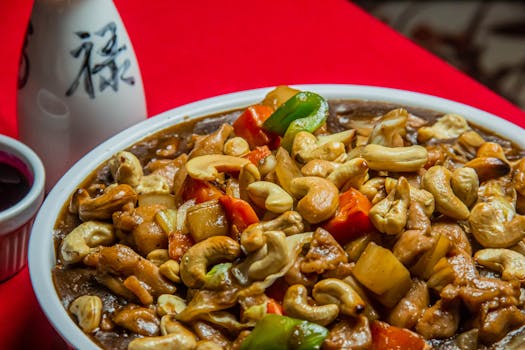
Photo: Horizon Content / Pexels
The diets react (see scores below)
Common Ingredients
- chicken
- cashews
- bell peppers
- dried chiles
- onion
- oyster sauce
- soy sauce
- scallions
Specific recipes may vary.
Incompatible with 5 of 11 diets
Diet Ratings
Cashew Chicken presents several keto challenges in its standard form. Cashews are among the highest-carb nuts (~8-9g net carbs per 1oz serving), and a typical restaurant portion includes 2-3oz, contributing 16-27g net carbs from cashews alone. Oyster sauce is sugar-laden (typically 5-7g carbs per tablespoon) and soy sauce adds minor carbs. Bell peppers and onion contribute additional carbs (~5-8g combined). The total dish can easily exceed 30-40g net carbs per serving, consuming most or all of a daily keto budget. However, with strict portion control on cashews, substitution of oyster sauce with coconut aminos in reduced quantity, and careful vegetable portions, the dish can be adapted. The chicken itself is keto-friendly, and the fat profile from cashews is acceptable.
Lazy keto and flexible keto practitioners may allow this dish in small portions, arguing that cashews' fat content partially offsets the carb load and that a half-portion with sauce modifications can fit within a 50g daily carb ceiling. Strict keto advocates counter that cashews are one of the most carb-dense nuts and oyster sauce is essentially sugar paste, making this dish nearly impossible to make keto-compliant without fundamentally altering the recipe.
Cashew Chicken contains multiple animal-derived ingredients that are strictly incompatible with a vegan diet. Chicken is animal flesh, making this dish fundamentally non-vegan. Additionally, oyster sauce is derived from oysters (shellfish), adding a second animal product. These are not trace or cross-contamination issues — they are primary, intentional ingredients central to the dish's identity and flavor profile.
Cashew Chicken contains two major non-paleo ingredients that are fundamental to the dish: soy sauce (a fermented soy product — a legume) and oyster sauce (a processed condiment containing sugar, modified starch, and additives). Both are explicitly excluded under paleo rules as processed and/or legume-derived ingredients. These are not minor or optional additions — they form the core flavor base of the dish. The remaining ingredients (chicken, cashews, bell peppers, dried chiles, onion, scallions) are all paleo-approved, but the sauce components disqualify the dish as traditionally prepared.
Cashew Chicken contains several Mediterranean-compatible elements — chicken (acceptable poultry), cashews (healthy plant-based fats and protein), bell peppers, onion, dried chiles, and scallions (all vegetables encouraged in Mediterranean eating). However, it diverges from Mediterranean principles in a few ways: oyster sauce and soy sauce are processed condiments high in sodium and not part of the Mediterranean tradition; the dish uses no olive oil; and it is a Thai preparation rather than a Mediterranean one. The chicken and vegetables are solid components, but the heavy sodium-laden sauces and absence of Mediterranean fats temper enthusiasm. Enjoyed occasionally with mindful portion control, this dish is acceptable but not a staple.
Some modern Mediterranean diet practitioners take a broader 'whole foods, plant-forward' interpretation, under which this dish — with its vegetables, lean poultry, and nuts — could be viewed more favorably if the sodium from sauces is a concern managed across the overall diet. Conversely, stricter Mediterranean traditionalists would note the complete absence of olive oil and reliance on processed Asian sauces as a meaningful departure from the diet's core principles.
Cashew Chicken is almost entirely incompatible with the carnivore diet. While chicken itself is an animal product, the dish is dominated by plant-based ingredients and condiments. Cashews are a plant-derived nut, bell peppers, dried chiles, onion, and scallions are all vegetables excluded from carnivore. Oyster sauce and soy sauce both contain plant-derived ingredients (soy, sugar, starches), with soy sauce being entirely grain-derived. The only carnivore-compatible element is the chicken itself, which represents a small fraction of the overall dish composition. This dish as prepared is a clear avoid with high confidence.
This dish contains two clearly excluded ingredients: soy sauce (made from soy, a legume, and often wheat) and oyster sauce (typically contains sugar and sometimes cornstarch or other non-compliant additives). Both are standard, non-negotiable exclusions on the Whole30. The remaining ingredients — chicken, cashews, bell peppers, dried chiles, onion, and scallions — are all Whole30-compliant on their own. However, the dish as commonly prepared cannot be approved due to the soy sauce and oyster sauce. Compliant versions could substitute coconut aminos for soy sauce and use a compliant oyster sauce alternative (or omit it), but that would be a significantly modified recipe.
This dish contains multiple high-FODMAP ingredients that make it unsuitable during the elimination phase. Onion is one of the highest-FODMAP foods tested by Monash University, containing significant fructans at any cooking amount used in a stir-fry. Cashews are high-FODMAP at typical serving sizes (Monash rates cashews as high-FODMAP at just 10 nuts/~15g due to GOS and fructans, and a standard cashew chicken dish uses far more than this). Oyster sauce contains moderate FODMAPs and can be problematic depending on the amount used. Scallion bulbs (white parts) are also high in fructans, though the green tops are low-FODMAP. The combination of onion plus cashews in standard cooking quantities makes this dish clearly high-FODMAP overall, even though several individual ingredients (chicken, bell peppers, soy sauce in small amounts, dried chiles, scallion green tops) are low-FODMAP. This dish would require substantial reformulation — removing onion entirely, replacing with scallion green tops only, and drastically reducing cashews to a garnish quantity — to become elimination-phase safe.
Thai Cashew Chicken contains several DASH-friendly components — lean chicken, bell peppers, onion, and scallions provide protein, fiber, potassium, and vitamins — but the sodium content is a significant concern. Oyster sauce typically contains 400–500mg sodium per tablespoon, and soy sauce adds approximately 900mg per tablespoon. Combined, these two condiments can easily push a single serving well above the DASH sodium limits (2,300mg/day standard, 1,500mg/day low-sodium). Cashews are nutritious nuts endorsed by DASH but are calorie-dense and should be portion-controlled. The vegetables and lean protein align with DASH principles, but the high-sodium sauce base is the primary disqualifier from a full approval. This dish could be modified to be more DASH-compatible by substituting low-sodium soy sauce, reducing sauce volumes, and increasing vegetable proportions.
Cashew Chicken contains many Zone-friendly elements — lean chicken breast as the protein source, colorful bell peppers and onion as low-glycemic carbohydrates, and scallions adding polyphenols. However, cashews are the primary complicating factor: while they do provide monounsaturated fat, they are higher in carbohydrates than most Zone-preferred fats (almonds, macadamia nuts, olive oil), and their caloric density makes them count against both the fat and carb blocks simultaneously. The sauces — oyster sauce and soy sauce — add sodium and some sugar (oyster sauce in particular has notable added sugar), which nudges the glycemic load upward and may require portion control. Dried chiles are fine in Zone terms. Overall, the dish is a reasonable Zone-compatible meal if portions are carefully managed: modest cashew quantity (limiting carb and fat overage), measured sauce amounts, and ensuring the chicken portion delivers the target ~25g protein per meal. It is not a naturally balanced Zone meal straight from a restaurant, but with home preparation and block awareness it can fit comfortably into a Zone day.
Some Zone practitioners would rate this more favorably, noting that cashews are still a predominantly monounsaturated fat source and that the vegetable-forward profile (bell peppers, onion, scallions) aligns with Sears' emphasis on colorful, polyphenol-rich produce. In later writings, Sears' anti-inflammatory focus would also applaud the capsaicin in dried chiles. The caution is primarily about restaurant-sized portions and sauce sugar content, which home cooks can easily control.
Thai Cashew Chicken is a mixed dish from an anti-inflammatory standpoint. On the positive side, lean chicken breast is an acceptable moderate protein, bell peppers are rich in vitamin C and carotenoids (notably anti-inflammatory), dried chiles contain capsaicin (a recognized anti-inflammatory compound), onions and scallions provide quercetin and other polyphenols, and cashews offer monounsaturated fats, magnesium, and some anti-inflammatory micronutrients. However, cashews have a notably high omega-6 to omega-3 ratio compared to walnuts or almonds, which slightly undermines their profile. The more significant concerns are the sauces: oyster sauce and soy sauce are both high in sodium and often contain added sugars, caramel color, and other additives — oyster sauce in particular can contain HFCS in commercial formulations. High sodium intake is associated with increased inflammatory markers in some research. The dish overall is a reasonable, vegetable-forward stir-fry but the sauce components introduce enough processed-food characteristics to prevent a clear approval. Prepared at home with low-sodium tamari, a clean oyster sauce (or a reduced portion), and a cooking oil like avocado or EVOO, this dish improves meaningfully. Restaurant versions are more likely to use refined vegetable oils and higher-additive sauces.
Some anti-inflammatory practitioners, particularly those following stricter protocols like AIP or those highly focused on omega-6 load, would rate cashews more negatively due to their omega-6 content and potential for mold-related mycotoxins, and would flag any commercial sauce as too processed for regular consumption. Conversely, mainstream anti-inflammatory nutrition (e.g., Dr. Weil's framework) would likely view this dish favorably given its vegetable content, lean protein, and chili pepper components, treating the sodium-heavy sauces as a manageable concern rather than a disqualifier.
Cashew Chicken offers a solid protein base from chicken breast and useful micronutrients from bell peppers and onions, but cashews introduce a meaningful fat load — roughly 12–14g fat per ounce — that can worsen GLP-1 side effects like nausea and bloating if portions aren't carefully controlled. Oyster sauce and soy sauce add sodium but are low-fat and used in small amounts, which is acceptable. Dried chiles may trigger reflux or nausea in sensitive patients, especially given slowed gastric emptying. The dish is not fried and contains no refined carbohydrates, which is a meaningful positive. Overall, this is a reasonable GLP-1 meal if cashew quantity is modest (a small handful, not a full restaurant portion) and the chile heat is mild.
Some GLP-1-focused dietitians would approve this dish outright, noting that cashews provide heart-healthy unsaturated fats, magnesium, and additional protein, and that fat-phobia can leave patients under-nourished. Others caution that high-fat nuts are among the most common triggers for nausea and delayed gastric emptying symptoms in GLP-1 patients, particularly in the first several months of treatment, and recommend limiting all high-fat ingredients regardless of fat quality until GI tolerance is established.
*See how scores were generated at our methodology page.
Nutritional profile
Six traits that cut across every diet.
Fiber & Plants
How much whole-plant food and fiber it delivers.
Healthy Fats
The quality of its fats (unsaturated, omega-3).
Whole / Unprocessed
How close it is to its natural, unprocessed form.
Gut Gentle
How easy it is on digestion (low FODMAP, few irritants).
Low Glycemic
How little it spikes your blood sugar.
Protein Density
How much protein it packs per calorie.
Controversy Index
Higher controversy = more disagreement between diets.
Diet-Specific Tips
 Keto — 4/10
View tips
- Cashews are high-carb nuts (~8-9g net carbs/oz); standard portions can deliver 16-27g net carbs
- Oyster sauce contains significant added sugar (~5-7g carbs per tablespoon)
- Bell peppers and onion add 5-8g net carbs combined
- Chicken is keto-friendly protein
- Total dish likely exceeds 30-40g net carbs in standard serving
- Dish can be adapted with reduced cashews, sauce substitution, and portion control
 Mediterranean — 5/10
View tips
- Chicken is an acceptable moderate protein in the Mediterranean diet
- Cashews and vegetables (bell peppers, onion, chiles, scallions) are plant-forward positives
- Oyster sauce and soy sauce are processed, high-sodium condiments not part of Mediterranean tradition
- No olive oil used — primary fat source in Mediterranean diet is absent
- Thai cuisine; dish lacks Mediterranean culinary alignment
- Occasional consumption fits within moderate/caution category
 DASH — 4/10
View tips
- Oyster sauce and soy sauce combine for very high sodium content, likely exceeding 1,000–1,500mg per serving
- Lean chicken breast is an approved DASH protein source
- Bell peppers, onion, and scallions are DASH-approved vegetables rich in potassium and fiber
- Cashews are DASH-friendly nuts but calorie-dense; portion control required
- Dried chiles add flavor without sodium, reducing reliance on salt
- Low-sodium soy sauce substitution would significantly improve DASH compatibility
- No saturated fat concerns from tropical oils or full-fat dairy in this dish
 Zone — 6/10
View tips
- Lean chicken protein aligns well with Zone lean protein guidelines
- Bell peppers and onion are favorable low-glycemic Zone carbohydrates
- Cashews carry both fat and carb blocks simultaneously, requiring careful portioning
- Oyster sauce contains added sugar, raising glycemic load and complicating block balance
- High sodium from soy sauce and oyster sauce is a secondary concern
- Dried chiles add anti-inflammatory capsaicin, aligning with Sears' later polyphenol emphasis
- Restaurant portions typically deliver too many cashews and too much sauce relative to Zone targets
 Anti-Inflammatory — 5/10
View tips
- Bell peppers and dried chiles are anti-inflammatory: rich in carotenoids, vitamin C, and capsaicin
- Lean chicken is an acceptable moderate protein within anti-inflammatory guidelines
- Cashews provide monounsaturated fats and magnesium but have a high omega-6 to omega-3 ratio compared to preferred nuts like walnuts
- Oyster sauce and soy sauce are high-sodium, processed condiments; commercial oyster sauce may contain HFCS and artificial additives
- Onions and scallions contribute quercetin and polyphenols — anti-inflammatory benefit
- Cooking oil is not specified — choice of oil significantly affects the dish's inflammatory profile
- Home preparation with low-sodium tamari and clean ingredients substantially improves the profile
 GLP-1 Friendly — 5/10
View tips
- Good lean protein source from chicken
- Cashews are high in unsaturated fat — portion size is critical
- Dried chiles may worsen reflux or nausea due to slowed gastric emptying
- Bell peppers and onions add fiber, micronutrients, and water content
- Oyster and soy sauce are high-sodium but low-fat — acceptable in moderation
- No frying, no refined grains — a structural positive
- Dish is portion-sensitive: restaurant servings typically over-load cashews