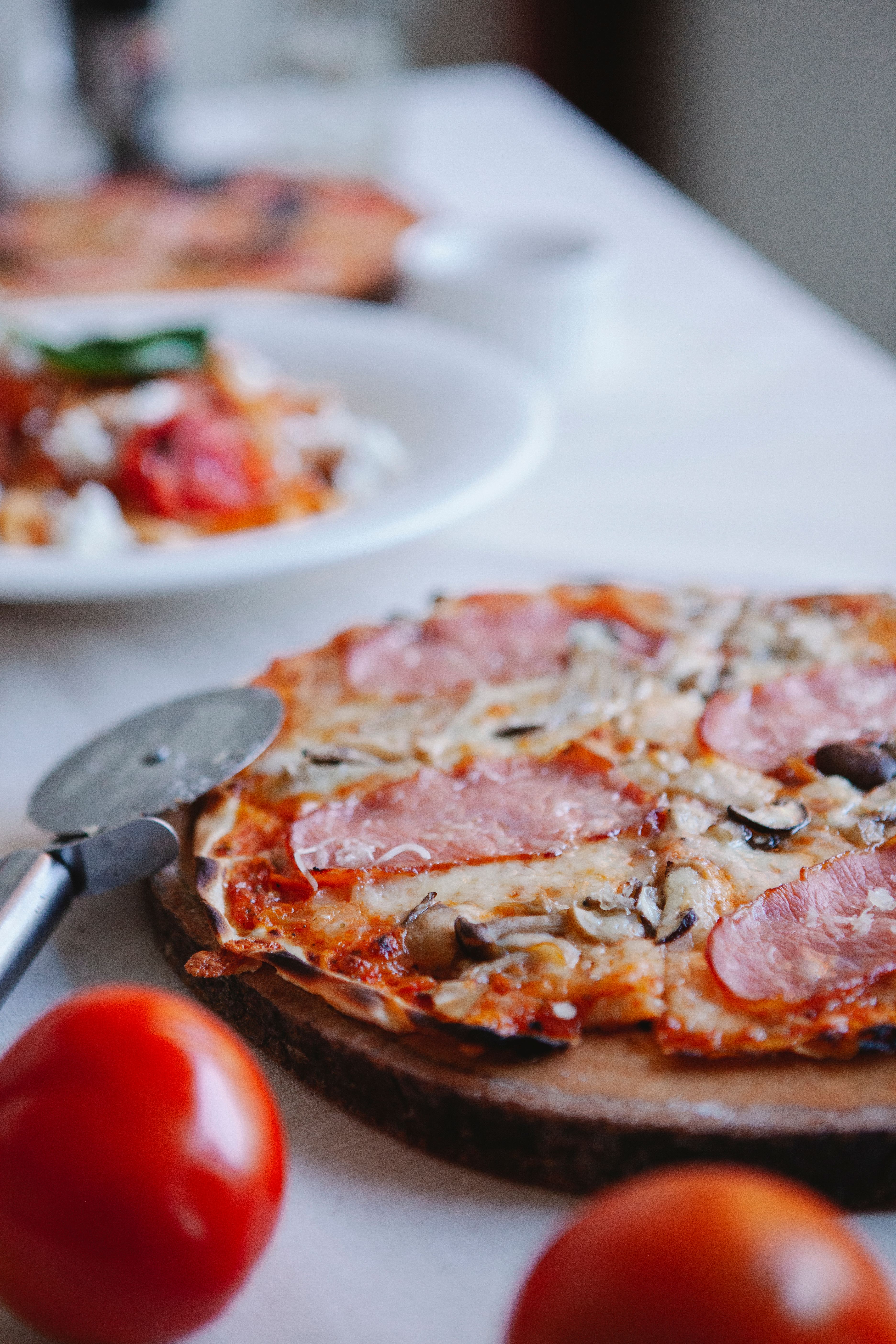
Photo: Antonius Ferret / Pexels
American
Cauliflower Crust Pizza
The diets react (see scores below)
Common Ingredients
- cauliflower
- mozzarella
- egg
- Parmesan
- tomato sauce
- oregano
- basil
Specific recipes may vary.
Incompatible with 4 of 11 diets
Diet Ratings
Cauliflower crust pizza is a popular keto-friendly alternative to traditional pizza, replacing grain-based dough with a cauliflower, egg, and cheese base. The crust itself is relatively low in net carbs — cauliflower has roughly 3-4g net carbs per 100g, and the eggs and cheeses add negligible carbs while boosting fat and protein. However, the tomato sauce introduces moderate sugar and carbs (roughly 3-6g net carbs per 1/4 cup depending on brand), making portion control essential. The full dish assembled is workable on keto in moderate portions but is not as freely consumable as a pure high-fat dish. The main risks are hidden sugars in commercial tomato sauces and the cumulative carb load if portions are generous. Using a low-sugar, small-portion tomato sauce keeps this within keto limits for most practitioners.
Strict keto practitioners caution that even homemade cauliflower crust pizza can add up quickly in net carbs — particularly when tomato sauce quantity isn't tightly controlled — and argue that the 'pizza format' encourages overconsumption, making it a poor regular choice. Some clinical keto protocols favor simpler, more carb-predictable meals over composite dishes like this.
Cauliflower crust pizza as listed contains multiple direct animal-derived ingredients: mozzarella (dairy cheese), egg (used as a binder in the crust), and Parmesan (dairy cheese). These are unambiguously non-vegan ingredients. The cauliflower, tomato sauce, oregano, and basil are fully plant-based, but the presence of dairy and eggs makes this dish incompatible with a vegan diet. A vegan version of cauliflower crust pizza is achievable by substituting the egg with a flax egg or chia egg, and replacing mozzarella and Parmesan with plant-based cheese alternatives, but as listed this recipe is not vegan.
Despite the clever grain-free crust using cauliflower, this dish contains mozzarella and Parmesan — both dairy products explicitly excluded from the Paleolithic diet. Dairy is one of the clearest 'avoid' categories in paleo, as it was unavailable to hunter-gatherers and contains casein and lactose that strict paleo excludes. Eggs are paleo-approved and cauliflower, tomato sauce, oregano, and basil are all compliant, but the cheese components are disqualifying. The dish could be made paleo-compatible by omitting the dairy cheeses entirely, but as presented it fails paleo standards.
Cauliflower crust pizza replaces refined grain crust with a vegetable base, which aligns well with Mediterranean diet principles emphasizing plant-based foods. The cauliflower is a nutrient-dense vegetable, and tomato sauce with oregano and basil reflect classic Mediterranean flavors. However, the crust relies heavily on mozzarella, Parmesan, and egg as binders, making dairy and eggs the primary structural components rather than incidental additions. This shifts the dish into moderate-use territory. Dairy (mozzarella, Parmesan) is acceptable a few times per week in Mediterranean eating, but the quantities used here are higher than typical. Notably absent is olive oil, the canonical Mediterranean fat. Overall, this is a reasonable, vegetable-forward dish that fits better than traditional refined-flour pizza but is not a Mediterranean staple.
Some Mediterranean diet practitioners would view this more favorably, noting that cheese and tomatoes feature prominently in Southern Italian and Greek culinary traditions, and that substituting a vegetable for refined grain is a meaningful improvement. Others might score it lower, arguing that the high dairy load per serving exceeds what traditional Mediterranean eating patterns would consider moderate.
Cauliflower crust pizza is fundamentally incompatible with the carnivore diet. The dish is built almost entirely on plant-based ingredients: cauliflower forms the crust, tomato sauce provides the base, and oregano and basil are plant-derived herbs. All of these are strictly excluded from carnivore. While eggs, mozzarella, and Parmesan are animal-derived and would be acceptable to many carnivore practitioners on their own, they are minor components here and cannot redeem a dish whose entire structure is plant-based. There is no meaningful protein from an animal source. The presence of multiple plant foods — a vegetable, a fruit-derived sauce, and two herb spices — places this firmly in the 'avoid' category with high confidence across all carnivore tiers.
Cauliflower Crust Pizza is explicitly prohibited by Whole30's Rule 4, which bans recreating pizza, pizza crust, and baked-good analogs even when made with fully compliant ingredients. The Whole30 program specifically calls out 'pizza crust' as a forbidden recreation regardless of the base ingredient used. Additionally, the dish contains mozzarella and Parmesan, both of which are dairy products excluded from Whole30 (only ghee and clarified butter are permitted dairy exceptions). The combination of the pizza-recreation violation and the dairy ingredients makes this a clear avoid.
Cauliflower crust pizza is generally lower-FODMAP than traditional wheat-based pizza, but several ingredients require attention. Cauliflower itself is FODMAP-sensitive: Monash rates it as low-FODMAP at 75g (approximately 1/2 cup) but high-FODMAP at larger servings due to fructans and polyols (mannitol). A typical cauliflower pizza crust uses a significant quantity of cauliflower (often 2-3 cups raw), so the crust alone can push FODMAP levels high depending on portion size. Mozzarella (hard/low-moisture) is low-FODMAP as FODMAPs in cheese are minimal when lactose is reduced during aging — however, fresh mozzarella contains more lactose and warrants caution. Parmesan is low-FODMAP (aged, minimal lactose). Eggs are low-FODMAP. Tomato sauce is conditionally low-FODMAP: plain canned tomatoes are safe at ~100g, but many commercial tomato sauces contain garlic and onion (high-FODMAP fructans), making ingredient sourcing critical. Oregano and basil are low-FODMAP herbs. The dish can be made low-FODMAP with careful portion control and ingredient selection (low-lactose mozzarella, garlic/onion-free tomato sauce, moderate cauliflower serving), but as typically prepared, cumulative FODMAP load is a real concern.
Monash University rates cauliflower as low-FODMAP only at 75g per serve, but a standard cauliflower pizza crust requires far more per person; many clinical FODMAP dietitians advise patients to avoid cauliflower crust pizza during the strict elimination phase due to the high quantity of cauliflower required, even if individual ingredients appear safe at small portions.
Cauliflower crust pizza is a mixed dish from a DASH perspective. Cauliflower is an excellent DASH-friendly vegetable, and tomato sauce with herbs (oregano, basil) aligns well with DASH principles. However, the crust typically combines cauliflower with mozzarella, Parmesan, and egg to bind it — meaning the cheese content is higher than in a typical vegetable dish. Both mozzarella and Parmesan contribute saturated fat and sodium, which DASH limits. A standard homemade cauliflower crust pizza can contain 400–700mg sodium per serving depending on cheese quantities and tomato sauce used, which is manageable within DASH limits but warrants attention. The saturated fat from two types of cheese is a moderate concern. Overall, this dish is better than traditional pizza (refined flour crust, full-fat cheese, processed toppings) and can fit within DASH in moderation, but the cheese load prevents a full approval.
NIH DASH guidelines specify limiting saturated fat and favoring low-fat dairy, which would flag the dual-cheese binder as a concern. However, updated clinical interpretations note that recent evidence (including meta-analyses like Drouin-Chartier et al.) suggests cheese consumption may not independently increase cardiovascular risk, and some DASH-oriented dietitians accept moderate cheese use when overall sodium and saturated fat remain within daily targets.
Cauliflower crust pizza is a notably Zone-friendly alternative to traditional pizza. The cauliflower base is a low-glycemic, high-fiber vegetable that replaces high-glycemic white flour crust, dramatically improving the carbohydrate quality. Eggs contribute lean protein blocks, while mozzarella and Parmesan provide additional protein along with some saturated fat. Tomato sauce adds polyphenols (lycopene) consistent with Sears' anti-inflammatory emphasis. The primary Zone concern is the fat profile: mozzarella and Parmesan introduce saturated fat, which early Zone methodology strictly limited. The dish also lacks a dedicated lean protein source (no chicken, fish, or tofu listed), making it protein-light relative to Zone's ~25g protein per meal target. With careful portioning — controlling cheese quantities and pairing with added lean protein — this dish can function as a reasonable Zone-compatible meal. It scores above midpoint because the foundational swap (cauliflower for flour) is exactly the kind of low-glycemic substitution Zone encourages, and most ingredients are whole, unprocessed foods.
Early Zone (Enter the Zone) would flag the saturated fat from full-fat mozzarella and Parmesan as 'unfavorable' fats that can interfere with eicosanoid balance. However, Sears' later writings (The Anti-Inflammation Zone) softened this stance, acknowledging that saturated fat is less harmful than omega-6-rich seed oils and that dairy fat in context is acceptable. Some Zone practitioners would fully approve this dish as written given the excellent carb base, while purists would insist on part-skim cheese and an added lean protein to reach proper block balance.
Cauliflower crust pizza presents a mixed anti-inflammatory profile. The base — cauliflower — is a cruciferous vegetable with glucosinolates and antioxidants that support anti-inflammatory pathways. Tomato sauce provides lycopene (especially when cooked), and oregano and basil contribute polyphenols and antimicrobial compounds with anti-inflammatory properties. These are all positives. However, the crust is bound with mozzarella, Parmesan, and egg, making it notably higher in full-fat dairy and saturated fat than a vegetable-forward dish would ideally be. Full-fat cheese (Parmesan in particular) is a LIMIT food under anti-inflammatory guidelines due to saturated fat content and potential to raise arachidonic acid levels. Mozzarella is moderate in fat and lower on the concern spectrum but still contributes. Egg is a contested ingredient (see dissenting view). The dish avoids refined carbohydrates and processed ingredients, which is a meaningful advantage over conventional pizza, and the overall ingredient list is whole-food based. The net result is a nutritionally mixed dish — better than conventional pizza, but not cleanly anti-inflammatory due to the dairy load in the crust itself.
Some anti-inflammatory practitioners, including those aligned with Dr. Weil's more permissive approach, would view modest amounts of cheese and eggs as acceptable within an otherwise plant-forward meal, and might score this higher given the absence of refined flour and processed ingredients. Conversely, stricter protocols (e.g., AIP or low-arachidonic-acid approaches) would flag both eggs and full-fat dairy more sharply, potentially pushing this toward a lower score.
Cauliflower crust pizza is a lower-carb, lower-calorie alternative to traditional pizza and offers meaningful advantages for GLP-1 patients. The cauliflower base provides fiber and micronutrients, while eggs and Parmesan in the crust contribute some protein. Mozzarella adds additional protein but also brings moderate saturated fat. Tomato sauce adds lycopene and a small fiber boost. The dish is portion-friendly and easier to digest than a traditional doughy pizza. However, the protein content per serving is modest (roughly 10-15g depending on cheese quantities) without a dedicated protein topping, falling short of the 15-30g per meal target. Fat content from the cheese combination (mozzarella plus Parmesan) is moderate and could contribute to nausea or reflux in GLP-1 patients who are sensitive. Overall, it is a reasonable occasional meal base but benefits significantly from adding a lean protein topping such as grilled chicken or turkey to meet protein targets.
Some GLP-1-focused dietitians view cauliflower crust pizza favorably as a satisfying, lower-glycemic comfort food that supports adherence, while others caution that the combined cheese load can trigger nausea or reflux in patients with slowed gastric emptying, particularly early in treatment or around dose escalation.
*See how scores were generated at our methodology page.
Nutritional profile
Six traits that cut across every diet.
Fiber & Plants
How much whole-plant food and fiber it delivers.
Healthy Fats
The quality of its fats (unsaturated, omega-3).
Whole / Unprocessed
How close it is to its natural, unprocessed form.
Gut Gentle
How easy it is on digestion (low FODMAP, few irritants).
Low Glycemic
How little it spikes your blood sugar.
Protein Density
How much protein it packs per calorie.
Controversy Index
Higher controversy = more disagreement between diets.
Diet-Specific Tips
 Keto — 5/10
View tips
- Cauliflower replaces grain-based dough — significantly reduces net carbs vs. traditional pizza
- Mozzarella, egg, and Parmesan add healthy fat and protein with minimal carbs
- Tomato sauce adds 3-6g net carbs per serving — key risk factor; avoid sweetened commercial varieties
- Overall net carbs per serving estimated 6-10g depending on sauce and portion size
- Portion control is critical — a full pizza could exceed daily carb limits
- No grains, added sugars from crust itself — clean keto ingredients aside from sauce
 Mediterranean — 6/10
View tips
- Cauliflower base replaces refined grain crust — a significant plant-forward improvement
- Tomato sauce, oregano, and basil are authentically Mediterranean
- Mozzarella and Parmesan used in larger-than-typical quantities as structural binders
- Egg included as binder — acceptable in moderation
- No olive oil present, missing the primary Mediterranean fat
- No red meat or highly processed ingredients
- Dish is vegetarian and whole-ingredient based
 Low-FODMAP — 5/10
View tips
- Cauliflower is high-FODMAP above 75g (mannitol/fructans) — crust typically uses much more
- Tomato sauce frequently contains garlic and/or onion — high-FODMAP fructans; must verify sauce is garlic/onion-free
- Low-moisture mozzarella is low-FODMAP; fresh mozzarella may contain significant lactose
- Parmesan is low-FODMAP (aged cheese, minimal lactose)
- Eggs are low-FODMAP
- Oregano and basil are low-FODMAP
- Cumulative FODMAP load from cauliflower quantity is the primary risk factor
 DASH — 5/10
View tips
- Cauliflower is a DASH-approved vegetable and a positive base ingredient
- Mozzarella and Parmesan together increase saturated fat content beyond DASH ideals for a single dish
- Tomato sauce with oregano and basil aligns well with DASH flavor and nutrient profile
- Egg as a binder is acceptable in DASH in moderation
- Sodium content depends heavily on tomato sauce and cheese amounts — low-sodium tomato sauce improves the score
- Significantly better than traditional pizza with refined-flour crust and processed toppings
- Portion control is important — one or two slices can fit within DASH daily limits
 Zone — 6/10
View tips
- Cauliflower replaces high-glycemic flour crust — a strong Zone-favorable substitution
- Low net carbs from cauliflower base supports 40% carb target without glycemic spike
- Tomato sauce provides polyphenols (lycopene) aligned with anti-inflammatory Zone principles
- Eggs provide lean protein blocks consistent with Zone guidelines
- Mozzarella and Parmesan contribute saturated fat, which early Zone limits
- No dedicated lean protein listed — dish may fall short of ~25g protein per meal target
- Oregano and basil add polyphenol content with negligible macro impact
- Portion control of cheese is essential to keep fat blocks in Zone range
 Anti-Inflammatory — 6/10
View tips
- Cauliflower base provides cruciferous vegetable benefits (glucosinolates, antioxidants) instead of refined flour
- Tomato sauce contributes cooked lycopene, a potent antioxidant and anti-inflammatory carotenoid
- Oregano and basil add polyphenols and anti-inflammatory phytonutrients
- High dairy content (mozzarella + Parmesan) introduces saturated fat — a LIMIT factor
- Full-fat Parmesan is among the more saturated dairy options
- Egg is a moderately contested ingredient; provides selenium and choline but contributes arachidonic acid
- No refined carbohydrates, processed ingredients, seed oils, or added sugars — a significant positive
- Net profile: substantially better than conventional pizza but not cleanly anti-inflammatory
 GLP-1 Friendly — 5/10
View tips
- Protein falls short of 15-30g per meal target without an added protein topping
- Cauliflower base provides fiber and micronutrients versus refined grain crust
- Moderate saturated fat from mozzarella and Parmesan may worsen GLP-1 GI side effects
- Egg in crust adds protein density and digestibility
- Tomato sauce is low-fat and nutrient-dense
- Portion-friendly format suits reduced GLP-1 appetite
- Easily upgraded to approve-tier by adding lean protein topping