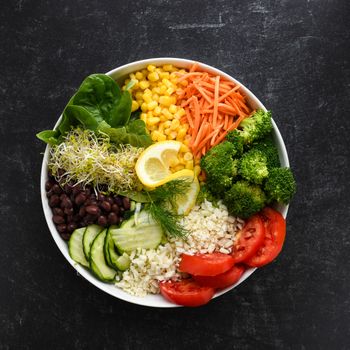
Photo: Heather Brock / Pexels
American
Cauliflower Rice Bowl
The diets react (see scores below)
Common Ingredients
- cauliflower rice
- chicken breast
- bell peppers
- red onion
- avocado
- tahini
- lime juice
Specific recipes may vary.
Incompatible with 2 of 11 diets
Diet Ratings
This Cauliflower Rice Bowl is largely keto-friendly. Cauliflower rice is an excellent low-carb substitute for grain-based rice (~3g net carbs per cup). Chicken breast provides clean lean protein. Avocado adds healthy monounsaturated fats and boosts the fat ratio significantly. Tahini contributes additional healthy fats with moderate carbs (~1-2g net per tablespoon). Bell peppers and red onion are the main carb contributors — bell peppers have ~4-6g net carbs per half cup and red onion runs higher than most alliums (~8-9g net per half cup) — so portions of these two should be monitored. Lime juice adds negligible carbs in typical amounts. The tofu variant is also acceptable, though it shifts the macronutrient profile slightly and some versions contain trace carbs. Overall, with reasonable portioning of bell peppers and red onion, this bowl can easily stay within the 20-50g daily net carb budget while delivering good fats from avocado and tahini.
Strict keto practitioners may flag the combination of red onion and bell peppers as carb-creep risks, arguing that these higher-carb vegetables should be eliminated or swapped for lower-carb options like zucchini or spinach to preserve a meaningful buffer in the daily carb budget. Additionally, some carnivore-leaning keto adherents would replace tahini and plant-based fats with animal-sourced fats for a 'cleaner' keto macro profile.
This dish as listed contains chicken breast, which is animal flesh and therefore explicitly excluded from a vegan diet. The listing notes 'chicken or tofu' as the primary protein, meaning the dish can be prepared either way. In its chicken breast version, it is not vegan-compliant. The remaining ingredients — cauliflower rice, bell peppers, red onion, avocado, tahini, and lime juice — are all fully plant-based and would score highly on their own. If prepared with tofu instead of chicken, the dish would be fully vegan and score 8-9.
This dish is mostly paleo-compliant, but has two notable considerations. Cauliflower rice, chicken breast, bell peppers, red onion, avocado, and lime juice are all clearly paleo-approved whole foods. Tahini (ground sesame seeds) is where debate enters: sesame seeds themselves are technically a seed and not excluded by paleo principles, but tahini is made from sesame paste, and sesame oil/sesame-derived products sit in a gray zone — some strict paleo frameworks flag sesame seeds due to their lectin and phytic acid content, while others freely allow them as seeds. Additionally, the listing of tofu as an alternative protein is a direct paleo violation, as tofu is a soy-based legume product, which is explicitly excluded. The dish as written with chicken is largely paleo; with tofu it is not. The tahini introduces mild ambiguity even in the chicken version.
Strict Cordain-school paleo and some paleo foundations flag sesame seeds and tahini due to antinutrient content (phytic acid, oxalates), placing them in the avoid or strict-caution category. Robb Wolf and more moderate paleo practitioners generally allow sesame seeds as whole seeds or minimally processed pastes in moderation.
This bowl is largely Mediterranean-friendly: cauliflower rice is a whole vegetable base, bell peppers and red onion are encouraged plant foods, avocado provides healthy monounsaturated fat, and tahini (sesame paste) is a traditional Mediterranean condiment rich in healthy fats. Lime juice adds brightness without concern. The primary protein is chicken breast, which is acceptable in moderation under Mediterranean guidelines (poultry a few times per week). The dish scores well for plant density and healthy fat sources, but falls short of a full 'approve' mainly because chicken is not a core Mediterranean staple (fish/seafood would be preferred), and cauliflower rice substituting for whole grains means the dish misses the fiber and nutrient benefits of traditional whole grain bases like farro, bulgur, or brown rice. The tofu option would push this slightly higher in Mediterranean alignment as a plant-based protein.
Some modern Mediterranean diet practitioners would rate this higher, arguing the exceptional vegetable density, healthy fats from tahini and avocado, and lean protein from chicken (or plant protein from tofu) make it a strong Mediterranean-aligned meal regardless of grain substitution. Traditional Mediterranean diets varied regionally and did not always center grains at every meal.
This dish is almost entirely plant-based and is fundamentally incompatible with the carnivore diet. The primary base is cauliflower rice — a plant food — and the dish is loaded with additional plant ingredients: bell peppers, red onion, avocado, tahini (made from sesame seeds), and lime juice. Every one of these is strictly excluded on a carnivore diet. The only carnivore-compatible ingredient is chicken breast, and even that is undermined by the option to substitute tofu, which is a processed soy-based plant protein. Even if the chicken were the sole focus, the dish as constructed cannot be adapted to carnivore without removing virtually every ingredient except the meat. Tahini and lime juice in particular are clear violations — a seed-based paste and citrus juice have no place on any tier of the carnivore diet.
The chicken breast version of this bowl is fully Whole30-compliant — cauliflower rice, chicken breast, bell peppers, red onion, avocado, tahini, and lime juice are all allowed foods. Tahini (ground sesame seeds) is a compliant fat source. However, the dish lists 'chicken or tofu' as the primary protein, and tofu is a soy product, which is explicitly excluded on Whole30. If ordered or prepared with tofu, this dish becomes non-compliant. The rating reflects the ambiguity of the dual-protein listing. Additionally, tahini-based sauces from store-bought sources may occasionally include added non-compliant ingredients, so label-reading is advised.
Some Whole30 practitioners note that tahini, while technically compliant, is a calorie-dense seed butter that could be used to replicate the richness of excluded condiments, touching on the program's 'psychological hold' considerations. However, official Whole30 guidelines do not restrict seed butters, so this remains a minor community debate rather than a rule violation.
This bowl has a mostly low-FODMAP base but contains two problematic ingredients that require portion control. Red onion is high in fructans and is a significant FODMAP concern even in small amounts — it is one of the most concentrated fructan sources tested by Monash and should generally be avoided during elimination. Avocado is low-FODMAP only at 1/8 of an avocado (30g) per Monash; a standard bowl serving would likely include 1/4 to 1/2 an avocado, which becomes high in polyols (sorbitol). The remaining ingredients are generally safe: cauliflower rice is low-FODMAP at standard servings (up to 1 cup), chicken breast is FODMAP-free, bell peppers are low-FODMAP (green lower risk than red, but red is still acceptable at ~43g), tahini is low-FODMAP at 2 tablespoons, and lime juice is low-FODMAP. With red onion removed or replaced with green onion tops, and avocado strictly limited to 1/8, the dish could be approved. As served with typical portions, caution is warranted.
Monash University rates red onion as high-FODMAP even in very small quantities (no safe serving identified), so most clinical FODMAP practitioners would advise complete elimination of red onion during the elimination phase rather than portion reduction. Avocado's low-FODMAP threshold of 1/8 avocado is considered impractically small by many dietitians, who note that real-world portions almost always exceed this limit, making it a higher-risk ingredient than its technical Monash approval suggests.
This Cauliflower Rice Bowl aligns strongly with DASH principles. Cauliflower rice is a non-starchy vegetable rich in fiber, potassium, and magnesium with negligible sodium. Chicken breast is a lean protein explicitly emphasized in DASH guidelines. Bell peppers and red onion contribute additional vegetables, fiber, potassium, and antioxidants. Avocado provides heart-healthy monounsaturated fats and potassium, fitting within DASH's allowance for healthy unsaturated fats. Tahini (sesame paste) provides magnesium, calcium, and healthy fats, though it is moderately calorie-dense and contributes a small amount of saturated fat. Lime juice adds flavor without sodium, a useful DASH strategy for reducing reliance on salt. The overall dish is low in sodium (assuming no added salt or high-sodium sauces), low in saturated fat, and nutrient-dense. The one consideration is that avocado and tahini together increase total fat content, requiring portion awareness. The tofu alternative is equally DASH-compatible, adding plant protein and isoflavones.
NIH DASH guidelines do not place specific limits on avocado or tahini, both being sources of unsaturated fat, and generally support their inclusion. However, some conservative DASH clinicians note that the combined fat load from avocado and tahini in a single bowl may push total daily fat toward the upper end of DASH targets, particularly for individuals with higher cardiovascular risk who follow stricter caloric limits.
The Cauliflower Rice Bowl is nearly a textbook Zone Diet meal. Cauliflower rice is an exceptionally low-glycemic, high-fiber carbohydrate that allows generous volume without spiking insulin — a Zone ideal. Bell peppers and red onion add polyphenol-rich, colorful, low-GI carbohydrates that Sears specifically champions for their anti-inflammatory properties. Chicken breast is the gold-standard Zone lean protein, delivering approximately 7g protein per ounce with minimal saturated fat. Avocado and tahini (sesame paste, high in monounsaturated fat) provide the fat block with favorable monounsaturated and anti-inflammatory fat profiles. Lime juice adds flavor with negligible macro impact. The overall macro architecture maps cleanly onto 40/30/30: the cauliflower-pepper-onion base handles carb blocks at low glycemic load, chicken handles protein blocks precisely, and avocado plus tahini handle fat blocks with quality fats. Portion control is straightforward — roughly 3 oz chicken, 1-2 cups cauliflower rice with vegetables, 1/4 avocado, and 1-2 tsp tahini approximates a balanced 3-block Zone meal. The tofu substitution also works well for vegetarian Zone, though fat block sizing would shift slightly (vegetarian fat blocks are 3g fat vs 1.5g for animal protein). This dish requires no modification to Zone principles — it was practically designed for the protocol.
This bowl is built on a strong anti-inflammatory foundation. Cauliflower rice is a cruciferous vegetable rich in sulforaphane and glucosinolates, compounds associated with reduced inflammatory markers. Bell peppers and red onion supply quercetin, vitamin C, and anthocyanins — potent antioxidants and polyphenols. Avocado contributes oleic acid and monounsaturated fats similar in profile to olive oil, along with anti-inflammatory phytosterols and glutathione. Tahini (sesame paste) provides lignans, vitamin E, and a modest sesame oil phenolic called sesamol with documented antioxidant activity; sesame's omega-6 content is partially offset by these unique antioxidants, distinguishing it from commodity seed oils. Lime juice adds vitamin C and flavonoids. The protein choice is flexible: chicken breast is a lean protein squarely in the 'moderate' category of anti-inflammatory frameworks, while tofu (whole soy) is explicitly emphasized by Dr. Weil's pyramid as a preferred protein. No refined carbohydrates, added sugars, trans fats, or pro-inflammatory oils are present. The only minor consideration is that tahini is sesame-derived and contains some omega-6, but the quantity used as a dressing is modest and its unique lignans provide compensating benefit. Overall, this dish exemplifies the anti-inflammatory pattern: abundant colorful vegetables, healthy fats, lean or plant protein, and whole-food ingredients with no inflammatory additives.
This bowl is well-suited for GLP-1 patients. Chicken breast delivers 25-35g of lean protein per standard serving, directly supporting the top priority of muscle preservation during weight loss. Cauliflower rice is low-calorie, easy to digest, and contributes modest fiber while keeping the dish light on the stomach — important given slowed gastric emptying. Bell peppers and red onion add fiber, micronutrients, and hydration-supporting water content. Tahini provides unsaturated fats and a small protein boost, and lime juice aids palatability without adding sugar or fat. Avocado is the one ingredient to watch: it contributes healthy monounsaturated fats, but its fat density can slow digestion further and add significant calories in a context where every calorie should be nutrient-dense. A modest portion (one-quarter to one-half of a medium avocado) keeps this dish solidly in the approve range. The tofu substitution is equally valid — it maintains strong protein density while reducing saturated fat to near zero and adding slightly more fiber. Overall this dish scores high on protein density, digestibility, fiber, nutrient density per calorie, and small-portion friendliness.
Some GLP-1-focused dietitians flag tahini and avocado together as a combined fat load that may worsen nausea or delayed gastric emptying in sensitive patients, particularly in the first weeks of dose escalation; they may recommend choosing one or the other rather than both in the same bowl. A minority view also notes that cauliflower rice, while low-calorie, provides meaningfully less fiber than whole grains and may not adequately support the constipation-prevention priority without supplementation from other meals.
*See how scores were generated at our methodology page.
Nutritional profile
Six traits that cut across every diet.
Fiber & Plants
How much whole-plant food and fiber it delivers.
Healthy Fats
The quality of its fats (unsaturated, omega-3).
Whole / Unprocessed
How close it is to its natural, unprocessed form.
Gut Gentle
How easy it is on digestion (low FODMAP, few irritants).
Low Glycemic
How little it spikes your blood sugar.
Protein Density
How much protein it packs per calorie.
Controversy Index
Higher controversy = more disagreement between diets.
Diet-Specific Tips
 Keto — 8/10
View tips
- Cauliflower rice is an ideal low-carb grain substitute (~3g net carbs/cup)
- Avocado and tahini provide substantial healthy fats, improving keto macro ratio
- Bell peppers and red onion add moderate carbs — portion control is essential
- Chicken breast is lean; fat content of the dish depends heavily on avocado and tahini amounts
- Lime juice is negligible in carb contribution at typical serving sizes
- Tofu variant is acceptable but may contain trace carbs depending on preparation
- Overall net carbs are manageable within keto limits if vegetable portions are controlled
 Paleo — 6/10
View tips
- Cauliflower rice is a paleo-approved grain substitute — fully compliant
- Chicken breast is a clean, approved paleo protein
- Bell peppers, red onion, avocado, and lime juice are all whole, paleo-approved foods
- Tahini (sesame paste) is a gray-area ingredient — seeds are generally allowed but sesame is debated due to antinutrient content
- Tofu listed as an alternative protein is a soy-based legume product and is explicitly excluded from paleo
- Dish is largely paleo with chicken, but the tofu option and tahini lower the overall score
 Mediterranean — 6/10
View tips
- Cauliflower rice replaces whole grains, missing fiber and nutrients of traditional Mediterranean grain bases like bulgur or farro
- Bell peppers, red onion, and avocado contribute strong plant-based Mediterranean elements
- Tahini is a traditional Mediterranean ingredient and excellent healthy fat source
- Chicken breast is acceptable but poultry is moderate — fish or seafood would be more aligned
- Tofu as an alternative protein would increase Mediterranean alignment as a plant-forward choice
- No processed ingredients, added sugars, or refined grains — clean whole-food preparation
 Whole30 — 6/10
View tips
- Chicken breast version is fully Whole30-compliant
- Tofu is a soy product and explicitly excluded on Whole30 — tofu version is non-compliant
- Cauliflower rice is an approved grain substitute and explicitly in the spirit of the program
- Tahini (sesame paste) is compliant but store-bought versions should be checked for additives
- Avocado, bell peppers, red onion, and lime juice are all clearly compliant
- Dish should be prepared with chicken only to be Whole30-approved
 Low-FODMAP — 5/10
View tips
- Red onion is high-FODMAP due to fructans — no established safe serving during elimination phase
- Avocado is low-FODMAP only at 1/8 avocado (30g); standard bowl portions typically exceed this, triggering polyol (sorbitol) load
- Cauliflower rice is low-FODMAP at up to 1 cup cooked
- Chicken breast is FODMAP-free
- Bell peppers are low-FODMAP at standard servings
- Tahini is low-FODMAP at 2 tbsp per Monash
- Lime juice is low-FODMAP
- Dish can be made safe by omitting red onion and strictly limiting avocado
 DASH — 8/10
View tips
- Cauliflower rice is a low-sodium, high-fiber, potassium-rich DASH-approved vegetable
- Chicken breast is a lean protein explicitly endorsed by DASH guidelines
- Bell peppers and red onion add multiple DASH-approved vegetable servings
- Avocado contributes heart-healthy monounsaturated fats and potassium
- Tahini provides calcium and magnesium but adds caloric density from fat
- Lime juice is a sodium-free flavor enhancer consistent with DASH sodium-reduction strategy
- No high-sodium sauces, processed ingredients, or saturated fat sources present
- Portion control of avocado and tahini is advisable to manage total fat intake
 Zone — 9/10
View tips
- Cauliflower rice is a near-zero glycemic load carbohydrate, maximizing carb block efficiency
- Chicken breast is a canonical Zone lean protein source (~7g protein per block)
- Avocado provides monounsaturated fat, the preferred Zone fat source
- Bell peppers and red onion are polyphenol-rich, colorful, low-GI vegetables Sears specifically recommends
- Tahini contributes additional monounsaturated and polyunsaturated fats with minimal saturated fat
- Lime juice adds anti-inflammatory polyphenols with negligible carb impact
- Dish works for both animal (chicken) and vegetarian (tofu) Zone protocols with minor fat block adjustment
- No high-glycemic, processed, or nutritionally empty ingredients present
 Anti-Inflammatory — 8/10
View tips
- Cauliflower is a cruciferous vegetable with sulforaphane and glucosinolates that reduce inflammatory signaling
- Bell peppers and red onion are high in quercetin, anthocyanins, and vitamin C — established anti-inflammatory antioxidants
- Avocado provides oleic acid, phytosterols, and glutathione supporting reduced inflammation
- Tahini contributes unique lignans (sesamin, sesamolin) and vitamin E with antioxidant properties
- Tofu option aligns with Dr. Weil's emphasis on whole soy foods as preferred anti-inflammatory protein
- Chicken breast is a lean protein appropriate in the 'moderate' anti-inflammatory category
- Lime juice adds flavonoids and vitamin C
- No refined carbohydrates, added sugars, trans fats, or high-omega-6 oils present
 GLP-1 Friendly — 8/10
View tips
- High lean protein from chicken breast or tofu supports muscle preservation
- Cauliflower rice is low-calorie, easy to digest, and gentle on slowed gastric emptying
- Bell peppers and red onion contribute fiber, micronutrients, and water content
- Avocado adds beneficial monounsaturated fats but should be portioned carefully due to fat and calorie density
- Tahini and avocado together increase total fat load — consider portion control or choosing one
- No fried, spicy, sugary, carbonated, or otherwise GLP-1-problematic ingredients
- Works well as a small meal and holds up nutritionally even in reduced-appetite portions
- Tofu substitution is equally strong — similar protein, lower fat, slightly more fiber