Vietnamese
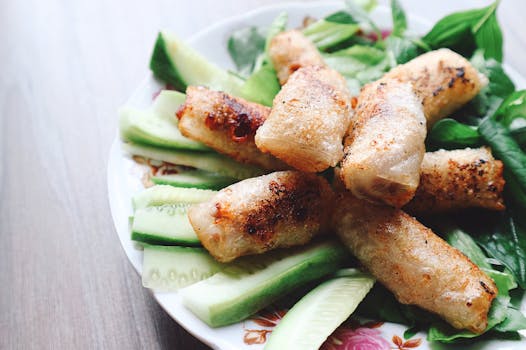
Vietnamese Fried Spring Rolls (Chả Giò)
The diets react (see scores below)
Common Ingredients
- rice paper
- ground pork
- shrimp
- wood ear mushrooms
- glass noodles
- carrots
- fish sauce
- lettuce
Specific recipes may vary.
Incompatible with 8 of 11 diets
Diet Ratings
Vietnamese Fried Spring Rolls (Chả Giò) are fundamentally incompatible with a ketogenic diet. The dish relies on rice paper wrappers, which are high in starch-based carbohydrates, and glass noodles (mung bean or sweet potato starch vermicelli), both of which are significant sources of net carbs. A typical serving of 2-3 rolls can easily contain 20-30g of net carbs from these two ingredients alone — potentially consuming an entire day's keto carb budget in a single snack. Carrots add additional net carbs. The protein sources (pork, shrimp) and fish sauce are keto-friendly, but the structural carbohydrate components of this dish make it unsuitable for ketosis without a fundamental recipe overhaul (e.g., using egg-based or cheese-based wrappers and omitting glass noodles).
Vietnamese Fried Spring Rolls (Chả Giò) contain multiple animal products that unambiguously disqualify them from a vegan diet. Ground pork and shrimp are direct animal flesh, fish sauce is derived from fermented fish, and shrimp is seafood — all strictly excluded under vegan rules. There is no ambiguity here: this dish is fundamentally built around animal proteins and animal-derived condiments. While the wrapper (rice paper), vegetables, glass noodles, and mushrooms are plant-based, the core ingredients make this entirely incompatible with veganism.
Vietnamese Fried Spring Rolls (Chả Giò) contain multiple non-paleo ingredients that disqualify the dish. Rice paper is made from rice flour — a grain product excluded from the paleo diet. Glass noodles are typically made from mung bean starch, a legume derivative, also excluded. Fish sauce in commercial form commonly contains added salt and sometimes sugar or preservatives. The frying process also typically involves seed oils (vegetable or canola oil). While the core proteins (ground pork, shrimp) and vegetables (carrots, wood ear mushrooms, lettuce) are paleo-compliant, the structural and starchy components of this dish are fundamentally incompatible with paleo principles.
Vietnamese Fried Spring Rolls (Chả Giò) conflict with Mediterranean diet principles on multiple fronts. The dish is deep-fried, introducing large amounts of oil (likely not extra virgin olive oil) and creating a highly processed cooking method that the Mediterranean diet explicitly discourages. The primary protein is ground pork, a red meat that should be limited to only a few times per month. While shrimp is acceptable, it is secondary here. The glass noodles are refined, not whole grain. The frying process also negates the positive contributions of the vegetables (carrots, mushrooms) and lettuce. Fish sauce, while not inherently problematic, is a high-sodium processed condiment. The overall dish profile — deep-fried, pork-dominant, refined starch wrapper — is fundamentally misaligned with Mediterranean diet staples.
Vietnamese Fried Spring Rolls (Chả Giò) are fundamentally incompatible with the carnivore diet. While the dish does contain carnivore-approved ingredients (ground pork and shrimp), it is overwhelmingly dominated by plant-based and processed components. Rice paper wrappers are made from rice starch — a grain product. Glass noodles are made from mung bean starch — a legume derivative. Wood ear mushrooms are fungi (plant kingdom). Carrots are a root vegetable. Lettuce is a leafy green. The entire structural concept of a spring roll — a grain-based wrapper stuffed with vegetables and noodles — is antithetical to carnivore principles. The pork and shrimp filling could be extracted and consumed on their own, but the dish as presented cannot be adapted into a carnivore-compliant meal without dismantling it entirely. Fish sauce is technically animal-derived and generally accepted, but it does not redeem the dish.
Vietnamese Fried Spring Rolls (Chả Giò) contain multiple Whole30-excluded ingredients. Glass noodles (miến) are typically made from mung bean starch or sweet potato starch — mung beans are legumes, making mung bean glass noodles non-compliant. Even if sweet potato-based, glass noodles function as a grain/starch analog that recreates a noodle format explicitly excluded under Rule 4 ('no pasta or noodles'). Additionally, rice paper wrappers are made from rice flour, placing them squarely in the excluded grains category. The fried spring roll format itself is also a wrapped, fried item analogous to excluded crackers, chips, and wraps. The pork, shrimp, wood ear mushrooms, carrots, fish sauce (check for no added sugar), and lettuce are individually compliant, but the dish as constructed cannot be made Whole30-compatible without fundamentally changing its identity.
Vietnamese Fried Spring Rolls (Chả Giò) present a mixed FODMAP picture. The base ingredients — rice paper, ground pork, shrimp, carrots, fish sauce, and lettuce — are all individually low-FODMAP and safe during elimination. Glass noodles (mung bean vermicelli) are also low-FODMAP. However, wood ear mushrooms (black fungus) are a significant concern: Monash University has tested them and found they are high-FODMAP at typical serving sizes due to polyols (mannitol). A single spring roll may contain a small enough quantity of mushrooms to remain borderline safe, but multiple rolls — which is the standard serving for a snack — could push total mannitol intake into high-FODMAP territory. Fish sauce is generally low-FODMAP in small amounts (1–2 tablespoons) as used in cooking. Garlic and onion are common additions in traditional Chả Giò recipes but are not listed here, which is favorable. The dish is conditionally acceptable at one roll with minimal mushroom content, but caution is warranted due to cumulative polyol load across multiple servings.
Monash University rates wood ear mushrooms as high-FODMAP (mannitol) even at moderate serving sizes, and many clinical FODMAP practitioners would advise avoiding this dish entirely during the elimination phase due to the unpredictable quantity of mushrooms per roll. The safe threshold is difficult to control when eating restaurant-prepared versions where mushroom amounts vary.
Vietnamese Fried Spring Rolls (Chả Giò) are problematic for DASH for several compounding reasons. The deep-frying process significantly raises total fat content and introduces potentially harmful oxidized fats, directly conflicting with DASH's emphasis on limiting total and saturated fat. Ground pork contributes saturated fat and cholesterol. Fish sauce is extremely high in sodium — a single tablespoon contains approximately 1,000–1,400mg of sodium, bringing this snack dangerously close to or exceeding the entire daily DASH sodium allowance (1,500–2,300mg/day). The overall dish is energy-dense, high in sodium, and high in fat from frying, placing it firmly in the 'avoid' category. While some individual ingredients (carrots, shrimp, wood ear mushrooms, glass noodles, lettuce) are DASH-compatible, the preparation method and sodium load from fish sauce override any nutritional benefits. A baked or air-fried version with reduced fish sauce or a low-sodium substitute would score considerably higher.
Vietnamese Fried Spring Rolls (Chả Giò) present a mixed Zone Diet picture. On the positive side, the protein sources — ground pork and shrimp — are lean and zone-compatible, and vegetables like carrots, wood ear mushrooms, and lettuce contribute low-glycemic carbohydrates with useful fiber and polyphenols. Fish sauce is a low-calorie, Zone-neutral flavoring. However, the dish has several Zone challenges: (1) Deep frying introduces a significant and uncontrolled load of fat, likely from omega-6-heavy seed oils (common in Vietnamese frying), which conflicts with Zone's anti-inflammatory and monounsaturated fat emphasis. (2) Rice paper and glass noodles are high-glycemic, refined carbohydrate wrappers with minimal fiber, making them 'unfavorable' carbs in Zone terminology — they spike blood sugar and are hard to block-balance without eating very small portions. (3) As a fried snack, the fat-to-protein-to-carb ratio almost certainly skews toward excess fat and carbs relative to protein, pushing well outside the 40/30/30 ideal. The dish could theoretically be portion-controlled into a Zone snack (e.g., 1-2 small rolls alongside a lean protein source and extra raw vegetables), but the deep-frying and refined carb wrappers make this a consistently difficult food to balance. It earns a caution rather than avoid because the core ingredients are not nutritionally empty and the dish is not pure sugar or processed junk.
Some Zone practitioners argue that Chả Giò, when eaten in strict moderation (1 small roll as part of a mixed-plate meal with extra lettuce wraps, raw vegetables, and lean protein), can be incorporated into an 'unfavorable but workable' Zone framework — similar to how Sears treats other starchy ethnic foods in Mastering the Zone. The vegetable and protein content inside the roll does provide partial Zone value, and if baked rather than fried (a common home preparation variant), the fat profile improves meaningfully. Sears' later writings also soften the hard line on occasional use of unfavorable carbs as long as the overall meal block ratio is maintained.
Vietnamese fried spring rolls (Chả Giò) present a genuinely mixed anti-inflammatory profile. On the positive side, the ingredient list contains several beneficial components: wood ear mushrooms offer polysaccharides with immune-modulating properties; shrimp provides lean protein and some omega-3s; carrots contribute beta-carotene and antioxidants; glass noodles (mung bean starch) are relatively refined but lower glycemic than wheat noodles; fish sauce adds umami with minimal inflammatory burden in small amounts; and lettuce wrapping adds fiber and phytonutrients. However, the dish is deep-fried, which is the primary concern. Deep frying typically uses high-omega-6 vegetable or seed oils (sunflower, soybean, or corn oil are common in Vietnamese cooking), generating oxidized lipids and advanced glycation end-products (AGEs) that are well-documented inflammatory triggers. The ground pork contributes saturated fat, which is flagged as a moderate-to-limit item under anti-inflammatory guidelines. Rice paper wrappers are refined starch with no significant nutritional benefit. The frying method effectively undermines what would otherwise be a moderately acceptable ingredient set. Eaten occasionally with plenty of fresh lettuce and herbs, this dish could fit into a broadly anti-inflammatory diet, but the deep-frying technique and pork fat content prevent a positive rating.
Some anti-inflammatory practitioners would rate this more favorably by focusing on the whole dish in context — fresh herbs, lettuce wrapping, and the relatively unprocessed nature of Vietnamese cuisine compared to Western fried foods. Dr. Weil's framework emphasizes dietary patterns over individual foods, and occasional fried dishes within an otherwise anti-inflammatory diet are not considered disqualifying. Others would rate it more harshly, noting that any deep-fried food using oxidized seed oils should be categorically avoided, regardless of ingredient quality.
Vietnamese fried spring rolls (Chả Giò) are deep-fried, which is a primary disqualifier for GLP-1 patients. Despite containing nutritionally reasonable ingredients — pork, shrimp, vegetables, and mushrooms — the deep-frying process dramatically increases fat content, makes the dish harder to digest, and is strongly associated with worsening GLP-1 side effects including nausea, bloating, reflux, and prolonged gastric discomfort. GLP-1 medications slow gastric emptying, meaning high-fat fried foods sit in the stomach significantly longer, amplifying these effects. The rice paper wrapper and glass noodles add refined carbohydrates with minimal fiber or protein contribution. The protein content per serving is relatively low given the caloric cost. Overall, the fried preparation method overrides the otherwise acceptable ingredient list, placing this firmly in the avoid category.
*See how scores were generated at our methodology page.
Nutritional profile
Six traits that cut across every diet.
Fiber & Plants
How much whole-plant food and fiber it delivers.
Healthy Fats
The quality of its fats (unsaturated, omega-3).
Whole / Unprocessed
How close it is to its natural, unprocessed form.
Gut Gentle
How easy it is on digestion (low FODMAP, few irritants).
Low Glycemic
How little it spikes your blood sugar.
Protein Density
How much protein it packs per calorie.
Controversy Index
Higher controversy = more disagreement between diets.
Diet-Specific Tips
 Low-FODMAP — 5/10
View tips
- Wood ear mushrooms are high-FODMAP due to mannitol (polyol) and are a primary concern in this dish
- Rice paper wrappers are low-FODMAP (rice-based, gluten-free grain)
- Glass noodles (mung bean) are low-FODMAP
- Ground pork and shrimp are FODMAP-free proteins
- Fish sauce is low-FODMAP at typical cooking quantities
- Carrots and lettuce are low-FODMAP
- Garlic and onion are absent from listed ingredients, which is favorable
- Serving size is critical — one roll may be tolerable but multiple rolls increase polyol load from mushrooms
- Restaurant preparation makes mushroom quantity difficult to control
 Zone — 4/10
View tips
- Deep frying introduces high and uncontrolled omega-6 fat load, conflicting with Zone's anti-inflammatory fat guidance
- Rice paper and glass noodles are high-glycemic refined carbs classified as 'unfavorable' in Zone terminology
- Pork and shrimp are lean, Zone-compatible protein sources
- Carrots, wood ear mushrooms, and lettuce contribute low-glycemic, polyphenol-rich carbs
- Macro ratio as prepared skews toward excess carb and fat relative to protein, making 40/30/30 difficult to achieve
- Very small portion (1 roll) could be worked into a Zone snack block, but requires careful meal engineering
 Anti-Inflammatory — 4/10
View tips
- Deep-frying introduces oxidized lipids and AGEs — significant pro-inflammatory concern
- High-omega-6 frying oils (common in this dish) contradict anti-inflammatory principles
- Ground pork adds saturated fat — a moderate-to-limit ingredient
- Wood ear mushrooms offer anti-inflammatory polysaccharides
- Shrimp provides lean protein with modest omega-3 content
- Carrots contribute beta-carotene and antioxidants
- Lettuce wrapping adds fiber and phytonutrients
- Rice paper is refined starch — nutritionally neutral to mildly negative
- Fish sauce is acceptable in small culinary amounts