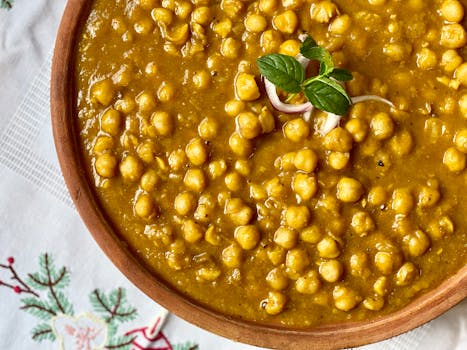
Photo: Muhammad Khawar Nazir / Pexels
Indian
Chana Masala
The diets react (see scores below)
Common Ingredients
- chickpeas
- tomatoes
- onion
- ginger
- garlic
- garam masala
- amchur
- cilantro
Specific recipes may vary.
Incompatible with 5 of 11 diets
Diet Ratings
Chana Masala is built around chickpeas, which are a legume with very high net carb content. A standard serving (1 cup cooked chickpeas) contains approximately 35-45g of net carbs on its own, which can single-handedly exhaust or exceed an entire day's keto carb budget. The supporting ingredients — onion, tomatoes, and amchur (dried mango powder) — add additional carbohydrates. There is no meaningful fat content in this dish, and the protein source (chickpeas) comes packaged with far too many carbs to be viable. This dish is fundamentally incompatible with ketosis regardless of portion size, as even a small serving would contribute a significant carb load.
Chana Masala is a classic North Indian dish built entirely on whole plant foods. Chickpeas provide the primary protein, tomatoes and onion form the base sauce, ginger and garlic add aromatics, and garam masala and amchur (dried mango powder) contribute the signature spicing. Cilantro finishes the dish. Every single ingredient is unambiguously plant-derived with no animal products, by-products, or contested ingredients present. The dish is also a whole-food preparation rather than a processed product, which scores it near the top of the approval range.
Chana Masala is built entirely around chickpeas, a legume that is unambiguously excluded from the Paleolithic diet. Legumes are rejected by all major paleo authorities — Loren Cordain, Mark Sisson, Robb Wolf — due to their high lectin and phytic acid content, which are considered anti-nutrients that impair gut health and nutrient absorption. While the supporting ingredients (tomatoes, onion, ginger, garlic, garam masala, amchur, cilantro) are all paleo-compatible, the primary protein and structural base of the dish is non-negotiable from a paleo standpoint. No amount of preparation or cooking makes chickpeas acceptable in a strict or mainstream paleo framework. The dish cannot be meaningfully adapted without removing its defining ingredient.
Chana Masala is an excellent fit for Mediterranean diet principles. Chickpeas are a cornerstone legume — high in plant protein, fiber, and complex carbohydrates — exactly the kind of food emphasized multiple times daily. The dish is built around vegetables (tomatoes, onion, garlic, ginger) and seasoned with whole spices (garam masala, amchur/dried mango powder, cilantro), all of which are wholesome and minimally processed. There is no red meat, refined grain, added sugar, or significant saturated fat. While the cuisine is Indian rather than Mediterranean, the ingredient profile aligns almost perfectly with Mediterranean diet ideals. The only minor note is the absence of olive oil (Indian cooking typically uses other oils), but that is a preparation variable rather than an ingredient concern.
Chana Masala is entirely plant-based and contains zero animal products. The primary protein is chickpeas, a legume explicitly excluded from the carnivore diet. Every single ingredient — chickpeas, tomatoes, onion, ginger, garlic, garam masala (a spice blend), amchur (dried mango powder), and cilantro — is plant-derived. This dish is as far from carnivore-compatible as possible: it combines legumes, vegetables, fruit-derived spices, and herbs with no animal component whatsoever. There is unanimous consensus across all carnivore diet tiers and practitioners that this dish is completely incompatible.
Chana Masala's primary protein is chickpeas, which are a legume. Legumes are explicitly excluded on the Whole30 program. Unlike green beans, sugar snap peas, and snow peas — which are the only legume exceptions — chickpeas have no such exception and are firmly off-limits. All other ingredients (tomatoes, onion, ginger, garlic, garam masala, amchur/dry mango powder, cilantro) are Whole30-compliant, but the dish cannot be rescued from its chickpea foundation.
Chana Masala contains multiple high-FODMAP ingredients that make it unsuitable during the elimination phase. Chickpeas are very high in GOS (galacto-oligosaccharides) and fructans — even canned and rinsed chickpeas are only low-FODMAP at a very small serving (42g/¼ cup canned), far below what constitutes a main-dish protein serving. Onion is one of the highest-fructan foods tested by Monash and is high-FODMAP at any cooking quantity. Garlic is similarly extremely high in fructans and is a major FODMAP offender even in tiny amounts. These three ingredients alone — each individually sufficient to cause symptoms — combine to make this dish high-FODMAP at any realistic serving size. Tomatoes are low-FODMAP in standard servings, and ginger, cilantro, and most spices including garam masala are generally safe. Amchur (dried mango powder) has limited Monash data but is used in small quantities and is unlikely to be a significant FODMAP contributor. However, the chickpea + onion + garlic triad is insurmountable for the elimination phase.
Chana Masala as prepared here is an excellent DASH diet food. Chickpeas are a DASH-emphasized legume, rich in plant-based protein, fiber, potassium, magnesium, and calcium. Tomatoes, onion, ginger, and garlic are all DASH-approved vegetables and aromatics that contribute potassium, antioxidants, and micronutrients. Garam masala, amchur (dried mango powder), and cilantro are spices and herbs with negligible sodium, aligning perfectly with DASH's strategy of using herbs and spices as flavor enhancers in place of salt. There is no saturated fat, added sugar, red meat, full-fat dairy, or high-sodium processed ingredients in this recipe. The dish is naturally low in sodium (assuming no added salt or minimal salt), high in fiber and plant protein, and fits squarely within DASH's beans/legumes serving recommendations (4-5 servings per week). This homemade version without added salt is nearly ideal for DASH compliance.
Chana Masala is a nutritionally dense Indian dish with a genuinely interesting Zone profile. Chickpeas serve as the primary protein source, but they are a vegetarian/legume protein — meaning they carry significant carbohydrate load alongside their protein. Per 1 cup cooked chickpeas: roughly 15g protein, 45g total carbs (~32g net carbs after fiber), and 4g fat. This creates a macro imbalance relative to Zone targets — the carb-to-protein ratio is too high for chickpeas alone to balance a Zone meal without careful portioning. However, the supporting ingredients (tomatoes, onions, ginger, garlic, cilantro) are all favorable low-glycemic Zone vegetables that add polyphenols and anti-inflammatory compounds with minimal glycemic impact. The spice blend (garam masala, amchur) adds no meaningful macros but contributes polyphenols. The dish contains no added oils or saturated fats as listed, so fat would need to be added (e.g., a drizzle of olive oil or small portion of avocado on the side) to reach the 30% fat target. For Zone compliance, portion chickpeas carefully (~1/2 cup), pair with additional lean protein if needed, and add a monounsaturated fat source. Under the vegetarian fat block rule (3g fat per fat block vs 1.5g for animal protein), the fat deficit is even more pronounced. This dish is usable in Zone but requires active management.
Some Zone practitioners treat chickpeas more favorably because their high fiber content significantly lowers net carbs, and the resistant starch has a blunted glycemic effect compared to refined carbs. Dr. Sears' later anti-inflammatory writings also emphasize polyphenol-rich foods, and the tomato-spice base of Chana Masala is rich in lycopene and other polyphenols. A generous argument could push this toward a 7 (low approve) for vegetarians where chickpeas are accepted as a combined protein-carb block source.
Chana Masala is an exemplary anti-inflammatory dish. Chickpeas are a fiber-rich legume explicitly emphasized in anti-inflammatory frameworks — their soluble fiber supports gut health and reduces CRP, while their protein and resistant starch moderate blood sugar response. Tomatoes provide lycopene and vitamin C, both potent antioxidants with well-documented anti-inflammatory effects (cooking tomatoes increases lycopene bioavailability). Ginger and garlic are cornerstone anti-inflammatory spices: garlic contains allicin and organosulfur compounds shown to inhibit inflammatory cytokines, while ginger contains gingerols that suppress NF-κB and COX-2 pathways. Garam masala is a blend typically containing curcumin-rich turmeric, black pepper (piperine enhances curcumin absorption), coriander, cardamom, and cloves — all with established anti-inflammatory polyphenol profiles. Amchur (dried mango powder) adds vitamin C and polyphenols. Cilantro contributes additional antioxidants. Onion provides quercetin, one of the most studied anti-inflammatory flavonoids. The dish contains no red meat, no refined carbohydrates, no added sugars, no seed oils (assuming traditional preparation with a neutral or olive oil base), and no processed ingredients. Every component either actively reduces inflammatory markers or is neutral — this is a near-ideal anti-inflammatory main course.
Chana Masala is a strong GLP-1-friendly dish. Chickpeas deliver both solid plant-based protein (~15g per cup cooked) and high fiber (~12g per cup), addressing the two top nutritional priorities simultaneously. The base — tomatoes, onion, ginger, garlic — is nutrient-dense, low in fat, and high in water content, supporting hydration. Garam masala is a warm spice blend that is generally well-tolerated in moderate amounts; it is not a high-capsaicin spice. Amchur (dried mango powder) adds a mild tartness with negligible calories or fat. The dish contains no added fats in this ingredient list, making it very low in fat and easy to digest relative to meat-based mains. It is naturally portion-friendly — a small serving is satisfying due to the fiber and protein content. The one limitation is that chickpeas alone do not meet the full per-meal protein target of 15–30g in a typical small serving (~1/2 cup), so pairing with a high-protein side such as Greek yogurt (as a raita substitute) or a small amount of lean protein would optimize it for GLP-1 patients.
*See how scores were generated at our methodology page.
Nutritional profile
Six traits that cut across every diet.
Fiber & Plants
How much whole-plant food and fiber it delivers.
Healthy Fats
The quality of its fats (unsaturated, omega-3).
Whole / Unprocessed
How close it is to its natural, unprocessed form.
Gut Gentle
How easy it is on digestion (low FODMAP, few irritants).
Low Glycemic
How little it spikes your blood sugar.
Protein Density
How much protein it packs per calorie.
Controversy Index
Higher controversy = more disagreement between diets.
Diet-Specific Tips
 Vegan — 9/10
View tips
- Chickpeas are a whole-food plant protein — ideal for vegan diets
- All aromatics (onion, ginger, garlic) are fully plant-based
- Garam masala is a spice blend with no animal-derived components
- Amchur (dried green mango powder) is a plant-based souring agent
- Tomatoes provide the sauce base with no dairy or cream additions
- Zero animal products or animal-derived ingredients present
- Qualifies as whole-food plant-based, not merely technically vegan
 Mediterranean — 9/10
View tips
- Chickpeas are a primary Mediterranean legume and plant protein source
- All ingredients are whole, unprocessed plant foods
- No red meat, refined grains, or added sugars
- Rich in fiber, micronutrients, and anti-inflammatory spices
- Tomatoes, garlic, and onion are staples of Mediterranean cooking
- Traditional Indian cooking oil may not be olive oil, but this is a minor preparation variable
 DASH — 9/10
View tips
- Chickpeas are a DASH-emphasized legume rich in fiber, potassium, magnesium, and plant protein
- All ingredients are whole, unprocessed foods with no high-sodium additives
- Spices (garam masala, amchur) replace salt as flavor base, consistent with DASH sodium reduction strategy
- No saturated fat, trans fat, added sugar, or red meat
- Tomatoes and aromatics contribute additional potassium and micronutrients
- Sodium content is naturally very low in this preparation; adding significant salt would lower the score
- Counts toward DASH's recommended 4-5 servings/week of beans and legumes
 Zone — 6/10
View tips
- Chickpeas carry high carbohydrate load relative to protein — difficult to balance Zone ratios without careful portioning
- Vegetarian protein source requires larger fat blocks (3g per block) making fat balance more challenging
- All supporting ingredients (tomatoes, onions, garlic, ginger, cilantro) are favorable low-glycemic Zone vegetables
- Rich in polyphenols and anti-inflammatory compounds aligning with Sears' later nutritional philosophy
- No added oils in recipe — monounsaturated fat must be added separately to meet Zone fat targets
- High fiber in chickpeas lowers net carbs and glycemic impact, partially mitigating carb concerns
 Anti-Inflammatory — 9/10
View tips
- Chickpeas: legume high in fiber and plant protein, emphasized in anti-inflammatory frameworks, reduces CRP
- Garlic and ginger: potent anti-inflammatory compounds (allicin, gingerols) with research-backed effects on NF-κB and COX-2
- Garam masala: blend includes turmeric (curcumin), black pepper (piperine), cloves (eugenol) — synergistic anti-inflammatory spice profile
- Tomatoes: lycopene and vitamin C, antioxidant-rich, bioavailability enhanced by cooking
- Onion: quercetin-rich, one of the most studied dietary anti-inflammatory flavonoids
- Amchur (dried mango powder): vitamin C and polyphenol contributor
- Cilantro: additional antioxidants and volatile anti-inflammatory compounds
- No pro-inflammatory ingredients: no red meat, refined sugar, trans fats, or seed oils
 GLP-1 Friendly — 8/10
View tips
- High fiber from chickpeas (~12g per cup) directly addresses GLP-1 constipation risk
- Moderate plant protein (~15g per cup) — adequate but may benefit from a protein-rich pairing to hit 15–30g per meal target
- No added fats in this ingredient list — low fat per serving reduces nausea and bloating risk
- Garam masala is a warm, aromatic spice blend — generally well-tolerated, not high-capsaicin
- Tomato and onion base adds micronutrients and water content supporting hydration
- Nutrient-dense per calorie — fits reduced-appetite eating pattern well
- Small portions remain satisfying due to combined fiber and protein content