Photo: Shameel mukkath / Pexels
Vietnamese
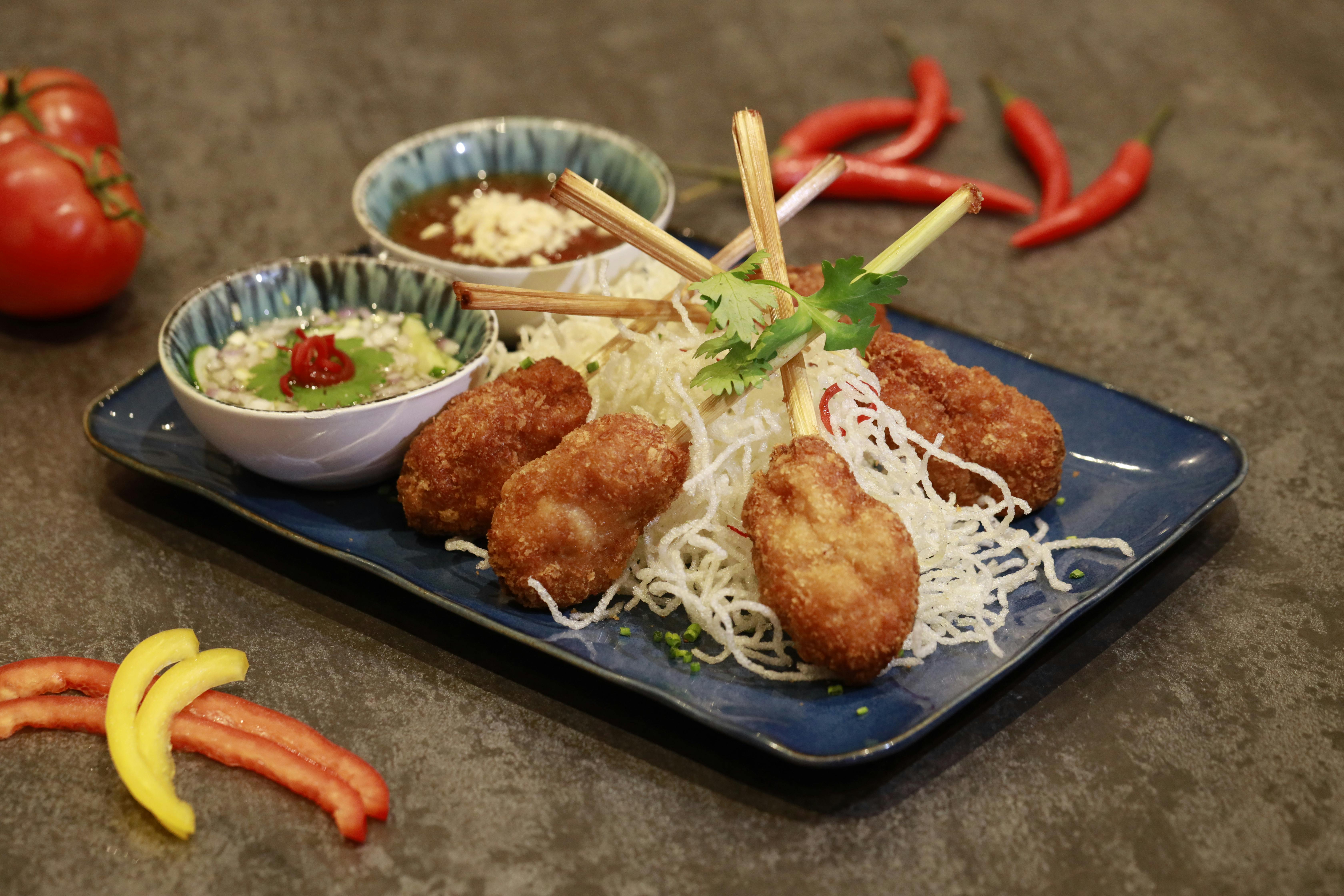
Shrimp on Sugarcane (Chạo Tôm)
The diets react (see scores below)
Common Ingredients
- shrimp
- sugarcane
- garlic
- scallions
- rice paper
- mint
- fish sauce
- peanuts
Specific recipes may vary.
Incompatible with 6 of 11 diets
Diet Ratings
Chạo Tôm is fundamentally incompatible with ketogenic eating due to multiple high-carb components. Rice paper wraps are grain-based and carry significant net carbs (~10-12g per sheet). Sugarcane, while primarily a skewer/flavor vehicle, still contributes sucrose directly. Peanuts add moderate carbs. Together, these ingredients make it virtually impossible to consume this dish without exceeding keto carb limits in a single serving. The shrimp, garlic, scallions, mint, and fish sauce would otherwise be keto-friendly, but the structural components (rice paper + sugarcane) disqualify the dish as traditionally prepared.
Chạo Tôm contains multiple animal-derived ingredients that make it entirely incompatible with a vegan diet. Shrimp is a seafood/animal product and serves as the primary protein and defining ingredient of this dish. Fish sauce is a fermented condiment made from anchovies or other fish and is a ubiquitous non-vegan ingredient in Vietnamese cuisine. Both disqualify this dish immediately and unambiguously under all mainstream vegan definitions.
This dish contains multiple non-paleo ingredients that disqualify it. Rice paper is made from rice flour — a grain product that is strictly excluded from the paleo diet. Peanuts are legumes, also clearly excluded. Fish sauce typically contains added salt and sometimes sugar or other additives, making it a processed condiment incompatible with strict paleo. The sugarcane itself, while a natural plant, functions as a skewer/flavoring agent here rather than a food consumed directly, but its use implies refined sugar exposure. The base protein (shrimp), garlic, scallions, and mint are all paleo-approved, but the structural components of the dish — rice paper wrappers and peanuts — are hard non-paleo violations that cannot be omitted without fundamentally changing the dish.
Chạo Tôm aligns well with Mediterranean diet principles. Shrimp is an excellent lean seafood protein, strongly encouraged 2-3 times weekly. The dish is built around whole, minimally processed ingredients: fresh herbs (mint, scallions), garlic, peanuts (healthy plant fats), and rice paper (a minimally processed grain wrapper). Fish sauce is a high-sodium fermented condiment analogous to Mediterranean garum, used in small amounts for flavor. The sugarcane serves primarily as a skewer/cooking vessel, contributing minimal added sugar to the final dish. The absence of red meat, heavy dairy, or refined fats makes this a clean, plant-forward seafood preparation that fits comfortably within Mediterranean eating patterns.
Some Mediterranean diet purists may note the lack of olive oil as the primary fat and the use of rice paper (a refined grain) rather than whole grain wraps, and the fish sauce sodium content could be flagged by stricter clinical interpretations. However, traditional Mediterranean coastal cuisines similarly used fermented fish condiments and white rice-based sides, so these are minor concerns.
Chạo Tôm is fundamentally incompatible with the carnivore diet. While shrimp is an acceptable animal protein, the dish is built around multiple plant-based components that are all excluded: sugarcane (a plant stalk and direct sugar source), rice paper (grain-based), mint (herb/plant), scallions (vegetable), garlic (vegetable), and peanuts (legume). Fish sauce may be acceptable in its pure fermented fish form, but the overall dish is a plant-heavy Vietnamese snack where the animal protein is a minor component wrapped in and served with numerous excluded foods. There is no meaningful way to adapt this dish and retain its identity — virtually every structural and flavoring element violates carnivore principles.
This dish contains two excluded ingredients that make it non-compliant with Whole30. First, peanuts are legumes, which are explicitly excluded from the Whole30 program with no exceptions. Second, rice paper is a grain-based wrapper made from rice flour, placing it squarely in the excluded grains category. Additionally, sugarcane in its natural stick form is used as a skewer and may impart some sweetness, though this is a gray area — however, the peanuts and rice paper are clear disqualifiers. The remaining ingredients (shrimp, garlic, scallions, mint, fish sauce) are generally compliant, assuming the fish sauce contains no added sugar or non-compliant additives.
Chạo Tôm contains multiple high-FODMAP ingredients that make it problematic during the elimination phase. Garlic is a significant fructan source and is high-FODMAP at any amount — it is one of the most concentrated sources of fructans in cooking. Scallions (green onions) are high-FODMAP when the white bulb portions are used, though the green tops alone are low-FODMAP; in traditional preparation both parts are typically used. Peanuts are moderate-FODMAP and become high-FODMAP above ~32g (a small handful), and as a garnish/component the quantity is uncertain. The shrimp itself is low-FODMAP, sugarcane is low-FODMAP (it's essentially sucrose/glucose-fructose in balanced ratio), rice paper wrappers are low-FODMAP (rice-based), mint is low-FODMAP, and fish sauce is low-FODMAP in typical serving amounts. However, the garlic alone is a near-certain FODMAP trigger at any culinary quantity, making the dish unsafe during the elimination phase without significant modification (garlic-infused oil substitution, green scallion tops only, portion-controlled peanuts).
Monash University confirms garlic is high-FODMAP at any cooking quantity, making this dish a clear avoid. However, some clinical FODMAP practitioners note that if garlic is replaced with garlic-infused oil and only scallion greens are used, the dish could potentially be modified to caution/low status — but as traditionally prepared, the dish is not elimination-phase safe.
Chạo Tôm (Shrimp on Sugarcane) contains several DASH-friendly ingredients — shrimp is a lean protein, mint and scallions are low-calorie vegetables, and rice paper wraps are relatively low in sodium and fat. However, fish sauce is a significant sodium concern: even small amounts (1-2 tbsp) can contribute 1,000–2,000mg of sodium, which substantially challenges the DASH sodium ceiling of 2,300mg/day (or 1,500mg on the stricter version). Peanuts add healthy unsaturated fats but require portion control. Sugarcane itself is low in bioavailable sugar when used as a skewer (most is not consumed), but any added sugar components in preparation are a mild concern. The dish overall is lean and vegetable-forward, but the fish sauce content — typical in Vietnamese cooking — makes this a 'consume with portion awareness' food rather than a freely approved DASH dish.
NIH DASH guidelines explicitly flag high-sodium condiments like fish sauce as problematic; however, updated clinical interpretations note that when fish sauce is used in small amounts as a dipping sauce (rather than a marinade throughout), the per-serving sodium can be meaningfully reduced — some DASH-oriented dietitians working with Asian-cuisine patients accept this dish prepared with reduced-sodium fish sauce or nuoc cham diluted with lime and water.
Chạo Tôm is a mixed Zone picture. The primary protein — shrimp — is excellent: lean, low-fat, and easy to portion into Zone blocks (roughly 7g protein per ~28g shrimp). Garlic, scallions, mint, and fish sauce are all Zone-favorable additions with minimal glycemic impact. However, several elements create friction. Sugarcane is used as a skewer and flavoring vehicle; the shrimp paste is typically pressed onto the cane and grilled or steamed, meaning some sucrose from the cane is absorbed — introducing a moderate glycemic load that would not be present in plain grilled shrimp. Rice paper wrappers add refined-starch carbohydrate blocks that are 'unfavorable' in Zone terminology due to their high glycemic index, though in thin sheets the portion is small. Peanuts contribute fat blocks, but peanuts are technically a legume with a higher omega-6 ratio than ideal Zone fats like almonds or macadamia nuts — Sears explicitly prefers monounsaturated fats lower in omega-6. As a snack, the overall carbohydrate profile skews high-glycemic (sugarcane, rice paper) relative to the lean protein, making it difficult to hit the 40/30/30 target without careful adjustment. A Zone practitioner could modify this dish — skip or minimize the rice paper, treat the sugarcane as a flavor note rather than a carb source, and replace peanuts with almonds — to make it more Zone-compliant, keeping the caution rating rather than an avoid.
Some Zone practitioners applying the block system would note that in a small snack portion, the sugarcane contribution is primarily structural (not eaten) and the rice paper sheet represents roughly one carb block — which, paired with shrimp protein blocks and a small fat block from peanuts, could be reasonably balanced. In this reading, the dish earns a soft approve at 6-7, provided rice paper is kept to one thin sheet and peanuts are used sparingly. Sears' later writings (The OmegaRx Zone) focus heavily on omega-3/omega-6 balance, which would re-flag peanuts as a concern but might be more permissive on the rice paper carbs in context.
Chạo Tôm is a relatively clean Vietnamese dish with several anti-inflammatory positives, but a few components introduce meaningful caveats. Shrimp is a lean, low-fat seafood with some omega-3s and selenium, though its omega-3 content is far lower than fatty fish and it contains some arachidonic acid. Garlic and scallions are anti-inflammatory alliums with well-documented benefits (allicin, quercetin). Fresh mint provides polyphenols and antioxidants. Peanuts offer resveratrol, healthy fats, and fiber, though they are a legume with a moderate omega-6 load. Rice paper (refined rice starch) is a refined carbohydrate with minimal nutritional value — neutral at best, and a mild negative in anti-inflammatory framing. Fish sauce is high in sodium; while not directly pro-inflammatory, excessive sodium can contribute to systemic inflammation and is generally flagged in anti-inflammatory guidance. The sugarcane itself introduces added sugar, though the amount actually consumed (from contact with the skewer) is typically minimal in practice. Overall, this dish is predominantly whole-food, herb-forward, and low in saturated fat, making it a reasonable 'caution' rather than a clear avoid. It sits in the moderate zone: better than most processed snacks but not optimized for anti-inflammatory eating due to refined carbs, high sodium from fish sauce, and the nominal sugar from sugarcane.
Some anti-inflammatory practitioners (particularly those following stricter protocols like AIP or functional medicine approaches) would flag shrimp more cautiously due to its arachidonic acid content and potential for farmed shrimp to contain antibiotics or environmental contaminants that may exacerbate inflammation. Conversely, mainstream anti-inflammatory guidance including Dr. Weil's framework endorses shrimp as an acceptable lean protein and would likely rate this dish more favorably given its herb-rich, whole-food composition.
Chạo Tôm features shrimp as the primary protein, which is an excellent lean, high-density protein source — strongly positive for GLP-1 patients. The dish is typically grilled or steamed on sugarcane, making it relatively low in fat and easy to digest. Wrapping in rice paper with fresh mint and vegetables adds fiber, hydration, and micronutrient value. Fish sauce contributes sodium but in small amounts typical of Vietnamese cooking. The main concerns are: (1) peanuts add moderate fat and caloric density — portion-sensitive but provide healthy unsaturated fats; (2) the sugarcane itself contributes added sugar, though patients typically chew and discard it rather than ingest it directly; (3) rice paper is a refined carbohydrate with minimal fiber or protein contribution; (4) as a snack category, total protein per serving may fall short of the 15–30g per meal target unless a substantial portion of shrimp is included. The overall profile is reasonably nutrient-dense, low in saturated fat, and GLP-1 friendly when portioned appropriately.
Some GLP-1-focused RDs would rate this higher given the lean protein base and fresh vegetable components, while others flag the refined rice paper wrapper and sugar exposure from the cane as unnecessary simple carbohydrates that displace more fiber-rich options — particularly relevant for patients with comorbid insulin resistance or type 2 diabetes.
*See how scores were generated at our methodology page.
Nutritional profile
Six traits that cut across every diet.
Fiber & Plants
How much whole-plant food and fiber it delivers.
Healthy Fats
The quality of its fats (unsaturated, omega-3).
Whole / Unprocessed
How close it is to its natural, unprocessed form.
Gut Gentle
How easy it is on digestion (low FODMAP, few irritants).
Low Glycemic
How little it spikes your blood sugar.
Protein Density
How much protein it packs per calorie.
Controversy Index
Higher controversy = more disagreement between diets.
Diet-Specific Tips
 Mediterranean — 8/10
View tips
- Shrimp is an ideal Mediterranean protein source — lean seafood encouraged multiple times weekly
- Sugarcane functions as a skewer, not a sugar source — negligible added sugar in final dish
- Peanuts contribute healthy plant-based fats consistent with Mediterranean nut emphasis
- Fresh herbs (mint, scallions) and garlic are strongly aligned with plant-forward Mediterranean principles
- Fish sauce is high in sodium but used in small quantities, analogous to traditional Mediterranean garum
- Rice paper is a refined grain, not a whole grain — minor negative factor
- No olive oil present, though dish is naturally low in unhealthy fats
- No red meat, processed ingredients, or added sugars of concern
 DASH — 5/10
View tips
- Fish sauce is high in sodium (700–1,400mg per tablespoon), posing a significant DASH sodium challenge
- Shrimp is a lean, low-saturated-fat protein consistent with DASH principles
- Peanuts provide healthy unsaturated fats but add caloric density; portion control needed
- Sugarcane used as skewer contributes negligible sugar when not consumed
- Herbs (mint, scallions) and rice paper wraps are DASH-friendly low-sodium components
- Sodium impact is highly preparation-dependent; reduced-sodium fish sauce significantly improves DASH compatibility
 Zone — 5/10
View tips
- Shrimp is an ideal Zone lean protein — low fat, easy to block
- Sugarcane introduces sucrose absorption into the shrimp paste, adding a high-glycemic carb element
- Rice paper is a refined, high-glycemic carbohydrate — 'unfavorable' in Zone terminology
- Peanuts provide fat blocks but are omega-6-heavy, not Sears' preferred monounsaturated fat source
- Herbs, garlic, scallions, and fish sauce are all Zone-favorable with negligible glycemic impact
- As a snack, the 40/30/30 ratio is achievable only with careful portioning of rice paper and peanuts
- Dish is modifiable toward Zone compliance by minimizing or skipping rice paper
 Anti-Inflammatory — 6/10
View tips
- Shrimp provides lean protein and some omega-3s but contains arachidonic acid
- Garlic and scallions are well-documented anti-inflammatory alliums
- Fresh mint adds polyphenols and antioxidants
- Rice paper is a refined carbohydrate — nutritionally minimal
- Fish sauce contributes high sodium, which may promote inflammation at excess levels
- Sugarcane adds nominal sugar (contact skewer), though intake is typically small
- Peanuts offer healthy fats and resveratrol but carry moderate omega-6 load
- Overall dish is whole-food, herb-forward, and low in saturated fat
 GLP-1 Friendly — 6/10
View tips
- Shrimp is an excellent lean, high-density protein source
- Grilled or steamed preparation keeps fat content low
- Fresh herbs and vegetables contribute micronutrients and hydration
- Peanuts add healthy unsaturated fat but increase caloric density — portion-sensitive
- Sugarcane sugar content is largely incidental if cane is not consumed
- Rice paper is a refined carbohydrate with minimal fiber
- Protein per snack serving may be insufficient without a generous shrimp portion
- Fish sauce sodium is moderate and generally tolerable
- No frying, no high-fat sauces, no carbonation — no major GLP-1 side effect triggers