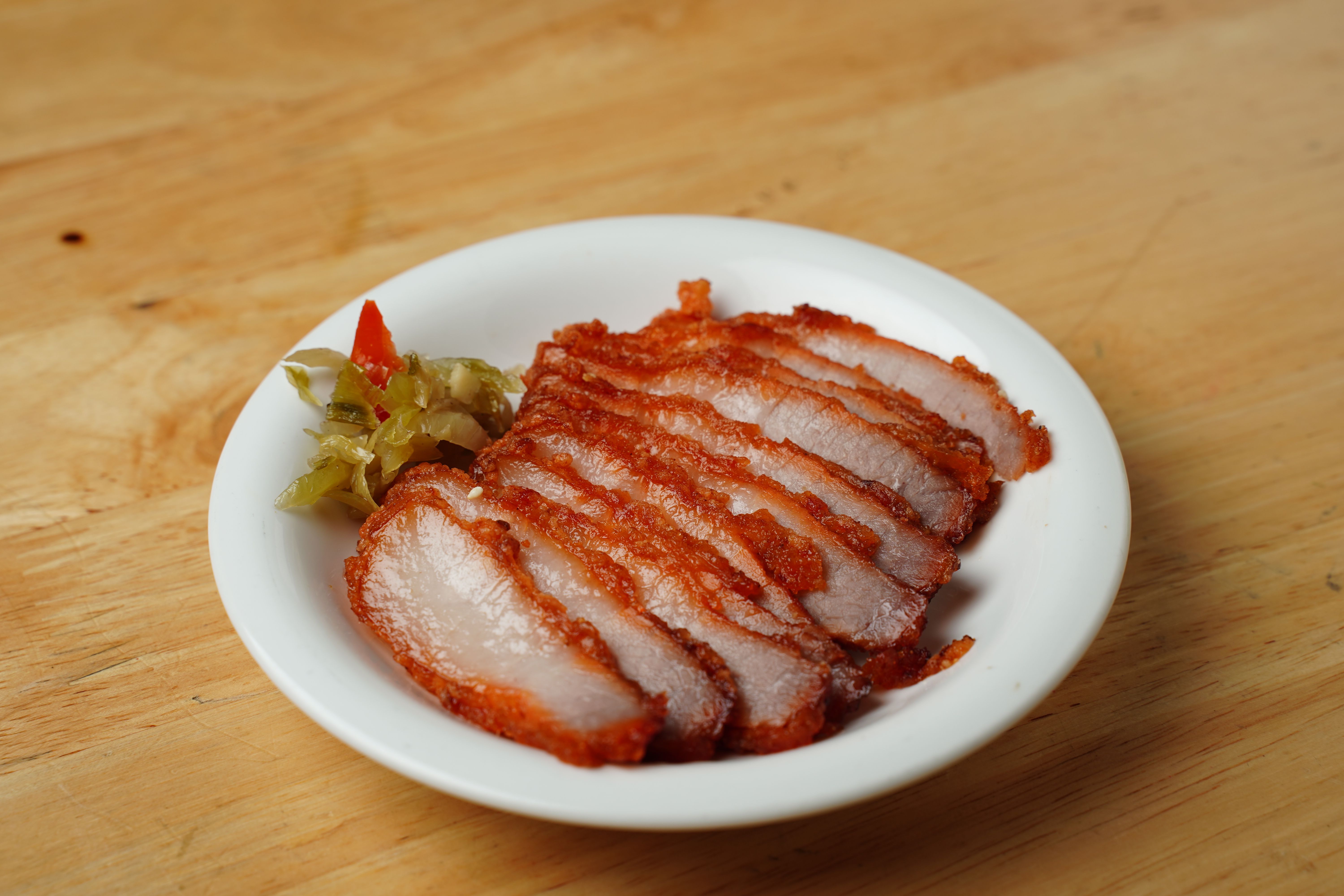
Photo: Kai-Chieh Chan / Pexels
Chinese
Char Siu (Cantonese BBQ Pork)
The diets react (see scores below)
Common Ingredients
- pork shoulder
- hoisin sauce
- honey
- soy sauce
- Shaoxing wine
- five-spice powder
- red bean curd
- garlic
Specific recipes may vary.
Incompatible with 9 of 11 diets
Diet Ratings
Char Siu is fundamentally incompatible with ketogenic eating in its traditional form. The marinade is heavily carb-laden: hoisin sauce is made from sugar and starches (roughly 10g+ carbs per tablespoon), honey is pure sugar (~17g carbs per tablespoon), and Shaoxing wine adds additional sugars. Red bean curd also contributes carbohydrates. Combined, the marinade ingredients would deliver a substantial sugar and carb load per serving — likely 20-35g net carbs per standard portion — far exceeding what most keto practitioners allow in an entire day. The pork shoulder itself is keto-friendly with good fat content, but the traditional preparation method makes the dish as a whole incompatible with ketosis. A keto-adapted version would require replacing hoisin with a low-carb alternative, substituting honey with a keto sweetener, omitting Shaoxing wine or replacing with dry sherry in very small quantities, but that would be a fundamentally different dish.
Char Siu is fundamentally incompatible with a vegan diet. The primary ingredient is pork shoulder, a mammalian muscle meat and one of the clearest examples of an animal product. Additionally, honey — excluded by the Vegan Society and most mainstream vegan organizations — is used as a glaze ingredient. There is no version of traditional Char Siu that can be considered vegan, as the entire dish is defined by its pork base.
Char Siu contains multiple non-paleo ingredients that disqualify it clearly. Hoisin sauce is made from soybeans (a legume) and often contains wheat (a grain), along with sugar and additives. Soy sauce is derived from fermented soybeans and wheat — both strictly excluded. Shaoxing wine is a grain-based rice wine, itself a processed grain product. Red bean curd is a fermented tofu product made from soybeans, another legume-based ingredient. Honey is technically a caution-level natural sweetener in paleo, but it cannot redeem a dish with this many core violations. The pork shoulder itself and garlic and five-spice powder are paleo-compatible, but the marinade is built almost entirely on legume and grain-derived condiments that are unambiguously excluded from the paleo framework.
Char Siu is a poor fit for the Mediterranean diet on multiple fronts. The primary protein is pork shoulder, a red meat high in saturated fat, which the Mediterranean diet limits to a few times per month. Beyond the meat itself, the dish is laden with added sugars (honey, hoisin sauce), high-sodium processed condiments (hoisin sauce, soy sauce), and alcohol (Shaoxing wine), all of which contradict core Mediterranean principles. There is no olive oil, no significant plant-based components, and the overall flavor profile and preparation method are entirely outside the Mediterranean culinary tradition. The combination of red meat, high sugar content, and processed sauces pushes this firmly into 'avoid' territory.
Char Siu is fundamentally incompatible with the carnivore diet despite its pork base. The marinade is a cascade of carnivore violations: hoisin sauce (fermented soybean paste, sugar, plant starches), soy sauce (fermented soybeans and wheat — both legume and grain), honey (debated even in lenient protocols, but irrelevant here given the other violations), Shaoxing wine (grain-fermented rice wine), five-spice powder (a blend of plant spices), red bean curd (fermented tofu — soy-based, a legume product), and garlic (a plant). The pork shoulder itself is perfectly carnivore-approved, but every single other ingredient violates carnivore principles. This dish is essentially a sugar-soy-plant-spice marinade applied to pork, making it one of the most carnivore-incompatible preparations possible. There is no meaningful carnivore community debate here — this dish is universally off-limits across all tiers of the carnivore spectrum.
Char Siu contains multiple excluded ingredients that make it clearly non-compliant with Whole30. Soy sauce contains soy (a legume) and often wheat (a grain) — both excluded. Hoisin sauce similarly contains soy, sugar, and often wheat. Honey is added sugar, which is excluded. Shaoxing wine is alcohol, which is excluded. Red bean curd is a fermented soy and bean product — doubly excluded as both a legume and typically containing alcohol. There is no compliant substitution pathway that would preserve the character of this dish; virtually every flavoring component violates Whole30 rules.
Char Siu contains multiple high-FODMAP ingredients that make it unsuitable during the elimination phase. Garlic is a major fructan source and is high-FODMAP at any amount. Hoisin sauce typically contains garlic and onion as primary ingredients, further compounding the fructan load. Honey is high in excess fructose and is high-FODMAP above very small quantities (1 teaspoon or less). Red fermented bean curd (南乳) is made from tofu fermented with red yeast rice and salt, but many commercial versions contain garlic and onion, and fermented soy products can have unpredictable FODMAP levels. Shaoxing rice wine is generally considered low-FODMAP in cooking quantities. Five-spice powder contains star anise which has limited Monash data but is used in small quantities. Soy sauce and pork shoulder are both low-FODMAP. However, the combination of garlic, hoisin sauce, and honey — all staple and non-optional components of authentic Char Siu — creates a clearly high-FODMAP dish that cannot easily be modified to be elimination-phase safe without fundamentally changing the recipe.
Some clinical FODMAP practitioners note that when garlic and onion-containing sauces are used in marinades and then the meat is cooked, a portion of FODMAPs may be left behind in drippings rather than retained in the meat; however, Monash University does not support this reasoning for whole ingredients like garlic — FODMAPs are still present in garlic-marinated and cooked meat. Additionally, low-FODMAP Char Siu adaptations using garlic-infused oil and FODMAP-friendly hoisin substitutes exist, but the traditional recipe as listed here is not safe for elimination phase.
Char Siu is fundamentally incompatible with DASH diet principles on multiple fronts. Pork shoulder is a fatty cut of red meat, which DASH explicitly limits due to its saturated fat and cholesterol content. The marinade compounds the problem significantly: soy sauce contributes very high sodium (a single tablespoon contains ~900-1,000mg), hoisin sauce adds more sodium plus sugar (~250mg per tablespoon), and honey adds substantial free sugars. Red bean curd (fermented tofu) is another high-sodium ingredient. Combined, a typical serving of Char Siu can easily contain 800-1,500mg of sodium — a substantial portion of even the standard DASH daily limit of 2,300mg, and potentially the entire allowance of the strict 1,500mg low-sodium DASH target. The dish also delivers meaningful saturated fat from pork shoulder and added sugars from honey and hoisin. This combination of high sodium, saturated fat from red meat, and added sugar places Char Siu firmly in the 'avoid' category under DASH guidelines.
Char Siu presents a mixed Zone profile. The primary protein is pork shoulder, which is a fattier cut than Zone-preferred lean proteins (skinless chicken, fish, lean pork loin). The marinade is the bigger concern: hoisin sauce and honey are high-sugar ingredients that spike the glycemic load significantly, and red bean curd adds sodium and some sugar. These ingredients make the carbohydrate portion of this dish high-glycemic and difficult to block properly. On the positive side, garlic and five-spice polyphenols align with Sears' anti-inflammatory principles, soy sauce contributes minimal carbs, and Shaoxing wine is negligible in small quantities. The dish can technically fit Zone principles if: (1) portion size is strictly limited to ~3 oz to manage both protein and fat blocks, (2) paired with abundant low-GI vegetables to rebalance the 40/30/30 ratio, and (3) the sugar-heavy glaze is treated as consuming most of the meal's carbohydrate block allowance. The fatty cut of pork plus the sugar-laden glaze make this a challenging Zone food requiring careful portioning rather than an outright avoid, since small portions can be worked into a Zone meal.
Some Zone practitioners and later Sears writings place greater emphasis on the anti-inflammatory polyphenol content of ingredients like garlic and five-spice, and would note that pork shoulder's fat content, while higher than ideal, contains some monounsaturated fat alongside saturated fat. A strict early-Zone interpretation (Enter the Zone) would score this lower, emphasizing that hoisin and honey make this a clearly 'unfavorable' carbohydrate-heavy preparation and that pork shoulder is not a lean Zone protein. The score could reasonably range from 3 to 5 depending on which version of Zone guidelines is applied.
Char Siu is a classic Cantonese BBQ pork dish that presents several significant anti-inflammatory concerns. The primary protein is pork shoulder, a fatty cut high in saturated fat, which falls into the 'limit' category at best. The marinade compounds the problem: honey and hoisin sauce contribute substantial added sugars (hoisin is also processed, containing refined ingredients and additives), and the overall sugar load is high enough to provoke glycemic and inflammatory responses. Red bean curd (fermented tofu) is a mildly beneficial fermented ingredient, and garlic and five-spice powder (containing star anise, cloves, cinnamon, Szechuan pepper, fennel — all with anti-inflammatory properties) offer some redeeming polyphenol and spice-based anti-inflammatory value. Shaoxing wine adds minimal alcohol. However, these modest benefits are outweighed by the combination of a high-saturated-fat cut of red/processed meat, significant added sugars from honey and hoisin, and the high-heat BBQ cooking method which generates advanced glycation end-products (AGEs) — all of which are well-established pro-inflammatory factors. This dish is not merely a 'caution' — the combination of fatty pork, high sugar marinade, and processed sauce ingredients places it firmly in 'avoid' territory on an anti-inflammatory framework.
Char Siu uses pork shoulder as its base, which is a moderately fatty cut (roughly 10-15g fat per 3oz serving) rather than a lean protein. The marinade adds meaningful sugar load from hoisin sauce and honey, contributing to a higher glycemic hit and empty calories that are counterproductive on a GLP-1 regimen. On the positive side, pork shoulder does deliver reasonable protein (~20g per 3oz serving), and the dish is soft-textured and easy to chew and digest, which suits the slowed gastric emptying of GLP-1 patients. The fat content is the primary concern — it increases risk of nausea, bloating, and reflux, which are already common GLP-1 side effects. The sugar-heavy glaze also conflicts with the nutrient-density-per-calorie priority. A small portion as part of a balanced meal with vegetables and a fiber source is acceptable, but it should not be a dietary staple. Leaner pork cuts (pork tenderloin) prepared similarly would score higher.
Some GLP-1-focused dietitians accept dishes like Char Siu in small portions because the protein contribution is meaningful and real-world adherence matters — overly restricting culturally significant foods can undermine long-term compliance. Others flag the combined fat-plus-sugar profile as disproportionately likely to trigger GI side effects, particularly in the first weeks of dose escalation, and recommend avoiding it until GI tolerance is established.
*See how scores were generated at our methodology page.
Nutritional profile
Six traits that cut across every diet.
Fiber & Plants
How much whole-plant food and fiber it delivers.
Healthy Fats
The quality of its fats (unsaturated, omega-3).
Whole / Unprocessed
How close it is to its natural, unprocessed form.
Gut Gentle
How easy it is on digestion (low FODMAP, few irritants).
Low Glycemic
How little it spikes your blood sugar.
Protein Density
How much protein it packs per calorie.
Controversy Index
Higher controversy = more disagreement between diets.
Diet-Specific Tips
 Zone — 4/10
View tips
- Pork shoulder is a fattier cut, not a Zone-preferred lean protein — higher saturated fat than ideal
- Hoisin sauce and honey create a high-sugar, high-glycemic glaze that is difficult to block accurately
- Marinade sugars use up carbohydrate block allowance with high-GI sources rather than favorable low-GI vegetables
- Dish can technically be portioned into a Zone meal but requires strict 3 oz serving and heavy vegetable pairing
- Garlic and five-spice contribute anti-inflammatory polyphenols consistent with Sears' later writings
- No trans fats or heavily processed seed oils present
 GLP-1 Friendly — 4/10
View tips
- Pork shoulder is a moderate-fat cut, increasing nausea and reflux risk on GLP-1 medications
- Hoisin sauce and honey glaze adds significant sugar, lowering nutrient density per calorie
- Adequate protein per serving (~20g per 3oz) is a meaningful positive
- Soft texture supports easy digestibility, which is beneficial given slowed gastric emptying
- High-sugar marinade conflicts with blood sugar stabilization goals
- Small portions alongside fiber-rich vegetables can partially offset drawbacks
- Leaner alternatives (pork tenderloin) would substantially improve the GLP-1 profile of this dish