This dish contains raw or undercooked ingredients. Consume at your discretion.
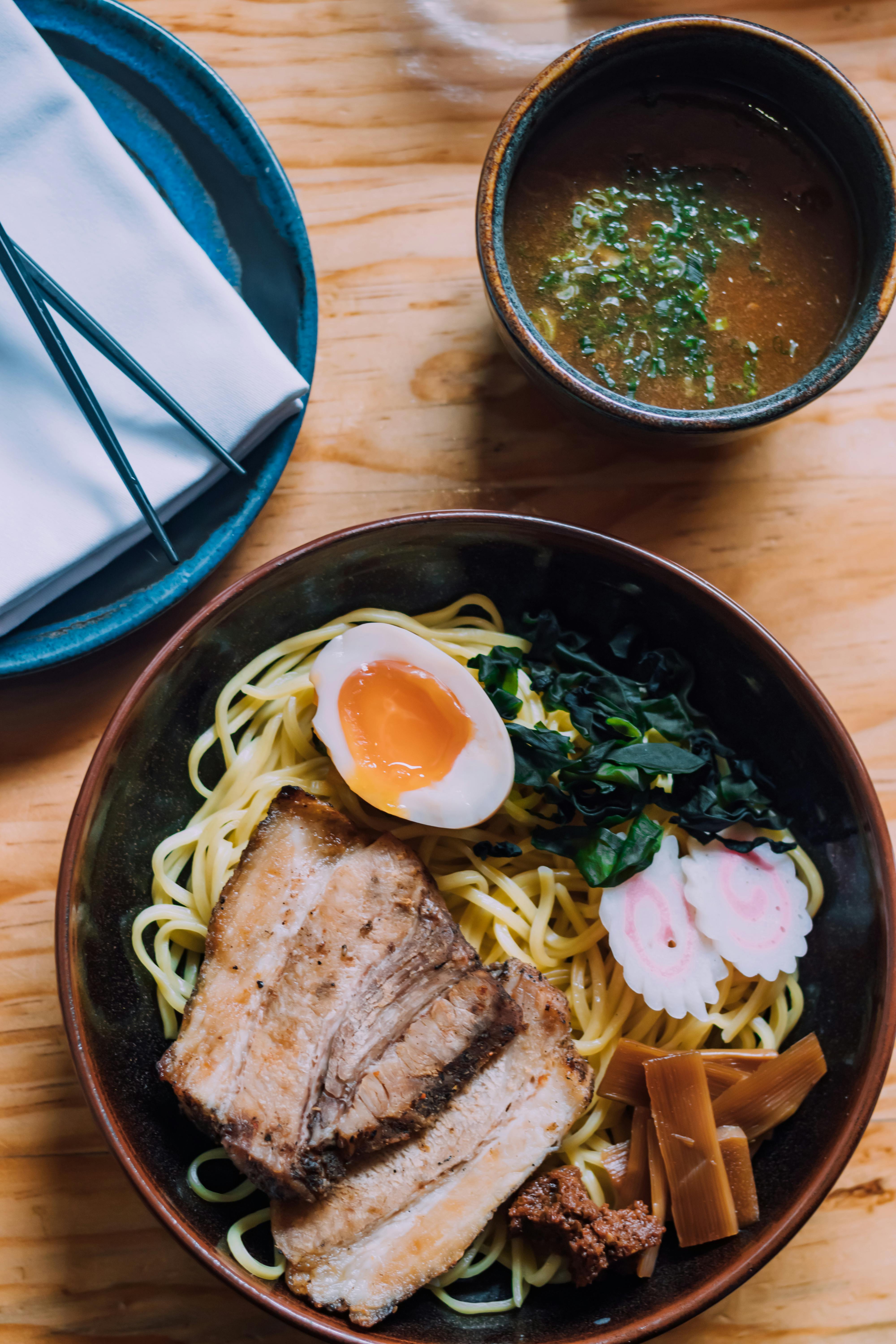
Photo: Miguel González / Pexels
The diets react (see scores below)
Common Ingredients
- pork belly
- short-grain rice
- soy sauce
- mirin
- sake
- scallions
- soft-boiled egg
- ginger
Specific recipes may vary.
Incompatible with 9 of 11 diets
Diet Ratings
Chashu Don is fundamentally incompatible with ketogenic eating. The dish is built on a base of short-grain rice, which is one of the highest-glycemic, highest-carb foods available — a single standard serving (1 cup cooked) delivers roughly 45-53g of net carbs, immediately exceeding or maxing out the entire daily keto carb budget. Beyond rice, the braising liquids (mirin and sake) are sugar-laden; mirin in particular is a sweet rice wine with significant sugar content. While the pork belly itself is an excellent keto protein and fat source, and the soft-boiled egg and scallions are keto-friendly, these positives are completely overshadowed by the rice and sweetened cooking liquids. There is no reasonable portion size of Chashu Don that would keep a person in ketosis.
Chashu Don contains multiple animal products that are entirely incompatible with a vegan diet. Pork belly is the primary protein — a direct animal flesh product — and the soft-boiled egg is an animal-derived ingredient. These two ingredients alone disqualify this dish from any vegan consideration. The remaining ingredients (rice, soy sauce, mirin, sake, scallions, ginger) are plant-based, but they cannot offset the presence of pork and egg.
Chashu Don contains multiple non-paleo ingredients that make it incompatible with the Paleolithic diet. Short-grain rice is a grain and is excluded under strict paleo rules. Soy sauce is a processed product derived from fermented soybeans (a legume) and wheat (a grain), both of which are explicitly excluded. Mirin is a sweetened rice wine — combining a grain-based alcohol with added sugar, both problematic. Sake is also grain-derived (fermented rice). While pork belly, soft-boiled egg, scallions, and ginger are all paleo-approved, the foundation of this dish — rice and its accompanying soy-based sauce — are firmly off-limits. The dish cannot be considered paleo in any meaningful sense without being fundamentally reconstructed.
Chashu Don is a Japanese rice bowl built around braised pork belly, which is a fatty red/processed meat, combined with refined short-grain white rice as the base. Both primary components directly contradict Mediterranean diet principles. Pork belly is one of the fattiest cuts available, high in saturated fat, and red meat is restricted to a few times per month. The dish is also heavy in sodium from soy sauce and mirin. Refined white rice provides minimal fiber and a high glycemic load compared to the whole grains the Mediterranean diet emphasizes. There are no vegetables, legumes, olive oil, or other Mediterranean staple components present. The dish is essentially a double violation: high-saturated-fat red meat plus refined grain base, with no mitigating plant-forward elements.
Chashu Don is fundamentally incompatible with the carnivore diet. While the pork belly and soft-boiled egg are carnivore-approved animal products, the dish is built around short-grain rice (a grain, strictly excluded), and the braising sauce contains soy sauce (fermented soybean — a legume), mirin (rice-based sweetener), and sake (rice-based alcohol) — all plant-derived. Ginger and scallions are plant foods. The rice base alone disqualifies this as a rice bowl by definition. The majority of the dish's calories and components come from excluded plant sources.
Chashu Don contains multiple excluded ingredients. Short-grain rice is a grain and is explicitly excluded on Whole30. Soy sauce contains soy (a legume) and typically wheat (a grain), both of which are excluded. Mirin is a sweet rice wine that contains both alcohol and rice (a grain), making it doubly excluded. Sake is rice-based alcohol, also excluded on two counts. The remaining ingredients — pork belly, scallions, soft-boiled egg, and ginger — are individually compliant, but the dish as a whole cannot be made compliant without fundamentally changing its character. This dish fails on multiple fronts simultaneously.
Chashu Don contains several ingredients that require careful consideration. Short-grain rice is low-FODMAP and safe. Pork belly is a plain protein and low-FODMAP. Ginger is low-FODMAP at standard culinary amounts (1 tsp). Soy sauce is low-FODMAP in small servings (up to 2 tbsp). Sake and mirin are generally used in small quantities and considered low-FODMAP at culinary doses, though mirin contains some sugars that could be problematic in larger amounts. The key concerns are: (1) Scallions — the green tops are low-FODMAP and safe, but if white/bulb portions are included, they contain fructans and are high-FODMAP. Traditional chashu preparations often use the whole scallion or include onion-adjacent aromatics. (2) Soft-boiled egg is low-FODMAP and safe. (3) The chashu braising liquid (soy, mirin, sake, sometimes sugar) is typically used in larger quantities and the dish is served with a reduction or sauce drizzled over rice — the cumulative FODMAP load from mirin and soy sauce at restaurant-style serving volumes warrants caution. The dish is not definitively high-FODMAP but the ambiguity around scallion preparation and sauce quantities makes it a caution-level food during elimination phase.
Monash University rates scallion green tops as low-FODMAP (safe) while the bulb is high-FODMAP due to fructans — in practice, many restaurant preparations use the full scallion or don't separate parts, and clinical FODMAP practitioners often advise patients to avoid scallions entirely during elimination unless they can confirm only green tops are used. Additionally, mirin used in larger braising-sauce quantities may push fructose load into moderate territory.
Chashu Don is fundamentally incompatible with DASH diet principles across multiple dimensions. Pork belly is a high-fat, high-saturated-fat cut explicitly discouraged by DASH guidelines, which limit red meat and saturated fat intake. The braising sauce — a combination of soy sauce, mirin, and sake — delivers substantial sodium, easily exceeding 1,000–1,500mg per serving from soy sauce alone, which directly conflicts with DASH sodium targets of <2,300mg/day (standard) or <1,500mg/day (low-sodium). White short-grain rice lacks the fiber of whole grains emphasized by DASH. The overall nutritional profile — high sodium, high saturated fat, refined carbohydrates, and red/fatty meat as the protein base — places this dish firmly in the 'avoid' category under NIH/NHLBI DASH guidelines.
Chashu Don is a challenging dish for Zone compliance on multiple fronts. The foundation is short-grain white rice, one of the highest-glycemic carbohydrate sources and explicitly unfavorable in Zone methodology — a typical donburi serving (1.5–2 cups cooked) delivers 60–80g of rapidly digested starch, blowing out the carb block allotment entirely. The protein source, pork belly, is among the fattiest cuts available, with a roughly 50/50 split of fat to protein by calories and high saturated fat content — the opposite of the lean protein profile Zone recommends. The fat content from pork belly also dramatically skews the 30/30/40 macro ratio, pushing fat calories far beyond the Zone target. Mirin and sake add additional sugar-derived carbohydrates. The soft-boiled egg and scallions are Zone-friendly components, but they are minor players in this dish. The combination of high-GI white rice as the dominant carbohydrate and fatty pork belly as the protein creates a macro profile that is nearly impossible to rebalance into Zone ratios without fundamentally reconstructing the dish — at which point it is no longer Chashu Don. This is one of the rare cases where the dish earns a low score because both its primary carb and primary protein sources are unfavorable in Zone terms simultaneously.
Chashu Don presents a mixed anti-inflammatory profile. The primary concern is pork belly, which is a fatty cut of red/processed-style meat high in saturated fat — a known pro-inflammatory factor when consumed regularly. The braising process concentrates soy sauce and mirin, adding significant sodium and modest sugar. White short-grain rice is a refined carbohydrate with a high glycemic index, offering minimal fiber and anti-inflammatory benefit. On the positive side, ginger is a well-established anti-inflammatory spice containing gingerols and shogaols that inhibit NF-κB and COX-2 pathways. Scallions provide quercetin and other flavonoids. The soft-boiled egg contributes choline and selenium. Sake, mirin, and soy sauce are used in modest culinary quantities and are not a major concern in themselves. Overall, the dish is dominated by ingredients in the 'limit' category (fatty pork, refined rice) with only minor anti-inflammatory contributors. It is not a dish to avoid entirely, but it should be consumed occasionally rather than regularly, and is not aligned with anti-inflammatory dietary principles as a staple.
Chashu Don is a poor choice for GLP-1 patients. The primary protein is pork belly, one of the fattiest cuts of meat available, typically containing 35-40g of fat per 100g serving — the majority of which is saturated fat. High-fat foods directly worsen the core GLP-1 side effects: nausea, bloating, reflux, and prolonged gastric discomfort, which is compounded by the already-slowed gastric emptying caused by the medication. The base is short-grain white rice, a refined carbohydrate with minimal fiber and low nutrient density per calorie — a poor use of limited appetite capacity. The braising liquid (soy sauce, mirin, sake) adds sodium and residual sugar with negligible nutritional benefit. While the soft-boiled egg adds modest protein and the scallions and ginger offer minor digestive benefits, these do not offset the fundamental problems: this dish is high-fat, low-fiber, and built around a protein source that is among the least appropriate for GLP-1 patients. A standard bowl would likely deliver 40-60g of fat, under 5g of fiber, and moderate protein at very high caloric cost — the opposite of nutrient density per calorie.
*See how scores were generated at our methodology page.
Nutritional profile
Six traits that cut across every diet.
Fiber & Plants
How much whole-plant food and fiber it delivers.
Healthy Fats
The quality of its fats (unsaturated, omega-3).
Whole / Unprocessed
How close it is to its natural, unprocessed form.
Gut Gentle
How easy it is on digestion (low FODMAP, few irritants).
Low Glycemic
How little it spikes your blood sugar.
Protein Density
How much protein it packs per calorie.
Controversy Index
Higher controversy = more disagreement between diets.
Diet-Specific Tips
 Low-FODMAP — 5/10
View tips
- Short-grain rice is low-FODMAP and safe as the base
- Pork belly is a plain protein — low-FODMAP
- Scallion green tops are low-FODMAP but white bulb portions are high in fructans — preparation ambiguity is a risk
- Soft-boiled egg is low-FODMAP
- Soy sauce is low-FODMAP at ≤2 tbsp but cumulative sauce volume in a don (rice bowl) may exceed safe threshold
- Mirin contains sugars and is low-FODMAP at small culinary doses but risky in larger braising-sauce reductions
- Ginger is low-FODMAP at standard culinary quantities
- Sake at culinary doses is generally considered low-FODMAP
 Anti-Inflammatory — 4/10
View tips
- Pork belly is high in saturated fat — falls in the 'limit' category under anti-inflammatory guidelines
- White short-grain rice is a refined carbohydrate with high glycemic index, minimal fiber
- Ginger is a validated anti-inflammatory spice (gingerols, shogaols inhibit inflammatory pathways)
- Scallions provide quercetin and flavonoids with antioxidant activity
- Soft-boiled egg is moderate — provides beneficial micronutrients but contains arachidonic acid
- Soy sauce/mirin add sodium and sugar, though in culinary amounts rather than excessive doses
- Overall dish is calorie-dense with pro-inflammatory saturated fat as the dominant nutritional signal