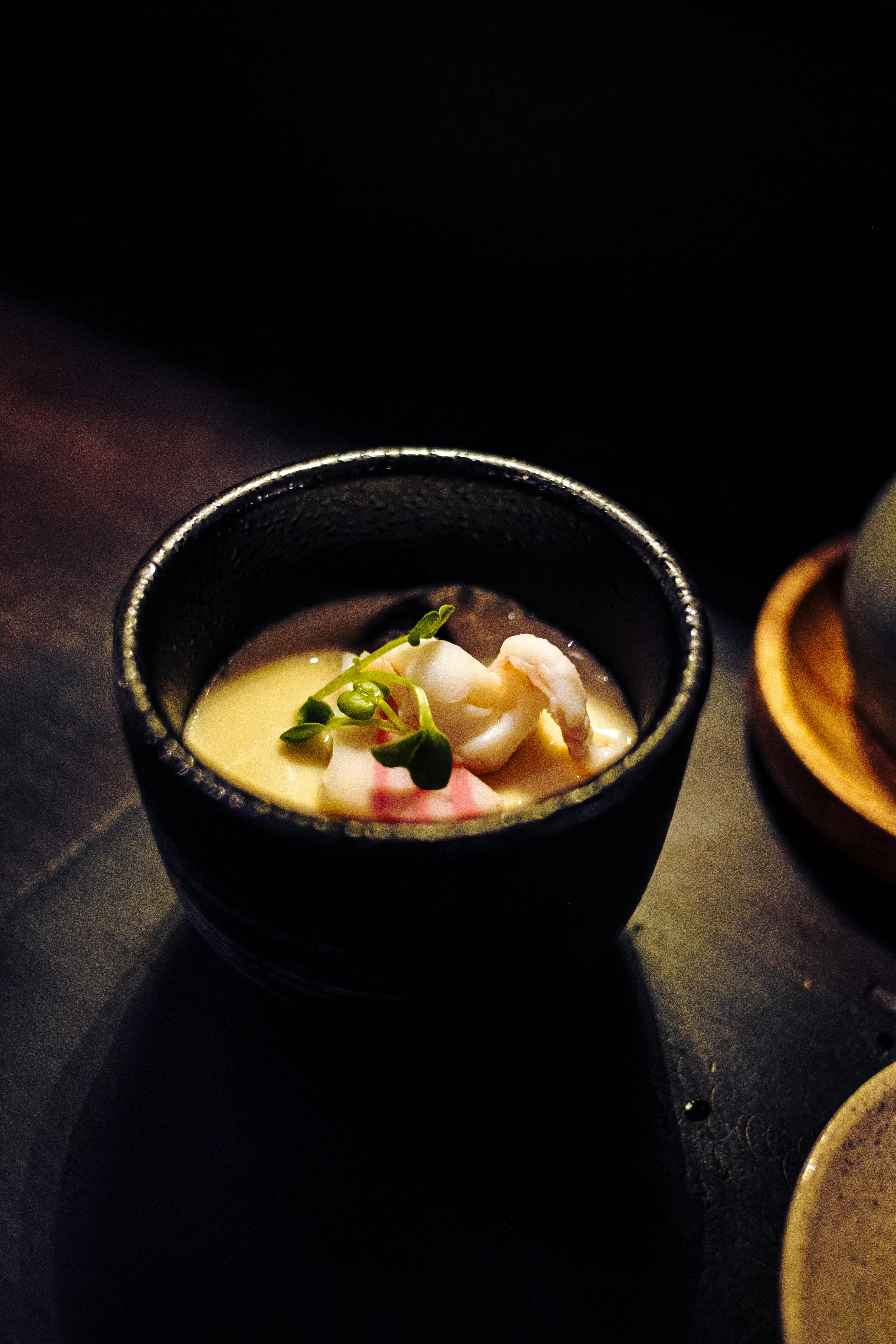
Japanese
Chawanmushi
The diets react (see scores below)
Common Ingredients
- eggs
- dashi
- chicken
- shrimp
- shiitake mushrooms
- soy sauce
- mirin
- mitsuba
Specific recipes may vary.
Incompatible with 4 of 11 diets
Diet Ratings
Chawanmushi is a savory steamed egg custard with generally keto-friendly core ingredients — eggs, dashi, chicken, shrimp, and shiitake mushrooms are all low-carb or zero-carb. The primary concern is mirin, a sweet rice wine used in traditional preparation that contains significant sugar and carbohydrates (roughly 8-14g carbs per tablespoon). Soy sauce adds minimal carbs but some keto practitioners flag it for trace wheat content. Shiitake mushrooms contribute a small amount of net carbs (~2-3g per serving). Dashi (typically from kombu and bonito) is nearly carb-free. If mirin is omitted or substituted with a keto-friendly alternative (e.g., a small amount of rice vinegar plus sweetener), this dish becomes solidly keto-approved. As traditionally made with mirin, a standard serving likely falls in the 5-10g net carb range — manageable with careful daily tracking but not freely consumable.
Some lazy keto or flexible keto practitioners would approve this dish outright, arguing the small amount of mirin used in a single serving keeps net carbs well within daily limits and that the high-protein, egg-based profile fits keto macros adequately. Strict keto adherents, however, would reject any use of mirin due to its sugar content and recommend omitting it entirely.
Chawanmushi contains multiple animal products that are explicitly excluded from a vegan diet. Eggs form the base of the dish as a steamed egg custard. Dashi is a Japanese stock traditionally made from katsuobushi (dried bonito fish flakes) and/or niboshi (dried sardines), making it animal-derived. Chicken and shrimp are direct animal proteins. These ingredients collectively make this dish entirely incompatible with vegan eating.
Chawanmushi contains multiple non-paleo ingredients that disqualify it. Soy sauce is a fermented soy and wheat product — a double violation covering both legumes and grains. Mirin is a sweet rice wine, making it a grain-derived, processed, alcohol-sugar hybrid that fails on multiple counts. Dashi, while often made from kombu and bonito flakes, is commonly prepared with soy sauce mixed in or sold as a processed product with additives and salt. The base ingredients — eggs, chicken, shrimp, and shiitake mushrooms — are fully paleo-approved, but the dish as traditionally prepared cannot be separated from its soy sauce and mirin components, which are structural to the flavor profile rather than optional garnishes.
Chawanmushi is a Japanese steamed egg custard containing eggs, dashi (fish stock), chicken, shrimp, shiitake mushrooms, soy sauce, mirin, and mitsuba. From a Mediterranean diet perspective, this dish has several compatible elements: eggs are acceptable in moderation, shrimp is a seafood protein that aligns well with Mediterranean principles, and shiitake mushrooms are a plant-based ingredient. However, the dish is distinctly non-Mediterranean in its flavor profile and preparation tradition. Dashi, soy sauce, and mirin are not part of the Mediterranean pantry. Mirin adds a small amount of sugar. The combination of chicken and shrimp together is acceptable — both are moderate-frequency proteins. There is no red meat, no heavy processing, and no refined grains or saturated fats. The overall dish is relatively light, protein-rich, and low in unhealthy fats, making it a reasonable occasional choice, but it lacks olive oil, legumes, whole grains, and other Mediterranean staples. It lands in the caution/moderate zone.
Some flexible interpretations of the Mediterranean diet focus on overall dietary patterns — low red meat, seafood inclusion, vegetable presence, and minimal processing — rather than strict geographic ingredient fidelity. Under this lens, chawanmushi's egg-and-seafood base with mushrooms could be seen as broadly compatible, and Japanese dietary patterns themselves share several longevity-promoting characteristics with Mediterranean eating.
Chawanmushi contains multiple disqualifying plant-based and processed ingredients. Shiitake mushrooms are fungi (plant kingdom equivalent, excluded on carnivore). Soy sauce is a fermented plant-based condiment derived from soybeans and wheat — both strictly excluded. Mirin is a sweet rice wine containing sugar and grain-derived alcohol, entirely incompatible with carnivore. Mitsuba is a Japanese herb (plant). Dashi, while often fish/kelp based, typically contains kombu (seaweed, a plant). The animal-derived components — eggs, chicken, and shrimp — are individually acceptable to most carnivore practitioners, but the dish as prepared is thoroughly contaminated with plant foods, fermented grain products, and sugar-containing condiments. This dish cannot be adapted to carnivore without fundamentally reconstructing it.
Chawanmushi contains two excluded ingredients: soy sauce (soy is a legume and explicitly excluded on Whole30) and mirin (a sweet rice wine that contains both alcohol/sugar and rice, both excluded categories). Dashi is typically made from kombu and bonito flakes and is compliant on its own, but the soy sauce and mirin make this dish non-compliant as traditionally prepared. The remaining ingredients — eggs, chicken, shrimp, shiitake mushrooms, and mitsuba — are all Whole30-compliant.
Chawanmushi contains several concerning FODMAP ingredients. Shiitake mushrooms are high in polyols (mannitol) and are rated high-FODMAP by Monash — even small amounts (e.g., 2 shiitake) exceed safe thresholds. Dashi made from kombu (a common base) contains mannitol as well, though katsuobushi-based dashi is generally low-FODMAP. Mirin contains fructose and in larger amounts can be problematic, though small culinary quantities are typically tolerated. Mitsuba (Japanese parsley) has limited Monash testing data. Eggs, chicken, and shrimp are all low-FODMAP proteins. Soy sauce in small amounts (1 tablespoon) is considered low-FODMAP by Monash. The primary disqualifier during strict elimination is the shiitake mushrooms, which are a standard ingredient in chawanmushi and difficult to reduce to a safe portion in a typical serving. The dish could be made low-FODMAP by substituting shiitake with oyster mushrooms or firm tofu and using bonito-based dashi without kombu, but as traditionally prepared it is not safe for elimination phase.
Monash University clearly rates shiitake mushrooms as high-FODMAP (even at 2 mushrooms), making this a borderline avoid rather than caution. However, some clinical FODMAP practitioners may allow chawanmushi with reduced shiitake (1 small mushroom per serving) since the overall dish volume dilutes the FODMAP load, which is why a caution rather than avoid verdict is reasonable with strict portion awareness.
Chawanmushi is a Japanese savory egg custard steamed with dashi broth, lean proteins (chicken, shrimp), and vegetables (shiitake mushrooms, mitsuba). Many of its components align well with DASH principles: eggs provide lean protein, shrimp and chicken are lean meats, and shiitake mushrooms contribute potassium and fiber. However, the dish contains soy sauce, which is high in sodium (one tablespoon contains ~900mg), and mirin adds modest sugar. Dashi (typically made from kombu and bonito flakes) is relatively low in sodium on its own, but combined with soy sauce, the total sodium per serving can reach 400–700mg, which is moderate but requires attention within DASH's 1,500–2,300mg/day limits. The overall fat content is low and there is no saturated fat concern. The dish is nutritionally balanced but sodium management is the primary issue for DASH compliance.
NIH DASH guidelines flag soy sauce as a high-sodium condiment to limit, making dishes relying on it cautionary. However, updated clinical interpretations note that chawanmushi uses soy sauce in small quantities relative to total dish volume, and when prepared with reduced-sodium soy sauce and measured portions, many DASH-oriented dietitians would consider it a favorable choice given its lean protein, vegetable content, and low saturated fat profile.
Chawanmushi is a Japanese steamed egg custard that aligns well with Zone Diet principles. The protein base (eggs, chicken, shrimp) is lean and Zone-favorable, providing good quality protein in modest portions. Dashi is a low-calorie, low-carb broth base with no glycemic impact. Shiitake mushrooms are an excellent low-glycemic Zone vegetable rich in polyphenols. The main caution flags are mirin and soy sauce: mirin contributes a small but notable amount of sugar (higher glycemic), and soy sauce adds significant sodium. However, both are used in small quantities as seasonings, so their glycemic impact per serving is limited. The overall dish is low in fat, which means it would need a Zone-compliant fat source (e.g., a few almonds or a drizzle of olive oil on the side) to complete the 40/30/30 ratio. As a snack, the protein and carb blocks are modest and manageable. Mitsuba (Japanese parsley) is a Zone-favorable herb. The dish is minimally processed, anti-inflammatory in character, and fits Zone block architecture well with minor adjustments.
The mirin content introduces refined sugar, which Sears classifies as an unfavorable carbohydrate. Strict Zone practitioners may note that traditional chawanmushi recipes vary in mirin quantity — higher-mirin versions could push the glycemic load enough to warrant a 'caution' rating. Additionally, the low fat content of this dish requires intentional pairing with monounsaturated fat to achieve proper Zone ratios, which some may view as an inconvenience in a snack context.
Chawanmushi is a Japanese steamed egg custard with a generally favorable anti-inflammatory profile. Shiitake mushrooms are explicitly emphasized in anti-inflammatory frameworks for their beta-glucans and immune-modulating properties. Dashi (typically kombu and bonito-based) provides umami with minimal calories and adds iodine and glutamates. Shrimp offers lean protein with some omega-3s and astaxanthin, a potent antioxidant carotenoid. Chicken is a lean protein in the 'moderate' category — acceptable and not pro-inflammatory. Mitsuba (Japanese parsley) contributes polyphenols and antioxidants. Soy sauce and mirin are used in small amounts for seasoning; soy sauce contains some isoflavones but is high in sodium, while mirin adds a modest amount of sugar/refined carbohydrate — neither is a concern at culinary doses. The dish is steamed (not fried), which avoids the introduction of inflammatory oils. The primary concern is eggs, which carry genuine debate around arachidonic acid content, and soy sauce's sodium load, which some anti-inflammatory practitioners flag for vascular inflammation at high intake. Overall, this is a lightly processed, whole-food-forward dish with multiple anti-inflammatory contributors and no strongly pro-inflammatory ingredients.
Eggs are the subject of ongoing debate: some anti-inflammatory researchers (including certain AIP-aligned practitioners) flag egg yolk arachidonic acid as a potential driver of inflammatory cascades, while mainstream anti-inflammatory guidance (including Dr. Weil) considers whole eggs acceptable in moderation given their choline, selenium, and lutein content. The high sodium from soy sauce is also flagged by some cardiovascular-focused anti-inflammatory researchers as a concern for regular consumption.
Chawanmushi is a steamed Japanese egg custard that aligns well with GLP-1 dietary priorities. The egg and dashi base provides a light, highly digestible protein source, supplemented by small amounts of chicken and shrimp that further boost protein density per serving. The dish is low in fat, contains no fried or greasy components, and the soft, silky custard texture is exceptionally easy on a slowed digestive system — making it one of the more GLP-1-friendly ways to consume protein. Shiitake mushrooms add a modest fiber contribution along with micronutrients. The broth base (dashi) contributes to hydration. Soy sauce and mirin add sodium and a small amount of sugar respectively, but quantities per serving are minimal. Portion size is naturally small and self-limiting, which suits the reduced appetite of GLP-1 patients well. The main limitation is that a standard serving (roughly 150–180ml) delivers only 8–12g of protein, meaning it functions better as a snack or protein-supplementing side dish than a standalone protein-primary meal.
Some GLP-1-focused dietitians may flag the sodium content from soy sauce as a mild concern, particularly for patients with hypertension or fluid retention common in the obesity medicine population. Mirin contributes a small glycemic load that most clinicians consider negligible at typical serving sizes, but practitioners working with patients who have concurrent type 2 diabetes may prefer the dish prepared with reduced-sugar or no-mirin versions.
*See how scores were generated at our methodology page.
Nutritional profile
Six traits that cut across every diet.
Fiber & Plants
How much whole-plant food and fiber it delivers.
Healthy Fats
The quality of its fats (unsaturated, omega-3).
Whole / Unprocessed
How close it is to its natural, unprocessed form.
Gut Gentle
How easy it is on digestion (low FODMAP, few irritants).
Low Glycemic
How little it spikes your blood sugar.
Protein Density
How much protein it packs per calorie.
Controversy Index
Higher controversy = more disagreement between diets.
Diet-Specific Tips
 Keto — 5/10
View tips
- Mirin contains significant sugar/carbs and is the primary keto concern
- Eggs, dashi, chicken, and shrimp are excellent keto-friendly proteins
- Shiitake mushrooms add minor net carbs (~2-3g per serving)
- Soy sauce may contain trace wheat (relevant for strict keto)
- Dish can be made keto-compliant by omitting or substituting mirin
- Traditional preparation likely yields 5-10g net carbs per serving
 Mediterranean — 5/10
View tips
- Eggs are acceptable in moderation under Mediterranean guidelines
- Shrimp aligns well as a seafood protein source
- Shiitake mushrooms are a beneficial plant-based ingredient
- Chicken is a moderate-frequency protein — acceptable but not a staple
- Mirin contributes minor added sugar
- No olive oil, legumes, whole grains, or Mediterranean-specific ingredients present
- Non-Mediterranean cuisine but not fundamentally incompatible in composition
 Low-FODMAP — 4/10
View tips
- Shiitake mushrooms are high-FODMAP (mannitol/polyols) — primary concern
- Dashi base may include kombu, which contains mannitol; bonito-only dashi is safer
- Eggs, chicken, and shrimp are all low-FODMAP proteins
- Soy sauce is low-FODMAP at standard culinary amounts (≤2 tbsp)
- Mirin is low-FODMAP in small culinary quantities but should be minimized
- Mitsuba has limited Monash testing data, adding uncertainty
- As traditionally prepared, shiitake cannot be easily reduced to a Monash-safe portion
 DASH — 5/10
View tips
- Soy sauce contributes significant sodium; standard preparation may deliver 400–700mg sodium per serving
- Mirin adds a small amount of sugar, a minor DASH concern
- Eggs are acceptable in moderation under current DASH-aligned clinical guidance
- Lean proteins (chicken, shrimp) are DASH-recommended
- Shiitake mushrooms provide potassium, fiber, and B vitamins consistent with DASH goals
- Low saturated fat overall; no red meat or full-fat dairy
- Using reduced-sodium soy sauce and dashi would improve the DASH score notably
 Zone — 8/10
View tips
- Lean protein from eggs, chicken, and shrimp — all Zone-favorable protein sources
- Dashi is a near-zero-carb, low-calorie base — excellent for Zone
- Shiitake mushrooms are a polyphenol-rich, low-glycemic Zone vegetable
- Mirin adds small amounts of sugar — a minor glycemic concern but limited by quantity used
- Naturally low in fat — requires pairing with a monounsaturated fat source to complete Zone ratios
- Minimally processed, anti-inflammatory ingredient profile aligns with Sears' broader dietary philosophy
- Soy sauce contributes sodium but negligible macronutrient impact on Zone blocks
 Anti-Inflammatory — 7/10
View tips
- Shiitake mushrooms: strongly anti-inflammatory (beta-glucans, eritadenine)
- Shrimp: lean protein with astaxanthin antioxidant
- Steamed preparation: no inflammatory cooking oils introduced
- Dashi: mineral-rich, low-calorie base with minimal processing
- Eggs: moderate — mixed evidence on arachidonic acid vs. beneficial micronutrients
- Soy sauce + mirin: small amounts acceptable; sodium and minor sugar are mild concerns
- Mitsuba: polyphenol-rich herb adding antioxidant value
- Chicken: lean protein, acceptable in anti-inflammatory framework
 GLP-1 Friendly — 8/10
View tips
- High digestibility — steamed custard texture is ideal for slowed gastric emptying
- Good lean protein density from eggs, chicken, and shrimp combined
- Low fat content — no frying, no saturated fat sources
- Dashi broth base supports hydration
- Shiitake mushrooms add fiber and micronutrients
- Small, self-limiting portion size suits GLP-1 reduced appetite
- Protein per serving (~8–12g) is moderate — better as snack or side than sole protein source
- Mirin adds minor sugar; soy sauce adds sodium — both minimal at standard serving