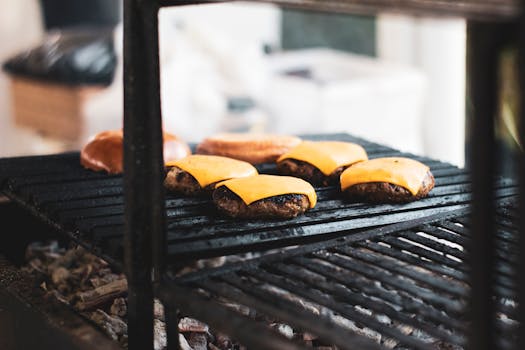
Photo: Thiago Miranda / Pexels
American
Cheeseburger
The diets react (see scores below)

That’s a heavy plate — want to see the leaner version?
Common Ingredients
- ground beefGround turkey
Lean ground turkey cuts the saturated fat of ground beef while keeping the dish a ground-meat dish.
- cheddar cheese
- hamburger bunWhole wheat hamburger bun
A whole-wheat bun adds fiber over the refined hamburger bun.
- lettuce
- tomato
- onion
- pickles
- ketchup
Specific recipes may vary.
Incompatible with 10 of 11 diets
Diet Ratings
A traditional cheeseburger as described is incompatible with ketogenic diet primarily due to the hamburger bun, which is a grain-based product contributing roughly 25-30g of net carbs on its own. Additionally, ketchup contains added sugars (approximately 4-5g net carbs per tablespoon), and the combination of tomato, onion, and these condiments pushes the total net carbs well above 30-40g for a single serving — potentially exceeding or consuming the entire daily keto carb budget. The patty, cheddar cheese, lettuce, and pickles are keto-friendly components, but the bun and ketchup are disqualifying elements in this standard preparation.
A cheeseburger contains two clear animal products: ground beef (mammal flesh) and cheddar cheese (dairy). Both are unambiguously excluded under every definition of veganism. The remaining ingredients — bun, lettuce, tomato, onion, pickles, and ketchup — are plant-based, but the presence of beef and dairy makes this dish entirely incompatible with a vegan diet.
The cheeseburger contains multiple non-paleo ingredients that are clearly excluded under any interpretation of the diet. The hamburger bun is made from wheat (a grain), making it an immediate disqualifier. Cheddar cheese is dairy, which is excluded across virtually all paleo frameworks. Ketchup typically contains refined sugar and additives. Pickles are usually brined with added salt and vinegar-based preservatives. Even setting aside the paleo-compliant elements (ground beef, lettuce, tomato, onion), the foundational components of this dish — the bun and cheese — are hard non-paleo violations with strong consensus. This dish as traditionally prepared is firmly in the 'avoid' category.
A cheeseburger is fundamentally at odds with Mediterranean diet principles on multiple fronts. Ground beef is red meat, which should be limited to only a few times per month. Cheddar cheese adds saturated fat beyond moderate dairy allowances. The hamburger bun is a refined grain product with little nutritional value. Ketchup contains added sugars. While the lettuce, tomato, onion, and pickles are Mediterranean-friendly, they are minor components of this dish. The overall nutritional profile — high saturated fat, refined carbohydrates, red meat as the primary protein, and processed condiments — directly contradicts the core tenets of the Mediterranean diet.
A cheeseburger as traditionally prepared is incompatible with the carnivore diet. While the ground beef patty and cheddar cheese are animal-derived ingredients, the dish is dominated by plant-based and processed components: a hamburger bun (grain/gluten), lettuce, tomato, onion, and pickles (all plant foods), plus ketchup (sugar-laden, plant-based condiment). The bun alone is a hard disqualifier — grains are strictly excluded. The vegetable toppings and ketchup further compound the violation. The only salvageable components are the beef patty and cheese. A carnivore adaptation would strip this down to a bunless beef patty with cheese only, which would rate far higher, but the dish as described cannot be approved.
A cheeseburger contains multiple excluded ingredients. Cheddar cheese is dairy and explicitly excluded. The hamburger bun is made from grains (wheat flour), which are excluded. Standard ketchup contains added sugar. These are all clearly prohibited on Whole30 with no ambiguity.
A standard cheeseburger contains multiple high-FODMAP ingredients that make it unsuitable during the elimination phase. The hamburger bun is made from wheat flour, which is high in fructans — a primary FODMAP trigger. Onion is one of the highest-FODMAP foods tested by Monash University, rich in fructans even in small amounts. Ketchup typically contains high-fructose corn syrup or concentrated tomato paste with added sugar, and standard servings (2+ tablespoons) push it into high-FODMAP territory due to excess fructose. Cheddar cheese is actually low-FODMAP (aged hard cheeses have negligible lactose), and ground beef, lettuce, and small amounts of fresh tomato are safe. However, the combination of wheat bun, onion, and ketchup makes this dish clearly high-FODMAP as served in any standard preparation.
A cheeseburger conflicts with multiple core DASH diet principles simultaneously. Ground beef (especially standard 80/20) is high in saturated fat, which DASH explicitly limits. Cheddar cheese is full-fat dairy, directly opposed to DASH's emphasis on fat-free or low-fat dairy. The combination of pickles, ketchup, and a standard hamburger bun contributes significant sodium — a typical cheeseburger can contain 800–1,200mg of sodium, representing 35–80% of the DASH daily sodium limit in a single meal. The refined white flour hamburger bun lacks the fiber of whole grains recommended by DASH. Red meat is explicitly limited under DASH guidelines. While the lettuce, tomato, and onion are DASH-friendly vegetables, they are minor contributors in the overall nutritional profile. The cumulative effect of high saturated fat, high sodium, refined carbohydrates, and full-fat dairy makes this dish a poor fit for the DASH eating plan.
A standard cheeseburger presents multiple Zone Diet challenges. The hamburger bun is a high-glycemic refined carbohydrate that Dr. Sears classifies as 'unfavorable' — it will spike insulin and throw off the 40/30/30 ratio. Ground beef is typically higher in saturated fat than Zone-preferred lean proteins (skinless chicken, fish), and cheddar cheese adds additional saturated fat. On the positive side, lettuce, tomato, onion, and pickles are favorable low-glycemic carb sources, and the dish does provide a meaningful protein block. The ketchup adds sugar (high-glycemic). To fit Zone principles, you would need to: (1) eliminate or replace the bun with lettuce wrap, (2) use extra-lean ground beef (90%+ lean), (3) reduce or eliminate the cheese, and (4) skip the ketchup. With those modifications it becomes a reasonable Zone meal, but as served in its standard form it delivers too much saturated fat, refined carbs, and insufficient favorable carbohydrate balance to warrant approval. The protein portion is workable (~25g in a standard patty) but the carb and fat quality are both unfavorable by Zone standards.
A classic cheeseburger presents multiple pro-inflammatory concerns stacked together. Ground beef is a red meat high in saturated fat and arachidonic acid, both linked to elevated inflammatory markers (CRP, IL-6) in research. Cheddar cheese adds full-fat dairy with additional saturated fat. The hamburger bun is a refined carbohydrate with a high glycemic index, driving insulin spikes and downstream inflammatory signaling. Ketchup typically contains added sugar and sometimes high-fructose corn syrup. The only redeeming ingredients are the vegetable toppings — lettuce, tomato, onion, and pickles — which contribute modest antioxidants and polyphenols, but in quantities too small to meaningfully offset the pro-inflammatory load of the rest of the dish. As a combined meal, a cheeseburger hits several major 'avoid' or 'limit' categories simultaneously: red meat, full-fat dairy, and refined carbohydrates. Occasional consumption is a different matter than regular eating, but as a dish evaluated on anti-inflammatory principles, it scores poorly.
A standard cheeseburger is a poor fit for GLP-1 patients across nearly every rating criterion. Ground beef (typically 80/20) is high in saturated fat, which worsens nausea, bloating, and reflux — the most common GLP-1 side effects. Cheddar cheese adds additional saturated fat. The white-flour hamburger bun contributes refined carbohydrates with minimal fiber and low nutrient density per calorie. While the dish does contain meaningful protein (roughly 25-30g), the fat load and digestive burden outweigh that benefit. Slowed gastric emptying means a high-fat meal like this sits in the stomach significantly longer, amplifying GI discomfort. Ketchup adds a small amount of added sugar. The lettuce, tomato, onion, and pickles are the only genuinely GLP-1-friendly components. Overall, this is a calorie-dense, high-saturated-fat, low-fiber meal that conflicts with the core priorities of GLP-1 dietary guidance.
*See how scores were generated at our methodology page.
Nutritional profile
Six traits that cut across every diet.
Fiber & Plants
How much whole-plant food and fiber it delivers.
Healthy Fats
The quality of its fats (unsaturated, omega-3).
Whole / Unprocessed
How close it is to its natural, unprocessed form.
Gut Gentle
How easy it is on digestion (low FODMAP, few irritants).
Low Glycemic
How little it spikes your blood sugar.
Protein Density
How much protein it packs per calorie.
Controversy Index
Higher controversy = more disagreement between diets.
Diet-Specific Tips
 Zone — 4/10
View tips
- Hamburger bun is a high-glycemic refined carbohydrate — classified 'unfavorable' by Dr. Sears
- Ground beef and cheddar cheese are higher in saturated fat than Zone-preferred lean proteins
- Lettuce, tomato, onion, and pickles are favorable low-GI Zone carb sources
- Ketchup contains added sugar, adding glycemic load
- Protein portion (~25g from beef patty) is appropriate for a Zone meal
- Modifiable: lettuce wrap instead of bun, leaner beef, and no cheese would improve Zone compatibility significantly
- As served, macro ratio skews toward unfavorable carbs and saturated fat, making 40/30/30 difficult to achieve