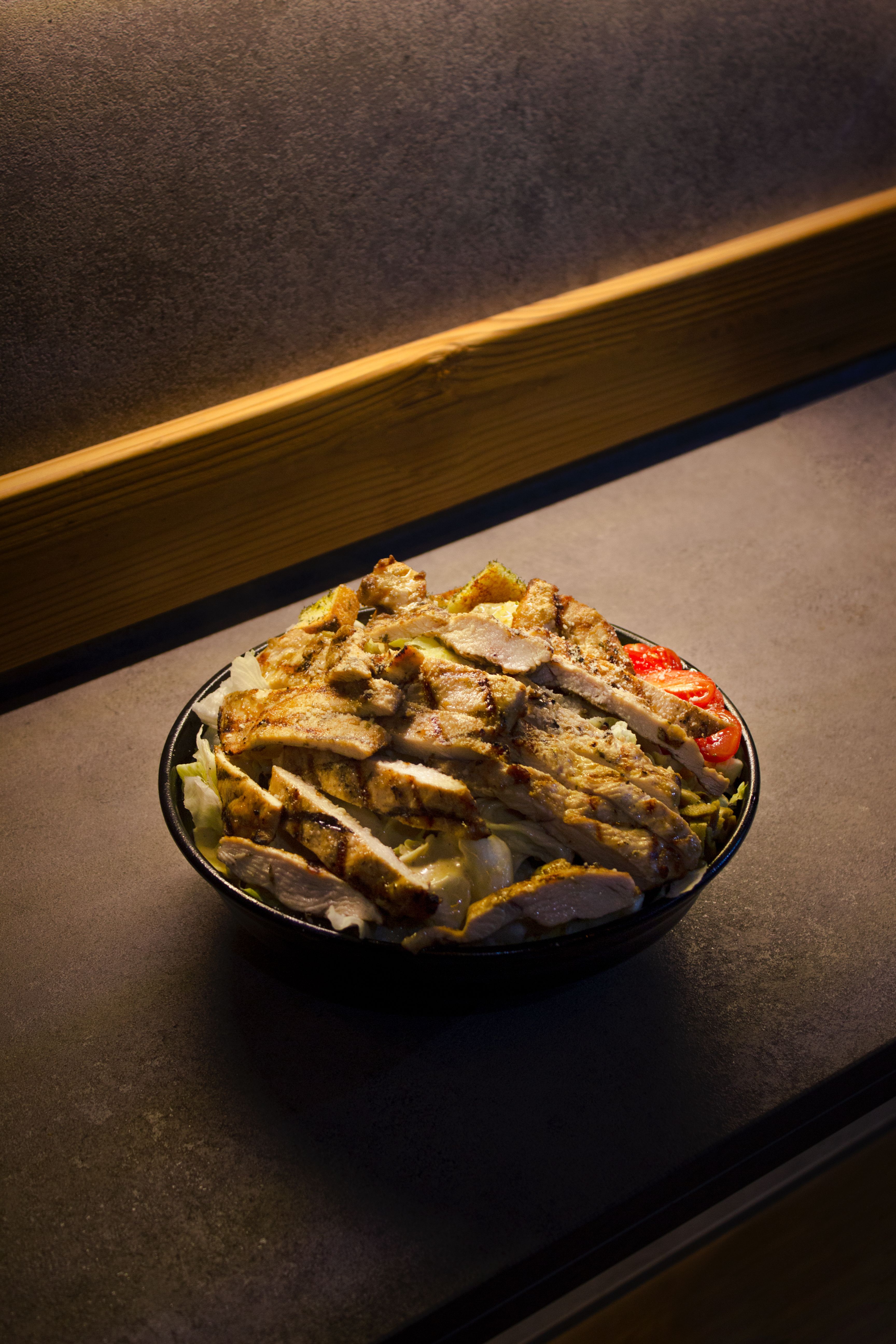
Photo: mohammad mohebbi / Pexels
American
Chef Salad
The diets react (see scores below)
Common Ingredients
- iceberg lettuce
- ham
- turkey
- Swiss cheese
- cheddar cheese
- hard-boiled egg
- tomato
- cucumber
Specific recipes may vary.
Incompatible with 4 of 11 diets
Diet Ratings
Chef Salad is naturally well-suited to keto. The base is iceberg lettuce (very low carb), and the primary proteins — ham and turkey — are moderate-carb processed meats that are generally keto-acceptable. Swiss and cheddar cheeses add healthy fats and protein with minimal carbs. Hard-boiled eggs are a keto staple. Tomato and cucumber add a small amount of net carbs but in typical salad portions (a few slices each) remain well within daily limits. The main keto concern is the ham and turkey, which may contain added sugars, nitrates, or fillers depending on brand — deli-sliced processed meats vary widely. With a standard oil-based or creamy dressing (not sweetened), this dish easily fits within a 20-50g daily net carb budget. A typical serving likely yields 4-7g net carbs from vegetables, making it a solid keto-friendly meal.
Stricter keto practitioners flag processed deli meats (ham and turkey) as problematic due to potential hidden sugars, starch fillers, and additives that can vary by brand; some carnivore-adjacent keto adherents prefer whole, unprocessed cuts of meat and would recommend substituting sliced roast turkey breast or whole ham instead.
Chef Salad contains multiple animal products: ham (pork meat), turkey (poultry), Swiss cheese (dairy), cheddar cheese (dairy), and hard-boiled egg. These are all unambiguously non-vegan ingredients. Even the plant-based components — iceberg lettuce, tomato, cucumber — cannot redeem a dish so thoroughly built around animal products. This is one of the clearest possible avoid verdicts under any interpretation of vegan principles.
This Chef Salad contains multiple non-paleo ingredients that disqualify it. Swiss cheese and cheddar cheese are dairy products, excluded under strict paleo guidelines. Ham and turkey in their typical deli/processed forms contain added salt, preservatives, nitrates, and other additives, making them processed meats that fall outside paleo compliance. The base vegetables — iceberg lettuce, tomato, cucumber — and the hard-boiled egg are fully paleo-approved, but the dairy and processed meat components are clear violations with high consensus in the paleo community.
Chef Salad occupies a middle ground in Mediterranean diet assessment. The vegetable base (lettuce, tomato, cucumber) is positive, and the egg is an acceptable moderate-consumption food. However, the primary proteins are processed deli meats (ham and turkey), which are high in sodium and preservatives — ham in particular is a processed red meat product that conflicts with Mediterranean principles. The two cheeses (Swiss and cheddar) add saturated fat beyond what moderate dairy guidelines suggest. There is no olive oil-based dressing indicated, and the iceberg lettuce provides minimal nutritional density compared to Mediterranean greens like arugula or spinach. The dish is not inherently harmful but leans heavily on processed meats and excess dairy rather than plant-forward or fish-based proteins.
Some Mediterranean diet practitioners would rate this more harshly, arguing that processed deli meats like ham should trigger an 'avoid' verdict regardless of the vegetable accompaniments, as processed meats are explicitly discouraged even in moderate amounts by clinical guidelines such as those from the Harvard T.H. Chan School of Public Health's Mediterranean diet framework.
Chef Salad is fundamentally incompatible with the carnivore diet. The dish is built on a base of iceberg lettuce — a plant food that is entirely excluded — and also contains tomato and cucumber, both of which are plant-derived and strictly off-limits. While the ham, turkey, hard-boiled egg, Swiss cheese, and cheddar cheese are animal-derived ingredients that carnivore practitioners could consume in isolation (with varying levels of acceptance), they are outnumbered and overshadowed by the plant components that define the dish itself. A carnivore cannot simply 'pick around' the vegetables here, as the salad format is inherently plant-based. The processed deli meats (ham, turkey) may also contain additives, fillers, or sugar depending on the brand, adding further concern. This dish cannot be adapted into a carnivore meal without fundamentally deconstructing it.
Chef Salad contains Swiss cheese and cheddar cheese, both of which are dairy products explicitly excluded on the Whole30 program. Dairy (other than ghee and clarified butter) is a core elimination category. Additionally, ham and turkey as commonly prepared and sold often contain added sugar, nitrates, or other non-compliant additives, making them suspect without verified compliant sourcing. The base vegetables (iceberg lettuce, tomato, cucumber), hard-boiled egg, and unseasoned protein would otherwise be compliant, but the cheese alone is sufficient to disqualify this dish as standardly prepared.
Most ingredients in this Chef Salad are low-FODMAP: iceberg lettuce, ham, turkey, hard-boiled eggs, tomato (up to ~65g), and cucumber are all well-tolerated during elimination phase. The primary concern is Swiss cheese and cheddar cheese. Hard aged cheeses like cheddar and Swiss are low-FODMAP because lactose is largely removed during the aging process — Monash rates both as low-FODMAP at standard serving sizes (~40g). However, a Chef Salad typically includes both cheeses together, and the combined dairy load warrants attention. Additionally, commercially prepared ham and turkey deli meats may contain garlic, onion powder, or other high-FODMAP additives in their seasoning or curing process, which is a meaningful practical concern. The salad itself contains no croutons, dressing, or high-FODMAP vegetables as listed, which is favorable. The dish scores well on paper but the deli meat additive risk and combined cheese portion push it to caution territory rather than a full approve.
Monash University rates aged cheeses (Swiss, cheddar) as low-FODMAP at standard servings, making this salad theoretically approvable. However, clinical FODMAP practitioners routinely flag deli meats — including ham and turkey — during elimination phase because processed meats frequently contain onion and garlic seasonings that are not always disclosed clearly on labels, and restaurant preparations cannot be verified; patients are advised to use plain, unprocessed proteins when possible.
Chef Salad contains several DASH-friendly components — iceberg lettuce, tomato, and cucumber contribute vegetables and fiber, while hard-boiled egg and turkey provide lean protein. However, the dish is undermined by multiple DASH-unfavorable ingredients: ham is a processed, cured meat high in sodium (a single serving can contribute 500–900mg sodium), and both Swiss and cheddar cheeses add saturated fat and additional sodium. Cheddar in particular is a full-fat cheese not emphasized on DASH. The combination of two cheese varieties and processed ham in a typical restaurant portion makes this a moderate-to-high sodium, moderate saturated fat dish. Turkey is lean and DASH-compatible, partially offsetting concerns. Overall, this salad has a sound vegetable base but its protein and dairy components require significant modification (reduced ham, low-sodium turkey, one low-fat cheese or smaller portions) to align well with DASH principles.
NIH DASH guidelines clearly limit processed meats and full-fat dairy due to sodium and saturated fat content. However, some updated clinical interpretations note that eggs are now broadly accepted in DASH-compatible diets following removal of the dietary cholesterol cap in the 2020-2025 Dietary Guidelines, and that small amounts of full-fat cheese may be permissible if overall sodium and saturated fat targets are met for the day — making a carefully portioned Chef Salad more acceptable in some practitioners' views.
A Chef Salad has a strong Zone foundation but requires portion adjustments to hit the ideal 40/30/30 ratio. The vegetables (iceberg lettuce, tomato, cucumber) provide low-glycemic carbohydrates, though iceberg lettuce is nutritionally inferior to colorful vegetables like spinach or romaine. The protein sources (ham, turkey, hard-boiled egg) are reasonable lean proteins, though ham is processed and moderately higher in sodium and saturated fat than ideal Zone proteins. The cheeses (Swiss and cheddar) introduce saturated fat and additional protein, which can push the fat ratio toward saturated rather than monounsaturated. The egg yolk adds some fat but also beneficial nutrients. The main Zone challenge is: (1) the carbohydrate volume from iceberg lettuce and tomato/cucumber alone may be insufficient to hit the 40% carb target without adding more vegetables or a small piece of fruit on the side, (2) the dual cheese combination adds saturated fat that crowds out preferred monounsaturated fats, and (3) ham is an 'unfavorable' Zone protein due to processing and fat content. With careful portioning — reducing cheese to one type in small quantity, emphasizing turkey and egg white for protein, and adding a Zone-friendly dressing (olive oil-based) plus more colorful vegetables — this dish can be brought closer to Zone compliance.
Some Zone practitioners would rate this higher (7-8) as a practical Zone-friendly meal: the salad format naturally provides low-glycemic carbs, multiple protein sources make it easy to hit a 3-block protein target, and the overall dish requires no high-glycemic foods. Dr. Sears' later anti-inflammatory work (The Anti-Inflammation Zone) also slightly relaxes the strict saturated fat limits when omega-3 intake is adequate — so the cheese and egg yolk are less concerning in that framework. The practical Zone approach treats chef salad as a 'good restaurant choice' with standard modifications.
A classic Chef Salad lands in mixed territory from an anti-inflammatory perspective. On the positive side, tomatoes and cucumbers contribute antioxidants (lycopene, vitamin C, quercetin), and eggs provide choline and selenium with some anti-inflammatory potential. Turkey is a lean poultry option that falls in the 'moderate' category. However, several components introduce inflammatory concerns: ham is a processed red/cured meat high in sodium and nitrates, which are associated with increased inflammatory markers. Swiss and cheddar cheeses are full-fat dairy — cheddar especially is high in saturated fat, which the anti-inflammatory framework recommends limiting. Iceberg lettuce, while harmless, contributes minimal anti-inflammatory value compared to darker leafy greens like spinach or arugula. The overall dish lacks the anti-inflammatory stars (omega-3s, colorful phytonutrients, olive oil, herbs/spices) that would push it toward approval, but it also isn't a highly processed, sugar-laden, or trans-fat-containing food. It's a neutral-to-slightly-mixed dish that could be improved with ingredient swaps (romaine or mixed greens, grilled salmon or chicken instead of ham, olive oil and lemon dressing, adding avocado or walnuts).
Eggs are contested: some anti-inflammatory practitioners flag arachidonic acid as mildly pro-inflammatory, while others (including Dr. Weil) consider eggs acceptable in moderation given their nutrient density. Ham's status is less debated — most anti-inflammatory frameworks agree processed/cured meats are problematic, though the small quantities typical in a salad setting may reduce practical concern.
A chef salad offers a reasonable mix of protein sources (ham, turkey, hard-boiled egg) and hydrating, fiber-containing vegetables (lettuce, tomato, cucumber), making it a moderately GLP-1-friendly option. However, several factors limit its score. The cheese components (Swiss and cheddar) add meaningful saturated fat, and processed deli ham is high in sodium and often contains preservatives. Iceberg lettuce provides very little fiber or micronutrient density compared to darker greens. The protein content is promising but highly variable depending on portion sizes of each ingredient — a small chef salad may deliver only 15-20g protein, while a generous one could hit 30g+. The dish contains no dressing in the listed ingredients, which is significant: standard creamy dressings (ranch, blue cheese) would push this toward avoid territory, while a light vinaigrette keeps it in caution range. Overall, the dish has real nutritional merit but needs mindful construction to serve GLP-1 patients well.
Some GLP-1-focused dietitians would rate this more favorably, citing the multi-source protein, easy digestibility, and hydrating vegetables as ideal for patients managing nausea and reduced appetite. Others flag processed deli meats and dual cheese as a saturated fat and sodium burden that conflicts with the nutrient-density-per-calorie principle, especially for patients with cardiovascular comorbidities common in the GLP-1 population.
*See how scores were generated at our methodology page.
Nutritional profile
Six traits that cut across every diet.
Fiber & Plants
How much whole-plant food and fiber it delivers.
Healthy Fats
The quality of its fats (unsaturated, omega-3).
Whole / Unprocessed
How close it is to its natural, unprocessed form.
Gut Gentle
How easy it is on digestion (low FODMAP, few irritants).
Low Glycemic
How little it spikes your blood sugar.
Protein Density
How much protein it packs per calorie.
Controversy Index
Higher controversy = more disagreement between diets.
Diet-Specific Tips
 Keto — 8/10
View tips
- Iceberg lettuce base is very low in net carbs
- Swiss and cheddar cheeses provide healthy fats with minimal carbs
- Hard-boiled eggs are a keto staple high in fat and protein
- Ham and turkey may contain hidden sugars or starch fillers depending on brand
- Tomato and cucumber contribute a small but manageable amount of net carbs
- Dressing choice is critical — avoid sweetened or low-fat dressings
- Overall net carbs for a standard serving are likely 4-7g, well within keto limits
 Mediterranean — 5/10
View tips
- Processed deli ham is a sodium-heavy, preserved red meat product inconsistent with Mediterranean principles
- Turkey deli meat is processed poultry — acceptable in small amounts but not ideal
- Two types of cheese exceed moderate dairy recommendations
- Vegetable components (tomato, cucumber) are positive Mediterranean staples
- No olive oil dressing indicated — likely served with creamy American-style dressings
- Iceberg lettuce is nutritionally sparse compared to traditional Mediterranean greens
- Hard-boiled egg is an acceptable moderate-consumption protein source
 Low-FODMAP — 4/10
View tips
- Iceberg lettuce, cucumber, and hard-boiled egg are reliably low-FODMAP
- Tomato is low-FODMAP at standard serving (~65g) but high-FODMAP at larger amounts
- Aged cheeses (Swiss and cheddar) are low-lactose and low-FODMAP at ~40g per serving
- Combined cheese portions in a full Chef Salad may approach or exceed safe thresholds
- Processed deli ham and turkey frequently contain garlic/onion powder as hidden FODMAPs
- No croutons or wheat-based ingredients listed, which is favorable
- Salad dressing not specified — many dressings contain garlic, onion, or honey (high-FODMAP)
 DASH — 5/10
View tips
- Ham is a processed, cured meat high in sodium — a primary DASH concern
- Dual cheese (Swiss + cheddar) adds saturated fat and sodium, inconsistent with DASH low-fat dairy emphasis
- Turkey is a lean DASH-compatible protein that partially offsets concerns
- Vegetables (lettuce, tomato, cucumber) provide fiber and key micronutrients aligned with DASH
- Hard-boiled egg is now generally accepted in DASH-oriented diets in moderation
- Typical restaurant portion of this salad likely exceeds DASH sodium targets for a single meal
- Substituting low-sodium turkey, removing or reducing ham, and using one reduced-fat cheese would significantly improve DASH compatibility
 Zone — 6/10
View tips
- Iceberg lettuce is low-glycemic but nutritionally suboptimal — colorful vegetables preferred in Zone
- Ham is a processed, higher-sodium protein — turkey and egg are better Zone protein choices in this dish
- Dual cheese (Swiss + cheddar) adds saturated fat, conflicting with Zone's monounsaturated fat preference
- Tomato and cucumber are favorable Zone carbohydrates with low glycemic impact
- Carbohydrate volume may be insufficient alone to hit 40% target — needs olive oil dressing and possibly more vegetables
- Hard-boiled egg provides quality protein and beneficial fats but whole eggs count toward fat blocks
- No high-glycemic carbohydrates present — a meaningful Zone positive
- Dressing choice is critical: olive oil-based dressing aligns with Zone; creamy/sugary dressings would not
 Anti-Inflammatory — 5/10
View tips
- Ham is a processed/cured meat associated with increased inflammatory markers (nitrates, sodium)
- Full-fat cheeses (cheddar, Swiss) contribute saturated fat, which anti-inflammatory guidelines recommend limiting
- Turkey is a lean protein in the acceptable 'moderate' category
- Tomatoes and cucumbers provide antioxidants and anti-inflammatory phytonutrients
- Eggs are nutritionally mixed from an anti-inflammatory standpoint
- Iceberg lettuce has minimal anti-inflammatory value vs. darker greens
- No anti-inflammatory powerhouses present (omega-3s, olive oil, herbs/spices, colorful vegetables beyond tomato)
 GLP-1 Friendly — 5/10
View tips
- Moderate protein from ham, turkey, and egg — but portion-dependent and variable
- Dual cheese (Swiss + cheddar) adds saturated fat, limiting the score
- Processed deli ham is high in sodium and low in nutritional quality vs. whole protein sources
- Iceberg lettuce is low in fiber and micronutrients — a missed opportunity for nutrient density
- Tomato and cucumber provide hydration support, which is a GLP-1 benefit
- No dressing listed — dressing choice critically determines whether this dish is caution or avoid
- Easy to digest and small-portion friendly, which suits GLP-1 eating patterns