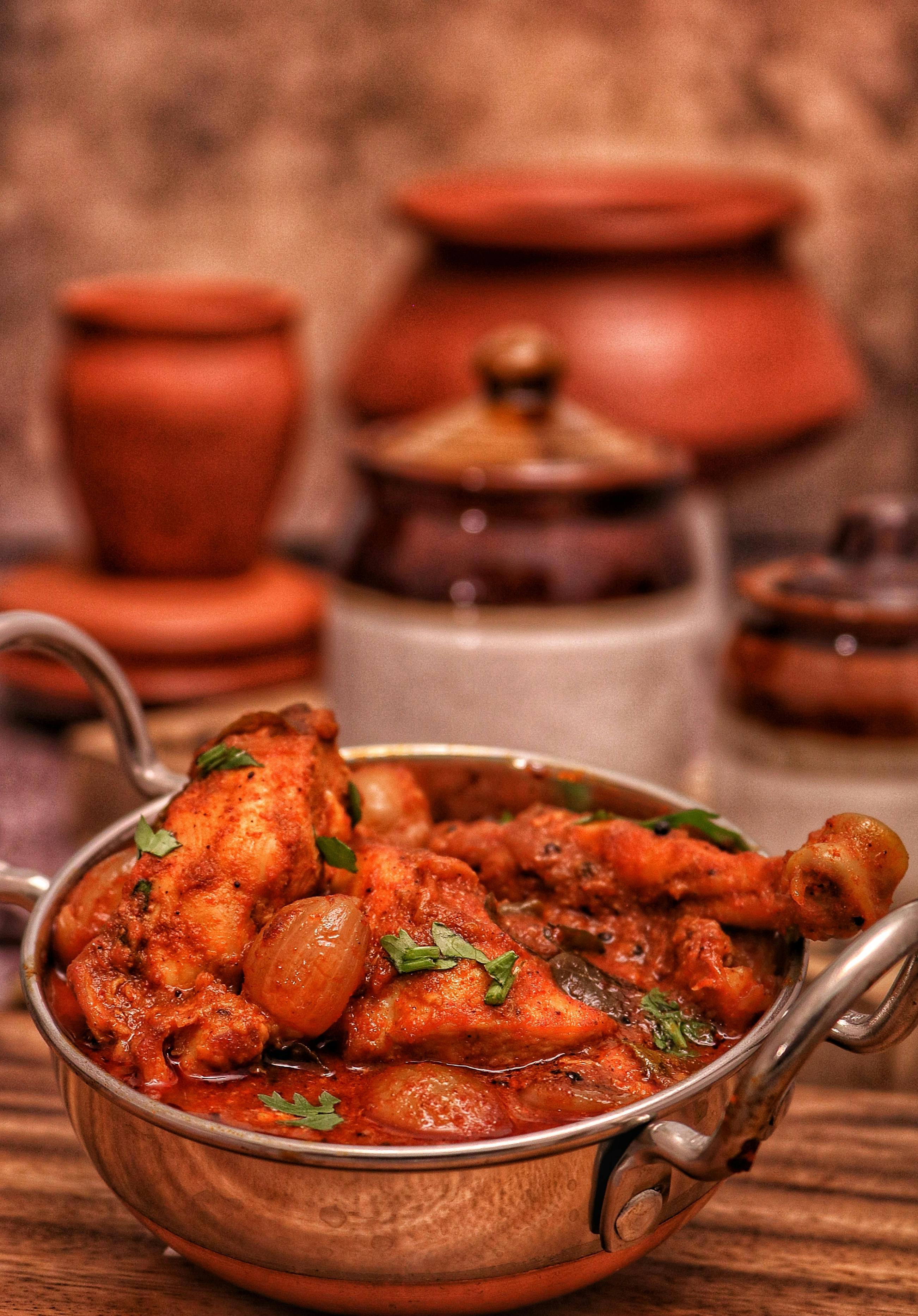
Photo: Saveurs Secretes / Pexels
Indian
Chettinad Chicken
The diets react (see scores below)
Common Ingredients
- chicken thighs
- dried red chiles
- coconut
- fennel seeds
- star anise
- curry leaves
- tamarind
- ginger
Specific recipes may vary.
Incompatible with 2 of 11 diets
Diet Ratings
Chettinad Chicken is built on a keto-friendly base of chicken thighs (high fat, quality protein) and coconut (healthy fats, MCTs), with aromatic spices that contribute negligible carbs. The main concerns are tamarind, which adds a small but meaningful amount of sugar/net carbs (roughly 3-5g per serving depending on quantity), and the cumulative carb load from dried red chiles, coconut, and the spice blend. In typical restaurant or home preparation, tamarind paste can be used moderately and the overall dish can remain under 8-10g net carbs per serving, making it workable within a keto framework. However, heavily sauced or restaurant versions may use larger amounts of tamarind or add onion/tomato bases not listed here, pushing the carb count higher. With mindful portioning and home preparation controlling tamarind quantity, this dish is generally keto-compatible.
Strict keto practitioners flag tamarind as a concentrated source of sugars and argue that any meaningful tamarind use should disqualify a dish outright, especially since cumulative spice and coconut carbs already use up a notable portion of the daily budget. Some carnivore-adjacent keto adherents also caution against curry leaves and dried chiles in quantity.
Chettinad Chicken contains chicken thighs as the primary protein, which is animal flesh and a direct disqualifier under any definition of veganism. All remaining ingredients (dried red chiles, coconut, fennel seeds, star anise, curry leaves, tamarind, ginger) are plant-based, but the presence of chicken makes the dish entirely incompatible with a vegan diet. There is no ambiguity here.
Chettinad Chicken is an excellent paleo dish. Every ingredient aligns cleanly with paleo principles: chicken thighs are an unprocessed animal protein; dried red chiles, curry leaves, ginger, fennel seeds, star anise, and tamarind are all whole herbs, spices, and natural flavor agents available in nature; coconut is a paleo staple; and tamarind is a fruit-derived souring agent with no processing concerns. There are no grains, legumes, dairy, seed oils, refined sugars, or processed additives present. The dish is essentially a spice-rich, whole-food preparation that mirrors the kind of unprocessed, ingredient-forward cooking fully consistent with a hunter-gatherer food philosophy.
Chettinad Chicken is a spiced poultry dish that aligns reasonably well with Mediterranean diet principles in several respects. Chicken thighs are an acceptable moderate protein source (poultry is permitted a few times per week). The dish is rich in whole spices and aromatics — dried red chiles, fennel seeds, star anise, curry leaves, ginger, and tamarind — which are all whole, minimally processed plant-based ingredients analogous to the herb and spice traditions of Mediterranean cooking. However, coconut is a notable flag: it is high in saturated fat and is not a traditional Mediterranean ingredient, diverging from the olive oil-as-primary-fat principle. The dish is not processed or sugar-laden, and the spice profile is wholesome, but the cooking fat context (likely coconut oil or coconut-based sauce) and the non-Mediterranean culinary tradition place it in the caution zone. Overall, this is a reasonable occasional dish if coconut content is moderate and olive oil or a neutral oil is substituted where possible.
Some modern Mediterranean diet practitioners argue that whole-food plant ingredients like coconut and diverse global spice blends are compatible with the diet's anti-inflammatory spirit, even if not traditionally Mediterranean. Conversely, stricter clinical interpretations (e.g., Lyon Diet Heart Study framework) would flag the saturated fat from coconut as inconsistent with the diet's cardiovascular benefits.
Chettinad Chicken is heavily incompatible with the carnivore diet. While chicken thighs are an acceptable animal protein, the dish is defined by an extensive array of plant-based ingredients: dried red chiles, coconut, fennel seeds, star anise, curry leaves, tamarind, and ginger. Tamarind and coconut add significant plant carbohydrates and plant compounds, while the spices and aromatics are entirely plant-derived. The carnivore diet excludes all plant foods — vegetables, fruits, seeds, spices, and plant oils — without exception. This dish is essentially a spice-forward plant-heavy curry that happens to contain chicken, making it fundamentally incompatible as a whole dish. The chicken thighs themselves would be approvable in isolation, but the preparation renders the dish an avoid.
Chettinad Chicken as described is fully Whole30 compliant. Every ingredient listed — chicken thighs, dried red chiles, coconut, fennel seeds, star anise, curry leaves, tamarind, and ginger — is a whole, unprocessed food that falls squarely within the allowed categories of meat, vegetables/plants, natural fats, herbs, and spices. There are no grains, legumes, dairy, added sugars, or any other excluded ingredients. Tamarind is a natural fruit-based souring agent and is permitted. Coconut (whether shredded, milk, or cream) is a natural fat and is allowed. This is a classic example of a whole-food, spice-forward dish that aligns perfectly with the Whole30 philosophy.
Chettinad Chicken contains mostly low-FODMAP ingredients — chicken thighs, ginger, curry leaves, tamarind (small amounts), fennel seeds, star anise, and dried red chiles are all generally low-FODMAP at typical cooking quantities. However, coconut is dose-dependent: desiccated coconut is low-FODMAP at 1/4 cup (22g) but becomes high-FODMAP above that, and if coconut milk or cream is used (common in Chettinad recipes), it is low-FODMAP only at 1/2 cup per Monash. The bigger concern is that traditional Chettinad recipes frequently include onion and garlic as base aromatics — these are among the highest-FODMAP ingredients and would immediately push this dish into 'avoid' territory. As listed, the ingredient list omits onion and garlic, which is unusual for this dish. If the recipe truly excludes them or uses garlic-infused oil instead, the dish becomes borderline acceptable with attention to coconut quantity. Tamarind paste is low-FODMAP at 1 tablespoon. Fennel seeds and star anise at cooking amounts (small pinches) are low-FODMAP. Rating as caution because the absence of onion/garlic from the listed ingredients is atypical for this dish, and coconut quantity requires monitoring.
Monash University rates the individual listed ingredients as largely low-FODMAP at controlled portions, but clinical FODMAP practitioners would flag that authentic Chettinad recipes almost universally contain onion and garlic; a home cook following a traditional recipe would likely add these, making the dish high-FODMAP in practice. Additionally, coconut cream used in larger amounts (above 1/2 cup) crosses into moderate-FODMAP territory.
Chettinad Chicken presents a mixed DASH profile. On the positive side, chicken thighs provide lean protein (though higher in fat than chicken breast), and the dish features numerous DASH-friendly spices and aromatics — fennel seeds, star anise, curry leaves, ginger, and tamarind — that contribute potassium and antioxidants with minimal sodium. However, two ingredients raise concerns: (1) Coconut is a tropical ingredient high in saturated fat, which DASH guidelines explicitly limit. Traditional Chettinad recipes use grated or ground coconut in significant quantities, which can substantially raise the saturated fat content of the dish. (2) Chicken thighs with skin add additional saturated fat compared to skinless white meat. The dish is otherwise relatively low in sodium (no added salt listed, though preparation typically includes salt) and free from processed ingredients. If prepared with skinless chicken thighs, coconut used sparingly, and sodium kept low, this dish can fit within a DASH framework in moderate portions — but as traditionally made, the coconut content warrants caution.
NIH DASH guidelines explicitly restrict saturated fat and identify tropical oils/coconut as foods to limit, making traditional coconut-heavy Chettinad preparations a concern. However, some updated clinical interpretations note that whole coconut (as opposed to coconut oil) contains fiber and is consumed in a food matrix that may moderate its impact on LDL cholesterol, and that the overall anti-inflammatory spice profile of the dish may offer cardiovascular benefits not captured by strict macronutrient analysis.
Chettinad Chicken presents a mixed Zone Diet profile. The primary protein — chicken thighs — is leaner than red meat but higher in saturated fat than skinless chicken breast, making it an 'unfavorable' protein choice by strict Zone standards. The spice blend (dried red chiles, fennel seeds, star anise, curry leaves, ginger) is excellent from an anti-inflammatory and polyphenol standpoint, which aligns well with Sears' later emphasis on polyphenol-rich foods. Tamarind adds some carbohydrate load with moderate glycemic impact — manageable in small amounts. The main concern is coconut, which is high in saturated fat and would add significantly to the fat block. In traditional Chettinad preparation, coconut is used in meaningful quantities for the masala paste, which can push saturated fat content well above Zone-friendly levels and disrupt the 30% fat target with the wrong fat profile. To adapt this dish for Zone compliance, one would need to: (1) substitute chicken breast for thighs, (2) reduce or eliminate coconut or replace with a small amount of olive oil-based fat, and (3) pair with low-glycemic vegetables to complete the carbohydrate block. As traditionally prepared, the dish requires significant modification to fit Zone ratios cleanly.
Some Zone practitioners following Sears' later work (particularly 'The OmegaRx Zone' and 'Toxic Fat') may be more permissive about coconut fat, as medium-chain triglycerides (MCTs) in coconut have a different metabolic pathway than long-chain saturated fats. Additionally, chicken thighs, while fattier than breast, are still a reasonable protein source within Zone block calculations — the total fat from thighs can be accounted for by reducing added fat blocks. In this reading, Chettinad Chicken with portion control could score a 6.
Chettinad Chicken is a spice-forward South Indian dish with a genuinely mixed anti-inflammatory profile. On the positive side, it features an impressive array of anti-inflammatory spices and aromatics: dried red chiles (capsaicin reduces CRP and NF-κB signaling), ginger (gingerols and shogaols are well-documented anti-inflammatory compounds), fennel seeds (anethole has demonstrated anti-inflammatory effects), star anise (trans-anethole, antioxidant flavonoids), curry leaves (carbazole alkaloids with antioxidant properties), and tamarind (polyphenols, tartaric acid). These spice components collectively represent a strong anti-inflammatory base. Chicken thighs are a lean-to-moderate protein source — acceptable in the anti-inflammatory framework as lean poultry, though higher in saturated fat than breast meat. The primary complication is coconut, which is high in saturated fat (lauric acid). Most anti-inflammatory authorities, including Dr. Weil, recommend limiting saturated fat; coconut is a contested ingredient. If the dish is cooked in coconut oil rather than olive oil, this further tips the balance. The overall dish scores positively on its spice profile but is held back by the saturated fat content from coconut and the use of skin-on thighs in traditional preparation.
Coconut's role is the key point of contention: mainstream anti-inflammatory nutrition (Weil's pyramid, IF Rating system) cautions against saturated fat including coconut fat, rating it as inflammatory. However, Paleo, AIP, and ancestral diet advocates (e.g., Chris Kresser, Mark Sisson) argue that lauric acid in coconut raises HDL proportionally and that traditional coconut-heavy diets correlate with low cardiovascular inflammation markers — making this a genuinely debated ingredient.
Chettinad Chicken is a protein-forward dish built on chicken, which is a GLP-1 positive. However, several ingredients raise meaningful concerns for GLP-1 patients. Chicken thighs are a fattier cut compared to breast — higher saturated fat content can worsen nausea, reflux, and bloating. Coconut adds significant saturated fat, which is a notable drawback for GLP-1 patients dealing with slowed gastric emptying. The dish is also heavily spiced with dried red chiles, which are known to worsen reflux and nausea — two of the most common GLP-1 side effects. The spice load in an authentic Chettinad preparation is quite high by design. Tamarind adds a modest amount of fiber and micronutrients, and fennel, star anise, and curry leaves are fine in small culinary quantities. But the combined fat load (thighs + coconut) plus the intense chili heat makes this a dish that many GLP-1 patients will struggle to tolerate, particularly in early weeks or during dose escalation. Modifying to skinless breast, reducing coconut, and dialing back the chili would improve the score substantially. As prepared traditionally, this lands solidly in caution territory.
Some GLP-1-informed dietitians are more permissive with coconut fat, noting that medium-chain triglycerides in coconut may digest more easily than long-chain saturated fats, and that the overall fat load depends heavily on the amount of coconut used. However, most GI-focused guidance for GLP-1 patients flags both high-fat meals and very spicy preparations as individual tolerance issues — patients vary considerably in how much chili heat they can handle without triggering nausea or reflux, so this dish may be tolerable for some patients and poorly tolerated by others.
*See how scores were generated at our methodology page.
Nutritional profile
Six traits that cut across every diet.
Fiber & Plants
How much whole-plant food and fiber it delivers.
Healthy Fats
The quality of its fats (unsaturated, omega-3).
Whole / Unprocessed
How close it is to its natural, unprocessed form.
Gut Gentle
How easy it is on digestion (low FODMAP, few irritants).
Low Glycemic
How little it spikes your blood sugar.
Protein Density
How much protein it packs per calorie.
Controversy Index
Higher controversy = more disagreement between diets.
Diet-Specific Tips
 Keto — 6/10
View tips
- Chicken thighs provide high-fat, quality protein — core keto protein
- Coconut adds healthy MCT fats with moderate net carbs
- Tamarind is the primary carb concern — use sparingly (1-2 tsp paste per serving)
- Spice blend (fennel, star anise, dried chiles, curry leaves) adds minimal net carbs
- No grains, starchy vegetables, or added sugars in base recipe
- Restaurant versions may include unlisted onions or tomatoes, raising carb count
- Overall net carbs manageable (~6-10g/serving) with portion control at home
 Paleo — 9/10
View tips
- Chicken thighs: unprocessed animal protein — fully approved
- Coconut: paleo staple fat and flavor source — fully approved
- Dried red chiles, curry leaves, ginger: whole spices and aromatics — fully approved
- Fennel seeds and star anise: whole spices with no processing concerns — fully approved
- Tamarind: natural fruit-derived souring agent — fully approved
- No grains, legumes, dairy, seed oils, refined sugar, or additives present
- Traditional preparation relies on whole spices rather than processed spice blends or packaged sauces
 Mediterranean — 5/10
View tips
- Chicken thighs are acceptable poultry — moderate consumption fits Mediterranean guidelines
- Whole spices and aromatics (chiles, fennel, star anise, ginger, tamarind) are wholesome plant-based ingredients
- Coconut is high in saturated fat and not a traditional Mediterranean ingredient, conflicting with olive oil primacy
- No refined grains, added sugars, or heavily processed ingredients
- Non-Mediterranean cuisine origin, but ingredient quality is largely whole-food based
 Whole30 — 9/10
View tips
- Chicken thighs: compliant protein
- Dried red chiles, fennel seeds, star anise, curry leaves, ginger: all compliant spices/aromatics
- Coconut: compliant natural fat (milk, cream, or shredded all allowed)
- Tamarind: compliant natural souring agent derived from fruit
- No grains, legumes, dairy, or added sugars present
- Dish is a whole-food preparation, not a recreation of a junk food or baked good
 Low-FODMAP — 5/10
View tips
- Chicken thighs are low-FODMAP and safe as primary protein
- Coconut (milk/cream/desiccated) is dose-dependent — low-FODMAP only at controlled portions
- Traditional Chettinad recipes typically include onion and garlic, which are high-FODMAP; their absence from the ingredient list is atypical
- Ginger is low-FODMAP at up to 1 teaspoon fresh
- Curry leaves, fennel seeds, star anise, and dried red chiles are low-FODMAP at cooking quantities
- Tamarind paste is low-FODMAP at 1 tablespoon per Monash University
- Risk level depends heavily on whether onion/garlic are present in the actual recipe used
 DASH — 4/10
View tips
- Coconut is high in saturated fat, which DASH guidelines explicitly restrict
- Chicken thighs are higher in saturated fat than skinless chicken breast
- Rich spice profile (fennel, star anise, curry leaves, ginger) is DASH-positive and adds flavor without sodium
- Tamarind contributes potassium and a tangy flavor without adding sodium
- No processed ingredients or added sugars
- Sodium level depends on preparation — dish as listed has no high-sodium components but cooking typically adds salt
- Skinless chicken thighs and reduced coconut would significantly improve DASH compatibility
 Zone — 5/10
View tips
- Chicken thighs are higher in saturated fat than Zone-preferred skinless chicken breast
- Coconut content introduces significant saturated fat, conflicting with Zone's monounsaturated fat preference
- Rich anti-inflammatory spice profile (chiles, ginger, curry leaves) aligns with Sears' polyphenol emphasis
- Tamarind adds moderate carbohydrate load — manageable in small portions
- No high-glycemic carbohydrates present in the dish itself
- Dish lacks a carbohydrate block component — would need to be paired with low-GI vegetables
- Traditional preparation may use coconut oil as well, compounding saturated fat concerns
 Anti-Inflammatory — 6/10
View tips
- Strong anti-inflammatory spice profile: dried red chiles (capsaicin), ginger, fennel, star anise, curry leaves
- Tamarind adds polyphenols and antioxidant compounds
- Chicken thighs are acceptable lean poultry but higher in saturated fat than breast
- Coconut is high in saturated fat — cautioned by mainstream anti-inflammatory guidelines
- No processed ingredients, artificial additives, or refined carbohydrates
- Traditional whole-food preparation aligns with anti-inflammatory principles
- Fat content and cooking oil choice (coconut vs. olive oil) significantly affect the inflammatory profile
 GLP-1 Friendly — 4/10
View tips
- Chicken thighs are a higher-fat protein source — saturated fat load worsens GLP-1 GI side effects
- Coconut adds significant saturated fat, increasing overall fat density of the dish
- Heavy dried red chili content is a known reflux and nausea trigger for GLP-1 patients
- Good protein source overall from chicken — supports the #1 priority
- Tamarind, fennel, and curry leaves contribute minor fiber and micronutrient value
- Not GLP-1 friendly as traditionally prepared — meaningful modifications needed
- Portion sensitivity applies: a small serving may be tolerated better than a full portion