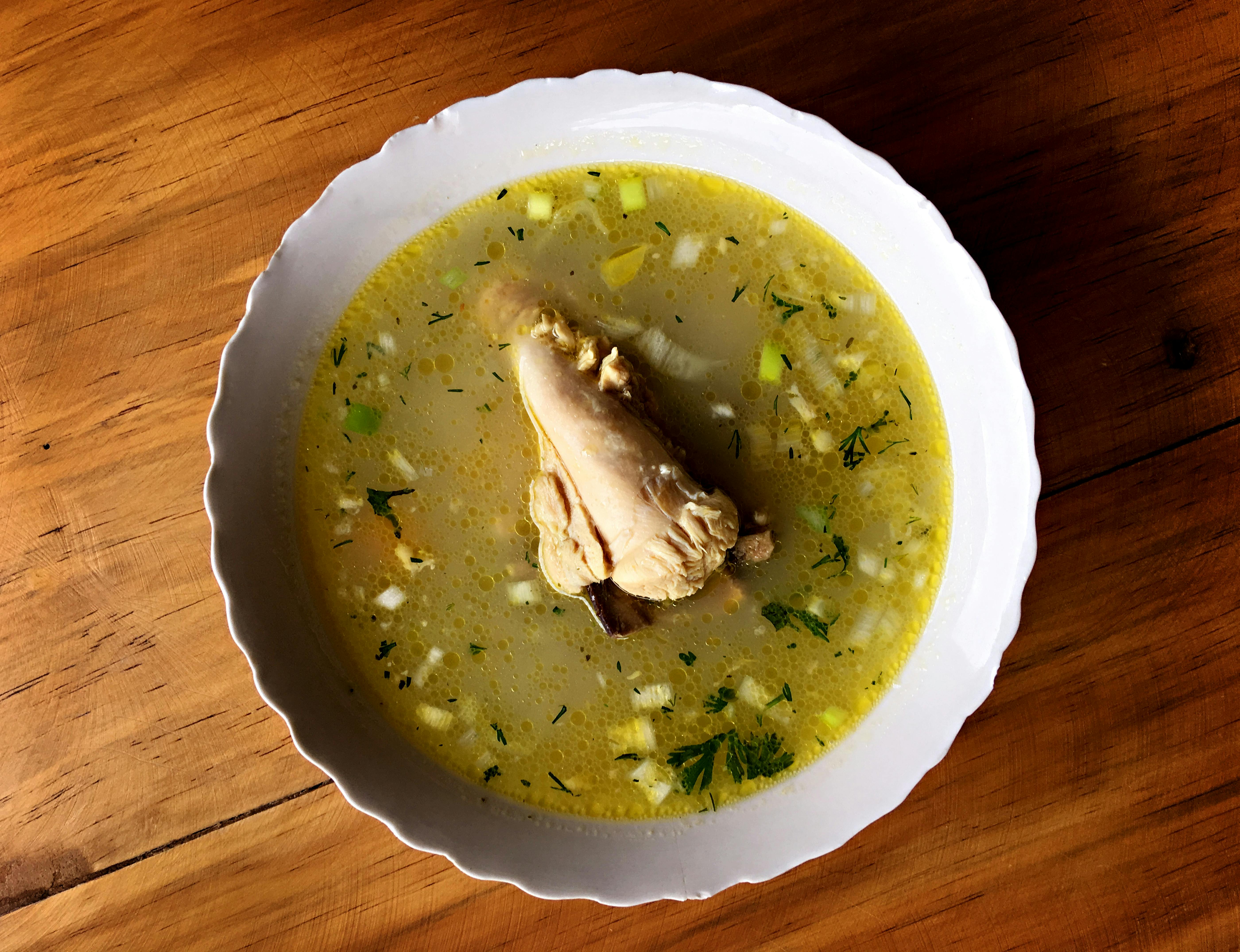
Photo: DΛVΞ GΛRCIΛ / Pexels
American
Chicken and Rice Soup
The diets react (see scores below)
Common Ingredients
- chicken breast
- white rice
- carrots
- celery
- onion
- chicken broth
- parsley
- black pepper
Specific recipes may vary.
Incompatible with 6 of 11 diets
Diet Ratings
Chicken and Rice Soup is incompatible with a ketogenic diet primarily due to white rice, which is a high-glycemic grain containing approximately 28g of net carbs per half-cup cooked serving. Even a modest bowl of this soup could easily deliver 30-50g of net carbs from the rice alone, instantly consuming or exceeding the entire daily keto carb budget. The remaining ingredients (carrots, onion) also contribute additional net carbs. While chicken breast and celery are keto-friendly, and chicken broth is acceptable, the white rice is a non-negotiable disqualifier. There is no portion size small enough to make a standard serving of this dish keto-compatible while still being a satisfying meal.
Chicken and Rice Soup contains multiple animal products that are categorically excluded from a vegan diet. Chicken breast is poultry (animal flesh), and chicken broth is derived from animal bones and tissue. Both are direct animal products with no ambiguity whatsoever. The remaining ingredients — white rice, carrots, celery, onion, parsley, and black pepper — are all plant-based, but the presence of chicken and chicken broth makes this dish entirely incompatible with a vegan diet.
Chicken and Rice Soup is disqualified by the inclusion of white rice, a grain that is explicitly excluded from the Paleo diet. All grains — including white rice — are avoided due to their anti-nutrient content (lectins, phytates) and the fact that they were not part of the Paleolithic diet. The remaining ingredients (chicken breast, carrots, celery, onion, parsley, black pepper) are all paleo-approved, and commercial chicken broth may also contain added salt or preservatives, adding a secondary concern. The dish as a whole cannot be considered paleo-compatible in its standard form.
Chicken and rice soup sits in acceptable-but-not-ideal territory for the Mediterranean diet. Chicken breast is a lean poultry protein, permitted in moderation (a few times per week), and the vegetables (carrots, celery, onion, parsley) are squarely Mediterranean. However, white rice rather than a whole grain like farro, barley, or brown rice is the main carbohydrate, which conflicts with modern Mediterranean dietary guidelines favoring whole grains. The dish is minimally processed and low in saturated fat, which is a positive. The absence of olive oil (no added healthy fat) and the use of refined grain are the two main limiting factors. Overall, this is a light, wholesome soup that fits within the diet's broader spirit but falls short of being a core staple.
Some traditional Mediterranean cuisines — particularly in Greece, Turkey, and the Levant — do incorporate white rice regularly in soups and pilafs (e.g., Greek avgolemono), and moderate white rice consumption is accepted in several regional interpretations. From this perspective, the soup could be viewed more favorably, especially if prepared with a drizzle of extra virgin olive oil.
Chicken and Rice Soup is fundamentally incompatible with the carnivore diet. While chicken and chicken broth are animal-derived, the dish contains multiple plant-based ingredients: white rice (a grain), carrots and celery (vegetables), onion (a vegetable), and parsley (an herb). These plant foods are categorically excluded from the carnivore diet. The combination of a grain (rice) alongside vegetables and aromatics makes this a classic omnivore comfort food with only incidental carnivore-compatible components. Even if one were to strain out the solids and drink only the broth, the broth itself was simmered with plant ingredients. A carnivore-compliant version would require removing all plant ingredients entirely — leaving only chicken and pure bone broth with salt.
White rice is a grain and is explicitly excluded on the Whole30 program. All grains — including rice — are eliminated for the full 30 days. The rest of the ingredients (chicken breast, carrots, celery, onion, parsley, black pepper) are fully compliant, and chicken broth is compliant provided it contains no added sugar, gluten, or other excluded additives. However, the presence of white rice makes this dish non-compliant as written. To make it Whole30-compatible, simply omit the rice or substitute with a compliant vegetable like cauliflower rice or diced potatoes.
This classic chicken and rice soup contains two high-FODMAP ingredients that make it unsuitable during the elimination phase: onion and standard chicken broth. Onion is one of the highest-fructan foods tested by Monash University and is high-FODMAP at any serving size — even small amounts cooked into a dish can leach fructans into the broth, making the entire liquid high-FODMAP. Commercial chicken broth frequently contains onion and/or garlic (as whole ingredients or 'natural flavors'), compounding the fructan load significantly. Celery is low-FODMAP at small servings (under 10g per Monash) but becomes moderate-to-high at a standard soup serving. Chicken breast, white rice, carrots (up to 1 cup), parsley, and black pepper are all low-FODMAP at standard servings. However, the onion and likely broth alone disqualify this dish as written. A low-FODMAP version is achievable by substituting onion with the green tops of scallions/spring onions, using garlic-infused oil for flavor, and using a certified low-FODMAP or homemade FODMAP-safe broth.
Chicken and Rice Soup contains many DASH-friendly ingredients — lean chicken breast, vegetables (carrots, celery, onion), and herbs — but the primary concern is the chicken broth, which in its standard commercial form is high in sodium, often contributing 800–1,000mg or more per serving. This easily pushes the dish toward or beyond DASH sodium limits in a single serving. White rice is also a refined grain rather than a whole grain, which DASH de-emphasizes in favor of brown rice or other whole grains. The vegetable content and lean protein are clear positives. If made with low-sodium or homemade broth and substituted with brown rice, this dish would comfortably score in the 8–9 range and earn an 'approve' verdict.
Chicken and Rice Soup sits squarely in Zone 'caution' territory. The protein component — chicken breast — is an ideal Zone lean protein, and the vegetables (carrots, celery, onion, parsley) are favorable low-glycemic carb contributors. However, white rice is a high-glycemic, unfavorable carbohydrate in Zone terminology. Dr. Sears explicitly classifies white rice as an unfavorable carb due to its rapid glucose response and lack of fiber, which can disrupt eicosanoid balance. The soup as typically prepared will skew the carbohydrate block heavily toward the white rice, making it difficult to achieve the 40/30/30 ratio without careful portioning. The dish is not a 'avoid' because the rice portion can be reduced significantly (using just a small amount as one carb block) while the vegetables pick up the remaining carb allotment, and chicken breast anchors the protein side perfectly. With disciplined portioning — a small amount of rice, generous vegetables, and a proper serving of chicken — this can be made Zone-compliant. As served in most recipes or restaurants, however, the rice-to-vegetable ratio is typically inverted from what Zone recommends, making it a caution-level dish requiring modification.
Chicken and rice soup is a nutritionally moderate dish from an anti-inflammatory perspective. On the positive side, lean chicken breast is a clean protein source that falls squarely in the 'moderate' tier of anti-inflammatory eating, and the vegetable base — carrots, celery, and onion — provides meaningful antioxidants, flavonoids (quercetin from onion), and beta-carotene from carrots. Parsley adds polyphenols and vitamin K, and black pepper contains piperine, which has mild anti-inflammatory properties and enhances absorption of other phytonutrients. The overall dish is low in saturated fat, free of trans fats, refined sugar, and processed additives, and is hydrating and easily digestible. The main limitation is white rice: a refined carbohydrate with a relatively high glycemic index that lacks the fiber, minerals, and phytonutrients of whole grains like brown rice, farro, or barley. Refined carbohydrates can modestly elevate blood glucose and, over time, contribute to low-grade inflammation. The dish also lacks omega-3 fatty acids, dark leafy greens, legumes, or potent anti-inflammatory spices like turmeric or ginger that would push it into the 'approve' tier. Swapping white rice for brown rice or adding turmeric and ginger would meaningfully improve the anti-inflammatory profile. As presented, this is a clean, wholesome dish that is neutral-to-mildly beneficial — appropriate in moderation and far better than most comfort foods, but not an anti-inflammatory standout.
Chicken and rice soup is a well-suited meal for GLP-1 patients. Chicken breast provides lean, high-quality protein with minimal fat, supporting the priority goal of preserving muscle mass during weight loss. The broth base is hydrating and easy to digest, directly addressing the slowed gastric emptying and reduced thirst sensation associated with GLP-1 medications. Vegetables (carrots, celery, onion) contribute fiber, micronutrients, and additional water content. The overall dish is low in fat, gentle on the stomach, and works well in small portions. The one moderate drawback is white rice, which is a refined grain with lower fiber and nutrient density compared to brown rice or other whole grains, and has a higher glycemic index. However, in the context of a broth-based soup where rice is a minor component by volume, this is a limited concern. The dish scores high on digestibility, protein quality, hydration support, and small-portion friendliness.
*See how scores were generated at our methodology page.
Nutritional profile
Six traits that cut across every diet.
Fiber & Plants
How much whole-plant food and fiber it delivers.
Healthy Fats
The quality of its fats (unsaturated, omega-3).
Whole / Unprocessed
How close it is to its natural, unprocessed form.
Gut Gentle
How easy it is on digestion (low FODMAP, few irritants).
Low Glycemic
How little it spikes your blood sugar.
Protein Density
How much protein it packs per calorie.
Controversy Index
Higher controversy = more disagreement between diets.
Diet-Specific Tips
 Mediterranean — 5/10
View tips
- Chicken breast is a lean, acceptable poultry protein in moderation
- White rice is a refined grain; whole grains (barley, farro) would be preferred by modern Mediterranean guidelines
- Vegetables (carrots, celery, onion, parsley) are strongly Mediterranean
- No olive oil present — the primary fat source of the Mediterranean diet is absent
- Minimal processing and no added sugars or saturated fat is a positive
- Traditional Mediterranean cuisines do include white rice in soups, lending some regional legitimacy
 DASH — 6/10
View tips
- Standard chicken broth is high in sodium, often 800–1,000mg per serving, conflicting with DASH sodium limits of <2,300mg/day (standard) or <1,500mg/day (low-sodium)
- Chicken breast is a lean protein, strongly aligned with DASH guidelines
- Carrots, celery, and onion provide potassium, fiber, and micronutrients consistent with DASH vegetable servings
- White rice is a refined grain; DASH recommends whole grains such as brown rice
- Low-sodium broth would significantly improve the DASH compatibility of this dish
- No saturated fat, added sugar, or other problematic ingredients present
 Zone — 5/10
View tips
- Chicken breast is an ideal Zone lean protein source
- White rice is explicitly classified as an 'unfavorable' high-glycemic carbohydrate in Zone methodology
- Vegetables (carrots, celery, onion) are favorable low-glycemic Zone carbs
- Typical preparation is rice-heavy, skewing carb blocks toward unfavorable sources
- Can be made Zone-compliant by minimizing rice and maximizing vegetables
- No significant fat component — would need added monounsaturated fat (e.g., olive oil drizzle) to complete the 30% fat block
- Broth-based preparation keeps saturated fat low, which is a Zone positive
 Anti-Inflammatory — 5/10
View tips
- Lean chicken breast is an acceptable moderate-tier protein with no saturated fat concerns
- White rice is a refined carbohydrate — raises glycemic load and lacks fiber compared to whole grain alternatives
- Carrots and onions contribute antioxidants (beta-carotene, quercetin) with mild anti-inflammatory benefit
- Parsley adds polyphenols and vitamin K
- Black pepper (piperine) has minor anti-inflammatory activity
- No omega-3 fatty acids, legumes, or potent anti-inflammatory spices (turmeric, ginger) present
- No trans fats, added sugars, processed additives, or high omega-6 oils — a clean ingredient list
 GLP-1 Friendly — 8/10
View tips
- Lean chicken breast delivers high-quality protein with low fat — ideal for muscle preservation on GLP-1s
- Broth base actively supports hydration, which GLP-1 patients struggle to maintain
- Easy to digest and gentle on the stomach, well-suited for days with nausea or GI side effects
- White rice is a refined grain — lower fiber and higher glycemic impact than whole grain alternatives; substituting brown rice or farro would improve the rating
- Vegetables add fiber, micronutrients, and water content without adding fat or significant calories
- Works well in small portions, consistent with the 4-5 small meal pattern recommended for GLP-1 patients
- No problematic ingredients — no high-fat additions, no frying, no added sugar, no carbonation