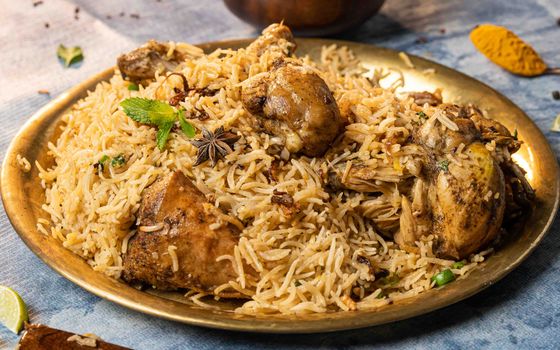
Photo: gourav sarkar / Pexels
Indian
Chicken Biryani
The diets react (see scores below)
Common Ingredients
- basmati rice
- chicken
- yogurt
- fried onions
- saffron
- ginger
- garlic
- whole spices
Specific recipes may vary.
Incompatible with 6 of 11 diets
Diet Ratings
Chicken Biryani is fundamentally incompatible with a ketogenic diet due to its primary ingredient: basmati rice. A standard serving (1.5–2 cups) contains approximately 60–80g of net carbs from rice alone, which far exceeds the entire daily keto limit of 20–50g net carbs. The remaining ingredients — chicken, yogurt, spices, fried onions — are largely keto-friendly or low-carb, but they cannot offset the massive carbohydrate load from the rice base. Fried onions also add a small but non-trivial amount of carbs. This dish, as traditionally prepared, will definitively break ketosis.
Chicken Biryani contains two direct animal products: chicken (poultry) and yogurt (dairy). Both are unambiguously excluded under all vegan definitions. The remaining ingredients — basmati rice, fried onions, saffron, ginger, garlic, and whole spices — are plant-based, but the presence of chicken and yogurt makes this dish fundamentally incompatible with a vegan diet. A vegan adaptation would require substituting chicken with a plant-based protein (e.g., chickpeas, tofu, or jackfruit) and replacing yogurt with a non-dairy alternative such as coconut or soy yogurt.
Chicken Biryani contains multiple non-paleo ingredients that make it clearly incompatible with the diet. Basmati rice is a grain and is excluded under strict paleo rules. Yogurt is a dairy product, also excluded. Fried onions are typically prepared in seed oils (sunflower or vegetable oil), adding another violation. While chicken, saffron, ginger, garlic, and whole spices are all paleo-approved, the foundational ingredients — rice, yogurt, and seed-oil-fried onions — disqualify this dish. There is broad consensus among paleo authorities on the exclusion of grains and dairy.
Chicken Biryani contains several Mediterranean-compatible elements — chicken (a moderate-consumption poultry protein), yogurt (acceptable dairy), and aromatic spices, garlic, and ginger that align well with Mediterranean flavor principles. However, basmati rice is a refined/white grain rather than the whole grains prioritized by the Mediterranean diet, and fried onions introduce oil of unspecified type (not olive oil) and additional calories. The dish lacks vegetables, legumes, or olive oil as a fat source. As a poultry-based dish with dairy, it fits the 'moderate' category, but the refined grain base and non-Mediterranean cooking method temper enthusiasm. Enjoyed occasionally as part of a broader Mediterranean-style eating pattern, it is acceptable but not a staple.
Some Mediterranean diet authorities note that basmati rice has a lower glycemic index than many white rices and is used in Eastern Mediterranean and Middle Eastern cuisines (e.g., Persian pilaf traditions), suggesting it may be more compatible than standard refined grains. However, modern clinical Mediterranean diet guidelines consistently prioritize whole grains, placing white rice dishes in a moderation category.
Chicken Biryani is fundamentally incompatible with the carnivore diet. The dish is built on basmati rice, a grain that is entirely excluded from carnivore eating. Beyond the rice, the recipe includes fried onions (plant-based), saffron (plant spice), ginger (plant root), garlic (plant bulb), and a blend of whole spices — all of which are plant-derived and excluded. Yogurt is the only ingredient that might pass scrutiny in some carnivore circles, and chicken is acceptable, but these two ingredients are completely overwhelmed by the plant-based foundation of the dish. This is a classic grain-and-spice-forward dish with no viable carnivore adaptation in its traditional form.
Chicken Biryani contains multiple excluded ingredients that make it clearly non-compliant with Whole30. Basmati rice is a grain, which is explicitly excluded for the entire 30 days. Yogurt is a dairy product, also explicitly excluded. Fried onions are commonly prepared with flour coating or cooked in non-compliant oils, adding further concern. The chicken, saffron, ginger, garlic, and whole spices are all compliant, but the foundational ingredients — rice and yogurt — are both hard exclusions with no exceptions in the Whole30 program.
Traditional Chicken Biryani contains multiple high-FODMAP ingredients that make it unsuitable during the elimination phase. Garlic is one of the highest-FODMAP foods (very high in fructans even in tiny amounts). Fried onions are a major fructan source and are used in significant quantities in biryani, often as a key flavouring base. Yogurt contains lactose and is typically used in substantial marinading quantities. Together, these three ingredients alone make a standard serving of Chicken Biryani clearly high-FODMAP. Basmati rice and chicken are individually low-FODMAP, and ginger and whole spices (such as cardamom, cloves, cinnamon, star anise) are generally low-FODMAP at culinary amounts — but the garlic, onion, and yogurt components are deal-breakers for elimination phase compliance.
Chicken Biryani contains several DASH-compatible ingredients — lean chicken, yogurt, aromatic spices, and basmati rice — but the dish as commonly prepared raises concerns. Fried onions add significant saturated or refined oil fat depending on preparation method. Basmati rice is a refined white grain rather than a whole grain, which DASH de-emphasizes. Yogurt is a DASH-friendly ingredient, though full-fat yogurt (common in traditional biryani) is not the preferred low-fat form. The sodium load depends heavily on preparation — restaurant versions and those made with packaged spice blends or bouillon can be quite high in sodium, conflicting with DASH's <2,300mg/day limit. On the positive side, the dish is rich in lean protein, uses anti-inflammatory spices (ginger, garlic, saffron, whole spices), and avoids obvious processed ingredients. With modifications — using low-fat yogurt, baking/caramelizing onions instead of frying, limiting added salt, and incorporating a portion of brown basmati — this dish can be made more DASH-compatible. As traditionally consumed, it warrants moderation rather than outright avoidance.
NIH DASH guidelines emphasize refined grain limitation and low-fat dairy, which would flag traditional biryani due to white basmati rice and possible full-fat yogurt; however, updated clinical interpretations note that basmati rice has a lower glycemic index than many refined grains, and some DASH practitioners are more permissive with full-fat fermented dairy like yogurt given emerging cardiovascular neutrality data, potentially rating a well-prepared home version more favorably.
Chicken Biryani presents a mixed Zone profile. The chicken is a lean, Zone-favorable protein source, and the spices (ginger, garlic, saffron, whole spices) are anti-inflammatory and polyphenol-rich — exactly what Dr. Sears encourages. The yogurt adds a modest protein boost and probiotics. However, basmati rice is the primary carbohydrate, and while it has a lower glycemic index than white rice, it is still a grain-based, starchy carb that Zone methodology classifies as 'unfavorable.' A typical restaurant serving is rice-heavy, skewing the macronutrient ratio far toward carbohydrates and making the 40/30/30 balance difficult to achieve without significant portion control. Fried onions add saturated fat and likely omega-6-heavy frying oil, which conflicts with Zone's anti-inflammatory fat priorities. To fit Zone principles, one would need to significantly reduce the rice portion, increase the chicken-to-rice ratio, and pair the dish with a large side of low-glycemic vegetables to rebalance the carb block profile.
Some Zone practitioners note that basmati rice, particularly aged long-grain basmati, has a glycemic index (around 50-58) meaningfully lower than most white rices, making it one of the more Zone-compatible grains. Dr. Sears' later writings (e.g., The Mediterranean Zone) show increasing acceptance of whole and lower-GI grains in modest portions. In this view, a carefully portioned biryani — emphasizing chicken, using a small rice serving, and pairing with a vegetable side — can be reasonably Zone-balanced, potentially pushing the score toward a 6.
Chicken Biryani presents a mixed anti-inflammatory profile. On the positive side, the dish contains several genuinely beneficial ingredients: ginger and garlic are well-established anti-inflammatory spices with active compounds (gingerols, allicin) that reduce inflammatory markers; saffron contains crocin and safranal with antioxidant properties; whole spices typically include cardamom, cloves, cinnamon, bay leaves, and cumin — all with meaningful anti-inflammatory phytochemicals. Chicken (lean protein) is categorized as moderate/acceptable. Yogurt provides probiotics that support gut health, which is linked to reduced systemic inflammation. Basmati rice, however, is a refined-to-moderate glycemic carbohydrate — white basmati has a lower glycemic index than standard white rice but is still a refined grain, lacking the fiber and phytonutrient density of whole grains. The biggest concern is the fried onions, which are typically deep-fried in high-omega-6 seed oils (sunflower or vegetable oil), introducing potentially pro-inflammatory oxidized oils into what would otherwise be a reasonably anti-inflammatory dish. The overall dish is not inherently inflammatory, but the cooking method (frying onions) and refined grain base prevent a full approval. In a home preparation using olive oil or ghee in moderation for the onions, the score would rise toward 6–7.
Some anti-inflammatory practitioners, particularly those aligned with Dr. Weil's framework, would view this dish more favorably given its generous use of anti-inflammatory spices and lean protein — the spice blend alone may offset concerns about the rice and cooking oils. Conversely, stricter anti-inflammatory protocols (such as those targeting autoimmune conditions) would flag white basmati as a refined carbohydrate and raise concerns about the frying oil's omega-6 load and potential acrylamide formation.
Chicken Biryani offers meaningful protein from chicken and digestive benefits from ginger and garlic, but presents several GLP-1-specific concerns. The fried onions add saturated fat and are hard to digest, which can worsen nausea and bloating on GLP-1 medications. Basmati rice is a refined carbohydrate with relatively low fiber, contributing empty calories when appetite is already suppressed. Whole spices (cloves, cardamom, bay leaf) are generally well-tolerated in small amounts, but the cumulative spice load of a traditional biryani preparation may irritate a slowed GI tract. Yogurt is a positive ingredient — it adds protein and probiotics — but is often used in small quantities in this dish. The dish is also typically served in large portions, which conflicts with the small-meal approach recommended for GLP-1 patients. A modified version with extra chicken, less rice, no fried onions, and a smaller portion can shift this toward acceptable.
Some GLP-1-focused dietitians consider well-portioned chicken biryani a reasonable real-world meal choice given its accessible protein content and the practicality of eating culturally familiar foods — individual tolerance to spice and fat load varies significantly among patients, particularly in the early weeks of dose escalation.
*See how scores were generated at our methodology page.
Nutritional profile
Six traits that cut across every diet.
Fiber & Plants
How much whole-plant food and fiber it delivers.
Healthy Fats
The quality of its fats (unsaturated, omega-3).
Whole / Unprocessed
How close it is to its natural, unprocessed form.
Gut Gentle
How easy it is on digestion (low FODMAP, few irritants).
Low Glycemic
How little it spikes your blood sugar.
Protein Density
How much protein it packs per calorie.
Controversy Index
Higher controversy = more disagreement between diets.
Diet-Specific Tips
 Mediterranean — 5/10
View tips
- Chicken is an acceptable moderate-protein source in Mediterranean diet
- Yogurt is a compatible dairy component
- Basmati rice is a refined/white grain, not the preferred whole grain
- Fried onions suggest non-olive-oil cooking fat
- Spices, garlic, and ginger are Mediterranean-friendly aromatics
- No vegetables or legumes present to boost plant-food content
- Not a traditional Mediterranean dish but shares some compatible ingredients
 DASH — 5/10
View tips
- Lean chicken is a DASH-approved protein source
- Basmati rice is a refined white grain, not a DASH-preferred whole grain
- Fried onions add significant oil/fat content — frying method matters considerably
- Yogurt is DASH-compatible, but full-fat versions are not the preferred form
- Sodium content varies widely — restaurant and packaged spice versions can be very high
- Spices (ginger, garlic, saffron, whole spices) are anti-inflammatory and DASH-neutral
- Portion control is important — rice-heavy servings can displace more nutrient-dense foods
- Home-prepared versions with low-sodium and low-fat modifications score significantly higher
 Zone — 5/10
View tips
- Basmati rice is a lower-GI grain but still an 'unfavorable' Zone carb; typical biryani portions are rice-heavy and carb-skewed
- Chicken is a lean, Zone-approved protein source that anchors the dish positively
- Yogurt provides additional protein and probiotic benefit, consistent with Zone anti-inflammatory goals
- Fried onions likely cooked in omega-6-heavy oil, conflicting with Zone's monounsaturated/anti-inflammatory fat preferences
- Spices (ginger, garlic, saffron) are strongly anti-inflammatory and polyphenol-rich — a Zone positive
- Dish requires significant portion adjustment (smaller rice serving, more chicken, vegetable side) to approach 40/30/30 macro balance
- No vegetables in the dish; Zone recommends 8 servings of vegetables per day, making a vegetable side essential
 Anti-Inflammatory — 5/10
View tips
- Ginger and garlic provide strong anti-inflammatory compounds (gingerols, allicin)
- Whole spices (cloves, cardamom, cinnamon) contribute polyphenols and antioxidants
- Saffron contains crocin with documented antioxidant activity
- Yogurt supports gut microbiome health, linked to reduced inflammation
- Fried onions typically prepared in high-omega-6 seed oils — a significant concern
- White basmati rice is a refined grain with moderate glycemic impact, lacking whole grain fiber
- Lean chicken is an acceptable moderate protein source in anti-inflammatory frameworks
- Overall dish quality highly dependent on cooking fat used for frying onions
 GLP-1 Friendly — 5/10
View tips
- Fried onions add saturated fat and are difficult to digest, worsening GLP-1 GI side effects
- Basmati rice is low in fiber and contributes refined carbohydrates with limited nutritional value per calorie
- Chicken provides solid protein but its density per serving depends heavily on the rice-to-chicken ratio
- Yogurt is a beneficial ingredient but typically present in small amounts
- Large traditional portion sizes conflict with GLP-1 small-meal guidance
- Whole spice load is generally tolerable but may cause GI irritation in sensitive patients
- Dish can be modified — more chicken, less rice, skip fried onions — to improve GLP-1 compatibility
Community
Healthiest Chicken Biryani recipes
One scanned recipe so far — scan yours to see how it stacks up.
Scan your Chicken Biryani recipe →