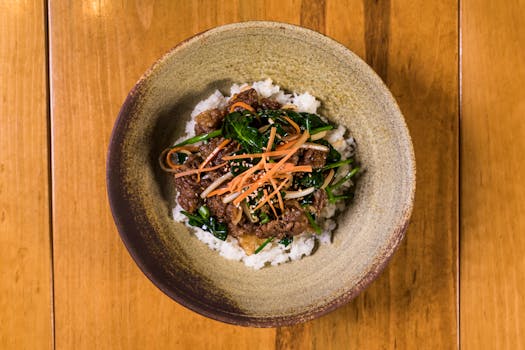
Photo: Luis Becerra Fotógrafo / Pexels
Korean
Chicken Bulgogi
The diets react (see scores below)
Common Ingredients
- chicken
- soy sauce
- sesame oil
- garlic
- Asian pear
- scallions
- sugar
- ginger
Specific recipes may vary.
Incompatible with 6 of 11 diets
Diet Ratings
Chicken Bulgogi contains two significant keto-incompatible ingredients: added sugar (a direct rule violation) and Asian pear (a high-sugar fruit used as a tenderizer/sweetener). Together these push the dish well beyond acceptable net carb limits. A standard serving of bulgogi marinade can contain 10-15g of sugar alone, and Asian pear adds additional natural sugars and carbs. While the base chicken, sesame oil, garlic, scallions, ginger, and soy sauce are keto-compatible or low-carb in reasonable amounts, the sugar and pear make this dish incompatible with ketosis in its traditional form. A keto-adapted version would need to substitute the sugar with a zero-carb sweetener and replace or omit the Asian pear entirely.
Chicken Bulgogi contains chicken as its primary protein, which is poultry — a direct animal product explicitly excluded under all vegan dietary frameworks. There is no ambiguity here: chicken is animal flesh, and no vegan organization or school of thought considers it acceptable. The remaining ingredients (soy sauce, sesame oil, garlic, Asian pear, scallions, sugar, ginger) are all plant-based, but the presence of chicken alone makes this dish entirely incompatible with a vegan diet.
Chicken Bulgogi contains multiple non-paleo ingredients that make this dish incompatible with the paleo diet. Soy sauce is a fermented soy (legume) product and also contains wheat (grain), making it doubly disqualifying. Sesame oil is a seed oil, explicitly excluded from paleo. Sugar is refined and excluded. While the chicken, garlic, Asian pear, scallions, and ginger are all paleo-approved, the foundational marinade ingredients — soy sauce, sesame oil, and sugar — are core to this dish and cannot simply be omitted without fundamentally changing it. The dish as traditionally prepared is clearly non-paleo.
Chicken Bulgogi is a Korean dish built around chicken, a lean poultry protein that fits within Mediterranean diet guidelines as a moderate, occasional food (a few servings per week). The garlic, scallions, ginger, and Asian pear are all whole, plant-based ingredients that align well with Mediterranean principles. However, several elements create friction: soy sauce is a highly processed, high-sodium condiment not native to Mediterranean tradition; sesame oil, while a plant-based fat, displaces the preferred extra virgin olive oil; and added sugar in the marinade contradicts the Mediterranean emphasis on minimal added sugars. The dish is not inherently unhealthy, but its flavor profile and ingredient base are distinctly non-Mediterranean, and the added sugar and processed soy sauce reduce its compatibility score.
Some modern Mediterranean diet practitioners take a broader view, emphasizing the overall dietary pattern rather than strict ingredient sourcing — under this lens, a lean chicken dish with aromatics, fruit, and plant-based fats could be considered reasonably compatible if consumed in moderation and the sugar quantity is small. Traditional Mediterranean cuisines do incorporate small amounts of marinades with acidic or sweet components (e.g., Moroccan chermoula with honey).
Chicken Bulgogi is fundamentally incompatible with the carnivore diet. While chicken itself is an animal product, the marinade is loaded with plant-based and processed ingredients that are explicitly excluded: soy sauce (fermented soy — a legume), sesame oil (plant oil), garlic (vegetable/allium), Asian pear (fruit), scallions (vegetable), sugar (processed carbohydrate), and ginger (root spice). The majority of this dish's flavor profile comes from plant-derived marinades and sweeteners. Even if one were permissive about chicken as a protein source, the preparation method makes this entirely off-limits. There is no meaningful carnivore-compatible version of this dish without stripping away virtually every ingredient except the chicken itself.
Chicken Bulgogi as listed contains two excluded ingredients: soy sauce (which contains soy, a legume, and often wheat, a grain) and sugar (an added sweetener explicitly banned on Whole30). These are both clear violations of Whole30 rules. The remaining ingredients — chicken, sesame oil, garlic, Asian pear, scallions, and ginger — are all compliant. A modified version could substitute coconut aminos for soy sauce and omit the sugar (relying on the Asian pear's natural sweetness as a marinade base), but as written this dish cannot be consumed on Whole30.
Chicken Bulgogi contains multiple high-FODMAP ingredients that make it unsuitable during the elimination phase. Garlic is one of the highest-FODMAP foods tested by Monash University, containing significant fructans even in tiny amounts — there is no safe serving size for garlic cloves. Asian pear (nashi pear) is high in polyols (sorbitol) and excess fructose at typical serving sizes. Scallions (green onions) contain fructans in the white bulb portion, which is commonly used in marinades where the whole scallion is typically included. Soy sauce in small amounts (1 tablespoon) is considered low-FODMAP by Monash, but the combination of these other high-FODMAP ingredients makes the overall dish problematic. Chicken, sesame oil, ginger, sugar, and the green tops of scallions are all low-FODMAP. However, the presence of garlic alone is sufficient to classify this dish as high-FODMAP, and the Asian pear compounds the issue further.
Chicken Bulgogi features lean chicken as its primary protein, which is a DASH-approved food, and beneficial ingredients like garlic, ginger, scallions, and Asian pear contribute potassium, fiber, and antioxidants. However, soy sauce is the primary concern: traditional soy sauce is very high in sodium (approximately 900–1,000mg per tablespoon), and bulgogi marinades typically use it generously, making the total dish potentially high in sodium relative to DASH's 1,500–2,300mg daily limits. Sesame oil is an unsaturated fat and acceptable in moderation per DASH principles. The added sugar is modest in typical bulgogi recipes and not a major concern in small amounts. Overall, the dish is built on a DASH-friendly protein base with beneficial aromatics and fruit, but the soy sauce sodium load is a meaningful barrier to full approval. Using low-sodium soy sauce or reducing the quantity would shift this dish closer to full DASH compatibility.
NIH DASH guidelines emphasize strict sodium limits, which standard soy sauce-heavy preparations of bulgogi would likely exceed in a single meal. However, updated clinical interpretations note that when portioned appropriately and prepared with low-sodium soy sauce (reducing sodium by ~40%), chicken bulgogi can fit comfortably within DASH guidelines — some DASH-oriented dietitians actively recommend such adapted Korean dishes as culturally inclusive lean protein options.
Chicken Bulgogi has strong Zone-friendly elements but requires attention to the marinade's sugar content. The chicken provides lean protein that fits well within Zone block calculations (~25g protein per meal). Sesame oil contributes fat, though it is primarily omega-6 rather than the preferred monounsaturated fat (olive oil, avocado, almonds). Garlic, scallions, and ginger are favorable low-glycemic, anti-inflammatory ingredients. Asian pear adds natural sugars but also fiber and polyphenols, making it more acceptable than refined sugar. The explicit addition of sugar in the marinade is the main Zone concern — while the amount per serving may be modest after dilution across multiple portions, it does nudge the carbohydrate profile toward higher-glycemic territory. Soy sauce adds sodium but negligible macronutrient impact. Overall, this dish can fit a Zone meal when the sugar in the marinade is minimized or substituted, the portion of chicken is controlled to ~3 blocks of protein, and the meal is paired with abundant low-glycemic vegetables to complete the 40/30/30 ratio. The sesame oil fat should be supplemented or replaced with a monounsaturated source for optimal Zone compliance.
Some Zone practitioners following Sears' later anti-inflammatory writings would score this higher (7), noting that Asian pear provides beneficial polyphenols and the sugar in a typical bulgogi marinade is distributed across servings, resulting in a relatively small glycemic load per portion. Others may score it lower (5) citing sesame oil's omega-6 profile as contrary to Sears' anti-inflammatory emphasis on monounsaturated and omega-3 fats.
Chicken Bulgogi has a mixed anti-inflammatory profile that lands firmly in the caution zone. On the positive side, chicken is a lean protein explicitly endorsed in the anti-inflammatory framework, and several ingredients are standout anti-inflammatory contributors: garlic (allicin, polyphenols), ginger (gingerols, shogaols), sesame oil (sesamol, sesamin — lignans with antioxidant properties), and scallions (quercetin, flavonoids). Asian pear adds fiber and polyphenols. Soy sauce is a fermented soy product, which aligns loosely with the emphasis on whole soy foods, though it is high in sodium and highly processed compared to tofu or tempeh. The main concern is the added sugar, which is a pro-inflammatory ingredient that anti-inflammatory guidelines consistently flag. Bulgogi marinades typically use a moderate amount — enough to register as a concern but not enough to condemn the dish outright, especially given the strong anti-inflammatory spice base. Sesame oil is a seed oil, which carries some debate (see dissenting view), but is used in relatively small quantities as a flavoring and contains beneficial lignans that distinguish it somewhat from high-omega-6 refined seed oils like sunflower or corn. Overall, this is a reasonably wholesome dish with good anti-inflammatory ingredients undermined modestly by added sugar and sodium.
Sesame oil is technically a seed oil with notable omega-6 content, and strict anti-inflammatory protocols (including some interpretations of the IF Rating system) would flag its regular use. However, most anti-inflammatory authorities including Dr. Weil's framework treat sesame oil more favorably than refined high-omega-6 oils due to its unique lignan content (sesamol, sesamin) and traditional use in small culinary quantities — the concern is more relevant to cold-pressed versus refined versions and to volume of consumption.
Chicken bulgogi is a strong GLP-1-friendly dish. Chicken (typically breast or thigh) provides high-quality lean protein — likely 25-35g per standard serving — directly supporting the #1 priority of muscle preservation during weight loss. The marinade ingredients (soy sauce, garlic, ginger, Asian pear, scallions) add flavor with minimal caloric cost and include anti-inflammatory and digestive-supportive compounds. Sesame oil is an unsaturated fat used in small amounts typical of Korean marinades, so fat content remains moderate and falls within the preferred unsaturated fat category. The sugar in the marinade is a minor concern — most of it is used in the marinade and some is lost in cooking, so the glycemic impact per serving is modest but not negligible. Asian pear also contributes natural sugars but adds enzymes (actinidin-like proteases) that aid tenderness and digestibility. The dish is easy to digest when not over-charred, fits well in small portions, and is nutrient-dense per calorie. It is not fried, not heavily processed, and not high in saturated fat. Overall, this is a well-balanced GLP-1-compatible meal when served with a fiber source like vegetables or a small portion of brown rice.
Some GLP-1-focused dietitians flag the added sugar in bulgogi marinades as a concern for patients managing blood sugar alongside weight loss, particularly those with type 2 diabetes on GLP-1 therapy — they may recommend requesting reduced-sugar versions or limiting portion size of the marinade. Others note that chicken thigh, the more traditional cut for bulgogi, carries more fat than breast and may warrant a slight caution rating depending on preparation.
*See how scores were generated at our methodology page.
Nutritional profile
Six traits that cut across every diet.
Fiber & Plants
How much whole-plant food and fiber it delivers.
Healthy Fats
The quality of its fats (unsaturated, omega-3).
Whole / Unprocessed
How close it is to its natural, unprocessed form.
Gut Gentle
How easy it is on digestion (low FODMAP, few irritants).
Low Glycemic
How little it spikes your blood sugar.
Protein Density
How much protein it packs per calorie.
Controversy Index
Higher controversy = more disagreement between diets.
Diet-Specific Tips
 Mediterranean — 5/10
View tips
- Chicken is an acceptable moderate protein in the Mediterranean diet
- Garlic, scallions, ginger, and Asian pear are whole plant-based ingredients
- Soy sauce is a highly processed, high-sodium ingredient not part of Mediterranean tradition
- Sesame oil replaces preferred extra virgin olive oil as the fat source
- Added sugar in the marinade conflicts with Mediterranean principles of minimal added sugars
- Non-Mediterranean cuisine origin means the overall flavor and ingredient profile diverges from the dietary pattern
 DASH — 5/10
View tips
- Lean chicken is a DASH-approved protein source
- Soy sauce is high in sodium (~900–1,000mg/tbsp), the primary DASH concern
- Asian pear, garlic, ginger, and scallions provide potassium and beneficial micronutrients
- Sesame oil is an unsaturated fat, acceptable in moderation
- Added sugar is modest and unlikely to be a significant issue in typical serving sizes
- Low-sodium soy sauce substitution would substantially improve DASH compatibility
- Portion control is important to manage sodium intake within daily limits
 Zone — 6/10
View tips
- Lean chicken protein is a favorable Zone protein source
- Added sugar in marinade increases glycemic load of the dish
- Sesame oil is primarily omega-6, not the preferred monounsaturated fat
- Asian pear provides natural sugars but also fiber and polyphenols
- Garlic, ginger, and scallions are anti-inflammatory, Zone-favorable aromatics
- Dish can fit Zone ratios when paired with low-glycemic vegetables and sugar is minimized
- Sodium content from soy sauce is nutritionally neutral in Zone macronutrient terms
 Anti-Inflammatory — 6/10
View tips
- Lean chicken protein — approved in anti-inflammatory framework
- Garlic and ginger are well-established anti-inflammatory spices
- Scallions provide quercetin and flavonoids
- Soy sauce is fermented but high in sodium and heavily processed vs. whole soy
- Added sugar is a pro-inflammatory ingredient, though quantity is moderate in typical bulgogi recipes
- Sesame oil provides beneficial lignans but carries some omega-6 debate
- Asian pear adds fiber and polyphenols
- No trans fats, no refined grains, no high-fructose corn syrup
 GLP-1 Friendly — 8/10
View tips
- High lean protein content supports muscle preservation priority
- Sesame oil is unsaturated fat used in small, traditional quantities
- Added sugar in marinade is a minor glycemic concern but modest per serving
- Easy to digest when properly cooked — fits slowed gastric emptying context
- Not fried, not heavily processed, not high in saturated fat
- Nutrient-dense per calorie with flavorful low-calorie marinade ingredients
- Pairs well with high-fiber sides to meet fiber target
- Cut of chicken (breast vs. thigh) affects fat content and rating precision