French
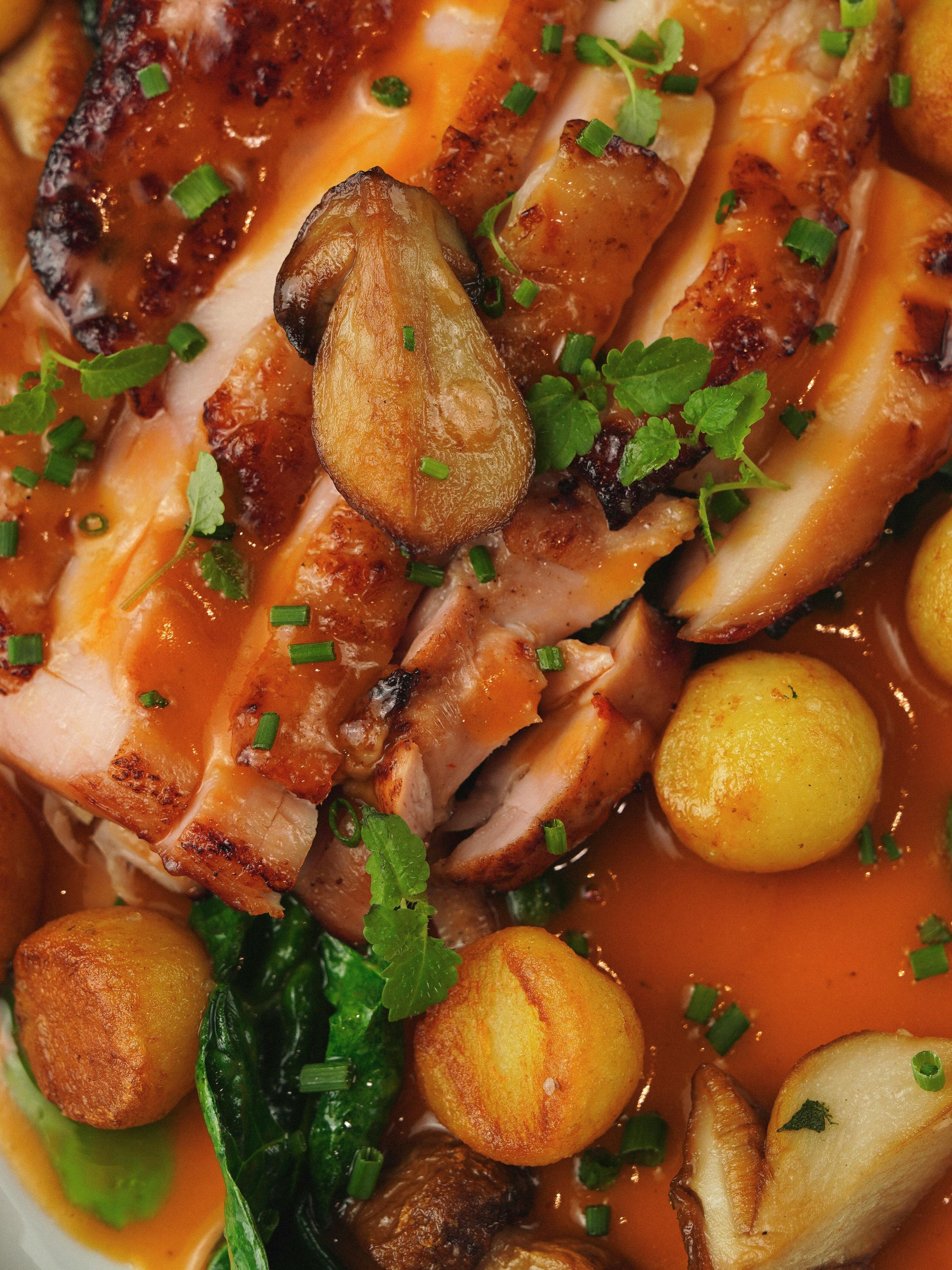
Chicken Chasseur (Hunter's Chicken)
The diets react (see scores below)
Common Ingredients
- chicken
- mushrooms
- shallots
- white wine
- tomatoes
- tarragon
- butter
- chicken stock
Specific recipes may vary.
Incompatible with 4 of 11 diets
Diet Ratings
Chicken Chasseur is largely keto-compatible but requires mindful portion control due to moderate carb contributors. Chicken and butter are ideal keto foods. Mushrooms and shallots add minimal net carbs in typical quantities. The main concerns are white wine (reduces during cooking but retains some residual carbs/sugars) and tomatoes (natural sugars, roughly 3-4g net carbs per 100g). A standard serving could push 8-12g net carbs depending on sauce reduction and tomato quantity, which is manageable within a daily keto budget but not negligible. No grains or added sugars are present, making this far more keto-friendly than most French braises. Overall a reasonable keto meal with awareness of portion size.
Stricter keto practitioners and those following therapeutic or clinical ketogenic protocols may flag the white wine and tomatoes as unnecessary carb sources, arguing these ingredients should be omitted or substituted (e.g., replacing wine with extra stock and tomatoes with tomato paste in micro-quantities), especially for those with strict 20g net carb ceilings or insulin sensitivity concerns.
Chicken Chasseur contains multiple animal products that are categorically excluded from a vegan diet. The dish is built around chicken as its primary protein, uses butter (a dairy product), and calls for chicken stock (animal-derived broth). These are not trace or incidental ingredients — they are foundational to the recipe. There is no ambiguity here: this dish is incompatible with a vegan diet.
Chicken Chasseur is largely paleo-compatible, with chicken, mushrooms, shallots, tomatoes, tarragon, and chicken stock all being straightforwardly approved. The two sticking points are butter and white wine. Butter is a dairy product excluded by strict Cordain-school paleo, though many modern practitioners accept it (especially grass-fed) given its minimal lactose and casein content. White wine, as an alcoholic product, falls into the caution/gray-area category within the paleo community. Neither ingredient is as disqualifying as grains or legumes, but together they push the dish out of a clean approval. The dish can be made more strictly paleo by substituting ghee or coconut oil for butter and using additional chicken stock or a splash of lemon juice in place of wine.
Strict Cordain-school paleo would flag butter as a dairy product to be avoided entirely, and some paleo authorities similarly exclude all alcohol including wine. Substituting ghee (itself debated) or a compliant fat and omitting the wine would bring it closer to full approval for purists.
Chicken Chasseur is a moderately Mediterranean-compatible dish. Chicken is an acceptable protein (poultry is permitted in moderation), and the vegetable-forward supporting ingredients — mushrooms, shallots, tomatoes, and white wine — align well with Mediterranean principles. However, the dish relies on butter as its primary fat rather than extra virgin olive oil, which is the canonical fat in the Mediterranean diet. Butter is a saturated animal fat not characteristic of traditional Mediterranean cooking. The overall dish is whole-food based with no refined grains, processed ingredients, or added sugars, which is a positive. Enjoyed occasionally with an olive oil substitution or alongside whole grains and vegetables, this dish fits reasonably within Mediterranean eating patterns.
Some regional French and Southern European traditions do incorporate butter in savory cooking, and a small amount in an otherwise vegetable-rich, wine-braised dish may be considered acceptable by more flexible Mediterranean diet interpretations. Modern clinical guidelines, however, consistently emphasize olive oil over butter as the primary fat source.
Chicken Chasseur is fundamentally incompatible with the carnivore diet. While chicken itself is an accepted animal protein, this dish is built around multiple plant-based ingredients that are strictly excluded: mushrooms, shallots, tomatoes, tarragon (an herb/spice), and white wine (a fermented plant product). Even the butter component, while animal-derived, does not redeem a dish where the majority of flavor, sauce, and volume comes from plant foods. This is a classic French braised dish whose entire identity depends on a vegetable-and-wine sauce — it cannot be adapted to carnivore without being an entirely different dish.
Chicken Chasseur contains butter, which is a dairy product explicitly excluded from the Whole30 program. Regular butter is not permitted — only ghee or clarified butter qualifies as the dairy exception. All other ingredients are compliant: chicken, mushrooms, shallots, white wine (alcohol used in cooking is generally accepted as it cooks off and is used as a flavoring ingredient in recipes), tomatoes, tarragon, and chicken stock are all Whole30-friendly. The dish is a single ingredient swap away from compliance — replacing butter with ghee or a compliant fat (olive oil, coconut oil) would make this fully approvable.
Chicken Chasseur contains two significant high-FODMAP ingredients that make it problematic during the elimination phase: shallots and mushrooms. Shallots are high in fructans (similar to onions) and are high-FODMAP at any culinary serving — even small amounts used in cooking contribute meaningful fructan load. Mushrooms are high in polyols (mannitol) and are high-FODMAP at typical serving sizes; Monash rates common button mushrooms as high-FODMAP above about 1 medium mushroom (approximately 65g), and Chasseur-style dishes typically use mushrooms as a substantial component. The remaining ingredients are generally low-FODMAP: chicken is safe, white wine is low-FODMAP at standard culinary quantities (and FODMAPs reduce with cooking), canned or fresh tomatoes are low-FODMAP at moderate servings, tarragon is a low-FODMAP herb, butter is low-FODMAP (negligible lactose), and chicken stock is typically low-FODMAP if onion/garlic-free (though commercial stocks often contain these). The dish could theoretically be modified — omitting shallots or replacing with the green tops of spring onions, and omitting or drastically reducing mushrooms — but as traditionally prepared it is not suitable for the elimination phase.
Some clinical FODMAP practitioners note that garlic-infused oil is sometimes used in adapted versions and that oyster mushrooms have a lower polyol content than button mushrooms at small servings, potentially making a modified version borderline acceptable. However, shallots remain a clear high-FODMAP ingredient at any realistic culinary quantity, and most elimination-phase guidance would classify this dish as avoid without significant recipe modification.
Chicken Chasseur is built on a largely DASH-friendly foundation — lean chicken provides quality protein, mushrooms and tomatoes contribute potassium and antioxidants, shallots add flavor with minimal sodium impact, and tarragon is sodium-free. However, the dish has two meaningful concerns for DASH compliance. First, butter adds saturated fat, which DASH explicitly limits; a traditional French chasseur sauce uses enough butter to push saturated fat intake into cautionary territory. Second, commercial or restaurant chicken stock is frequently high in sodium, potentially adding 400–800mg per serving, which erodes the DASH sodium budget (≤2,300mg/day standard, ≤1,500mg low-sodium). White wine is used in modest culinary quantities and its residual alcohol and sugar content are minor concerns. Overall, this dish is acceptable in moderation for DASH followers when prepared with low-sodium stock, skinless chicken, and butter used sparingly — but as typically prepared in French cooking, it warrants caution rather than full approval.
NIH DASH guidelines emphasize limiting saturated fat and sodium, which standard Chicken Chasseur exceeds via butter and conventional stock. However, updated clinical interpretations note that when prepared with olive oil substituted for butter and low-sodium stock, the dish aligns closely with DASH principles — some DASH-oriented dietitians would conditionally approve a modified version.
Chicken Chasseur has a solid Zone-friendly foundation but requires some adjustments to fit cleanly into Zone ratios. The chicken provides lean protein — an ideal Zone building block — and the mushrooms, shallots, tomatoes, and tarragon are all low-glycemic, polyphenol-rich vegetables that Zone enthusiasts would celebrate. White wine adds modest carbohydrates with a relatively low glycemic impact, and tomatoes contribute lycopene alongside favorable carb blocks. The main Zone concern is butter: early Sears Zone protocols strictly limited saturated fat in favor of monounsaturated fats like olive oil. A traditional Chasseur sauce can carry a meaningful amount of butter, which disrupts the intended fat profile. However, the dish is otherwise so well-aligned — lean protein, vegetable-forward carbs, anti-inflammatory herbs — that a simple substitution of olive oil for some or all of the butter brings it fully into Zone territory. With skin-on chicken, the fat burden increases further. The dish as traditionally prepared lands at 'caution' due to the butter content and potential skin-on preparation, but it is among the more Zone-adaptable French classics and is easily modified.
Sears' later writings (The Anti-Inflammation Zone, 2005 and beyond) softened the strict anti-saturated-fat position somewhat, emphasizing the omega-6/omega-3 ratio and polyphenol content as more important levers than total saturated fat. Under this updated framework, modest butter in a polyphenol-rich dish (tomatoes, tarragon, mushrooms, wine) may be viewed more favorably, potentially pushing the score toward a low 'approve.' Some Zone practitioners also note that traditional French cooking uses butter in moderation, not excess, and the overall macro balance of this dish can be Zone-compliant with careful portioning.
Chicken Chasseur presents a mixed anti-inflammatory profile. On the positive side, the dish features several beneficial ingredients: mushrooms provide beta-glucans and antioxidants with anti-inflammatory properties; tomatoes are rich in lycopene and other polyphenols; shallots and garlic (implied in classical versions) contain quercetin and organosulfur compounds; tarragon is an anti-inflammatory herb; and white wine contributes some polyphenols. Lean chicken is categorized as a moderate/acceptable protein in anti-inflammatory frameworks. However, the dish is built on a butter-based sauce, and butter is a saturated fat that should be limited on an anti-inflammatory diet. The amount of butter used in classic French cuisine can be substantial. White wine (as opposed to red wine) lacks the resveratrol that gives red wine its conditional approval in Dr. Weil's framework, though the cooking process does reduce alcohol content. Chicken stock is generally neutral to beneficial. Overall, the dish has genuinely anti-inflammatory components balanced against a notable saturated fat burden from butter, placing it solidly in the 'caution' zone — acceptable occasionally, but not a regular anti-inflammatory staple without modification (e.g., reducing butter, substituting olive oil).
Some anti-inflammatory practitioners, particularly those following stricter protocols like AIP or Mediterranean-focused guidance, would rate this higher if prepared with olive oil instead of butter and would emphasize the tomatoes and mushrooms as strong positives. Conversely, stricter low-saturated-fat anti-inflammatory advocates would push toward a lower score given the classic French preparation's reliance on butter as a primary fat.
Chicken Chasseur is a protein-rich French braise built around lean chicken, mushrooms, tomatoes, and aromatics — a fundamentally solid GLP-1 foundation. The chicken provides strong protein density, mushrooms and tomatoes contribute fiber, micronutrients, and water content, and the slow-braised format makes the dish easy to digest. The white wine cooks off substantially during braising, reducing (though not eliminating) alcohol content. The primary concern is butter: traditional Chicken Chasseur relies on butter for both sautéing and finishing the sauce, introducing saturated fat and increasing overall fat per serving. The amount matters significantly — a restaurant portion or traditional recipe may use 2–4 tablespoons of butter, pushing the dish into higher-fat territory that can worsen nausea, bloating, or reflux in GLP-1 patients. A home-prepared version with butter reduced to 1 teaspoon or substituted with olive oil would score closer to 7–8. As prepared traditionally, it earns a cautious approval contingent on portion size and fat moderation.
Some GLP-1-focused dietitians would approve this dish outright, arguing that the saturated fat from a modest butter finish is clinically minor compared to the protein and micronutrient value of the overall dish, and that patients should prioritize whole, minimally processed meals over macronutrient perfectionism. Others flag butter-finished sauces categorically due to the high sensitivity many GLP-1 patients develop to dietary fat, particularly in the early months of treatment.
*See how scores were generated at our methodology page.
Nutritional profile
Six traits that cut across every diet.
Fiber & Plants
How much whole-plant food and fiber it delivers.
Healthy Fats
The quality of its fats (unsaturated, omega-3).
Whole / Unprocessed
How close it is to its natural, unprocessed form.
Gut Gentle
How easy it is on digestion (low FODMAP, few irritants).
Low Glycemic
How little it spikes your blood sugar.
Protein Density
How much protein it packs per calorie.
Controversy Index
Higher controversy = more disagreement between diets.
Diet-Specific Tips
 Keto — 5/10
View tips
- Chicken is zero-carb and high-protein — ideal keto base
- Butter adds healthy saturated fat — fully keto-approved
- White wine contributes residual sugars even after reduction
- Tomatoes add natural sugars (~3-4g net carbs per 100g)
- Shallots are higher in carbs than onions; quantity matters
- Mushrooms are low net-carb and keto-friendly
- No grains, added sugars, or starchy thickeners present
- Estimated 8-12g net carbs per serving — workable but portion-sensitive
 Paleo — 6/10
View tips
- Chicken is a fully approved paleo protein
- Mushrooms, shallots, tomatoes, and tarragon are all paleo-approved whole foods
- Butter is dairy and excluded by strict paleo (Cordain), though accepted by many modern paleo practitioners
- White wine is alcoholic and falls in the caution/gray area for paleo
- Chicken stock is paleo-friendly if unsalted and unprocessed
- No grains, legumes, seed oils, or refined sugar present
- Dish is minimally processed and aligns with hunter-gatherer food philosophy
 Mediterranean — 5/10
View tips
- Chicken is an acceptable moderate-frequency protein in the Mediterranean diet
- Butter replaces olive oil as the primary fat, adding saturated fat inconsistent with core principles
- Mushrooms, tomatoes, shallots, and white wine are highly compatible Mediterranean ingredients
- No processed foods, refined grains, or added sugars present
- Tarragon and herbs reflect Mediterranean flavor profiles
- Dish is whole-food based and nutrient-dense overall
 DASH — 5/10
View tips
- Lean chicken is a DASH-approved protein source
- Mushrooms and tomatoes provide potassium and fiber consistent with DASH goals
- Butter contributes saturated fat, which DASH explicitly limits
- Standard chicken stock is high in sodium — low-sodium stock significantly improves DASH compatibility
- White wine used in cooking poses minimal concern at typical culinary volumes
- Dish can be modified (olive oil for butter, low-sodium stock, skinless chicken) to score higher
- As traditionally prepared, saturated fat and sodium push this to caution territory
 Zone — 6/10
View tips
- Lean chicken protein is an ideal Zone protein block — approximately 3 blocks per standard serving if skinless
- Mushrooms, shallots, and tomatoes are low-glycemic favorable Zone carbohydrates with polyphenol benefits
- Butter is a saturated fat source that conflicts with classic Zone fat guidelines favoring monounsaturated fats
- White wine contributes low-glycemic carbohydrate blocks and polyphenols — Zone-compatible in moderation
- Tarragon and tomatoes add anti-inflammatory polyphenols consistent with Sears' later focus
- Dish lacks a complete carbohydrate complement for a Zone meal — needs a vegetable side to hit 40% carb target
- Easily Zone-optimized by substituting olive oil for butter and ensuring skinless chicken
 Anti-Inflammatory — 5/10
View tips
- Butter adds saturated fat — a limited ingredient in anti-inflammatory frameworks
- Mushrooms provide anti-inflammatory beta-glucans and antioxidants
- Tomatoes contribute lycopene and polyphenols
- Chicken is an acceptable lean protein (moderate category)
- Tarragon and shallots add modest anti-inflammatory phytonutrients
- White wine lacks resveratrol benefits of red wine; alcohol content partly reduced by cooking
- Easily made more anti-inflammatory by substituting olive oil for butter
 GLP-1 Friendly — 6/10
View tips
- Good lean protein source from chicken — supports muscle preservation
- Mushrooms and tomatoes add fiber, water content, and micronutrients
- Braised format is soft and easy to digest — favorable for slowed gastric emptying
- Butter is a saturated fat source that can worsen GLP-1 GI side effects at traditional recipe quantities
- White wine reduces during cooking but residual alcohol content is a minor concern
- Portion-sensitive: a small serving over a fiber-rich base (e.g., lentils or whole grain) improves the overall nutritional profile
- Home preparation allows fat reduction; restaurant versions may use significantly more butter