Photo: Garley Gibson / Pexels
Indian
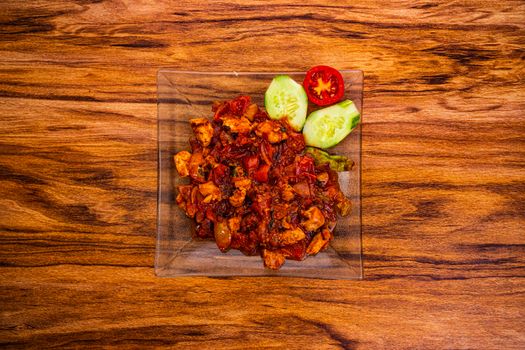
Chicken Jalfrezi
The diets react (see scores below)
Common Ingredients
- chicken breast
- bell peppers
- onion
- tomatoes
- green chilies
- ginger
- garam masala
- cilantro
Specific recipes may vary.
Incompatible with 3 of 11 diets
Diet Ratings
Chicken Jalfrezi is built on lean protein (chicken breast) with a vegetable-heavy sauce of bell peppers, onion, and tomatoes — the main keto concern. Bell peppers (~4g net carbs per 80g), onions (~7g net carbs per 100g), and tomatoes (~3-4g net carbs per 100g) add up meaningfully, especially in a dish where these are core bulk ingredients rather than garnishes. A typical serving could push 10-18g net carbs depending on portions, which is manageable within a 20-50g daily budget but leaves little room. The spice blend (garam masala, ginger, green chilies, cilantro) is keto-neutral. Chicken breast is acceptable protein but lacks the fat content keto prefers — pairing with a fat source (ghee, coconut cream) would improve the macro profile. The dish contains no grains, added sugars, or starchy vegetables, which is a strong positive. With careful portioning and reduced onion/tomato quantities, it can fit keto, but as traditionally prepared in generous restaurant portions, it warrants caution.
Some strict keto practitioners argue that onions and tomatoes should be minimized or avoided entirely due to their cumulative carb load and natural sugars, and that restaurant or traditional preparations of this dish routinely exceed safe thresholds, making it a practical avoid rather than a caution.
Chicken Jalfrezi contains chicken breast as its primary protein, which is animal flesh and explicitly excluded under all vegan dietary frameworks. There is no ambiguity here — poultry is a direct animal product. The remaining ingredients (bell peppers, onion, tomatoes, green chilies, ginger, garam masala, cilantro) are all plant-based, but the dish as defined is fundamentally non-vegan due to the chicken. A vegan adaptation could substitute tofu, chickpeas, or a plant-based meat alternative for the chicken breast.
Chicken Jalfrezi is an excellent paleo dish. All ingredients are fully compliant: chicken breast is a lean, unprocessed protein; bell peppers, onion, tomatoes, green chilies, ginger, and cilantro are whole vegetables and herbs available to hunter-gatherers; and garam masala is a blend of natural spices (cumin, coriander, cardamom, black pepper, cinnamon, cloves) with no grain or legume fillers. There are no grains, legumes, dairy, refined sugars, seed oils, or processed ingredients present. This dish represents the paleo philosophy well — whole, unprocessed ingredients cooked simply.
Chicken Jalfrezi is built on a strong foundation of Mediterranean-compatible vegetables — bell peppers, onion, tomatoes, green chilies, ginger, and cilantro — which are all staples of a plant-forward diet. Chicken breast is a lean poultry protein, acceptable in moderation under Mediterranean guidelines (a few servings per week). The dish is whole-food based with no processed ingredients, added sugars, or refined grains. However, chicken is not a core Mediterranean protein (fish and seafood are preferred), and the Indian spice profile (garam masala) is not traditional to Mediterranean cuisine, though spices themselves are not problematic. The absence of olive oil as the cooking fat is a notable gap — preparation likely uses neutral oil or ghee. Overall, this is a nutritionally sound, whole-food dish that aligns well with Mediterranean principles in composition, but the poultry-centric protein and non-Mediterranean culinary tradition place it in the 'caution/moderation' tier rather than a full approval.
Some modern Mediterranean diet practitioners, particularly those following the broader 'prudent dietary pattern' interpretation championed by researchers like Walter Willett, would view this dish more favorably, noting that the abundant vegetables, lean protein, and anti-inflammatory spices closely mirror the spirit of the diet even if the cultural origin differs. Conversely, stricter traditionalists anchored to the original Ancel Keys framework would note that poultry should be limited and olive oil is non-negotiable as the primary fat.
Chicken Jalfrezi is almost entirely incompatible with the carnivore diet. While chicken itself is an animal product, the dish is dominated by plant-based ingredients: bell peppers, onion, tomatoes, green chilies, ginger, garam masala (a spice blend), and cilantro. These are all strictly excluded on the carnivore diet — vegetables, aromatics, and plant-derived spices have no place in even the most lenient carnivore frameworks. The dish is fundamentally a plant-heavy curry that uses chicken as a secondary component. There is no version of this dish that could be considered carnivore-compatible without a complete reconstruction.
Chicken Jalfrezi as described contains only Whole30-compliant ingredients. Chicken breast is an approved protein, bell peppers, onion, tomatoes, and green chilies are all allowed vegetables, ginger and cilantro are permitted herbs/aromatics, and garam masala is a spice blend composed of compliant spices (cumin, coriander, cardamom, cinnamon, black pepper, cloves, etc.). There are no excluded ingredients — no grains, legumes, dairy, added sugars, or any other prohibited substances. This is a clean, whole-food preparation that aligns perfectly with the Whole30 program's intent.
Chicken Jalfrezi as traditionally prepared contains onion as a primary ingredient, which is high-FODMAP due to fructans at any meaningful cooking quantity. Onion remains high-FODMAP even when cooked, as fructans are heat-stable and water-soluble (meaning they leach into sauces and broths, making the entire dish high-FODMAP). Garlic, while not explicitly listed, is almost universally present in jalfrezi spice blends and garam masala preparations. The chicken breast, bell peppers, tomatoes (in moderate amounts), ginger, green chilies, and cilantro are all low-FODMAP ingredients. However, the onion alone is sufficient to make this dish unsuitable during the elimination phase. A low-FODMAP adaptation is possible by substituting onion with the green tops of spring onions and using garlic-infused oil instead of garlic cloves, but the traditional dish as described cannot be approved.
Chicken Jalfrezi as described aligns well with DASH diet principles. Chicken breast is a lean protein explicitly recommended by DASH guidelines. Bell peppers, onions, tomatoes, and green chilies are all DASH-approved vegetables rich in potassium, fiber, and antioxidants. Ginger and garam masala add flavor without sodium-heavy additions, reducing reliance on salt. Cilantro is a sodium-free herb. There is no added saturated fat, tropical oils, red meat, or high-sodium processed ingredients in this ingredient list. The dish is naturally low in saturated fat and sodium (assuming minimal added salt), and high in vegetables and lean protein — a combination DASH emphasizes. The primary consideration is preparation method: if cooked with ghee or coconut oil, the saturated fat profile worsens. If cooked with vegetable or canola oil in modest amounts, it remains DASH-friendly. Restaurant versions may also use more salt than home-prepared versions.
NIH DASH guidelines would straightforwardly approve this dish given its lean protein and vegetable-forward profile with no processed or high-sodium ingredients listed. However, some DASH-oriented clinicians note that restaurant or takeout versions of Indian dishes like Jalfrezi often include ghee, butter, or undisclosed amounts of added salt that can elevate sodium and saturated fat beyond DASH thresholds — making home preparation important for full DASH compatibility.
Chicken Jalfrezi is an excellent Zone Diet meal. Chicken breast is a quintessential lean Zone protein source, providing approximately 7g protein per ounce with minimal fat. The vegetable base — bell peppers, onion, tomatoes, and green chilies — consists almost entirely of low-glycemic, colorful, polyphenol-rich vegetables that Zone explicitly favors. Ginger and garam masala are anti-inflammatory spices that align perfectly with Sears' emphasis on reducing systemic inflammation. The dish is naturally low in fat, which means a small amount of olive oil or a few nuts added as a side can complete the fat block. The macro profile naturally skews toward the 40/30/30 target: lean protein from chicken, low-GI carbohydrates from the vegetables, and minimal saturated fat. Bell peppers in particular are a Zone star ingredient — high in polyphenols, very low glycemic load, and count directly toward the 8 daily vegetable servings. This dish requires virtually no modification to fit Zone parameters beyond standard block portioning (approximately 3oz chicken, generous vegetable portion, and ensuring cooking oil is olive oil rather than seed oil).
Chicken Jalfrezi is a well-structured anti-inflammatory dish. Chicken breast is lean poultry, which falls into the 'moderate' category under anti-inflammatory guidelines — it provides high-quality protein without the saturated fat load of red meat or processed meats. The vegetable base is strong: bell peppers are rich in vitamin C and carotenoids (particularly red and yellow varieties), tomatoes provide lycopene and quercetin, onions deliver quercetin and inulin-type prebiotics, and green chilies contain capsaicin, a well-documented anti-inflammatory compound. Ginger is a standout ingredient — gingerols and shogaols have demonstrated inhibitory effects on inflammatory pathways including COX-2 and NF-κB. Garam masala typically contains turmeric, cumin, coriander, cardamom, and black pepper; the turmeric-piperine combination (from black pepper) is particularly valued in anti-inflammatory contexts for enhancing curcumin bioavailability. Cilantro adds further polyphenol content. The dish is naturally free of refined carbohydrates, trans fats, added sugars, and processed additives. The main limitation is that the cooking oil used is unspecified — if prepared with a seed oil high in omega-6s (sunflower oil is common in Indian cooking), that would be a concern; extra virgin olive oil or avocado oil would be preferable. The dish scores well as written based on its ingredient list.
The nightshade vegetables in this dish (bell peppers, tomatoes, chili peppers) are broadly considered anti-inflammatory by Dr. Weil's framework and mainstream nutrition due to their antioxidant density, but Autoimmune Protocol (AIP) advocates like Dr. Tom O'Bryan argue that solanine and lectins in nightshades can trigger inflammation in individuals with autoimmune conditions — those on AIP would need to modify or avoid this dish entirely.
Chicken Jalfrezi is built on a strong GLP-1-friendly foundation — lean chicken breast delivers high-quality protein (25-30g per serving) with low fat, and the vegetable base of bell peppers, onions, and tomatoes adds fiber, micronutrients, and water content. Ginger is actually beneficial, as it can help mitigate nausea, a common GLP-1 side effect. The dish is low in refined carbs and free of fried elements in its traditional preparation. However, the green chilies and garam masala introduce meaningful spice heat, which can worsen reflux, nausea, and GI discomfort in GLP-1 patients — particularly those in early dose escalation phases. The rating lands at caution rather than approve primarily due to the spice profile, not the nutritional composition. A mild or reduced-chili version of this dish would score 8-9.
Some GLP-1-focused dietitians would rate a well-prepared Chicken Jalfrezi as an approve, arguing that spice tolerance is highly individual and that the lean protein and vegetable density outweigh the GI risk for patients who tolerate moderate heat. Others maintain a blanket caution on chili-forward dishes due to the frequency of reflux and gastroparesis-like symptoms in GLP-1 patients, especially during dose titration, where even previously tolerated spice levels can suddenly become problematic.
*See how scores were generated at our methodology page.
Nutritional profile
Six traits that cut across every diet.
Fiber & Plants
How much whole-plant food and fiber it delivers.
Healthy Fats
The quality of its fats (unsaturated, omega-3).
Whole / Unprocessed
How close it is to its natural, unprocessed form.
Gut Gentle
How easy it is on digestion (low FODMAP, few irritants).
Low Glycemic
How little it spikes your blood sugar.
Protein Density
How much protein it packs per calorie.
Controversy Index
Higher controversy = more disagreement between diets.
Diet-Specific Tips
 Keto — 5/10
View tips
- Chicken breast is lean protein — lacks fat, consider cooking in ghee or adding a fat source
- Bell peppers, onion, and tomatoes contribute meaningful net carbs cumulatively (est. 10-18g per serving)
- No grains, added sugars, or starchy vegetables — structurally keto-friendly
- Spices and aromatics (garam masala, ginger, chilies, cilantro) are keto-neutral
- Portion control is critical — half-portions significantly reduce carb load
- Restaurant versions may use added sugar or thickeners, increasing carb risk
 Paleo — 9/10
View tips
- Chicken breast is a clean, unprocessed paleo protein
- All vegetables (bell peppers, onion, tomatoes, green chilies) are whole and paleo-approved
- Ginger and cilantro are natural herbs fully consistent with paleo
- Garam masala is a natural spice blend — no anti-nutrient concerns
- No grains, legumes, dairy, or refined sugars present
- No seed oils listed — dish should be prepared in olive oil, coconut oil, or animal fat to maintain full compliance
- One of the cleanest Indian dishes for paleo adherents
 Mediterranean — 5/10
View tips
- Lean poultry protein — acceptable in moderation, not a Mediterranean staple
- Abundant whole vegetables (bell peppers, tomatoes, onion, chilies) strongly align with Mediterranean principles
- No processed ingredients, refined grains, or added sugars
- Cooking fat likely not olive oil — a key gap in Mediterranean compliance
- Spices (garam masala, ginger) are healthful and anti-inflammatory, though not traditionally Mediterranean
- Dish lacks fish/seafood, which are the preferred proteins in the Mediterranean pattern
 Whole30 — 9/10
View tips
- Chicken breast is an approved Whole30 protein
- All vegetables (bell peppers, onion, tomatoes, green chilies) are fully compliant
- Garam masala is a spice blend with no excluded ingredients
- Ginger and cilantro are allowed herbs/aromatics
- No dairy, grains, legumes, or added sugars present
- Dish is a whole-food preparation, not a recreated junk food
 DASH — 8/10
View tips
- Chicken breast is a DASH-recommended lean protein
- Bell peppers, onions, and tomatoes provide potassium, fiber, and vitamins consistent with DASH vegetable servings
- No high-sodium processed ingredients in the listed recipe
- Garam masala adds flavor complexity without significant sodium
- Preparation method matters: vegetable oil preferred over ghee or coconut oil to keep saturated fat low
- Restaurant versions may contain hidden sodium and added fats not reflected in the listed ingredients
- Green chilies and ginger contribute anti-inflammatory phytonutrients with no DASH concerns
 Zone — 9/10
View tips
- Chicken breast is a top-tier Zone lean protein source (~7g protein per ounce)
- Bell peppers, onions, tomatoes, and chilies are all favorable low-glycemic Zone carbohydrates
- Ginger and garam masala are anti-inflammatory spices consistent with Sears' polyphenol emphasis
- No high-glycemic carbohydrates, sugar, or starchy fillers in the ingredient list
- Naturally low saturated fat profile — fat block easily completed with olive oil in cooking
- High vegetable density supports the Zone recommendation of 8 vegetable servings daily
- No processed ingredients or omega-6-heavy seed oils (assuming olive oil used for cooking)
 Anti-Inflammatory — 8/10
View tips
- Lean chicken breast is a preferred anti-inflammatory protein over red meat or processed meats
- Ginger contains gingerols with documented COX-2 and NF-κB inhibitory activity
- Garam masala likely includes turmeric and black pepper, supporting curcumin bioavailability
- Bell peppers and tomatoes provide carotenoids, lycopene, and vitamin C
- Green chilies contribute capsaicin with established anti-inflammatory effects
- Onions deliver quercetin, a potent flavonoid with anti-inflammatory properties
- No refined carbohydrates, added sugar, trans fats, or processed additives
- Cooking oil unspecified — outcome depends on whether anti-inflammatory oils (EVOO, avocado) are used
- Nightshade vegetables may be problematic for autoimmune-sensitive individuals
 GLP-1 Friendly — 6/10
View tips
- High lean protein from chicken breast — strong GLP-1 priority #1 support
- Bell peppers, onions, tomatoes provide fiber and micronutrients
- Ginger may actively help reduce GLP-1-related nausea
- Green chilies and garam masala pose reflux and nausea risk for GLP-1 patients
- No frying, no refined grains, no added sugar — clean nutritional profile
- Spice tolerance is highly variable and often worsens during dose escalation
- Portion-friendly dish — works well in small servings without losing satiety value