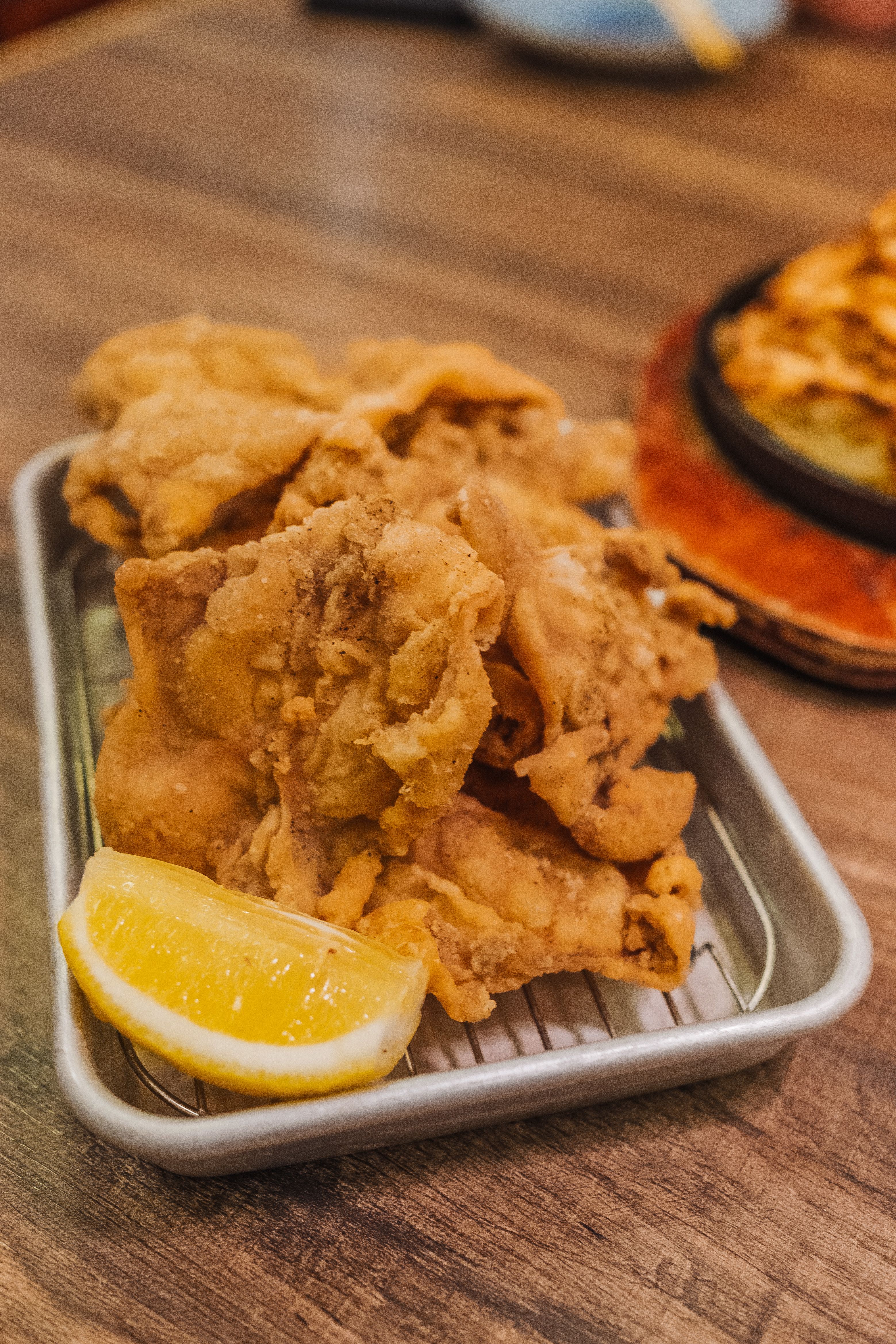
Japanese
Chicken Karaage
The diets react (see scores below)
Common Ingredients
- chicken thighs
- soy sauce
- sake
- ginger
- garlic
- potato starch
- sesame oil
- lemon
Specific recipes may vary.
Incompatible with 8 of 11 diets
Diet Ratings
Chicken Karaage is a fried chicken dish that is largely keto-friendly but has two notable concerns. First, potato starch is used as the coating — it has high net carbs and is not keto-approved; however, the amount per serving is relatively small (typically 1-2 tbsp spread across multiple pieces), limiting the carb impact. Second, sake contains residual sugars and carbs, though most of it cooks off. Soy sauce adds minimal carbs. The base — chicken thighs fried in oil — is excellent for keto (high fat, quality protein). A strict keto practitioner would substitute potato starch with almond flour or pork rind crumbs to make this dish fully compliant. As prepared traditionally, it sits in caution territory due to the starch coating and sake.
Strict keto practitioners argue that any use of potato starch or grain-based coatings, even in small amounts, should disqualify a dish outright, particularly for those with insulin sensitivity or in early ketosis induction phases. Lazy keto or maintenance-phase followers may consider the small starch quantity negligible and approve it freely.
Chicken Karaage is a Japanese fried chicken dish with chicken thighs as its primary and non-negotiable ingredient. Chicken is an animal product — specifically poultry — which is categorically excluded under all vegan frameworks. There is no ambiguity here. The remaining ingredients (soy sauce, sake, ginger, garlic, potato starch, sesame oil, lemon) are all plant-derived and would be vegan-compatible, but the presence of chicken makes this dish entirely incompatible with a vegan diet.
Chicken Karaage contains multiple non-paleo ingredients that disqualify it from approval. Soy sauce is a fermented soy and wheat product — both legume and grain derivatives are excluded from paleo. Sake is a rice-based alcohol, making it a grain-derived processed beverage. Potato starch used as a coating is a heavily processed derivative, and sesame oil is a seed oil explicitly excluded under paleo guidelines. While the base ingredients — chicken thighs, ginger, garlic, and lemon — are fully paleo-approved, the dish as traditionally prepared cannot be considered paleo-compatible. The problematic ingredients are core to the recipe's identity, not optional additions.
Chicken Karaage is a Japanese deep-fried chicken dish that conflicts with Mediterranean diet principles on multiple fronts. While chicken itself is an acceptable moderate protein, the preparation method (deep-frying in oil, likely neutral vegetable or seed oil rather than olive oil) adds significant unhealthy fats. The potato starch coating creates a refined, processed exterior. Soy sauce and sake are non-traditional, non-Mediterranean ingredients, though not inherently harmful in small amounts. The overall dish profile — deep-fried, starch-coated, high in saturated and trans fats from frying — contradicts the Mediterranean emphasis on minimally processed, olive-oil-based preparations. This is not a 'red meat' avoid scenario, but the cooking method makes it incompatible with Mediterranean principles.
Some modern Mediterranean diet interpretations focus primarily on ingredient quality rather than cooking method, and might argue that chicken with garlic, ginger, and lemon has merit as an occasional protein. A flexible Mediterranean-influenced approach could permit occasional fried chicken if olive oil were used for frying, as frying in olive oil is practiced in some Southern Mediterranean (Spanish, Greek) traditions.
Chicken Karaage is heavily incompatible with the carnivore diet. While chicken thighs are an animal protein, the dish is prepared with numerous plant-derived and processed ingredients that are entirely excluded on carnivore: soy sauce (fermented soy/wheat), sake (fermented grain alcohol), ginger (plant root), garlic (plant bulb), potato starch (plant-derived coating), sesame oil (plant seed oil), and lemon (citrus fruit). The potato starch coating alone would disqualify this dish, and sesame oil is a plant-based oil explicitly excluded. This is essentially a marinated and breaded chicken dish — the preparation method and marinade make it fully off-limits regardless of the animal protein base.
Chicken Karaage contains two excluded ingredients that make it non-compliant with Whole30. First, soy sauce is a soy-based product and soy is explicitly excluded from the Whole30 program. Second, sake is an alcoholic beverage (rice wine), and alcohol is fully excluded. Additionally, potato starch used as a coating that recreates a fried/breaded texture may conflict with the spirit of the program, though it is less clear-cut than the first two violations. The remaining ingredients — chicken thighs, ginger, garlic, sesame oil, and lemon — are all compliant. A modified version could substitute coconut aminos for soy sauce and omit the sake, but the dish as described is not Whole30 compatible.
Chicken Karaage as traditionally prepared contains garlic, which is one of the highest-FODMAP foods tested by Monash University, containing significant fructans even at very small quantities. Garlic is a clear 'avoid' during the elimination phase with no safe serving size. The dish also contains soy sauce, which is low-FODMAP in small amounts (up to 2 tablespoons), sake (generally low-FODMAP in cooking quantities), ginger (low-FODMAP), potato starch (low-FODMAP), sesame oil (low-FODMAP), and lemon (low-FODMAP). The chicken thighs themselves are FODMAP-free. However, the presence of garlic as a marinade ingredient is disqualifying — even small amounts of garlic used in marinades contribute fructans, and the food is marinated rather than infused, meaning the FODMAPs transfer to the chicken. The dish cannot be considered low-FODMAP unless garlic is substituted with garlic-infused oil.
Chicken Karaage presents several significant conflicts with DASH diet guidelines. The primary concerns are high sodium content from soy sauce (a single tablespoon contains ~900-1000mg sodium, often exceeding one-third of the standard DASH daily limit and well over half the low-sodium DASH target), and deep-frying, which dramatically increases total fat content. Chicken thighs are a higher-fat cut compared to DASH-preferred skinless chicken breast. The potato starch coating absorbs frying oil, adding saturated fat. While some ingredients are DASH-friendly (ginger, garlic, lemon), the overall preparation method and soy sauce marinade make this dish incompatible with DASH principles in its standard form.
Chicken Karaage presents a mixed Zone Diet profile. The protein base (chicken thighs) is a real positive, though thighs carry more saturated fat than Zone-preferred skinless chicken breast. The dish is deep-fried in sesame oil, which introduces significant fat — sesame oil contains a notable omega-6 profile, which conflicts with Zone's anti-inflammatory emphasis, though it is less problematic than seed oils like corn or soybean oil. The potato starch coating adds a high-glycemic carbohydrate load, and while the quantity per serving is relatively small, it's an 'unfavorable' carb in Zone terminology with no fiber offset. Soy sauce, sake, ginger, garlic, and lemon are minor contributors that don't significantly disrupt Zone ratios. The core challenge is that as traditionally prepared, Karaage is a fried dish: the fat content will be elevated and difficult to precisely block, and the fat source is not primarily monounsaturated. With careful portioning (small serving, pairing with a large low-glycemic vegetable side, accounting for the fat blocks from frying), it can fit into a Zone meal, but it requires meaningful adjustment and is not a naturally Zone-friendly dish.
Some Zone practitioners take a more lenient view on deep-fried chicken dishes, arguing that if total fat blocks are counted and the meal is balanced with adequate low-GI vegetables, the occasional fried protein fits within the Zone's ratio-based flexibility. Dr. Sears' later work also softened the strict stance on saturated fat in favor of focusing on omega-6/omega-3 ratios, which could modestly rehabilitate this dish if sesame oil is used conservatively.
Chicken Karaage presents a mixed anti-inflammatory profile. On the positive side, ginger and garlic are well-established anti-inflammatory spices, lemon provides vitamin C and flavonoids, sake adds minimal concern in cooking quantities (alcohol largely evaporates), and sesame oil contains sesamol and sesamin with antioxidant properties. Soy sauce, while high in sodium, is fermented and contributes small amounts of beneficial compounds. The primary concern is the cooking method: deep-frying in oil raises the dish's inflammatory potential significantly. Deep frying typically uses refined vegetable or seed oils high in omega-6 fatty acids, which at high heat can oxidize and generate pro-inflammatory compounds. Potato starch itself is relatively neutral, but as a frying coating it contributes to the fried-food profile. Chicken thighs are lean poultry (a 'moderate' category food), acceptable but not emphasized. Overall, the ingredient base is solid — the marinade components are genuinely anti-inflammatory — but the deep-frying preparation method introduces meaningful pro-inflammatory risk, placing this squarely in the 'caution' zone rather than a clear approval or avoidance.
Some anti-inflammatory practitioners would rate this more favorably if prepared with avocado oil or a light air-fry method, which preserves the anti-inflammatory marinade benefits while minimizing oxidized fat exposure. Conversely, strict anti-inflammatory protocols (e.g., Dr. Weil's guidance against fried foods) would push this toward a lower score given that deep-frying is the defining preparation method and the frying oil choice is typically pro-inflammatory.
Chicken Karaage is a deep-fried Japanese dish. Despite being made from chicken, the deep-frying method is a hard disqualifier for GLP-1 patients. The chicken thigh base is already higher in saturated fat than breast meat, and deep-frying in oil dramatically increases total fat content and caloric density per serving. High-fat, fried foods are among the worst triggers for GLP-1 side effects — nausea, bloating, reflux, and prolonged gastric discomfort — because slowed gastric emptying means greasy food sits in the stomach far longer than usual. The potato starch coating absorbs frying oil and adds refined carbohydrates with negligible fiber or micronutrient value. Sesame oil adds further fat. While soy sauce, ginger, garlic, and lemon are benign or beneficial, they cannot offset the core problem. The dish is also low in fiber and low in nutrient density per calorie.
*See how scores were generated at our methodology page.
Nutritional profile
Six traits that cut across every diet.
Fiber & Plants
How much whole-plant food and fiber it delivers.
Healthy Fats
The quality of its fats (unsaturated, omega-3).
Whole / Unprocessed
How close it is to its natural, unprocessed form.
Gut Gentle
How easy it is on digestion (low FODMAP, few irritants).
Low Glycemic
How little it spikes your blood sugar.
Protein Density
How much protein it packs per calorie.
Controversy Index
Higher controversy = more disagreement between diets.
Diet-Specific Tips
 Keto — 5/10
View tips
- Potato starch coating adds meaningful net carbs — not keto-approved but small quantity per serving
- Sake introduces residual sugars, though most cooks off during preparation
- Chicken thighs are an ideal keto protein source — high fat, moderate protein
- Soy sauce contributes minimal carbs and is generally tolerated
- Easily modified for full keto compliance by substituting starch with almond flour or pork rinds
- Portion size significantly affects carb load — a small serving may stay within limits
 Zone — 5/10
View tips
- Chicken thighs are higher in saturated fat than Zone-preferred skinless chicken breast
- Deep frying significantly increases fat content, making macro ratios hard to control
- Potato starch coating is a high-glycemic, unfavorable Zone carbohydrate
- Sesame oil has a relatively high omega-6 content, conflicting with Zone's anti-inflammatory principles
- Ginger, garlic, and lemon contribute polyphenols that align with Zone's anti-inflammatory focus
- Dish can be portioned into a Zone meal but requires pairing with substantial low-GI vegetables to balance carb blocks
 Anti-Inflammatory — 5/10
View tips
- Ginger and garlic provide meaningful anti-inflammatory polyphenols and organosulfur compounds
- Deep-frying method introduces oxidized fats and omega-6-heavy oils, a significant pro-inflammatory concern
- Chicken thighs are lean poultry — acceptable in moderation per anti-inflammatory guidelines
- Sesame oil contains antioxidant lignans (sesamol, sesamin) with documented anti-inflammatory activity
- Lemon adds vitamin C and flavonoids, supporting antioxidant profile
- High sodium from soy sauce is a minor concern; fermentation adds minimal benefit at cooking quantities
- Potato starch is neutral but reinforces the fried-food character of the dish