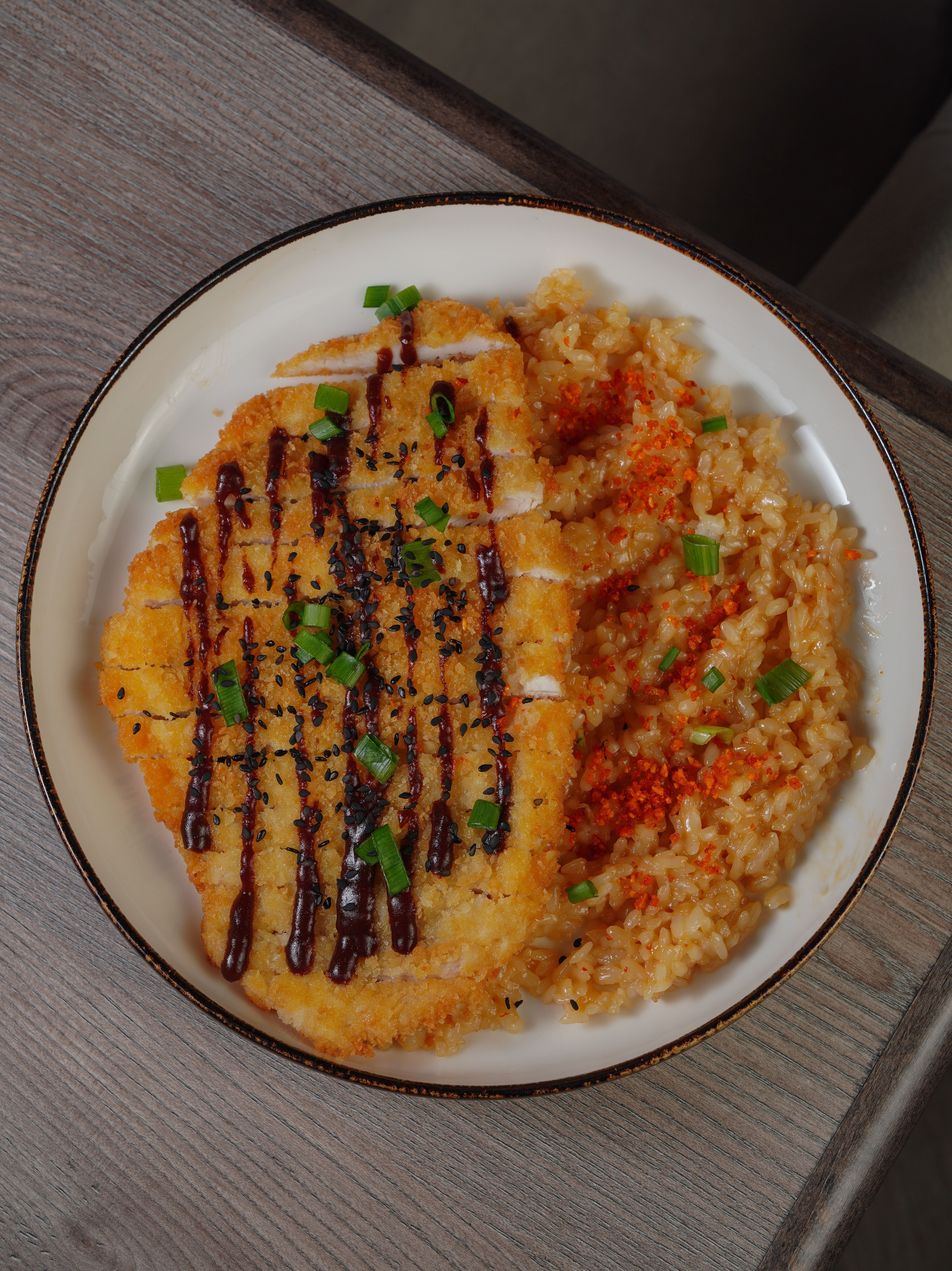
Japanese
Chicken Katsu
The diets react (see scores below)
Common Ingredients
- chicken breast
- panko breadcrumbs
- flour
- eggs
- tonkatsu sauce
- cabbage
- vegetable oil
- Japanese rice
Specific recipes may vary.
Incompatible with 8 of 11 diets
Diet Ratings
Chicken Katsu is fundamentally incompatible with a ketogenic diet. The dish contains multiple high-carb components that together create a massive carbohydrate load. Japanese rice alone contributes 40-50g of net carbs per serving, instantly exceeding the daily keto limit on its own. The panko breadcrumb coating and flour dredge add another 20-30g of net carbs and are derived from refined grains, which are strictly prohibited on keto. Tonkatsu sauce is sugar-laden, adding further carbs. Even if rice were removed, the breaded coating alone would make this dish incompatible. The only keto-friendly elements are the chicken breast (lean protein) and cabbage (low-carb vegetable), but these are overwhelmed by the carb-heavy components that define the dish's character.
Chicken Katsu contains multiple animal products that are categorically excluded from a vegan diet. The primary protein is chicken breast (poultry/meat), and eggs are used in the breading process as a binding agent. Both are direct animal products with no ambiguity in vegan standards. The remaining ingredients (panko breadcrumbs, flour, tonkatsu sauce, cabbage, vegetable oil, and Japanese rice) are generally plant-based, but the presence of chicken and eggs makes this dish entirely incompatible with a vegan diet.
Chicken Katsu is fundamentally incompatible with the Paleo diet. The dish relies on multiple core non-Paleo ingredients: panko breadcrumbs and flour are grain-based coatings strictly excluded from Paleo; Japanese rice is a grain, excluded under standard Paleo rules; tonkatsu sauce is a processed condiment containing sugar, soy (a legume), and additives; and vegetable oil (likely soybean or canola-based) is a seed oil explicitly avoided on Paleo. The only Paleo-compliant components are the chicken breast, eggs, and raw cabbage. The dish's defining preparation method — breading and deep-frying in seed oil — directly contradicts Paleo principles, making this a clear avoid.
Chicken Katsu conflicts with Mediterranean diet principles on multiple fronts. The dish is deep-fried in vegetable oil (not olive oil), coated in refined white flour and panko breadcrumbs (processed refined grains), and served with tonkatsu sauce which typically contains added sugars. White Japanese rice is a refined grain lacking the fiber of whole grains. While chicken itself is an acceptable moderate protein in the Mediterranean diet, the preparation method — deep-frying in refined oils with a refined-grain breading — transforms it into a heavily processed dish that contradicts core Mediterranean principles. The overall profile is high in refined carbohydrates, uses non-Mediterranean fats, and contains added sugars.
Chicken Katsu is fundamentally incompatible with the carnivore diet. While chicken breast is an animal protein, the dish is predominantly defined by its plant-based coating and accompaniments. Panko breadcrumbs and flour are grain-derived and strictly excluded. Tonkatsu sauce contains sugar, fruit, and vegetable-based ingredients. Cabbage is a plant food. Japanese rice is a grain. Vegetable oil is a plant-based seed oil, explicitly avoided on carnivore. The only carnivore-compatible ingredients in this dish are the chicken and eggs — every other component violates carnivore principles. This is not a borderline case; the dish is structurally built around excluded foods.
Chicken Katsu contains multiple excluded ingredients that make it clearly non-compliant with Whole30. Panko breadcrumbs and flour are grain-based ingredients, both explicitly excluded. Japanese rice is a grain, also excluded. Tonkatsu sauce typically contains sugar, soy (a legume), and other non-compliant additives. The dish is also essentially a breaded, fried cutlet — even if one tried to substitute compliant coatings, the concept of recreating a breaded fried food falls under the 'no junk food recreation' spirit of the program.
Chicken Katsu as traditionally prepared contains multiple high-FODMAP components that make it problematic during the elimination phase. The two primary offenders are panko breadcrumbs and tonkatsu sauce. Panko is made from wheat, which is high in fructans — a key FODMAP. While the coating is a relatively thin layer, it still represents a meaningful fructan exposure. More significantly, tonkatsu sauce (e.g., Bull-Dog brand) typically contains apple purée or apple juice, onion, and garlic — all high-FODMAP ingredients — making it a clear avoid. The plain flour used for dredging also adds fructan load. The remaining ingredients are largely low-FODMAP: chicken breast is safe, eggs are low-FODMAP, Japanese white rice is low-FODMAP, plain shredded cabbage is low-FODMAP at standard servings (up to 1 cup), and vegetable oil used for frying is fine. However, the combination of wheat-based coating and tonkatsu sauce tips this dish firmly into high-FODMAP territory for elimination phase.
Monash University rates small amounts of wheat-based coatings as borderline, and some FODMAP practitioners allow thin breadcrumb coatings if portion is controlled — but tonkatsu sauce remains the harder problem, as no commercially standard version is free of onion, garlic, or high-fructose fruit ingredients. A modified version using gluten-free breadcrumbs and a FODMAP-friendly dipping sauce (e.g., garlic-free tamari-based sauce) could shift this dish to 'caution' or 'approve.'
Chicken Katsu presents a mixed DASH profile. The base protein — chicken breast — is a DASH-approved lean protein. However, the dish is deep-fried in vegetable oil, significantly increasing total fat content and caloric density, which runs counter to DASH's fat-moderation principles. Panko breadcrumbs add refined carbohydrates with minimal fiber benefit. The tonkatsu sauce is a major concern: it is high in sodium and added sugar, which conflicts directly with DASH's sodium (<2,300mg/day) and added-sugar limits. Japanese white rice is a refined grain, whereas DASH emphasizes whole grains. The shredded cabbage is a genuine DASH positive — a non-starchy vegetable rich in potassium and fiber. Overall, this dish can be consumed occasionally but requires significant modification (baking instead of frying, using a low-sodium sauce sparingly, substituting brown rice) to align better with DASH guidelines.
NIH DASH guidelines would flag the deep-frying method, refined grains, and high-sodium sauce as problematic for regular consumption. However, some updated clinical interpretations note that vegetable oils (unlike tropical oils) are unsaturated and cardiovascular-neutral, and that a home-prepared, baked version with low-sodium sauce and brown rice could reasonably fit within a DASH framework as an occasional meal.
Chicken Katsu presents several Zone Diet challenges despite its lean protein base. The chicken breast itself is an ideal Zone protein, but the preparation undermines its Zone compatibility significantly. The panko breadcrumbs and flour coating add high-glycemic carbohydrates and cause the dish to be deep-fried in vegetable oil (typically omega-6-heavy seed oils like canola or soybean), directly conflicting with Zone's anti-inflammatory principles. The Japanese white rice is an 'unfavorable' high-glycemic carbohydrate that spikes insulin — precisely what Zone aims to avoid. Tonkatsu sauce is sugar-forward, adding further glycemic load. On the positive side, the cabbage is a favorable low-glycemic Zone vegetable, and the chicken breast provides lean protein. To make this more Zone-compatible, one would need to dramatically reduce or eliminate the rice, skip or minimize the sauce, and ideally bake rather than fry. The combination of fried coating, white rice, and sweet sauce creates a high-glycemic, omega-6-heavy meal that is difficult to balance into a proper 40/30/30 Zone ratio without major modifications.
Chicken Katsu presents a mixed anti-inflammatory profile. On the positive side, chicken breast is a lean protein that fits within the 'moderate' category of anti-inflammatory eating, and raw cabbage is a genuinely anti-inflammatory vegetable rich in vitamin C, glucosinolates, and fiber. However, the dish has several concerning elements. The deep-frying in vegetable oil (typically high-omega-6 oils such as canola, soybean, or corn oil) introduces a significant pro-inflammatory factor — both from the omega-6 fatty acid load and from the oxidation that occurs when oils are heated at high temperatures. The panko breadcrumbs and flour coating represent refined carbohydrates with little nutritional value. Japanese white rice is a refined grain that raises glycemic load concerns. Tonkatsu sauce typically contains added sugars and sometimes high-fructose corn syrup or preservatives. The combination of deep-frying refined-carb coatings in seed oils is the primary anti-inflammatory concern here. The dish is not egregious — it uses lean meat and includes cabbage — but the cooking method and coating undermine what could otherwise be a moderate dish. A baked version with whole-grain breadcrumbs and brown rice would score considerably higher.
Some mainstream nutritionists and anti-inflammatory researchers (including those aligned with AHA guidelines) consider canola or other vegetable oils acceptable or even heart-healthy due to their unsaturated fat profile, which would make this dish more defensible. Conversely, stricter anti-inflammatory protocols (such as those advocated by Dr. Weil and others focusing on omega-6/omega-3 balance) would rate this even more harshly due to deep-frying in high-omega-6 seed oils and the refined-carb coating.
Chicken Katsu is a deep-fried preparation: chicken breast is coated in flour, egg, and panko breadcrumbs, then fried in vegetable oil. Despite the lean protein base, the deep-frying process makes this a high-fat, high-calorie dish that is well-documented to worsen GLP-1 side effects including nausea, bloating, and reflux due to slowed gastric emptying. The tonkatsu sauce is typically high in sugar and sodium, adding empty calories. Japanese white rice is a refined carbohydrate with minimal fiber and low nutrient density per calorie — a poor fit for patients eating smaller portions who need every bite to count. The cabbage garnish is a minor positive (fiber, hydration) but insufficient to offset the core concerns. The breaded-and-fried preparation is the defining characteristic and disqualifies this dish regardless of its chicken base.
*See how scores were generated at our methodology page.
Nutritional profile
Six traits that cut across every diet.
Fiber & Plants
How much whole-plant food and fiber it delivers.
Healthy Fats
The quality of its fats (unsaturated, omega-3).
Whole / Unprocessed
How close it is to its natural, unprocessed form.
Gut Gentle
How easy it is on digestion (low FODMAP, few irritants).
Low Glycemic
How little it spikes your blood sugar.
Protein Density
How much protein it packs per calorie.
Controversy Index
Higher controversy = more disagreement between diets.
Diet-Specific Tips
 DASH — 4/10
View tips
- Chicken breast is a DASH-approved lean protein
- Deep-frying in oil significantly increases total fat and caloric load
- Tonkatsu sauce is high in sodium and added sugar — conflicts with core DASH limits
- Panko breadcrumbs are refined carbohydrates with low fiber value
- White Japanese rice is a refined grain; DASH recommends whole grains
- Shredded cabbage is a DASH-positive non-starchy vegetable
- Baked preparation with low-sodium sauce and brown rice would improve DASH compatibility
 Zone — 4/10
View tips
- Chicken breast is an ideal Zone lean protein source
- Panko + flour coating adds high-glycemic, unfavorable carbohydrates
- Deep-frying in vegetable oil introduces heavy omega-6 fats, anti-inflammatory concern per Sears
- White Japanese rice is a high-glycemic 'unfavorable' carbohydrate in Zone terminology
- Tonkatsu sauce adds significant sugar, raising glycemic load
- Cabbage is a favorable Zone carbohydrate
- Overall dish ratio skews heavily toward unfavorable high-GI carbs and omega-6 fats
 Anti-Inflammatory — 4/10
View tips
- Deep-fried in high-omega-6 vegetable oil — significant pro-inflammatory concern
- Oil oxidation from high-heat frying increases inflammatory potential
- Panko breadcrumbs and flour coating are refined carbohydrates
- White Japanese rice has high glycemic load
- Tonkatsu sauce often contains added sugars and preservatives
- Chicken breast is a lean, moderate anti-inflammatory protein
- Cabbage is a genuinely anti-inflammatory vegetable with glucosinolates and vitamin C