Chinese
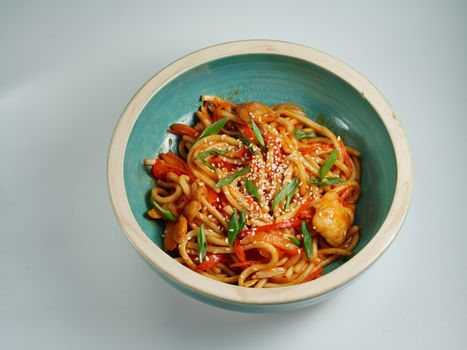
Chicken Lo Mein
The diets react (see scores below)
Common Ingredients
- lo mein noodles
- chicken breast
- bok choy
- carrots
- bean sprouts
- soy sauce
- oyster sauce
- sesame oil
Specific recipes may vary.
Incompatible with 6 of 11 diets
Diet Ratings
Chicken Lo Mein is fundamentally incompatible with a ketogenic diet. The primary ingredient, lo mein noodles, are wheat-based and contain approximately 40-50g of net carbs per serving alone — enough to exceed or nearly exhaust the entire daily carb limit in a single dish. Combined with carrots (additional starchy carbs) and oyster sauce (which typically contains added sugar and starch), this dish is a high-carb meal by design. There is no realistic portion size that makes this keto-compatible while still constituting a meaningful meal.
Chicken Lo Mein contains multiple animal-derived ingredients that make it entirely incompatible with a vegan diet. Chicken breast is a direct animal product (poultry), and oyster sauce is derived from oysters, a marine animal. Both are clear and unambiguous violations of vegan principles. The remaining ingredients — lo mein noodles, bok choy, carrots, bean sprouts, soy sauce, and sesame oil — are plant-based, but the presence of chicken and oyster sauce makes this dish a definitive avoid with no meaningful debate within the vegan community.
Chicken Lo Mein contains multiple ingredients that are clearly incompatible with the Paleo diet. Lo mein noodles are made from wheat flour, a grain that is strictly excluded. Soy sauce is a processed condiment derived from fermented soybeans (a legume) and wheat, both of which are forbidden. Oyster sauce is a processed condiment containing added sugar, salt, and thickeners. Sesame oil is a seed oil, which is excluded in favor of animal fats, olive oil, coconut oil, and similar options. Bean sprouts, while less clear-cut, come from mung beans, which are a legume. Although the chicken, bok choy, and carrots are fully Paleo-approved, the foundational components of this dish — the noodles, soy sauce, oyster sauce, and sesame oil — make it fundamentally incompatible with Paleo principles. There is no meaningful debate within the paleo community about wheat noodles, soy sauce, or seed oils; all are firmly excluded.
Chicken Lo Mein contains several elements that conflict with Mediterranean diet principles while also including some acceptable components. The lo mein noodles are refined wheat noodles, not whole grain, which Mediterranean guidelines discourage in favor of whole grains. Soy sauce and oyster sauce are highly processed, high-sodium condiments absent from Mediterranean tradition, where herbs, lemon, and olive oil dominate flavoring. Sesame oil, while a plant-based fat, is not the canonical Mediterranean fat (extra virgin olive oil). On the positive side, chicken breast is an acceptable moderate protein, and the vegetables — bok choy, carrots, and bean sprouts — are plant-forward and nutritious, aligning with Mediterranean emphasis on vegetables. The dish is not inherently harmful but represents a non-Mediterranean culinary framework that uses refined grains, processed sauces, and a non-olive oil fat as its base.
Some modern Mediterranean diet practitioners take a flexible, whole-foods approach and would view this dish more favorably given its lean protein and vegetable content, arguing that the spirit of plant-forward eating is partially met. Substituting whole-wheat noodles and reducing sodium sauces could bring it closer to Mediterranean principles.
Chicken Lo Mein is almost entirely incompatible with the carnivore diet. The dish is dominated by plant-based and grain-based ingredients: lo mein noodles (wheat-based grain), bok choy, carrots, and bean sprouts are all plant foods explicitly excluded from carnivore. The sauces — soy sauce (fermented soy/wheat), oyster sauce (contains sugar and starch fillers), and sesame oil (plant-derived oil) — are all non-carnivore. The only carnivore-compatible element is the chicken breast itself, but it is a minor component swimming in a sea of excluded ingredients. This dish represents essentially the opposite of a carnivore meal.
Chicken Lo Mein contains multiple Whole30-excluded ingredients. Lo mein noodles are made from wheat flour, a grain explicitly excluded from the program. Soy sauce contains both soy (a legume) and wheat (a grain), both of which are banned. Oyster sauce typically contains added sugar and sometimes soy, making it non-compliant as well. Even if the protein and vegetables (chicken, bok choy, carrots, bean sprouts) are individually compliant, the foundational components of this dish — the noodles and the sauces — are clear violations. Additionally, noodles fall under the 'no recreating pasta/noodles' rule even if a grain-free substitute were used.
Chicken Lo Mein as traditionally prepared contains multiple high-FODMAP ingredients that make it unsuitable during the elimination phase. The primary offender is lo mein noodles, which are wheat-based and therefore high in fructans — a major FODMAP trigger. There is no realistic portion of wheat noodles that qualifies as low-FODMAP under Monash guidelines. Oyster sauce typically contains wheat and garlic/onion extracts, adding further fructan load. Standard soy sauce also contains wheat, though tamari (gluten-free soy sauce) would be an acceptable substitute. The remaining ingredients — chicken breast, bok choy, carrots, bean sprouts, and sesame oil — are all low-FODMAP and would otherwise be safe. However, the wheat noodles and oyster sauce alone are disqualifying for the elimination phase. A low-FODMAP adaptation using rice noodles and gluten-free tamari with a FODMAP-safe sauce would transform this dish into an approvable option.
Chicken Lo Mein contains several DASH-friendly components — lean chicken breast, bok choy, carrots, and bean sprouts are all vegetables and lean proteins consistent with DASH principles. However, the sodium content is the primary disqualifier for full approval. Soy sauce is extremely high in sodium (approximately 900–1,000mg per tablespoon), and oyster sauce adds further sodium load, easily pushing a single serving well above 1,000–1,500mg of sodium — a significant portion or even the entirety of the DASH daily sodium ceiling. Lo mein noodles are refined carbohydrates, not whole grains, which are de-emphasized on DASH. Sesame oil is an unsaturated vegetable oil and is acceptable in moderation. The dish is not categorically off-limits but requires substantial modification (low-sodium soy sauce, reduced sauce volume, whole wheat or high-fiber noodles) to be DASH-compatible. As commonly prepared in restaurants or at home, the sodium burden places this firmly in caution territory.
Chicken Lo Mein has a solid Zone-friendly core — chicken breast is an ideal lean protein source, and bok choy, carrots, and bean sprouts are favorable low-glycemic vegetables rich in polyphenols. However, lo mein noodles are the central challenge: made from refined wheat flour, they are a high-glycemic, 'unfavorable' carbohydrate in Zone terminology. A typical restaurant serving is heavily noodle-dominant, skewing the carb block count far above Zone's 40% target and blowing the macronutrient ratio. Sesame oil is omega-6-heavy and less ideal than monounsaturated fats like olive oil or avocado, though the quantity is small. Oyster and soy sauces add sodium but minimal macronutrient impact. The dish CAN be made Zone-compatible by dramatically reducing noodle portion, increasing vegetable volume, and ensuring adequate chicken for 3 protein blocks (~21g protein). As typically prepared and served in a restaurant, the noodle-to-vegetable ratio makes it difficult to hit Zone targets without significant modification.
Chicken Lo Mein presents a mixed anti-inflammatory profile. On the positive side, chicken breast is a lean protein consistent with anti-inflammatory guidelines, and the vegetable components — bok choy, carrots, and bean sprouts — contribute antioxidants, carotenoids, and fiber that support an anti-inflammatory diet. Sesame oil contains sesamol and sesamin, lignans with documented antioxidant properties, though it is relatively high in omega-6 fatty acids, which is a moderate concern. The primary drawback is the lo mein noodles: these are typically made from refined wheat flour, placing them in the refined carbohydrate category that anti-inflammatory frameworks recommend limiting. Refined carbs can promote blood sugar spikes and elevate inflammatory markers like CRP. Soy sauce contributes high sodium, and oyster sauce adds sugar and sodium, both of which are minor concerns in typical serving amounts but worth noting. Overall, this dish is a balanced but imperfect choice — the anti-inflammatory vegetable base and lean protein are offset by the refined noodles and high sodium condiments. Substituting whole wheat or soba (buckwheat) noodles would meaningfully improve the profile.
Some anti-inflammatory practitioners, including those following stricter protocols, would rate this lower due to the refined noodles elevating glycemic load and the omega-6 content of sesame oil. However, Dr. Weil's broader anti-inflammatory framework, which includes moderate refined grains in the context of an otherwise plant-rich dish, and mainstream nutrition researchers who view sesame oil favorably for its unique lignans would consider this an acceptable moderate-frequency meal.
Chicken Lo Mein has genuine strengths for GLP-1 patients — chicken breast is a lean, high-quality protein source, and the vegetables (bok choy, carrots, bean sprouts) add fiber, micronutrients, and water content. However, the dish is anchored by refined lo mein noodles, which are low in fiber, digest quickly, and offer minimal nutritional density per calorie — a meaningful drawback when total food intake is already reduced. Sesame oil and oyster sauce add fat and sodium respectively; while the fat from sesame oil is unsaturated and modest in a typical serving, it can compound nausea or reflux in sensitive patients due to slowed gastric emptying. Sodium load from soy sauce and oyster sauce combined may also contribute to water retention and bloating. The dish can work in moderation with portion control and a protein-forward plating strategy (more chicken and vegetables, less noodle), but as typically served — noodle-dominant with sauces — it underperforms on fiber and nutrient density per calorie.
Some GLP-1-focused dietitians consider dishes like chicken lo mein acceptable as a practical, culturally accessible meal that delivers lean protein and vegetables, arguing that sodium and refined carb concerns are secondary to overall dietary adherence and protein adequacy. Others flag the refined noodle base and high-sodium sauces as consistently problematic for GLP-1 patients who are prone to bloating and fluid retention, recommending substitution with whole wheat noodles or shirataki noodles if possible.
*See how scores were generated at our methodology page.
Nutritional profile
Six traits that cut across every diet.
Fiber & Plants
How much whole-plant food and fiber it delivers.
Healthy Fats
The quality of its fats (unsaturated, omega-3).
Whole / Unprocessed
How close it is to its natural, unprocessed form.
Gut Gentle
How easy it is on digestion (low FODMAP, few irritants).
Low Glycemic
How little it spikes your blood sugar.
Protein Density
How much protein it packs per calorie.
Controversy Index
Higher controversy = more disagreement between diets.
Diet-Specific Tips
 Mediterranean — 4/10
View tips
- Refined lo mein noodles instead of whole grains — conflicts with Mediterranean guidelines
- Soy sauce and oyster sauce are highly processed, high-sodium condiments not used in Mediterranean cooking
- Sesame oil replaces extra virgin olive oil as the primary fat
- Chicken breast is acceptable in moderation under Mediterranean guidelines
- Vegetables (bok choy, carrots, bean sprouts) are positive, plant-forward components
- Overall dish profile is non-Mediterranean in flavor framework and ingredient sourcing
 DASH — 4/10
View tips
- Very high sodium from soy sauce and oyster sauce — likely 1,000–1,800mg+ per serving as commonly prepared
- Lean chicken breast is a DASH-approved protein source
- Bok choy, carrots, and bean sprouts are excellent DASH vegetables providing potassium, magnesium, and fiber
- Lo mein noodles are refined grains, not DASH-preferred whole grains
- Sesame oil is an acceptable unsaturated fat in moderation
- Low-sodium soy sauce substitution would significantly improve DASH compatibility
- Restaurant versions typically contain even higher sodium than home-prepared versions
 Zone — 5/10
View tips
- Lo mein noodles are refined, high-glycemic carbohydrates — 'unfavorable' in Zone terminology and likely to dominate the carb blocks in a standard serving
- Chicken breast is an ideal Zone lean protein source, scoring well on its own
- Bok choy, bean sprouts, and carrots are favorable low-glycemic vegetables that support the Zone's emphasis on colorful, polyphenol-rich produce
- Sesame oil is omega-6 dominant, less preferred than monounsaturated fats (olive oil, avocado) in Zone's anti-inflammatory framework
- Restaurant portions are typically noodle-heavy, making the 40/30/30 ratio very difficult to achieve without significant modification
- Home-prepared version with reduced noodles and increased vegetables can be brought closer to Zone compliance
 Anti-Inflammatory — 5/10
View tips
- Refined lo mein noodles raise glycemic load — a key anti-inflammatory concern
- Lean chicken breast aligns with anti-inflammatory protein guidelines
- Bok choy and carrots provide antioxidants and carotenoids
- Sesame oil contains anti-inflammatory lignans but is high in omega-6
- High sodium from soy sauce and oyster sauce is a minor concern
- No trans fats, processed additives, or seed oils of concern present
- Dish would score higher with whole grain noodle substitution
 GLP-1 Friendly — 5/10
View tips
- Lean protein from chicken breast supports daily protein targets
- Refined lo mein noodles are low fiber and low nutrient density per calorie
- Vegetables (bok choy, carrots, bean sprouts) contribute fiber and hydration
- Sesame oil adds unsaturated fat — modest amount but relevant given slowed gastric emptying
- High sodium from soy sauce and oyster sauce may worsen bloating
- Noodle-to-protein ratio in standard serving reduces overall diet quality
- Portion control critical — protein and vegetable-forward plating improves score significantly
Community
Healthiest Chicken Lo Mein recipes
One scanned recipe so far — scan yours to see how it stacks up.
Scan your Chicken Lo Mein recipe →