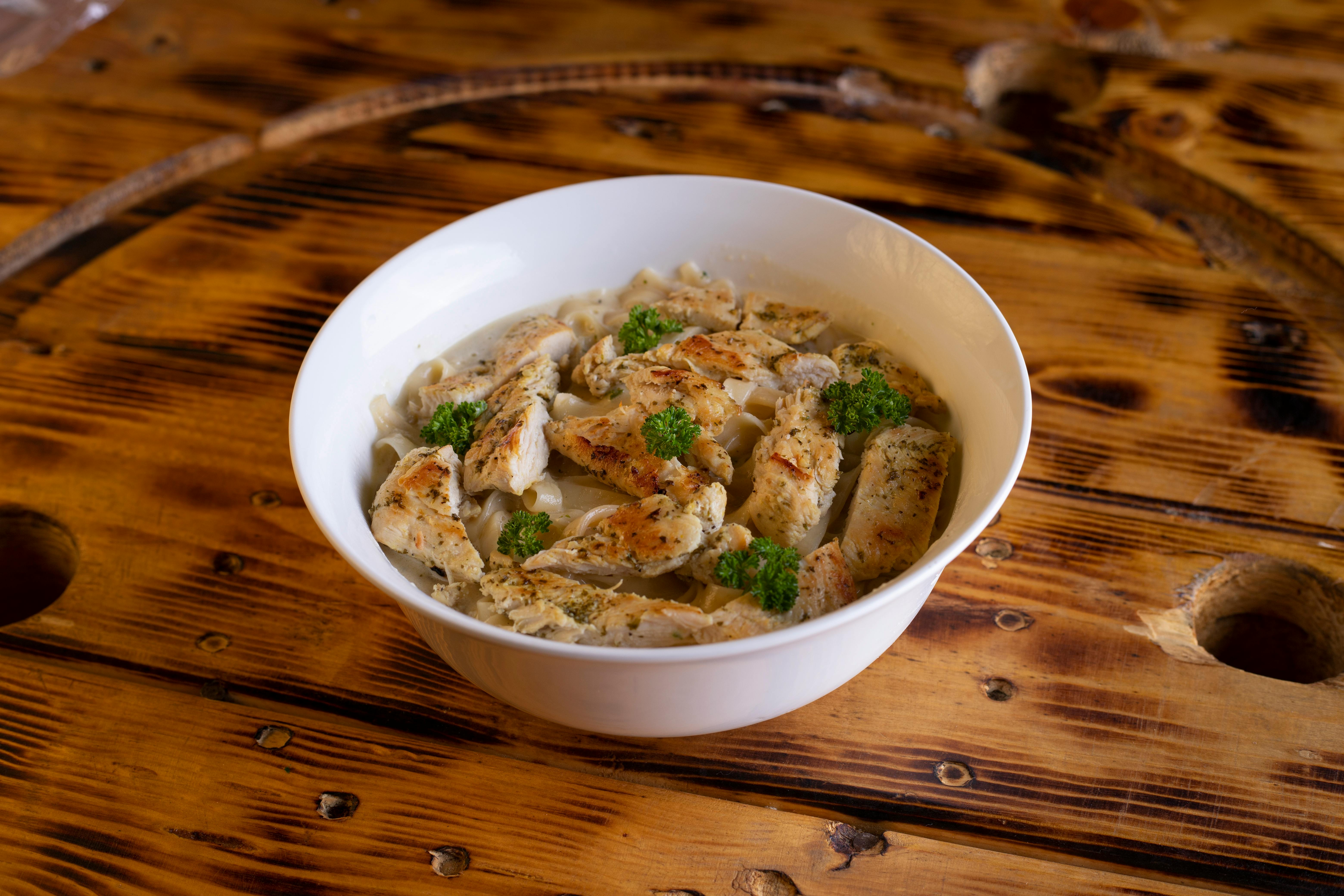
Photo: Biel Heinrich / Pexels
Italian
Chicken Marsala
The diets react (see scores below)
Common Ingredients
- chicken breast
- Marsala wine
- mushrooms
- shallots
- butter
- flour
- chicken broth
- parsley
Specific recipes may vary.
Incompatible with 5 of 11 diets
Diet Ratings
Chicken Marsala as traditionally prepared contains two significant keto concerns: flour (used to dredge the chicken, adding refined carbs) and Marsala wine (a fortified wine with residual sugars, contributing additional carbs). A standard serving could easily push 15-25g net carbs depending on portion size, primarily from the flour dredge and wine reduction. The chicken, butter, mushrooms, and broth are all keto-friendly, and shallots are low in quantity but add minor carbs. With modifications — substituting almond flour or omitting the dredge, and using a dry Marsala in smaller quantities — the dish becomes much more keto-compatible. As served in a restaurant or by traditional recipe, it sits in caution territory requiring significant adaptation.
Some lazy keto practitioners argue that the flour used in dredging is minimal per serving and the wine largely cooks off, keeping net carbs manageable within a daily 50g limit. Others in strict/therapeutic keto communities would rate this avoid due to the flour (a grain product) and the sugar content of fortified wine being non-negotiable regardless of portion.
Chicken Marsala contains multiple animal products that are categorically excluded from a vegan diet. Chicken breast is animal flesh, chicken broth is animal-derived, and butter is a dairy product. These are not trace or cross-contamination ingredients — they are primary, structural components of the dish. No meaningful debate exists within the vegan community about any of these ingredients.
Chicken Marsala contains multiple non-paleo ingredients that disqualify it from approval. Flour (wheat) is a grain and a clear paleo violation. Butter is a dairy product excluded under strict paleo guidelines. While Marsala wine is alcohol and falls into a gray area, the flour and butter alone are sufficient to render this dish non-compliant. The chicken, mushrooms, shallots, chicken broth, and parsley are all paleo-approved, but the dish as traditionally prepared cannot be considered paleo-friendly without significant modification.
Chicken Marsala is a classic Italian-American dish built around chicken breast, which is a lean poultry protein acceptable in moderate amounts under Mediterranean diet principles. Mushrooms and shallots are excellent Mediterranean vegetables. Marsala wine aligns with the tradition of cooking with wine. However, butter is used as the primary fat rather than olive oil, which contradicts a core Mediterranean principle, and refined white flour is used for dredging. These two elements push the dish away from ideal Mediterranean practice, though the dish is not deeply processed or high in red meat or added sugar.
Some northern Italian and Sicilian culinary traditions do incorporate butter alongside or instead of olive oil, and traditional Mediterranean cooking does use small amounts of flour as a binding agent; from this regional perspective, Chicken Marsala could be seen as an acceptable moderate dish. However, mainstream Mediterranean diet clinical guidelines consistently designate olive oil as the sole primary fat and flag refined flour as an ingredient to minimize.
Chicken Marsala is fundamentally incompatible with the carnivore diet. While chicken itself is an animal product, this dish is loaded with multiple plant-derived and non-carnivore ingredients: mushrooms (fungus/plant kingdom), shallots (plant), flour (grain — a major carnivore violation), parsley (herb/plant), and Marsala wine (plant-derived alcohol). Flour alone is a hard disqualifier as a processed grain product. The mushrooms and shallots add further plant matter. Even the butter, while animal-derived, is overshadowed by the numerous forbidden ingredients. The only carnivore-compatible components are the chicken breast, butter, and chicken broth — making this dish approximately 30% carnivore-compatible at best. This is a classic Italian dish built around a wine-and-flour sauce, which is structurally incompatible with carnivore principles.
Chicken Marsala contains multiple Whole30-excluded ingredients. Butter is a dairy product and is not allowed (only ghee or clarified butter is permitted). Flour is a grain-based ingredient and is explicitly excluded. Marsala wine is an alcoholic beverage, and alcohol in cooking is not permitted on Whole30 — it cannot be 'cooked off' as an exception. Any one of these three ingredients alone would disqualify the dish; together they make it clearly non-compliant.
Chicken Marsala contains multiple high-FODMAP ingredients that make it problematic during the elimination phase. Shallots are high in fructans (similar to onion) and are a significant FODMAP concern at any culinary quantity. Mushrooms are high in polyols (mannitol) — common button/cremini mushrooms used in this dish are high-FODMAP above very small amounts (around 1 medium mushroom or 65g per Monash). Wheat flour used for dredging the chicken contains fructans. Marsala wine, while an alcohol (which is generally low-FODMAP in small quantities), is a fortified wine with some uncertainty around concentrated compounds. The combination of shallots, mushrooms, and wheat flour creates three simultaneous FODMAP triggers, making this dish unsuitable for the elimination phase without significant modifications. A compliant version would require substituting: garlic-infused oil or green onion tops for shallots, oyster mushrooms (low-FODMAP at 75g) or omitting mushrooms, and gluten-free flour or cornstarch for dredging.
Monash University has tested individual ingredients separately, and some practitioners note that small quantities of mushrooms (under 65g) and minimal flour coating may stay within thresholds — however, most clinical FODMAP dietitians advise avoiding this dish as-is during elimination given the stacking of fructan and polyol sources. The shallots alone are typically considered a 'no' at any culinary serving, comparable to onion.
Chicken Marsala contains several DASH-friendly components — lean chicken breast is an excellent lean protein source, mushrooms add potassium and fiber, and shallots are a DASH-compatible vegetable. However, the dish is moderated by butter (saturated fat), which DASH limits, and traditional recipes can accumulate meaningful sodium from chicken broth (often 400–900mg per cup in standard versions). The Marsala wine and flour are not major concerns in moderate amounts. As commonly prepared in restaurants or home kitchens, the butter content and broth sodium push this into caution territory. A DASH-optimized version using low-sodium broth, minimal butter or a plant-based oil substitute, and portion control on the sauce would score significantly higher (7–8).
NIH DASH guidelines specifically limit saturated fat and emphasize low-fat cooking methods, which traditional butter-based pan sauces do not fully align with. However, updated clinical interpretations note that moderate butter use in an otherwise balanced dish — particularly one centered on lean poultry and vegetables — may be acceptable within overall daily saturated fat limits, and some DASH-oriented clinicians focus more on the overall dietary pattern than restricting individual cooking fats in mixed dishes.
Chicken Marsala has a solid Zone foundation — chicken breast is an ideal lean protein source, and mushrooms are favorable low-glycemic vegetables. However, several elements complicate Zone compatibility. Butter is a saturated fat, not the preferred monounsaturated fat (olive oil or avocado); while small amounts are manageable, it shifts the fat profile away from Zone ideals. Flour used for dredging adds refined, high-glycemic carbohydrate that is 'unfavorable' in Zone terminology. Marsala wine, though used in moderate quantities, contributes sugar and alcohol-derived calories that don't count as favorable Zone carb blocks. The dish can be adapted — substituting olive oil for butter and minimizing flour — to become a reasonable Zone meal centered around 3 protein blocks of chicken with mushrooms and shallots as the carb base. As traditionally prepared, though, the macro balance skews toward unfavorable carbs and saturated fat, requiring careful portioning and ideally pairing with additional low-glycemic vegetables to round out the carb blocks.
Some Zone practitioners and later Sears anti-inflammatory writings acknowledge that small amounts of saturated fat (butter) in a predominantly lean-protein dish are acceptable in context, and that wine-based sauces in Italian cooking often use small enough quantities that glycemic impact is minimal. In this view, Chicken Marsala prepared in a restaurant portion could score as a 6-7 with appropriate sides, as the chicken remains the dominant macronutrient and the sauce volume per serving is modest.
Chicken Marsala has a mixed anti-inflammatory profile. On the positive side, lean chicken breast is a moderate protein source, mushrooms offer notable anti-inflammatory compounds (beta-glucans, ergothioneine, and selenium), shallots provide quercetin and other flavonoids, and parsley contributes antioxidants. Marsala wine, a fortified wine, contains some polyphenols, though it is not red wine and sits in a gray zone — most anti-inflammatory frameworks that permit alcohol favor red wine specifically for resveratrol content. The main concerns are butter (saturated fat, a known pro-inflammatory trigger in quantity) and refined flour (refined carbohydrate that can spike blood sugar and contribute to inflammatory signaling). These two ingredients are central to the dish's sauce and coating, so they're not incidental. If made with extra virgin olive oil in place of butter and a whole grain or almond flour substitute, the profile would improve significantly. As prepared in the traditional recipe, it sits in cautious territory — not actively harmful in moderate portions, but not aligned with anti-inflammatory principles due to the butter and refined flour components.
Dr. Weil's framework permits lean poultry and even moderate wine, and some practitioners would view this dish favorably given mushrooms and shallots, arguing the butter quantity per serving is minor and the overall meal is nutrient-rich. Stricter anti-inflammatory protocols, however, would flag both the butter (saturated fat) and Marsala wine (fortified alcohol not equivalent to red wine) as reasons to limit or avoid this dish.
Chicken Marsala is built on a solid GLP-1-friendly foundation — lean chicken breast provides strong protein density, and mushrooms add fiber, micronutrients, and easy digestibility. However, the classic preparation introduces meaningful concerns: butter adds saturated fat that can worsen nausea and reflux, flour thickens the sauce but contributes refined carbs with low nutritional value, and Marsala wine — even though much of the alcohol cooks off — contributes residual alcohol and added sugar from the fortified wine, both of which are flagged for GLP-1 patients (empty calories). The dish is not fried and is generally easy to digest, but the butter-wine sauce makes it portion-sensitive and moderately high in fat per serving. A modified version — using less butter or substituting olive oil, reducing sauce volume, using a light flour dusting only — would score meaningfully higher.
Some GLP-1-aware dietitians consider a small portion of restaurant-style Chicken Marsala acceptable because the protein-to-fat ratio is still favorable compared to most Italian entrées, and the alcohol content after cooking is clinically negligible. Others flag the butter and fortified wine more strictly, particularly for patients experiencing active nausea or reflux in early titration phases, where even moderate dietary fat can significantly worsen GI side effects.
*See how scores were generated at our methodology page.
Nutritional profile
Six traits that cut across every diet.
Fiber & Plants
How much whole-plant food and fiber it delivers.
Healthy Fats
The quality of its fats (unsaturated, omega-3).
Whole / Unprocessed
How close it is to its natural, unprocessed form.
Gut Gentle
How easy it is on digestion (low FODMAP, few irritants).
Low Glycemic
How little it spikes your blood sugar.
Protein Density
How much protein it packs per calorie.
Controversy Index
Higher controversy = more disagreement between diets.
Diet-Specific Tips
 Keto — 4/10
View tips
- Flour dredge adds refined grain carbs — a direct keto violation in traditional preparation
- Marsala wine is a fortified wine with residual sugars, contributing net carbs to the sauce reduction
- Chicken breast is lean protein — acceptable but not fat-forward
- Butter and mushrooms are keto-friendly components
- Shallots add minor carbs but in small culinary quantities
- Dish is highly modifiable: almond flour swap and reduced wine can make it keto-compliant
- Restaurant portions likely push net carbs above comfortable keto threshold
 Mediterranean — 5/10
View tips
- Chicken breast is an acceptable moderate-frequency poultry protein
- Mushrooms and shallots are Mediterranean-friendly vegetables
- Marsala wine aligns with Mediterranean cooking traditions
- Butter as primary fat contradicts olive oil-first Mediterranean principle
- Refined white flour used for dredging is a refined grain ingredient
- No red meat, minimal processing, and no added sugar keep the score from falling lower
 DASH — 5/10
View tips
- Lean chicken breast is a core DASH protein source
- Mushrooms and shallots provide potassium and support DASH vegetable servings
- Butter adds saturated fat, which DASH explicitly limits
- Standard chicken broth can contribute significant sodium — low-sodium broth recommended
- Marsala wine is a minor concern in typical quantities
- Overall sodium load depends heavily on broth choice and added salt
- Restaurant portions often include more butter and salt than home-prepared versions
 Zone — 5/10
View tips
- Chicken breast is an ideal Zone lean protein — favorable building block
- Mushrooms and shallots are low-glycemic, favorable Zone carbohydrates
- Butter is saturated fat, not preferred monounsaturated fat — unfavorable in Zone
- Flour dredging adds refined high-glycemic carbohydrate — unfavorable Zone carb
- Marsala wine contributes sugar and alcohol calories outside favorable Zone carb blocks
- Dish is adaptable: substituting olive oil and omitting flour would significantly improve Zone score
- Needs low-glycemic vegetable sides to complete Zone carb block allocation
 Anti-Inflammatory — 5/10
View tips
- Lean chicken breast: anti-inflammatory moderate protein (approved in moderation)
- Mushrooms: strong anti-inflammatory compounds including beta-glucans and ergothioneine
- Shallots: quercetin and flavonoids with anti-inflammatory effect
- Parsley: antioxidant herb, positive contribution
- Butter: saturated fat — pro-inflammatory, especially in sauce-forward preparations
- Refined all-purpose flour: refined carbohydrate, raises glycemic load, mild pro-inflammatory
- Marsala wine: fortified wine with polyphenols but not equivalent to red wine; alcohol is cautioned
 GLP-1 Friendly — 5/10
View tips
- Lean chicken breast is an excellent high-protein, low-fat base
- Mushrooms add fiber, micronutrients, and support easy digestion
- Butter introduces saturated fat that can worsen GLP-1 GI side effects
- Marsala wine is a fortified wine — higher sugar and residual alcohol than dry wine, both cautionary for GLP-1 patients
- Flour adds refined carbs with minimal nutritional value
- Dish is not fried and is generally easy to digest — a positive
- Portion-sensitive: a small serving with modest sauce is significantly more GLP-1-compatible than a full restaurant portion
- Home preparation allows easy modification to reduce fat and sauce volume