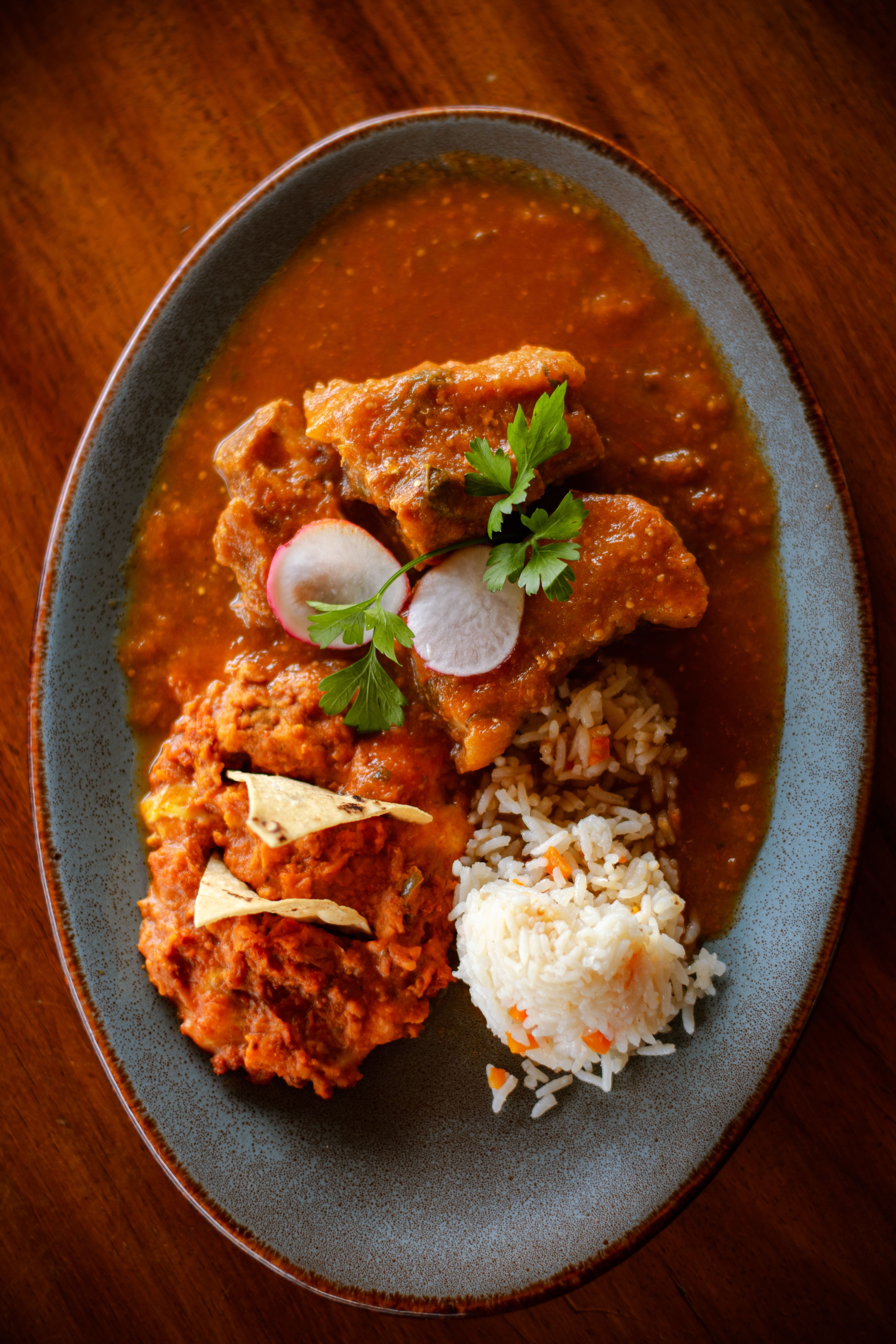
Photo: César O'neill / Pexels
Mexican
Chicken Mole Poblano
The diets react (see scores below)
Common Ingredients
- chicken
- ancho chiles
- pasilla chiles
- Mexican chocolate
- sesame seeds
- tomatoes
- raisins
- cinnamon
Specific recipes may vary.
Incompatible with 5 of 11 diets
Diet Ratings
Chicken Mole Poblano is fundamentally incompatible with a ketogenic diet in its traditional form. While the chicken itself is keto-friendly, the mole sauce is a carbohydrate minefield. Mexican chocolate contributes significant sugar and carbs, raisins are concentrated sugar (among the highest sugar fruits), and dried ancho and pasilla chiles used in quantity add meaningful net carbs. Together, a standard serving of mole sauce can easily contain 20-35g of net carbs from the sauce alone — potentially exceeding an entire day's carb budget in one dish. The combination of added sugars (from chocolate and raisins), dried fruit, and the volume of chiles required to make an authentic mole makes this dish a clear avoid for ketogenic dieters without radical reformulation.
Chicken Mole Poblano is definitively not vegan. The primary protein is chicken, an animal product that is categorically excluded from any vegan diet. While the mole sauce itself contains several plant-based ingredients (ancho chiles, pasilla chiles, tomatoes, raisins, cinnamon, sesame seeds), and Mexican chocolate is often dairy-free, the dish is built around chicken as its core component. No meaningful vegan debate exists around consuming poultry.
Chicken Mole Poblano sits in a gray zone for paleo. The chicken, ancho chiles, pasilla chiles, tomatoes, raisins, and cinnamon are all paleo-approved whole foods. Sesame seeds are generally accepted (though technically a seed oil source when pressed, the whole seeds are fine). The two problematic ingredients are Mexican chocolate and raisins. Mexican chocolate (e.g., Ibarra or Abuelita) typically contains added sugar and sometimes grain-based additives — this is a meaningful concern. Raisins are technically paleo but are a concentrated natural sugar source. Traditional mole also often includes bread or tortilla as a thickener, which would be a hard avoid, but the listed ingredients don't include these. If the Mexican chocolate is substituted with a high-cacao (>70%), minimal-ingredient dark chocolate or raw cacao paste with no refined sugar, the dish becomes more paleo-compliant. As listed, the added sugar in commercial Mexican chocolate is the primary flag, landing this dish in caution territory.
Some paleo practitioners following a stricter Cordain-school approach would avoid this dish entirely due to the processed chocolate component with refined sugar. Conversely, more flexible paleo frameworks (e.g., Mark Sisson's Primal Blueprint) might fully approve it if made with quality dark chocolate, viewing small amounts of added sugar in a complex dish as acceptable in moderation.
Chicken Mole Poblano features chicken as the primary protein, which is acceptable in moderation on the Mediterranean diet (poultry is in the 'caution' tier, allowed a few times per week). The ingredient list includes several Mediterranean-compatible components: tomatoes, sesame seeds, chiles, and spices like cinnamon are all plant-based and nutritious. However, Mexican chocolate introduces added sugar and is a non-traditional ingredient not part of Mediterranean cuisine. Raisins add natural sugar but are a whole food and acceptable in small amounts. The overall dish is not Mediterranean in tradition, but it is not deeply contradictory either — it is a whole-food, chile-and-spice-based preparation with a moderate-protein poultry base. The primary concern is the chocolate (added sugar) and the non-olive-oil fat base typical in mole preparations.
Some Mediterranean diet interpreters would score this lower, noting that Mexican chocolate contributes added sugar and that traditional mole relies on lard or other non-olive-oil fats, which diverge from Mediterranean principles. Conversely, others highlight that the dish's reliance on whole plant ingredients (chiles, tomatoes, seeds, spices) aligns well with plant-forward Mediterranean values, and that cultural cuisine diversity is increasingly recognized within broader Mediterranean-style eating patterns.
Chicken Mole Poblano is fundamentally incompatible with the carnivore diet. While chicken itself is an acceptable animal protein, the dish is defined by its mole sauce, which is composed almost entirely of plant-based ingredients: ancho chiles, pasilla chiles, Mexican chocolate, sesame seeds, tomatoes, raisins, and cinnamon. These ingredients are all explicitly excluded on a carnivore diet — chiles and tomatoes are vegetables/fruits, chocolate and sesame seeds are plant-derived, raisins are fruit, and cinnamon is a plant spice. The mole sauce is the dish; removing it leaves plain chicken, which is a different food entirely. There is no version of Chicken Mole Poblano that can be made carnivore-compliant without completely deconstructing it.
Chicken Mole Poblano is excluded from Whole30 due to Mexican chocolate, which is a core ingredient of the dish. Mexican chocolate (such as Ibarra or Abuelita) contains added sugar and often dairy or grain-based additives, both of which are explicitly excluded on Whole30. While the remaining ingredients — chicken, ancho chiles, pasilla chiles, sesame seeds, tomatoes, raisins, and cinnamon — are individually Whole30-compatible, the dish as traditionally prepared cannot be made without sugar-laden chocolate. Raisins are technically allowed (dried fruit with no added sugar), and the chiles, sesame seeds, and spices are all fine. However, Mexican chocolate is non-negotiable to the dish's identity and contains excluded added sugar, making this dish a clear avoid in its traditional form.
Chicken Mole Poblano contains multiple high-FODMAP ingredients that collectively make this dish problematic during the elimination phase. Raisins are high in excess fructose and polyols (sorbitol) even in small quantities. Mexican chocolate typically contains significant amounts of added ingredients and higher cocoa solids, and at the quantities used in mole (which requires substantial chocolate for the sauce), it exceeds safe FODMAP thresholds — dark chocolate is only low-FODMAP at 30g per Monash. Ancho and pasilla chiles are dried chiles used in large quantities in mole; while fresh chiles in small amounts can be low-FODMAP, the concentrated dried forms used to build a mole sauce raise fructan concerns. Tomatoes are low-FODMAP at standard servings (up to 65g canned or 75g fresh). Sesame seeds are low-FODMAP. Cinnamon is low-FODMAP. Chicken itself is a safe protein. However, the combination of raisins and concentrated dried chiles in the sauce — core to an authentic mole poblano — makes this dish high-FODMAP at any standard restaurant or home serving. The dish cannot easily be modified without fundamentally changing the recipe.
Monash University has not specifically tested mole poblano as a composite dish, and the FODMAP load depends heavily on the exact quantities of each ingredient used per serving. Some FODMAP-trained dietitians suggest that very small portions of mole sauce (as a condiment rather than a generous coating) might fall within tolerable limits for highly compliant patients, but this is not standard elimination phase guidance.
Chicken Mole Poblano presents a mixed DASH diet profile. The lean chicken is a DASH-approved protein, and the chiles, tomatoes, and spices like cinnamon are DASH-friendly vegetables and seasonings rich in antioxidants, fiber, and potassium. Sesame seeds provide magnesium and healthy fats. However, Mexican chocolate introduces added sugar and some saturated fat, and raisins add concentrated natural sugars. The dish is not inherently high in sodium if prepared without added salt, but restaurant or packaged mole sauce versions can be sodium-laden. The overall fat profile depends heavily on preparation — traditional mole can include lard or significant amounts of oil, which would increase saturated fat content. The combination of modest added sugar from chocolate and raisins, potential sodium from preparation, and moderate fat content places this in the 'caution' zone — acceptable in controlled portions but not a core DASH dish.
NIH DASH guidelines do not specifically address mole; some DASH-oriented nutritionists note that homemade mole with dark chocolate in small quantities, minimal added oil, and no added salt aligns reasonably well with DASH principles given its abundance of vegetables, lean protein, and micronutrient-rich spices — whereas others flag the added sugars and saturated fat from chocolate as incompatible with strict DASH adherence.
Chicken Mole Poblano has a favorable lean protein base (chicken) but the mole sauce creates Zone complexity. The Mexican chocolate and raisins introduce higher-glycemic, higher-sugar carbohydrates that Sears explicitly flags as 'unfavorable' Zone carbs. Ancho and pasilla chiles, tomatoes, sesame seeds, and cinnamon are all Zone-positive ingredients — low-glycemic, anti-inflammatory, and polyphenol-rich. The sesame seeds contribute fat (predominantly monounsaturated/polyunsaturated), which is acceptable though the omega-6 content is something Sears would moderate. The Mexican chocolate adds saturated fat and sugar, pushing the dish toward an unfavorable macronutrient ratio. However, because mole is used as a sauce rather than consumed in large volume, portion control can significantly mitigate these concerns — a modest serving of mole over a properly portioned chicken breast can be worked into a Zone meal. The overall dish is technically feasible in the Zone but requires careful portioning of the sauce and attention to the carb blocks contributed by chocolate and raisins.
Some Zone practitioners and later Sears writings (particularly his anti-inflammatory focus) would note that the polyphenol density of mole — from chiles, cinnamon, and dark chocolate — provides genuine anti-inflammatory benefit that partially offsets the glycemic concerns. The small amounts of chocolate and raisins in a full batch of mole, divided across many servings, may contribute only modest sugar per portion, making this more Zone-compatible than it initially appears. Strict early Zone methodology, however, would flag both raisins and Mexican chocolate as unfavorable carb sources to minimize.
Chicken Mole Poblano presents a genuinely mixed anti-inflammatory profile. On the positive side, the dish contains several strongly anti-inflammatory ingredients: dried chiles (ancho, pasilla) are rich in capsaicin and carotenoids with documented anti-inflammatory effects; cinnamon is a recognized anti-inflammatory spice; tomatoes provide lycopene; sesame seeds offer lignans, vitamin E, and a modest omega-3 contribution; and the lean chicken protein is in the 'moderate/acceptable' category. Mexican chocolate — ideally high-cacao — contributes flavanols similar to dark chocolate, though traditional mole chocolate (like Ibarra) contains significant added sugar and is lower cacao than the >70% threshold. The raisins add concentrated sugars and some antioxidants, which is a trade-off. The overall sauce is spice-forward and vegetable-forward, which aligns well with anti-inflammatory principles. However, the meaningful added sugar content (from chocolate and raisins combined), and the fact that mole sauces in restaurant or traditional preparation may use seed oils or lard for frying the chile paste, tempers the rating. The dish is nutrient-dense and polyphenol-rich overall, landing it solidly in 'caution/acceptable' territory rather than a full approve — it's a conditionally anti-inflammatory dish depending on preparation details.
The primary point of contention is the chocolate and sugar content: some anti-inflammatory practitioners (following stricter protocols) would rate added sugars in savory sauces as meaningfully pro-inflammatory and downgrade the dish accordingly. Conversely, food-as-whole-pattern advocates (aligned with Dr. Weil's Mediterranean-adjacent philosophy) would likely emphasize the spice diversity, chile antioxidants, and lean protein, and approve the dish as an example of healthful traditional cuisine where no single ingredient dominates the inflammatory equation.
Chicken Mole Poblano is a mixed dish for GLP-1 patients. The chicken base provides solid lean protein (20-30g per serving depending on portion), which is the top priority. However, the mole sauce introduces meaningful complexity: Mexican chocolate and raisins add moderate sugar and some saturated fat, sesame seeds contribute healthy unsaturated fats but also caloric density, and the overall sauce is rich and calorie-dense per tablespoon. The fat content of a traditional mole is moderate-to-high due to the combination of chocolate, seeds, and chiles, which may worsen nausea, reflux, or bloating — known GLP-1 side effects. On the positive side, ancho and pasilla chiles provide fiber and antioxidants, tomatoes add hydration and micronutrients, and the dish is not fried. Spice levels in mole poblano are generally mild-to-moderate (ancho and pasilla are low-heat chiles), making it more tolerable than very spicy preparations. The key issue is sauce volume and fat load — a small portion of chicken with a modest amount of mole sauce is manageable, but a full traditional serving may be too rich and calorie-dense for reduced-appetite GLP-1 patients. Nutrient density per calorie is acceptable but not optimal due to the sugar and fat in the sauce.
Some GLP-1-focused dietitians would allow mole poblano in moderation given its whole-food ingredients and the protein anchor of the chicken, noting that the chiles, tomatoes, and seeds offer genuine micronutrient value. Others caution more strongly against it, arguing that the chocolate and raisin sugar load combined with the fat density of the sauce poses a meaningful GI tolerance risk and displaces higher-value calories in a reduced-appetite context.
*See how scores were generated at our methodology page.
Nutritional profile
Six traits that cut across every diet.
Fiber & Plants
How much whole-plant food and fiber it delivers.
Healthy Fats
The quality of its fats (unsaturated, omega-3).
Whole / Unprocessed
How close it is to its natural, unprocessed form.
Gut Gentle
How easy it is on digestion (low FODMAP, few irritants).
Low Glycemic
How little it spikes your blood sugar.
Protein Density
How much protein it packs per calorie.
Controversy Index
Higher controversy = more disagreement between diets.
Diet-Specific Tips
 Paleo — 5/10
View tips
- Chicken is fully paleo-approved
- Ancho and pasilla chiles are whole, paleo-approved ingredients
- Mexican chocolate typically contains refined sugar — a paleo avoid
- Raisins are paleo but high in natural sugars
- Sesame seeds are paleo-approved whole seeds
- Cinnamon and tomatoes are paleo-approved
- Traditional mole often uses bread/tortilla as thickener — not listed but a risk in restaurant preparation
- Dish can be made paleo-compliant with raw cacao or >70% dark chocolate substitution
 Mediterranean — 5/10
View tips
- Chicken is an acceptable moderate protein in the Mediterranean diet
- Mexican chocolate adds sugar, a concern under Mediterranean guidelines
- Tomatoes, sesame seeds, chiles, and cinnamon are plant-based and Mediterranean-compatible
- Raisins are a whole food but add natural sugars
- Mole sauces traditionally use non-olive-oil fats (e.g., lard), not aligned with Mediterranean fat principles
- Dish is whole-food based with no highly processed ingredients
 DASH — 5/10
View tips
- Lean chicken is a DASH-approved protein source
- Ancho and pasilla chiles are nutrient-dense, DASH-friendly vegetables
- Mexican chocolate adds saturated fat and significant added sugar
- Raisins contribute concentrated natural sugars
- Sesame seeds provide healthy fats, magnesium, and calcium
- Sodium content varies widely — homemade can be low-sodium, restaurant versions often are not
- Traditional preparation may include lard or excessive oil, increasing saturated fat
- Overall caloric and fat density requires portion control for DASH compliance
 Zone — 5/10
View tips
- Lean chicken protein is an ideal Zone protein source
- Mexican chocolate adds sugar and saturated fat, both Zone-unfavorable
- Raisins are explicitly high-glycemic and flagged as unfavorable in Zone methodology
- Ancho and pasilla chiles are low-glycemic, polyphenol-rich Zone-favorable carbs
- Sesame seeds provide mostly unsaturated fat, acceptable in Zone but omega-6 content warrants moderation
- Portion control of the mole sauce is essential to manage carb and fat blocks
- Anti-inflammatory spices (cinnamon) and polyphenol sources (chiles, dark chocolate) align with Sears' later anti-inflammatory emphasis
 Anti-Inflammatory — 6/10
View tips
- Ancho and pasilla chiles: rich in capsaicin and carotenoids — anti-inflammatory
- Cinnamon: recognized anti-inflammatory spice
- Sesame seeds: lignans and vitamin E, modest anti-inflammatory benefit
- Lean chicken: acceptable moderate protein, lower saturated fat than red meat
- Mexican chocolate: flavanols are beneficial but traditional mole chocolate has high sugar and lower cacao percentage than recommended >70% threshold
- Raisins: concentrated natural sugars offset antioxidant content — net neutral to slightly negative
- Tomatoes: lycopene and polyphenols — anti-inflammatory
- Preparation variable: traditional frying of chile paste in lard or seed oil would add saturated or omega-6 fats
 GLP-1 Friendly — 5/10
View tips
- Good lean protein source from chicken (20-30g per serving)
- Mole sauce is calorie-dense and moderate-to-high in fat from chocolate and sesame seeds
- Mexican chocolate and raisins add sugar, reducing nutrient density per calorie
- Ancho and pasilla chiles are low-heat, reducing reflux/nausea risk compared to spicier preparations
- Chiles and tomatoes contribute fiber and micronutrients
- Rich sauce may worsen GLP-1 side effects (nausea, bloating, reflux) at full traditional portion
- Portion-sensitive: small chicken portion with modest sauce is acceptable; full traditional serving is problematic
- Not fried — preparation method is a positive factor