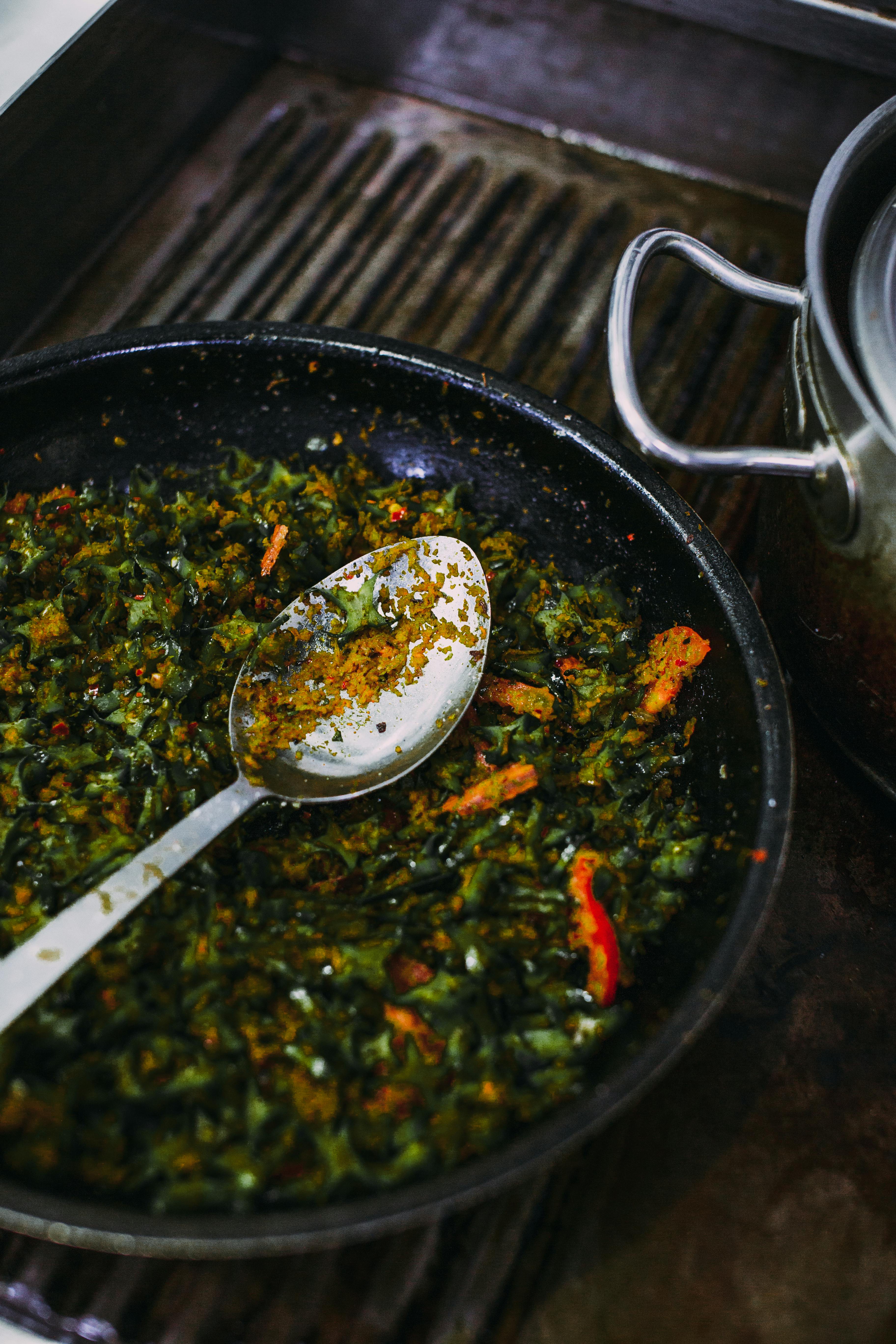
Photo: Rachel Claire / Pexels
Indian
Chicken Saag
The diets react (see scores below)
Common Ingredients
- chicken
- spinach
- mustard greens
- ginger
- garlic
- garam masala
- yogurt
- ghee
Specific recipes may vary.
Incompatible with 5 of 11 diets
Diet Ratings
Chicken Saag is highly keto-compatible in its traditional form. The base consists of chicken (zero carbs, quality protein), spinach and mustard greens (very low net carbs, high fiber), and ghee (pure fat, ideal for keto). Ginger, garlic, and garam masala add minimal carbs in typical cooking quantities. The primary concern is yogurt, which contains lactose (milk sugar), but the amount used per serving is small enough that net carbs remain well within keto limits. Ghee as the cooking fat makes this dish particularly keto-friendly, providing healthy saturated fats. A standard serving likely contains 5-8g net carbs, comfortably within daily keto budgets.
Strict keto practitioners may flag the yogurt due to its lactose content and potential mild insulin response, and some clinical ketogenic protocols eliminate all dairy including cultured products. Additionally, some zero-carb or carnivore-leaning keto adherents avoid all plant-based ingredients including spinach and mustard greens, though this is a minority position.
Chicken Saag contains multiple animal-derived ingredients that are categorically incompatible with a vegan diet. Chicken is poultry (animal flesh), yogurt is a dairy product, and ghee is clarified butter — all animal products firmly excluded under vegan principles. There is no ambiguity here; this dish fails vegan criteria on three separate counts.
Chicken Saag contains two problematic ingredients under paleo rules. Yogurt is a dairy product, which is excluded from the paleo diet. Ghee occupies a gray area — while many modern paleo practitioners accept it due to the removal of casein and lactose, The Paleo Diet's official guidance discourages it. The remaining ingredients — chicken, spinach, mustard greens, ginger, garlic, and garam masala — are all paleo-approved. However, the yogurt alone is sufficient to push this dish into 'avoid' territory, as it is unambiguously dairy. If yogurt were removed and ghee debated separately, this dish could be reconsidered.
Some paleo practitioners, particularly those following Mark Sisson's Primal Blueprint or who accept ghee, might rate this as 'caution' rather than 'avoid' — arguing that ghee is essentially dairy-free and that yogurt could be substituted with coconut cream to make the dish compliant. The dish's non-dairy ingredients are otherwise exemplary paleo fare.
Chicken Saag contains several Mediterranean diet-friendly elements — spinach and mustard greens are excellent leafy vegetables, and garlic and ginger offer strong phytonutrient benefits. Chicken is an acceptable moderate-frequency protein. However, ghee (clarified butter) is a saturated animal fat that conflicts with the Mediterranean principle of extra virgin olive oil as the primary fat. Yogurt is acceptable in moderation. Garam masala is a non-issue nutritionally. Overall, the dish is nutritious and plant-forward in its greens content, but the ghee and the absence of olive oil place it in caution territory rather than a full approve.
Some Mediterranean diet practitioners argue that small amounts of animal fats like ghee can be accommodated within a broadly healthy dietary pattern, particularly when the dish is otherwise rich in vegetables and lean protein. Traditional Middle Eastern and Eastern Mediterranean cuisines do occasionally use clarified butter, so a more generous interpretation could score this dish higher.
Chicken Saag is fundamentally incompatible with the carnivore diet. While chicken and ghee are animal-derived, the dish is built around large quantities of plant foods: spinach, mustard greens, ginger, garlic, and garam masala (a blend of multiple plant-based spices). The leafy greens form the bulk of the dish — they are not incidental garnishes but the defining base of the saag sauce. All plant foods are excluded on the carnivore diet without exception. Yogurt adds a debated dairy element, but it is irrelevant given the overwhelming plant content. This dish cannot be modified minimally to be carnivore-compliant; it would need to be entirely reconstructed.
Chicken Saag as listed contains yogurt, which is a dairy product explicitly excluded on the Whole30 program. All other ingredients — chicken, spinach, mustard greens, ginger, garlic, garam masala, and ghee — are fully compliant. Ghee is the one dairy exception explicitly allowed by Whole30. However, yogurt (used as a marinade or sauce base in traditional saag recipes) is categorically excluded dairy. The dish cannot be approved as described.
Chicken Saag contains two significant high-FODMAP ingredients that make it unsuitable during the elimination phase: garlic and yogurt. Garlic is one of the highest-FODMAP foods tested by Monash University, containing high levels of fructans even in very small amounts (a single clove is enough to cause issues). Yogurt contains lactose, which is a disaccharide FODMAP — regular yogurt is high-FODMAP at standard serving sizes. The chicken, spinach (up to 75g), mustard greens (moderate amounts), ginger, garam masala, and ghee are all low-FODMAP ingredients. However, the combination of garlic and regular yogurt as core ingredients means this dish cannot be safely consumed during the elimination phase without significant recipe modification. A modified version using garlic-infused oil instead of garlic and lactose-free yogurt would shift the verdict to approve.
Chicken Saag contains several strong DASH-positive elements: spinach and mustard greens are among the most nutrient-dense DASH vegetables, rich in potassium, magnesium, calcium, and fiber. Lean chicken (especially breast) is an approved lean protein. Ginger, garlic, and garam masala are sodium-free flavor enhancers that align well with DASH's emphasis on herbs and spices over salt. However, ghee is a clarified butter high in saturated fat, which DASH explicitly limits, and yogurt in restaurant preparations is often full-fat rather than the low-fat dairy DASH recommends. The dish earns a 'caution' rather than 'approve' primarily due to ghee's saturated fat content and the variability in preparation — restaurant versions often use substantially more ghee than home recipes, and sodium can vary widely depending on added salt.
NIH DASH guidelines clearly limit saturated fat sources like ghee; however, updated clinical interpretations note that ghee is used in relatively small quantities in saag preparations, and some DASH-aligned dietitians accept modest use of traditional cooking fats when the overall dish is vegetable- and lean-protein-rich. Substituting low-fat yogurt and reducing or replacing ghee with a small amount of canola or olive oil would elevate this dish to a clear 'approve.'
Chicken Saag aligns well with Zone Diet principles across all three macronutrient categories. Chicken provides lean protein that fits neatly into Zone protein blocks (~7g per block). Spinach and mustard greens are exemplary Zone carbohydrates — extremely low-glycemic, high in polyphenols and fiber, and among the most 'favorable' vegetables in Zone terminology. Ginger and garlic add anti-inflammatory polyphenols that Sears explicitly champions in his later writings. Yogurt contributes a small amount of protein and carbohydrate and is a Zone-acceptable dairy. The primary concern is ghee, a saturated fat source rather than the preferred monounsaturated fat (olive oil, avocado). However, the quantity of ghee in a typical saag preparation is modest, and the dish's overall macro profile remains strongly favorable. With portion control on the ghee and ensuring the chicken portion aligns with roughly 3 blocks (~21g protein), this dish can easily hit the 40/30/30 target. The anti-inflammatory ingredient profile — omega-3-supportive greens, ginger, garlic, and spices — also aligns with Sears' later Zone emphasis on controlling silent inflammation.
Earlier Zone writings (Enter the Zone) more strictly flagged saturated fats like ghee as unfavorable, recommending substitution with olive oil. Sears' later work (The Anti-Inflammation Zone) softened this stance somewhat, acknowledging that traditional cooking fats in context are less problematic than industrial seed oils. Some strict Zone practitioners would substitute ghee with olive oil to optimize the fat block quality, while others comfortable with the evolved Zone framework would accept ghee in modest quantities.
Chicken Saag has a genuinely mixed anti-inflammatory profile. On the positive side, spinach and mustard greens are antioxidant-rich leafy greens high in vitamins K, C, and carotenoids with well-established anti-inflammatory properties. Ginger and garlic are among the most evidence-backed anti-inflammatory spices, and garam masala typically contains turmeric, cumin, coriander, and black pepper — all beneficial. Yogurt contributes probiotics which support gut health and may indirectly reduce systemic inflammation. Chicken is a lean protein classified as 'moderate' in anti-inflammatory frameworks — acceptable but not actively beneficial. The primary concern is ghee: a clarified butter that is high in saturated fat. Anti-inflammatory guidelines consistently flag saturated fat and full-fat dairy as foods to limit, as they can promote inflammatory signaling. The quantity of ghee matters considerably — a small amount used for tempering is different from a ghee-heavy preparation. If ghee is used sparingly, the dish leans toward approval; if used liberally, it pulls the score down. Overall, this dish sits at the higher end of 'caution' territory, with strong anti-inflammatory contributors partially offset by the saturated fat in ghee.
Dr. Weil's anti-inflammatory framework emphasizes limiting saturated fat including butter and cream, which would flag ghee as a concern in this dish. However, some integrative nutrition practitioners and Ayurvedic-informed anti-inflammatory approaches consider traditional ghee a functional fat with butyrate content that supports gut lining integrity and may itself have anti-inflammatory effects — a view that has gained some traction in functional medicine circles even if it remains outside mainstream consensus.
Chicken Saag is a nutrient-dense dish with strong GLP-1-friendly credentials in several areas: lean chicken provides high-quality protein (20-30g per serving depending on portion), and spinach plus mustard greens deliver meaningful fiber, iron, folate, and micronutrients in a low-calorie package. Ginger and garlic are well-tolerated and may even support digestion. The primary concern is ghee, a saturated animal fat that adds caloric density and fat load per serving — traditional recipes can use 2-4 tablespoons, which meaningfully increases the fat content and may worsen GLP-1 side effects like nausea, bloating, and reflux. Yogurt is a positive addition, adding protein and probiotics that support gut motility. Garam masala at typical culinary doses is generally well tolerated, but individual spice sensitivity on GLP-1 medications varies. Overall this dish scores well on protein, fiber, and digestibility, but the ghee content holds it back from a full approve. Prepared with reduced ghee (1 teaspoon or substituted with a small amount of olive oil), this dish would comfortably score 8-9.
Some GLP-1-focused dietitians consider small amounts of ghee acceptable given its short-chain fatty acid profile and the overall nutrient density of the dish, and would approve a standard restaurant portion without modification. Others flag that GLP-1 patients are particularly sensitive to saturated fat load triggering nausea and delayed gastric emptying, and recommend avoiding ghee-based dishes entirely in the early months of treatment.
*See how scores were generated at our methodology page.
Nutritional profile
Six traits that cut across every diet.
Fiber & Plants
How much whole-plant food and fiber it delivers.
Healthy Fats
The quality of its fats (unsaturated, omega-3).
Whole / Unprocessed
How close it is to its natural, unprocessed form.
Gut Gentle
How easy it is on digestion (low FODMAP, few irritants).
Low Glycemic
How little it spikes your blood sugar.
Protein Density
How much protein it packs per calorie.
Controversy Index
Higher controversy = more disagreement between diets.
Diet-Specific Tips
 Keto — 8/10
View tips
- Ghee as primary fat is ideal for keto macros
- Spinach and mustard greens are low net-carb leafy greens
- Chicken provides quality protein with zero carbs
- Yogurt introduces small amounts of lactose but is used in modest quantities
- Garam masala and aromatics contribute negligible carbs at typical serving sizes
- No grains, starches, or added sugars in traditional recipe
 Mediterranean — 5/10
View tips
- Chicken is a moderate-frequency protein — acceptable but not a staple
- Spinach and mustard greens are strongly Mediterranean-aligned leafy vegetables
- Ghee is a saturated animal fat that conflicts with olive oil as the preferred fat source
- Yogurt is acceptable in moderation per Mediterranean guidelines
- No refined grains, added sugars, or highly processed ingredients
- Dish is not traditional Mediterranean but aligns partially with Mediterranean principles
 DASH — 6/10
View tips
- Spinach and mustard greens are top-tier DASH vegetables rich in potassium, magnesium, and calcium
- Lean chicken is an approved DASH protein source
- Ghee is high in saturated fat, which DASH explicitly limits
- Yogurt should be low-fat per DASH guidelines; full-fat yogurt is commonly used in restaurant versions
- No added sodium from ingredients list, but preparation sodium varies widely
- Herbs and spices (ginger, garlic, garam masala) replace sodium for flavor — a DASH-positive practice
- Home-prepared versions with reduced ghee and low-fat yogurt could score 7-8
 Zone — 8/10
View tips
- Chicken is a lean, ideal Zone protein source
- Spinach and mustard greens are top-tier Zone carbohydrates — very low glycemic, high fiber, polyphenol-rich
- Ginger and garlic provide anti-inflammatory polyphenols aligned with Sears' later Zone emphasis
- Ghee is saturated fat, not the preferred monounsaturated fat — the main Zone concern
- Yogurt is a Zone-acceptable dairy contributing moderate protein and low-glycemic carbs
- Garam masala spices are calorie-negligible and anti-inflammatory
- Dish can readily be portioned into Zone blocks without major structural changes
 Anti-Inflammatory — 6/10
View tips
- Spinach and mustard greens are rich in antioxidants, carotenoids, and vitamin K — strong anti-inflammatory contributors
- Ginger and garlic have well-documented anti-inflammatory mechanisms (gingerols, allicin)
- Garam masala likely contains turmeric and black pepper — curcumin bioavailability enhanced by piperine
- Ghee (clarified butter) is high in saturated fat — flagged as 'limit' by most anti-inflammatory frameworks
- Chicken is a lean protein — moderate/neutral in anti-inflammatory context
- Yogurt provides probiotics that support gut health and may reduce systemic inflammation
- Dish balance depends heavily on ghee quantity used in preparation
 GLP-1 Friendly — 6/10
View tips
- High-quality lean protein from chicken supports muscle preservation
- Spinach and mustard greens provide fiber, micronutrients, and hydration support
- Ghee adds saturated fat that may worsen nausea, bloating, and reflux on GLP-1 medications
- Yogurt contributes additional protein and gut-supportive probiotics
- Ginger may actively support digestion and reduce nausea
- Spice level of garam masala is generally mild and well-tolerated
- Dish is small-portion friendly and nutrient-dense per calorie
- Scoring assumes standard restaurant preparation — home preparation with reduced or substituted ghee significantly improves the rating